
Joseph Miscimarra 🇺🇸

3.7K posts

Joseph Miscimarra 🇺🇸 banner
Joseph Miscimarra 🇺🇸

Joseph Miscimarra 🇺🇸

@jmisci

I work in the energy efficiency industry and love walkable neighborhoods. Here to stay updated on climate, energy, urbanism, and weather

Chicago Katılım Temmuz 2013
985 Takip Edilen2.2K Takipçiler
Sabitlenmiş Tweet
Joseph Miscimarra 🇺🇸
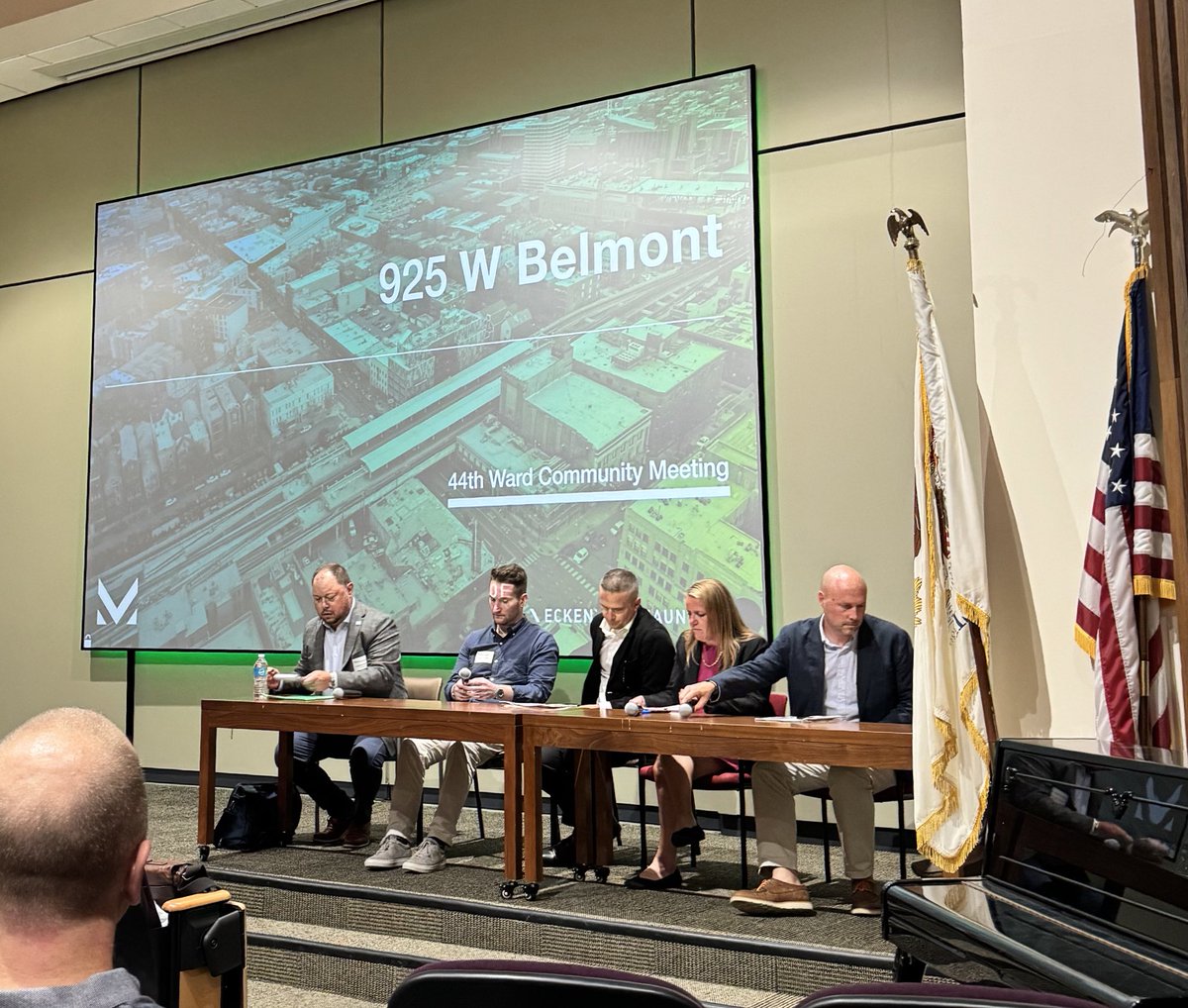
Housing is more expensive now. There are a few reasons for this. Here in Chicago, one of those reasons isn’t super obvious—until you go to a community meeting for a local housing proposal. Here’s a thread about the absurdity of housing development in 2024🧵
Joseph Miscimarra 🇺🇸 tweet media
English
79
347
3.7K
763K
ParsOnPolitics
ParsOnPolitics@ParsOnPolitics·
@jmisci We’ve had this discussion in the past. The viability of ADUs are dead in the water. It’s lip service, pandering. The math doesn’t work & regs make it difficult. Until any of you look into the numbers on building one you’re all just looking to get clicks & make yourself feel good
English
1
0
0
11
Joseph Miscimarra 🇺🇸
If you live in any area that’s not blue on this map: your aldermen wants you to have FEWER housing options. They chose to limit accessory dwelling units (often used as starter homes for young families, or housing for seniors). Tell your alderman today to stop micromanaging.
Joseph Miscimarra 🇺🇸 tweet media
Alice Yin@byaliceyin

New from @JakeSheridan_: Ultimately, 16 alders — particularly in the far Northwest Side, Southwest Side and South Side — opted OUT of the ordinance giving Chicago building owners green light to build coach houses and “granny flats” on their properties chicagotribune.com/2026/04/02/coa…

English
6
6
49
4.8K
FunkyKazoo
FunkyKazoo@KazooFunky·
@jmisci Again are you talking about rent? It’s debatable whether ADU rent is cheaper than a comparable unit in a multi unit structure. It’s probably more actually cause it’s like a mini house. ADU can’t be sold independently of the main structure. So they aren’t starter homes.
English
1
0
0
15
Joseph Miscimarra 🇺🇸
@KazooFunky “It’s on the lot of a larger, more expensive structure” Correct. ADUs are often cheaper than the primary structure. That’s why they are starter homes. (Many have pointed out that ADUs in Chicago are still very expensive. But that doesn’t mean they can’t be starter homes)
English
1
0
0
45
FunkyKazoo
FunkyKazoo@KazooFunky·
@jmisci How is an ADU a starter home? It’s on the lot of a larger, more expensive structure. Are you talking about rent?
English
1
0
0
49
Joseph Miscimarra 🇺🇸
@mollyfleck Actually wait I forgot an important detail. Steven Vance pointed out that ADUs are now allowed by default in RT/RM/etc higher density zones everywhere in Chicago. The colors only refer to the limits on ADUs in zones RS-1/2/3 dictated by each alderman. (Confusing, I know!)
English
0
0
1
54
Joseph Miscimarra 🇺🇸
The Port of Chicago has been hollowed out. Wherever you look, you can see infrastructure decaying. This means fewer jobs, less local investment, and more pollution in our neighborhoods (since more cargo is transported by truck instead of ships/barges)
Joseph Miscimarra 🇺🇸 tweet mediaJoseph Miscimarra 🇺🇸 tweet media
English
0
0
2
96
Joseph Miscimarra 🇺🇸 retweetledi
CDOT
CDOT@ChicagoDOT·
Introducing Wackr™ — Navigate like a Chicagoan Lower Wacker Drive: chaotic, confusing… and yes, beautiful. That’s why we made Wackr™, the only app for Chicago’s most confusing roadway. Comment below, which Wackr™ feature should we add next?
CDOT tweet media
English
21
56
375
31.5K
Joseph Miscimarra 🇺🇸
@jessezorr I think I buy the original post's argument for some aspects of local governance, but Cook County is on a whole different level with the amount of fragmentation. Prime example: the fact that we have multiple mosquito abatement districts.
Joseph Miscimarra 🇺🇸 tweet media
English
1
0
0
27
Jesse Orr
Jesse Orr@jessezorr·
Cook County (and more broadly, IL’s “A million municipalities now!” attitude to governance) would beg to differ, no? Or LA County’s morass of muni’s?
Kevin Klinkenberg@kevinklink

If I had the time to flesh this all out, I'd do a book on how American cities manage virtually everything at the wrong scale, and this accounts for about 80% of our routine issues. Policy wonks want to policy wonk everything; designers like me see everything as a design problem. But what I've become convinced of is we have a basic management problem. I find this to be really difficult to communicate, so bear with me (which would be the point of writing something out, right?) Smaller cities and towns have their limitations, but their local governments are intimately familiar with issues in town, know their constituents closely and are generally very accessible. As cities grow larger, the population of districts also grows. Sometimes to very large numbers. My district in my city has over 80,000 people in it - represented essentially by 2 people. Bear in mind there are entire towns of half that size with a City Council of 5-12 people. So there's that aspect - the political side. Then there's the day to day management side. As cities grow, they grow like corporations used to grow - vertically and siloed. It becomes harder and harder for lay people to know who to call, who does what, etc etc. I've seen a number of workarounds tried, with good managers and not so good ones. But fundamentally I see a systems problem - people just get farther and farther away from constituents and needs. One result is many very localized issues just don't get dealt with well at all. Everyone in the process seems to default to solving problems at the scale of the whole city, when in fact most issues are hyper-local. That hyper-local scale gets problem-solvers in the form of BIDs, CIDs, Place-management organizations, like mine. And these groups often do a great job - because again they operate at a fine scale and are accessible. But parts of the community without those groups, just generally don't get their issues solved. This is but one part of a much longer thought train, but over and over again I've seen how we have countless issues because of lack of management at the right scale - a more localized one. And those issues then metastasize and become much bigger fights. Much of this is rooted in the very 20th century idea that consolidation of governments and annexations would lead to management efficiencies. Because that was the mentality of much of society at the time. Might've sounded good in a textbook or a seminar, but it just hasn't worked. My gut tells me so much of cities would work 1000% better if we had smaller-scale, localized governance and management. I feel like people instinctively know this or sense it, but we can't figure out how to communicate it well or solve for it.

English
2
1
23
2.5K
Joseph Miscimarra 🇺🇸 retweetledi
Micky Horstman
Micky Horstman@Micky_Horstman·
Only six aldermen showed up for the CTA hearing Thursday. We deserve leaders who treat public safety, accountability & reliable transit as priorities. If aldermen won’t question the CTA during a period of rising crime, leadership uncertainty & financial risk, when will they?
Chicago Tribune Opinion@chitribopinions

Letters: The City Council needs to show us that it takes safety on the CTA seriously chicagotribune.com/2026/03/31/let…

English
3
8
39
2.4K
Joseph Miscimarra 🇺🇸 retweetledi
Travis Kavulla
Travis Kavulla@TKavulla·
Each municipality (525 in all) in Illinois has its own approach to permitting @basepowerco & other energy-storage tech. That imposes costs & friction to our customers. As a result, whole communities may get left behind as companies just say "no thanks" to the hassle. Not great!
Travis Kavulla tweet media
English
3
3
25
10.2K