Blake Gower

211 posts

Blake Gower

Blake Gower

@bkgower

Katılım Şubat 2016
453 Takip Edilen11 Takipçiler
Blake Gower retweetledi
Milk Road AI
Milk Road AI@MilkRoadAI·
Skip the Netflix binge and get an Ivy League education for free. This Stanford deep dive reveals the actual mechanics behind ChatGPT and Claude. Watch to level up your AI knowledge and bookmark this.
English
5
16
96
11.2K
Blake Gower retweetledi
Allen Braden
Allen Braden@allen_explains·
This 2-hour Stanford lecture breaks down how models like ChatGPT and Claude are actually built, clearer than what many people in top AI roles ever get exposed to. Save this and set aside two hours today. It might end up being the most valuable thing you learn all week.
English
162
4.5K
27.6K
3.4M
Blake Gower retweetledi
Brian Halligan
Brian Halligan@bhalligan·
NEW EPISODE: @jack & @roelofbotha unpack @blocks 40% staff cut and rebuilding the entire company as a mini-AGI. This isn’t “use AI to make people more productive.” It’s making the company itself the intelligence. If you’re a founder or operator wondering what work looks like in the next 5 years… this is the episode. The evolution looks like: • Manager mode = Pyramid 🔺 (command & control) • Founder mode = Flat ➖(founders decide fast) • Dorsey mode = Circle 🔵 w/ AI at the center, humans at the edge, and decisions flow from customer inputs → AI → humans steering it I’ve tried killing org charts before. Brutally hard. But we never had these tools. This is rewriting the CEO playbook for the AI era. Buckle up. 00:00 Existential Dread & Hope 02:56 AI Replaces Hierarchy 07:22 Block’s New Three Roles 26:47 Flattening the Company, Fast 35:23 Getting the Board to Buy-In, Fast 36:50 Building a Great Board 41:29 Founder CEO Lessons 48:18 Second Acts & Conviction 56:22 Timeless CEO Traits
English
86
240
1.7K
339.5K
Blake Gower retweetledi
Infinite Loops 🎙
Infinite Loops 🎙@InfiniteL88ps·
You don’t know people as well as you think. Polina Pompliano studies the world’s highest performers—and what she’s found challenges how we think about success, creativity, and human behavior. From mental models to media bias to the hidden motivations driving people, this is a deep dive into how great thinkers actually see the world. TIMESTAMPS 00:00 – Intro 02:12 – How Polina Breaks Down High Performers 06:02 – Rationality vs Emotion 10:03 – Creativity and Logic 15:30 – The Power of Storytelling 19:00 – Building The Profile 22:29 – The Mask vs The Real Person 30:48 – Growing Up in Bulgaria 36:03 – What Freedom Actually Means 40:17 – Why We’re All in Ideological “Cults” 01:00:15 – What She Learned From Profiling People
English
19
24
126
50.6K
Blake Gower retweetledi
Peter Agboola
Peter Agboola@baba_Omoloro·
Anthropic has launched free courses to master AI with certificates for $0.00 anthropic.skilljar.com
English
558
8K
55.5K
16.8M
Blake Gower retweetledi
Anish Moonka
Anish Moonka@anishmoonka·
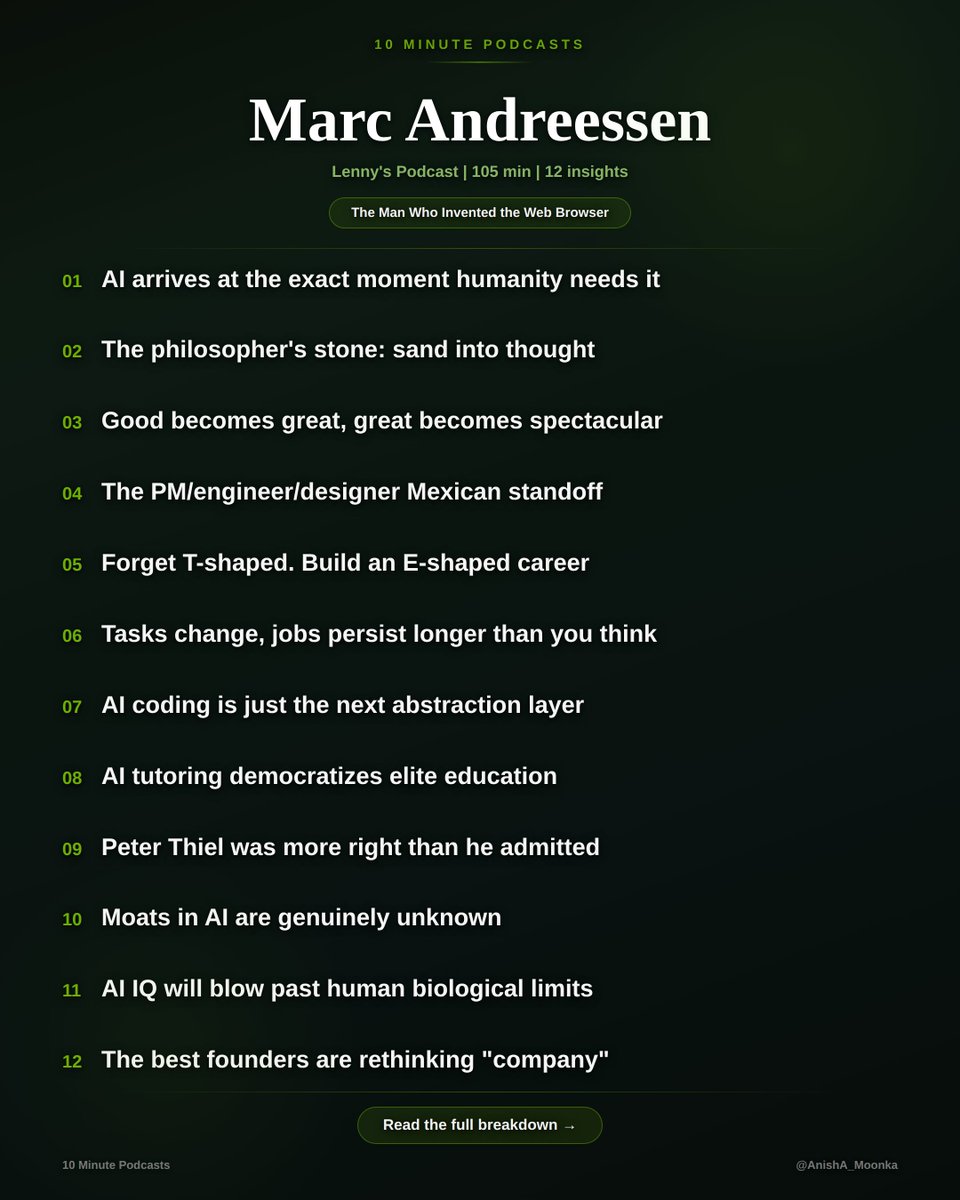
Marc Andreessen just dropped ~105 mins on Lenny's Podcast covering AI, jobs, careers, and why everyone is panicking about the wrong thing. Just the clearest macro framework I've heard on where AI actually lands. My notes: 𝟭. 𝗔𝗜 𝗶𝘀 𝗮𝗿𝗿𝗶𝘃𝗶𝗻𝗴 𝗮𝘁 𝘁𝗵𝗲 𝗲𝘅𝗮𝗰𝘁 𝗺𝗼𝗺𝗲𝗻𝘁 𝗵𝘂𝗺𝗮𝗻𝗶𝘁𝘆 𝗻𝗲𝗲𝗱𝘀 𝗶𝘁. US productivity growth has been running at half the rate of the 1940-1970 era and a third the rate of 1870-1940. The global population is declining below replacement in dozens of countries, including China. Without AI, we would be panicking about economies shrinking from depopulation, not job loss. The timing is almost miraculous. This is what Andreessen means when he says the real boom has not started yet. We have been in a 50-year productivity drought, and most people do not even realize it. 𝟮. 𝗔𝗜 𝗶𝘀 𝘁𝗵𝗲 𝗽𝗵𝗶𝗹𝗼𝘀𝗼𝗽𝗵𝗲𝗿'𝘀 𝘀𝘁𝗼𝗻𝗲. Isaac Newton spent decades trying to transmute lead into gold and never succeeded. AI does something more powerful: it converts sand (silicon) into thought. The most common material in the world is the rarest output. This one metaphor reframes the entire AI conversation. You do not have a job loss problem. You have a philosopher's stone sitting on your desk that you are not using enough. 𝟯. 𝗔𝗜 𝗺𝗮𝗸𝗲𝘀 𝗴𝗼𝗼𝗱 𝗽𝗲𝗼𝗽𝗹𝗲 𝘃𝗲𝗿𝘆 𝗴𝗼𝗼𝗱, 𝗮𝗻𝗱 𝘃𝗲𝗿𝘆 𝗴𝗼𝗼𝗱 𝗽𝗲𝗼𝗽𝗹𝗲 𝘀𝗽𝗲𝗰𝘁𝗮𝗰𝘂𝗹𝗮𝗿𝗹𝘆 𝗴𝗿𝗲𝗮𝘁. The best coders right now are not reporting 2x productivity. They are reporting 10x. The gap between "pretty good with AI" and "elite with AI" is widening, not narrowing. This is the most important signal for career planning right now. If you are just using AI to do the same job slightly faster, you are leaving the real leverage on the table. 𝟰. 𝗧𝗵𝗲𝗿𝗲'𝘀 𝗮 𝗠𝗲𝘅𝗶𝗰𝗮𝗻 𝘀𝘁𝗮𝗻𝗱𝗼𝗳𝗳 𝗯𝗲𝘁𝘄𝗲𝗲𝗻 𝗣𝗠𝘀, 𝗲𝗻𝗴𝗶𝗻𝗲𝗲𝗿𝘀, 𝗮𝗻𝗱 𝗱𝗲𝘀𝗶𝗴𝗻𝗲𝗿𝘀. Every engineer now thinks they can be a PM and designer. Every PM thinks they can code and design. Every designer knows they can do both. And they are all correct, because AI enables each role to absorb the tasks of the other two. I have seen this firsthand in the investing world. The analyst who can build models and write narratives is 5x more valuable than someone who can do only one. The same convergence is happening in the product. 𝟱. 𝗙𝗼𝗿𝗴𝗲𝘁 𝗧-𝘀𝗵𝗮𝗽𝗲𝗱. 𝗕𝘂𝗶𝗹𝗱 𝗮𝗻 𝗘-𝘀𝗵𝗮𝗽𝗲𝗱 𝗰𝗮𝗿𝗲𝗲𝗿. Scott Adams could not have created Dilbert by being the world's best cartoonist or the world's best business mind. He needed both. The additive effect of two skills is more than double. Three skills are more than triple. Larry Summers puts it differently: don't be fungible. The person who can code, design, and ship a product is no longer a unicorn. They are the new baseline for "extremely valuable." If you are only one of those three things, you are increasingly replaceable. 𝟲. 𝗝𝗼𝗯𝘀 𝗮𝗿𝗲 𝗯𝘂𝗻𝗱𝗹𝗲𝘀 𝗼𝗳 𝘁𝗮𝘀𝗸𝘀. 𝗧𝗮𝘀𝗸𝘀 𝗰𝗵𝗮𝗻𝗴𝗲. 𝗝𝗼𝗯𝘀 𝗽𝗲𝗿𝘀𝗶𝘀𝘁. Executives never typed their own emails in the 1970s. Secretaries printed incoming emails and hand-delivered them. Both roles survived the transition, just with different task sets. The same will happen with AI and coding, PM work, and design. Everyone obsessing over "will my job disappear" is asking the wrong question. The right question is: which tasks in my job are about to rotate, and am I ready to pick up the new ones? 𝟳. 𝗔𝗜 𝗰𝗼𝗱𝗶𝗻𝗴 𝗶𝘀 𝗷𝘂𝘀𝘁 𝘁𝗵𝗲 𝗻𝗲𝘅𝘁 𝗮𝗯𝘀𝘁𝗿𝗮𝗰𝘁𝗶𝗼𝗻 𝗹𝗮𝘆𝗲𝗿. We went from human calculators to machine code to assembly to C to scripting languages. Each layer was dismissed by the previous generation. Each time, the new layer won, and total coding employment grew. AI coding is the same pattern, not a rupture. The Perl programmers of 2005, laughing at JavaScript, are the C programmers of 1995, laughing at scripting. History rhymes, and it always rewards the people who adopt the next abstraction first. 𝟴. 𝗔𝗜 𝘁𝘂𝘁𝗼𝗿𝗶𝗻𝗴 𝗱𝗲𝗺𝗼𝗰𝗿𝗮𝘁𝗶𝘇𝗲𝘀 𝗲𝗹𝗶𝘁𝗲 𝗲𝗱𝘂𝗰𝗮𝘁𝗶𝗼𝗻. One-on-one tutoring is the only method proven to move a student from the 50th to the 99th percentile (Bloom's two sigma effect). It used to require being born into royalty. Alexander the Great was tutored by Aristotle. Now, any kid with a phone can access the same quality of personalized instruction. This is the most under-discussed consequence of AI. Every parent reading this should be supplementing their kid's education with structured AI tutoring right now. Not next year. Now. 𝟵. 𝗣𝗲𝘁𝗲𝗿 𝗧𝗵𝗶𝗲𝗹 𝘄𝗮𝘀 𝗺𝗼𝗿𝗲 𝗿𝗶𝗴𝗵𝘁 𝘁𝗵𝗮𝗻 𝗔𝗻𝗱𝗿𝗲𝗲𝘀𝘀𝗲𝗻 𝗼𝗿𝗶𝗴𝗶𝗻𝗮𝗹𝗹𝘆 𝗮𝗱𝗺𝗶𝘁𝘁𝗲𝗱. Progress in bits masked stagnation in atoms. The built world is barely different from 50 years ago. Same bridges from the 1930s, same dams from the 1910s. Cartels, monopolies, unions, and regulations prevent the rate of change that people had 100 years ago. This is also why AI will not transform everything overnight. Institutional sclerosis is real. Healthcare alone could take a generation. If you are building in atoms, budget for a war of attrition, not a blitzkrieg. 𝟭𝟬. 𝗠𝗼𝗮𝘁𝘀 𝗶𝗻 𝗔𝗜 𝗮𝗿𝗲 𝗴𝗲𝗻𝘂𝗶𝗻𝗲𝗹𝘆 𝘂𝗻𝗸𝗻𝗼𝘄𝗻. Within a year of ChatGPT's launch, five American companies, five Chinese companies, and open-source all had roughly equivalent models. DeepSeek emerged from a hedge fund in China and basically replicated the American labs' work. The smartest AI insiders privately admit there aren't many real secrets among the big labs. This is the most honest take I have heard from a top-tier VC. No one knows if the value accrues to models, apps, or infrastructure. Anyone who tells you otherwise is selling you certainty they do not have. 𝟭𝟭. 𝗔𝗜 𝗜𝗤 𝘄𝗶𝗹𝗹 𝗯𝗹𝗼𝘄 𝗽𝗮𝘀𝘁 𝗵𝘂𝗺𝗮𝗻 𝗹𝗶𝗺𝗶𝘁𝘀. Human IQ caps around 160 because of biology. Current AI models test around 130-140. There is no theoretical ceiling stopping AI from reaching 200, 250, or 300. The concept of AGI as a "human equivalent" will be a footnote because AI will race past that threshold. This is the frame that makes the "will AI take my job" debate feel small. We are not building a replacement for human thought. We are building something that will be better than the best human thought has ever been. 𝟭𝟮. 𝗧𝗵𝗲 𝗯𝗲𝘀𝘁 𝗳𝗼𝘂𝗻𝗱𝗲𝗿𝘀 𝗮𝗿𝗲 𝗿𝗲𝘁𝗵𝗶𝗻𝗸𝗶𝗻𝗴 𝘄𝗵𝗮𝘁 𝗮 𝗰𝗼𝗺𝗽𝗮𝗻𝘆 𝗲𝘃𝗲𝗻 𝗶𝘀. Layer one: AI redefines products. Layer two: AI redefines jobs within companies. Layer three, which has not dropped yet: AI redefines the very concept of having a company. The holy grail is the one-person, billion-dollar outcome, and the best founders are chasing it. Satoshi did it with Bitcoin. Instagram and WhatsApp came close with tiny teams. The question is no longer if this is possible with software. The question is how many of these we will see in the next five years. AI is the philosopher's stone. The question is whether you pick it up. The full podcast is worth your time. Link in replies.
Anish Moonka tweet media
English
88
566
3K
831.5K
Blake Gower retweetledi
Raoul Pal
Raoul Pal@RaoulGMI·
Blimey, in a couple of hours this has had 500,00 views and 4,000 bookmarks! 🙏
English
57
67
1.1K
259.4K
Blake Gower retweetledi
Shruti
Shruti@heyshrutimishra·
Elon Musk’s 3-hour interview broke the internet. He revealed; → Why software devs are "about to have a hard lesson in hardware" → next 36 months will create more millionaires than last 36 years. Here's every prediction you need to see👇
English
183
861
5.3K
917.1K
Blake Gower retweetledi
Julio Medina
Julio Medina@JulioMedina·
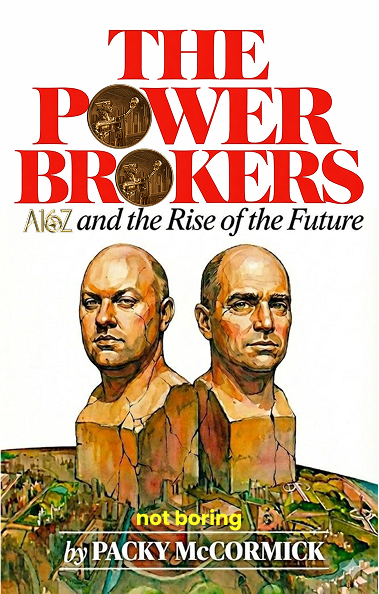
@packyM The cover image goes hard looks like a beat seller book cover or classic movie.
English
1
0
1
504
Packy McCormick
Packy McCormick@packyM·
a16z: The Power Brokers There is this story about Marc Andreessen that I think perfectly captures a16z. in 2015, when New Yorker writer Tad Friend sat down to breakfast with Marc Andreessen while writing Tomorrow’s Advance Man. Friend had just heard from a rival VC who wanted to get a word in: that a16z’s funds were so large, and ownership percentages so small1, that to get 5-10x aggregate returns across its first four funds, they’d need their aggregate portfolio to be worth $240-480 billion. “When I started to check the math with Andreessen,” Friend writes, “He made a jerking-off motion and said ‘Blah-blah-blah. We have all the models—we’re elephant hunting, going after big game!’” The aggregate portfolio did not end up being worth $240-480 billion. a16z Funds 1-4 had a total enterprise value of $853 billion at distribution or latest post-money valuation. Since distribution, Facebook alone has added $1.5 trillion in market cap. Some form of this pattern keeps playing out: a16z makes a crazy bet on the future. Those in the know say it’s stupid. Wait some years. Turns out it’s not stupid! Which is why, as a16z announces $15 billion in fresh funds, it is probably a mistake to dismiss them as greedy or stupid. It's probably worth understanding just exactly what IT'S TRYING TO BUILD. That's what I do in today's not boring deep dive: a16z: The Power Brokers
Packy McCormick tweet media
English
73
151
1.4K
1.4M
Blake Gower retweetledi
Mark Kretschmann
Mark Kretschmann@mark_k·
Here's the brilliant new interview with @elonmusk, in its entirety (3h). It's the best interview Elon has done in a long time, hitting all the right topics: AI, robots, and the singularity!
Peter H. Diamandis, MD@PeterDiamandis

Join my conversation with @elonmusk on AGI timelines, energy, robots, and why abundance is the most likely outcome for humanity's future, alongside my Moonshot Mate @DavidBlundin! (00:00) - Navigating the Future of AI and Robotics (04:54) - The Promise of Abundance and Optimism (10:02) - Energy: The Key to a Sustainable Future (15:00) - The Role of Education in a Changing World (41:07) - Health, Longevity, and the Future of Humanity (50:51) - AI's Impact on Labor and Employment (55:05) - Universal High Income: A New Economic Paradigm (57:58) - Navigating the Singularity and AI's Acceleration (01:02:30) - The Role of AI in Healthcare and Surgery (01:08:22) - Ethics and AI: Programming Values into Machines (01:14:18) - The Future of Space Exploration and AI's Role (01:33:30) - The Chip Shortage Crisis (01:42:46) - Simulation Theory and Consciousness (01:48:18) - The Search for Extraterrestrial Life (01:58:28) - The Future of Robotics and AI Integration

English
238
593
3.4K
1.2M
Jack
Jack@jackunheard·
🚨BREAKING: Zohran Mamdani stuns New York, putting Ramzi Kassem — 9/11 Al Qaeda defense lawyer — in charge as Chief Counsel New York, what have you done?
English
6.5K
18.3K
78.9K
5M
Blake Gower retweetledi
Tulsi Soni
Tulsi Soni@shedntcare_·
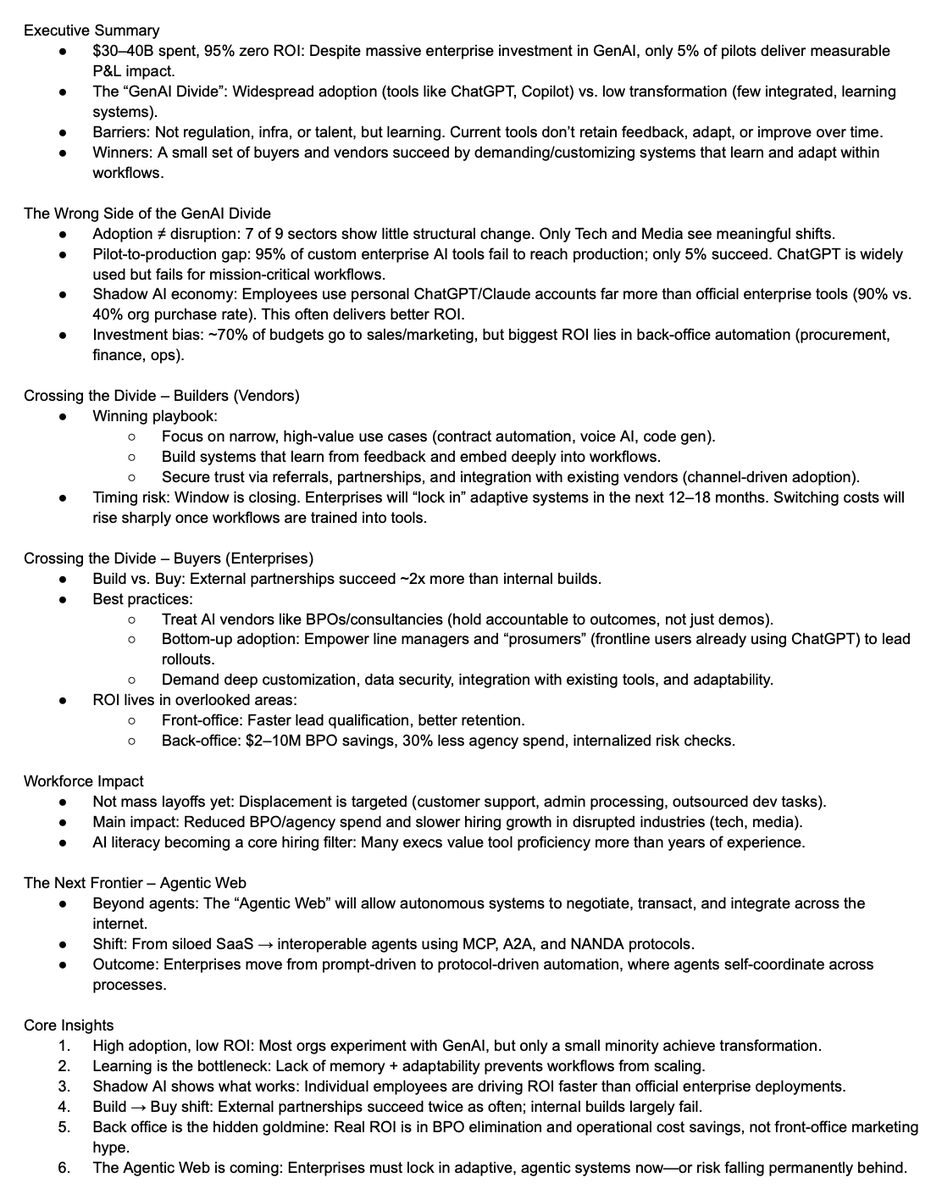
MIT just dropped a 26-page report on AI (2025). Worth a read if you want fresh insights into where AI is headed.
Tulsi Soni tweet mediaTulsi Soni tweet media
English
33
159
906
84.6K
Blake Gower retweetledi
Matthew LaBosco
Matthew LaBosco@matthew_labosco·
Anxiety, depression, and burnout are not “all in your head... They’re in your gut. Your gut makes 90% of serotonin and 50% of dopamine. When the gut is inflamed, your mind suffers. Since your doctor won’t tell you this... Here are 7 ways to fix the gut–mind connection: 🧵
English
27
85
337
104.3K
Blake Gower retweetledi
HarmonyHaven
HarmonyHaven@HarmonyHaven_1·
Fasting for 72 hours is the best medicine on Earth. It triggers your body to "eat up" tumors, inflammation, and toxins. It's literally a doctor within. Here's how to fast correctly (according to science):
English
358
1.9K
18K
12.1M