big red retweetledi
big red
1.1K posts

big red retweetledi

“If you don’t support the budget, you don’t support Canada.” @BenMulroney is tired of @MarkJCarney ‘s rhetoric. Are you?
English
big red retweetledi
big red retweetledi

Here’s the original clip of Ronald Reagan from April 25, 1987, where he delivered a complete and total rebuke against tariffs. Trump is calling Reagan’s words in this video “FAKE” and “fraudulent.” They’re 100% real. And the original clip is actually far worse for Trump, as much is left out of the ad. Watch this clip and read the full transcript:
Throughout the world, there's a growing realization that the way to prosperity for all nations is rejecting protectionist legislation and promoting fair and free competition. Now, there are sound historical reasons for this. For those of us who lived through the Great Depression, the memory of the suffering it caused is deep and searing. And today, many economic analysts and historians argue that high tariff legislation passed back in that period, called the Smoot-Hawley tariff, greatly deepened the depression and prevented economic recovery.
You see, at first when someone says, let's impose tariffs on foreign imports, it looks like they're doing the patriotic thing by protecting American products and jobs. And sometimes for a short while, it works, but only for a short time. What eventually occurs is, first, homegrown industries start relying on government protection in the form of high tariffs. They stop competing and stop making the innovative management and technological changes they need to succeed in world markets.
And then, while all this is going on, something even worse occurs. High tariffs inevitably lead to retaliation by foreign countries and the triggering of fierce trade wars. The result is more and more tariffs, higher and higher trade barriers, and less and less competition. So soon, because of the prices made artificially high by tariffs that subsidize inefficiency and poor management, people stop buying.
Then the worst happens. Markets shrink and collapse, businesses and industry shut down, and millions of people lose their jobs. The memory of all this occurring back in the 30s made me determined when I came to Washington to spare the American people the protectionist legislation that destroys prosperity. Now, it hasn't always been easy. There are those in the Congress, just as there were back in the 30s, who want to go for the quick political advantage, who risk America's prosperity for the sake of a short-term appeal to some special interest group, who forget that more than 5 million American jobs are directly tied to the foreign export business, and additional millions are tied to imports.
Well, I've never forgotten those jobs. And on trade issues, by and large, we've done well.
Ron Filipkowski@RonFilipkowski
If Joffrey Baratheon grew up to be an American president, this is pretty much what it would look like.
English
big red retweetledi
big red retweetledi

BREAKING: I followed the trail of Mark Carney’s money-laundering scheme
I’m writing to you from a tax haven called the Isle of Man. I’ve never seen any place quite like it. It’s a little island between Ireland and the UK, home to 85,000 people. And it’s famous for two things: its annual motorcycle race, and billionaires avoiding their taxes.
That’s why I’m here: because two and a half years ago Mark Carney set up a shell company to avoid paying taxes in Canada. The Isle of Man has very few taxes — no capitals gains tax, no inheritance tax, no wealth tax. Income tax is just 22%. Corporate taxes are 10% or less.
But the Isle of Man does something more important: it allows oligarchs from around the world to pay taxes on their global income to the Isle of Man. So they can operate around the world, but choose to pay a fraction of their real tax obligation in the Isle of Man.
And perhaps the most important feature of the Isle of Man’s tax scheme is the secrecy. Anyone can set up shell companies hiding the true ownership of any business. That’s why this place is full of Russian oligarchs, international drug dealers and semi-legal online casinos. They can hide their tracks.
Which brings us to Mark Carney, the chairman of Brookfield Asset Management until just a few weeks ago. He set up a complex corporate structure to avoid paying Canadian taxes. To him, taxes are for the little people. In the video, I show how I searched the corporate registry to find Brookfield IOM’s address, and to find the identity of their sole director: an 88-year-old man named Leslie Commins.
The registry gave the address of Brookfield IOM’s headquarters, but it wasn’t in an office tower, or an office at all — it was just Leslie’s small apartment. Of course, 88-year-old Leslie Commins isn’t the real owner of Brookfield IOM. He’s what they call a “straw man”. Of course his apartment isn’t the world headquarters of Brookfield IOM. Of course the whole thing is a sham, to pretend that Brookfield IOM does business in the Isle of Man, so it can pay its global taxes there.
Hey, wouldn’t it be nice if you could do that? If you ran a barber shop, or farm, or restaurant, and instead of paying all the taxes and regulations Canada piles onto you, you could just have a guy in the Isle of Man saying that’s your world headquarters, so you’ll pay all your taxes there?
It’s obviously tax avoidance, which is why so many shady characters put their money in the Isle of Man. Like Mark Carney.
I thought it was eye-opening to see how casually the man who was “selected” to become our prime minister, engages in unethical tax-dodging for his well-connected friends. And remember, Carney has never answered where he personally paid taxes last year, or the year before, or the year before that. Did he pay them in the Isle of Man, or some other tax haven?
Obviously that’s a question that the CBC would never ask. (I put eight questions to the Liberal Party in writing today, but obviously they wouldn’t answer these questions, no matter who asks them.) We’ll keep at it.
REPORT by @EzraLevant:
English
big red retweetledi

Mark Carney caught LYING again—this time about his call with Trump
Yves-François Blanchet DESTROYS him:
“He claims to be the best at everything, but everything he says is a lie”
“Quebeckers aren’t dumb. Neither is the rest of Canada”
This could be it
x.com/cbcwatcher/sta…
English
big red retweetledi

Mark Carney lied about his call with Trump in a desperate attempt to distract from the lost Liberal decade of rising costs and crime and to trick Canadians into giving Liberals a 4th term.
Carney’s entire campaign is built on lies. If he lies about this, he would lie about inflation, taxes, crime and everything else.
English
big red retweetledi

Confidential Brief to Canadians: My analysis of Mark Carney’s fiscal framework
I spent Easter weekend reading and analyzing Mark Carney’s proposed fiscal framework in detail. I hold an MBA in economics and finance, and before diving into the numbers, I also consulted with a few trusted economists. Together, we went through the plan with a fine-tooth comb.
Here’s what I found:
👇🏻
📉 Deficit-to-GDP ratio
Under this plan, the deficit-to-GDP ratio would rise by 65% by the final year. That’s a significant and concerning increase.
💸 Debt-to-GDP ratio
Based on my calculations, the debt-to-GDP ratio would hover around 42% throughout the entire horizon of the framework (42.4% in 2028–2029), instead of falling to 39.5% as the platform claims.
📈 Federal debt
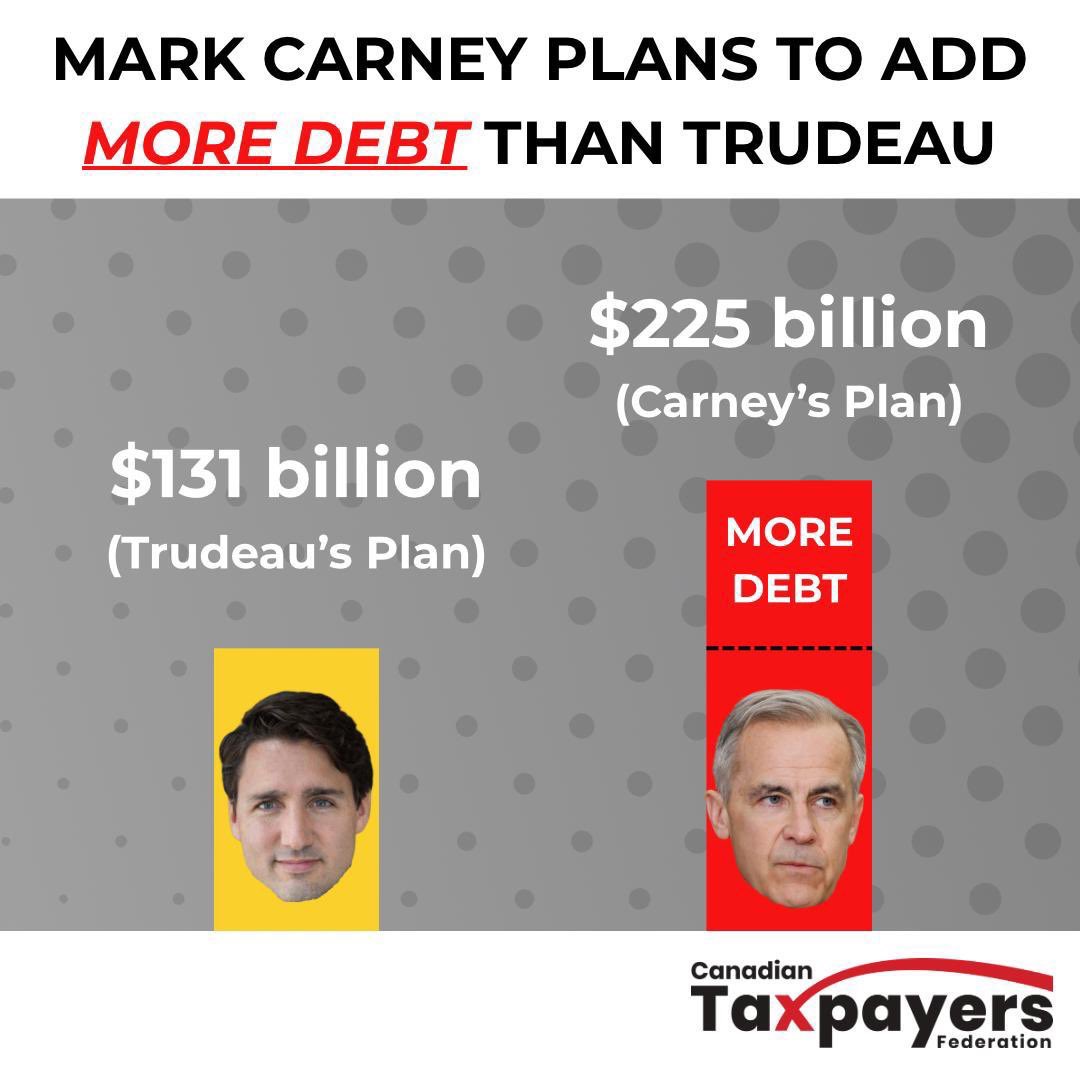
Even factoring in the proposed savings, this plan would add $83 billion to the federal debt.
🧾 Claimed new revenues and savings: $52B
But here’s the issue:
👉🏻 $20B is projected to come from new tariffs, which carry serious risks of trade retaliation and economic slowdown.
👉🏻 $28B comes from so-called “government efficiency” — frankly, this is wishful thinking. That portion is almost entirely undocumented.
⚠️ Unrealistic ambition
Generating $28B in savings over 4 years, including $13B in the final year alone, is extremely ambitious. And frankly, it’s hard to believe — especially coming from a government proposing dozens of new programs with no plan to scale back its footprint in provincial jurisdictions.
❌ Politically invisible measures
What struck me most was the sheer number of measures in this budget that no voter will see or understand during the campaign.
Carney is tying his government’s hands with technical, behind-the-scenes commitments that are politically irrelevant. A puzzling choice.
🧮 New spending: $130B
The platform outlines $130 billion in new measures over four years, which would increase the federal debt by $225 to $250 billion.
🌍 Net-zero by 2029–2039
A laudable goal, but the plan excludes infrastructure spending from the operating budget.
✅ These costs won’t show up in the deficit
❌ But they will add directly to the debt
Yes, this mirrors the model used in Quebec’s Plan québécois des infrastructures (PQI). In theory, it can work — but only with strict oversight of capital investments. Otherwise, the debt will balloon far beyond projections.
⚠️ A credibility risk for Canada
An additional $250B in debt, combined with a stagnant debt-to-GDP ratio, will inevitably raise red flags with credit rating agencies.
It risks eroding confidence in the long-term fiscal viability of the plan — and of the government that implements it.
🔮 Overly optimistic assumptions
The framework is built on economic assumptions that are frankly unrealistic, in a context of:
👉🏻 potential economic slowdown triggered by tariffs
👉🏻 and unplanned increases in spending if a recession hits
🎯 Conclusion
If this plan is implemented, credit agencies — and markets — may very well lose confidence. Not just in the fiscal framework, but in the government itself.
English
big red retweetledi

I read the liberal platform. I know a thing or two about govt budgets having worked for a Finance minister.
This plan will lead to Canada losing its AAA credit rating.
Markets were expecting (wrongfully) something serious to come from an ex-central banker. They were wrong.
And mark my words they will react.
The craziest thing in there is the creative accounting regarding investments vs. spending. Liberals will pretend that "investments" (I presume infrastructure? who knows cause there aren't any details!) don't count in the deficit, and so they will be able to "balance the budget" by 2030.
Unfortunately, their 250 billion dollars (!!) in new spending will still add to the debt. You just won't see it. Canada, in its current state, can't afford this.
As an economist, I honestly was expecting more from Carney.
English
big red retweetledi
big red retweetledi

Mark Carney, the unelected banker-turned-savior of the Liberal Party, stood on a stage at Durham College on April 19 and did what professional economic grifters do best—he smiled politely, gestured at some numbers, and attempted to sell Canadians on a $130 billion illusion.
He called it a “costed platform.” What it really was, was a pitch deck for national decline—a warmed-over slab of recycled Trudeauism, backed by deficit delusion and framed as “bold leadership.”
And yes, the numbers are real. Terrifyingly real.
The Liberal platform promises $130 billion in new spending over four years, while running deficits of $62.3 billion this year, $59.9 billion next year, and still sitting at $48 billion in the red by 2028. To balance all of this out? A magical $28 billion in “unspecified cuts.” Not outlined. Not itemized. Just floated in the air like a promise from a door-to-door vacuum salesman.
Carney, in his perfectly rehearsed banker tone, assures us it’s not spending. No, it’s “investment.” Which is hilarious, because that’s exactly what Justin Trudeau said when he kicked off a decade of reckless spending, capital flight, and housing inflation. Carney has simply pulled off the Liberal magic trick of rebranding debt as growth.
But this isn’t just fiscal mismanagement. This is coordinated, high-level dishonesty.
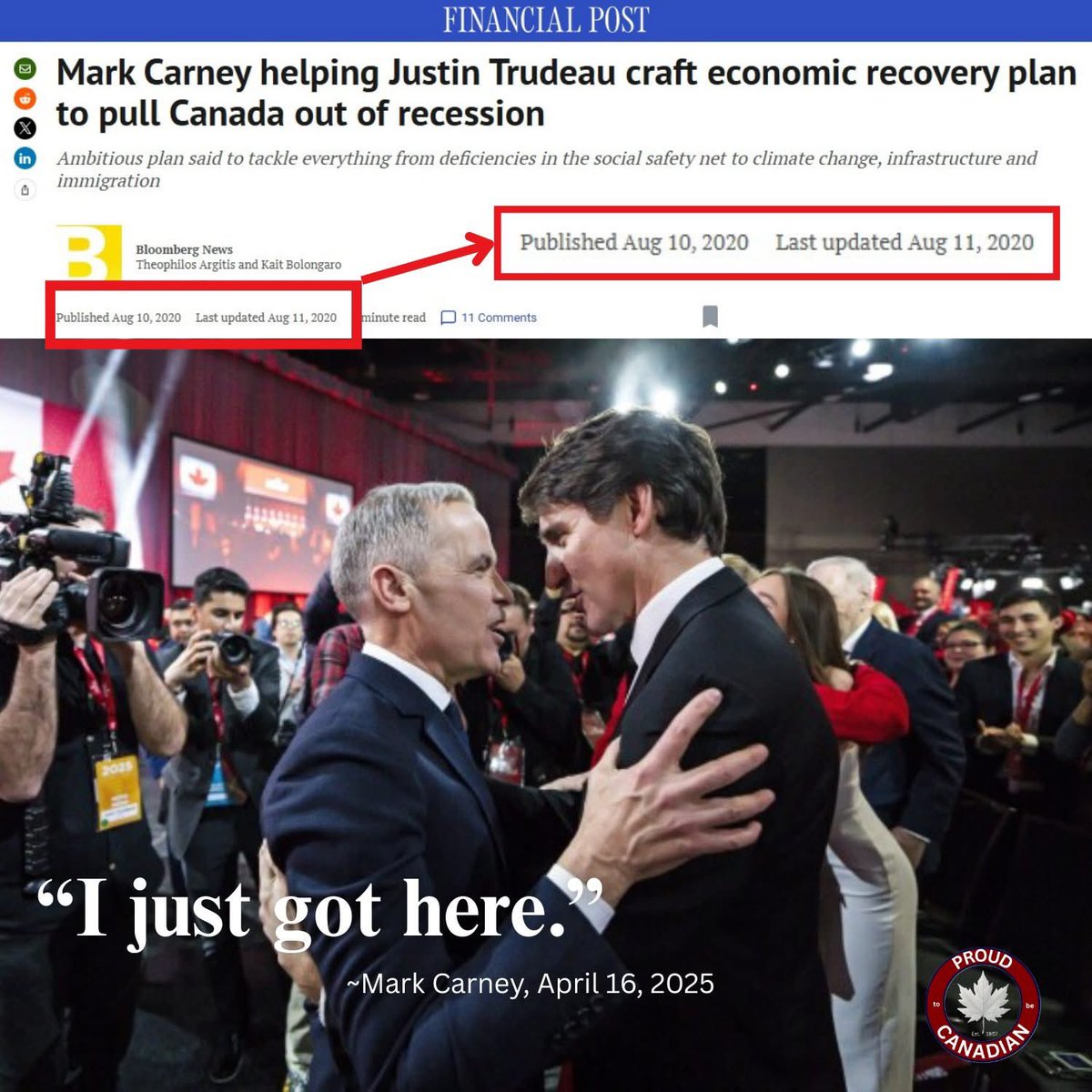
Let’s be clear: Mark Carney is not new to any of this. He isn’t some white knight riding in to clean up Trudeau’s mess. He is the mess. He was Trudeau’s economic consigliere. He sat in the backrooms when they passed Bill C-69, which throttled Canada’s energy sector. He championed ESG, oversaw the implosion of GFANZ (his climate finance alliance), and helped drive $500 billion in investment out of this country.
Now he’s back—wearing a new title, making the same promises, using the same playbook. Only this time, he’s brought a spreadsheet.
In one breath, Carney says we need to “diversify trade.” In the next, he’s counting on $20 billion in one-time countertariff revenues to prop up his platform. In one paragraph, he says Canada will be “fiscally responsible.” In the next, he admits the deficit will nearly double this year. He claims he’ll spend 2% of GDP on defense—but not until 2029, because, of course, there’s no urgency when you’re protected by the American military umbrella you secretly resent.
And his housing plan? If you thought things couldn’t get worse than Justin Trudeau’s housing disaster, buckle up. Carney’s solution is modular housing—yes, government-subsidized, prefabricated micro-boxes dropped onto federally controlled land.
Mark Carney will never live in modular housing. His children will never live in modular housing. But for you, the taxpayer? That’s the future he envisions—managed housing, managed economy, managed speech, managed life.
He’s not here to lift Canadians up. He’s here to lock them down—into a permanent, bureaucratically engineered middle class, dependent on state subsidies and grateful for whatever dignity Ottawa hasn’t yet taxed away.
And when asked how he’ll find the $28 billion in cuts needed to make this plan remotely plausible, his answer was priceless:
“Technology, attrition, and a review of consultant contracts.”
Translation: “We don’t know.”
And here’s where the grift goes full throttle—the accounting scam.
Carney is trying to redefine the deficit by splitting it into two categories: “operating” and “capital”—a little trick borrowed from UK public finance to confuse voters and dodge political accountability. It’s not something Canada has ever used in federal budget reporting, and there’s a reason for that: it’s misleading by design.
Here’s how it works: Carney claims that by 2028, the government will run an “operating surplus.” Sounds responsible, right? Like the books are balanced?
Wrong.
Because even while he’s claiming an “operating surplus,” the federal government will still be running a $48 billion deficit overall. That’s real debt—borrowed money the country doesn’t have.
So how does he square the circle?
Simple: he relabels infrastructure and program spending as “capital investment”, pushes it off to the side, and tells you the main budget is in good shape.
But guess what?
You still owe the money.
The debt still grows.
And interest payments still stack up.
It’s like maxing out your credit card, then saying “no problem—I only overspent on long-term purchases, not day-to-day expenses.”
Try that line with your bank. Let me know how it goes.
This isn’t honest budgeting. It’s spreadsheet manipulation by a guy who knows how to massage the optics while the house burns down.
And let’s not forget who we’re talking about here.
This is the man who moved his financial headquarters to New York while lecturing Canadians about economic sovereignty.
This is the guy with a Cayman Islands tax haven, who built his fortune offshore and now wants to manage your budget while shielding his own.
This is the architect of GFANZ—the so-called climate finance alliance—that imploded under his leadership. The same alliance that saw JPMorgan, Citigroup, and the Big Six Canadian banks bail because Carney couldn’t keep the cartel together without running afoul of antitrust laws.
This is the same man mentioned in Marco Mendicino’s Emergencies Act texts—the man who said, Move the tanks on the protesters.
That’s right.
He wasn’t calling for dialogue. He wasn’t calling for democracy. He was calling for force—on peaceful Canadians exercising their rights. That’s who this is. A man who smiles like a diplomat and governs like a tyrant.
So let’s drop the fantasy.
Mark Carney isn’t here to save you.
He’s not here to build a country.
He’s not here to restore prosperity.
He’s here to finish what Justin Trudeau started—with less flair and even less accountability.
This election is your moment. Not just to vote against failed leadership—but to vote for something better.
Vote for Canadian workers.
Vote for Canadian resources.
Vote for Canadian sovereignty.
Vote Canada First.
English
big red retweetledi
big red retweetledi

The Liberal platform dropped.
It’s not like Trudeau…
It’s TRUDEAU ON STEROIDS.
The SPENDING is so MASSIVE that Canadians rushed to see the damage —
Now the Liberal website has CRASHED.
You literally can’t see the cost.
Go check. I’m not kidding. liberal.ca/platform/costin
English
big red retweetledi

big red retweetledi
big red retweetledi
big red retweetledi
big red retweetledi

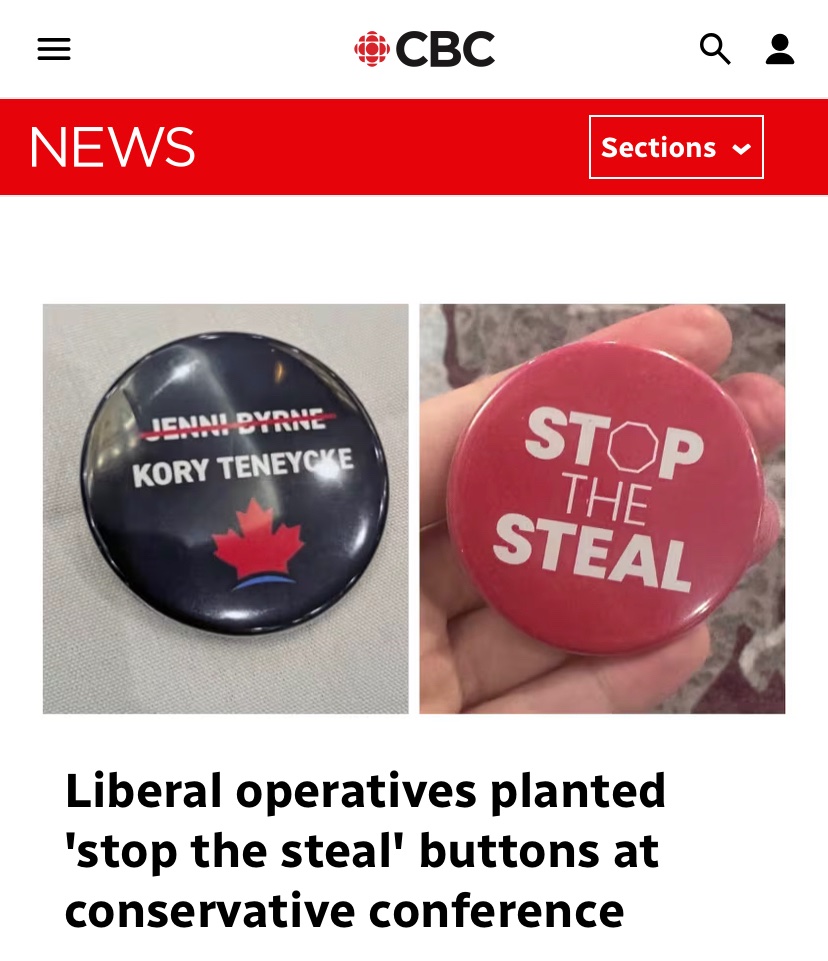
I never want to hear another Liberal talk about “the dangers of disinformation” in our politics.
This is the textbook definition of disinformation, and planting lies about an opposing party’s position can never, ever be tolerated.
Mark Carney needs to take responsibility for his employees’ actions and denounce this crap immediately.

English