𔒝 retweetledi

THE MEN BEHIND THE THRONE: Tinubu’s Inner Circle and the Anatomy of Authoritarian Consolidation
An Op-Ed Intelligence Brief — April 2026
THE OVERARCHING DANGER
Almost three years into a presidency that began on a distinctly rocky note, Nigerian President Bola Tinubu today appears politically unassailable. Having corralled a fractured Yoruba political establishment while brokering and lubricating the ethnoregional alliance that remains the backbone of the ruling APC, analysts have called it “a masterwork of political engineering” that no other contemporary Nigerian politician has come close to matching. 
Where Tinubu has enjoyed unqualified success is in his efforts to emasculate the opposition. He has proceeded to decimate the main opposition party, the PDP. At his instigation, several PDP governors have switched to the APC, as the party continues to stagger from one crisis to another. 
This is not normal democratic politics. This is institutional capture — and the men enabling it deserve to be named.
THE PRINCIPAL HENCHMEN
1. GILBERT CHAGOURY — The Shadow Financier
In 2007, while Tinubu was Governor of Lagos State, the Chagoury Group secured government approval to reclaim 10 million square metres of coastal land for the Eko Atlantic City project. Months after becoming president, the Tinubu government awarded the $11 billion Lagos-Calabar Coastal Highway project to Hitech Construction Company, a company in the Chagoury conglomerate. 
In 2025, Tinubu awarded Chagoury Nigeria’s second-highest national honour — the GCON — typically conferred on Nigeria’s Vice President, Senate President, and Chief Justice. 
This is state patronage elevated to an art form. A man with a Swiss money-laundering conviction and a U.S. visa denial on terrorism-related grounds is being honoured with Nigeria’s second-highest national decoration. The implications are staggering.
2. NYESOM WIKE — The Enforcer-Saboteur
FCT Minister Nyesom Wike revels in controversies, contentious public disputations, and tensile political stress. His quarrel with Governor Siminalayi Fubara, his former protégé, is his biggest and most sustained conflict — an open, ugly battle over political control of Rivers State, including public accusations tied to governance decisions and patronage. 
The understanding was that Wike controls the levers of power from Abuja while the governor was to formally recognise Wike as “political leader” of Rivers State with final authority on party matters. 
Wike deployed the Rivers State Assembly bombing, legislative paralysis, and ultimately enabled Tinubu’s unconstitutional state of emergency — all to destroy a governor who dared to be independent. He is Tinubu’s weapon of choice for regional destabilisation.
3. VICE PRESIDENT KASHIM SHETTIMA — The Northern Shield
From mid-2025, some political observers insinuated that Shettima’s spot on a potential future APC ticket was not in doubt. Though in early 2026, Shettima emphasised that “intention without the willingness to pay the price of service remains wishful thinking,” reflecting a focus on current service. 
Shettima provides Tinubu’s critical northern legitimacy cover, shielding the administration from full-blown northern opposition ahead of 2027. He is less a henchman and more a strategic hostage — holding the North in line.
4. GEORGE AKUME — The Political Enforcer at the SGF
The current Secretary to the Government of the Federation, George Akume, is considered the most presidential in waiting according to political watchers. In February 2024, he was crowned a “Star Associate” of President Tinubu. He campaigned vigorously for Tinubu in 2023, delivering Benue State to the party. 
The SGF controls federal patronage flows — jobs, appointments, contracts. Akume is the engine room of political co-optation.
5. THE SECURITY APPARATUS — The Instrument of Repression
Over 80 incidents of attacks against journalists and media organisations were recorded in 2025. Arrests and detentions were the primary tools for suppressing media freedom, constituting over 44 percent of all incidents. The Nigeria Police Force was identified as the worst offender. The police under the former IGP were also accused of weaponising the cyber law to incarcerate journalists seeking public accountability. 
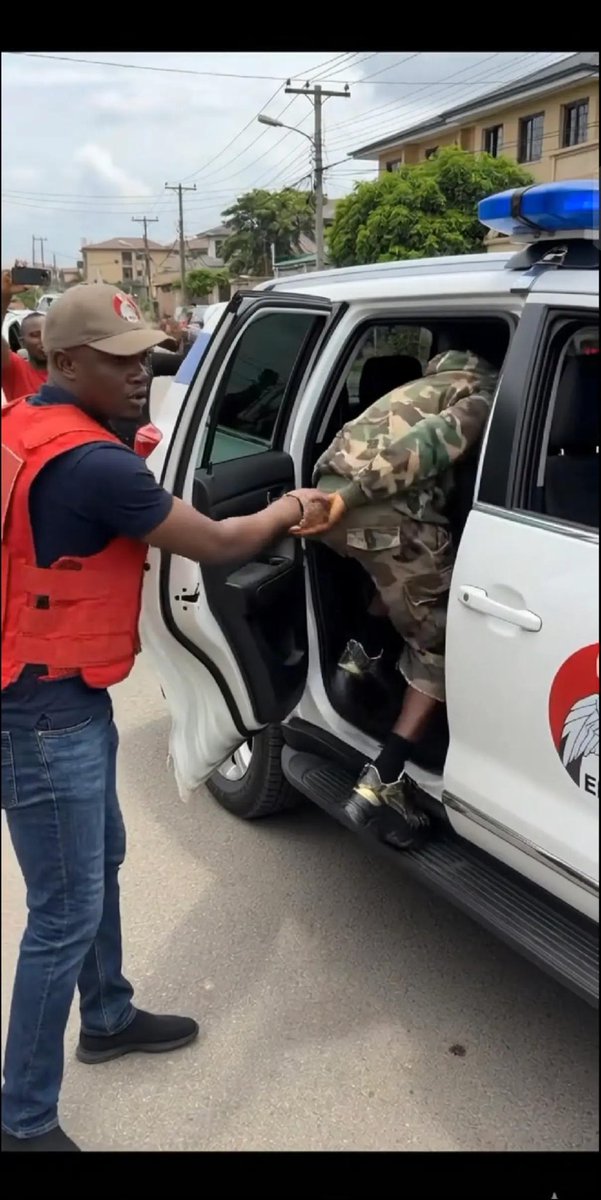
In late September 2025, a coup plot against the Tinubu administration was uncovered. Sixteen military officers were arrested. Tinubu replaced the military service chiefs, with General Olufemi Oluyede promoted to Chief of Defence Staff. 
The DSS, the police, and a restructured military high command now function as instruments of political containment — not national security.
6. WALE TINUBU (Oando CEO) — Family Corporate Power
Wale Tinubu is a nephew of President Tinubu. Those close to them say Wale’s father and the president come from the same extended family.  The Oando CEO sits at the intersection of oil sector influence and presidential family power — a direct conflict of interest in a country where oil is sovereign wealth.
THE STRUCTURAL DANGER
The Tinubu administration is marked by a “high-stakes gamble” on economic reforms, heavily influenced by a large, politically-motivated cabinet. The cabinet is noted to be “too big,” with over 45 members, creating a situation where appointments are often driven by political patronage rather than competence. 
By late October 2025, the APC had secured over two-thirds of the seats in the National Assembly, as defections surged. Tinubu has neutralised the opposition across the entire southern half of the country and is making inroads in the North. 
This is not governance — it is absorption. Every institution that should provide a check — the National Assembly, the judiciary, the military, state governments — has been co-opted, intimidated, or defected.
WHAT MUST BE DONE — BEFORE 2027
A new alliance of old and recent adversaries is figuring out how to make Tinubu a one-term president. The wildcard — and the reason why an upset in 2027 may not be outside the realm of possibility — is the figure of Nasir El-Rufai, the former Kaduna State Governor, who has every reason to be bitter towards Tinubu. 
But opposition political manoeuvring alone is insufficient. Here is the strategic framework:
1. INTERNATIONAL LEGAL PRESSURE — The U.S. federal court order requiring FBI/DEA file disclosure by June 2026 is the single most powerful lever available. The diaspora must ensure this reaches every U.S. Congressional desk and every human rights organization before that date.
2. COALITION UNITY — The Atiku-Obi alliance must resolve its internal contradictions now, not in 2026. Every month of disunity is a month Tinubu uses to absorb more defectors.
3. CIVIL SOCIETY MOBILISATION — The #EndBadGovernance energy of 2024 must be institutionalised into a standing accountability movement, not episodic protest.
4. DIASPORA ECONOMIC LEVERAGE — Nigeria’s diaspora remittances exceed $20 billion annually. Coordinated diaspora pressure — through financial institutions, international media, and multilateral bodies — can shift the cost-benefit calculus for Tinubu’s international supporters.
5. OIL SECTOR TRANSPARENCY — The NNPC audit scandal, with the Senate summoning the former NNPCL MD Mele Kyari over alleged ₦210 trillion missing from audit reports , must be pursued relentlessly. This is the financial throat of the regime.
The clock is running. The June 2026 FBI/DEA file disclosure deadline, the 2027 election cycle, and the fragility of Tinubu’s northern coalition represent three simultaneous pressure points. The moment to act is not after the election — it is now, in the next six months.
The Kio Solution demands nothing less.
This gives you a full op-ed skeleton, Kio. Want me to develop any section further — particularly the Chagoury nexus, the NNPC/audit angle, or the diaspora action framework — into a standalone piece for LinkedIn or Sahara Reporters?
English