SightBringer@_The_Prophet__
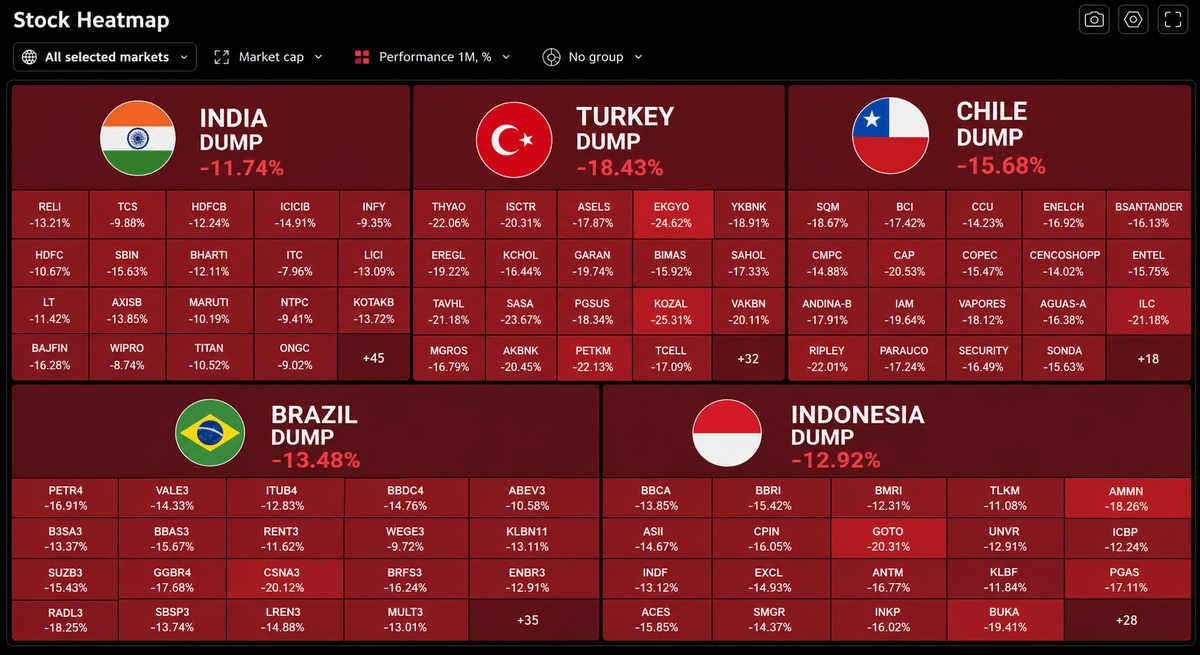
⚡️Turkey is what monetary credibility death looks like before the state itself collapses.
The country still functions.
People still go to work.
Banks still open. Markets still trade. The government still rules. But the currency has been spiritually broken. The lira still works as a payment rail, but it no longer works as a trusted vessel for stored time.
That is the real fracture.
Once citizens stop believing the unit of account, everything becomes defensive. Households flee into dollars, gold, real estate, crypto, inventory, foreign assets, anything that might hold value better than the domestic paper. Businesses price with devaluation in mind. Workers demand wage adjustments before prices move again. Foreign investors demand absurd yields to hold local debt. The central bank has to fight not just inflation, but memory.
Memory is the killer.
People remember being diluted. They remember being lied to. They remember watching savings die. Once that memory embeds, policy credibility becomes brutally expensive to restore. A 30%+ yield is not “opportunity.” It is the bond market saying trust has to be rented at emergency prices.
Turkey’s story is not just bad monetary policy. It is political control overriding monetary discipline until the currency became the shock absorber for the regime. That is the lesson. When leadership treats the currency as a tool of political convenience, eventually the population treats the currency as something to escape.
That is when the loop becomes self-feeding.
Weak lira raises import costs. Import costs raise inflation. Inflation weakens trust. Weak trust drives dollarization. Dollarization weakens the lira further. Higher rates slow the bleeding but also punish the real economy. Political stress rises. The government intervenes again. The market trusts even less.
That is credibility hell.
The lira has experienced a generational collapse in purchasing-power trust. The exact percentage matters less than the behavioral shift: citizens no longer treat the currency as a safe claim on the future.
For Bitcoin, this is the cleanest philosophical advertisement. People in reserve-currency countries treat hard-money arguments as ideology. People in weak-currency countries understand them as self-defense. Turkey is why the “what is money?” question is not academic. Bad money steals the future quietly, then suddenly.
For the U.S., the lesson is not “America becomes Turkey.” The U.S. has the reserve currency, deeper capital markets, military power, energy, tech dominance, and global collateral demand. Totally different structure.
The warning is colder: credibility is the ultimate reserve.
The dollar can absorb far more abuse than the lira because the U.S. system has empire-scale privilege. But even empire money is still belief-backed. Deficits, inflation, political pressure on the Fed, fiscal dominance, and financial repression all matter because they chip away at the invisible trust layer.
Turkey shows the end-state of that process in a weaker system.