Brandon
425 posts


Brandon
@brandonsochacki
Consistently working on self-improvement. @smbcapital trader. 23 years old. Tweets are not buy / sell recommendations.

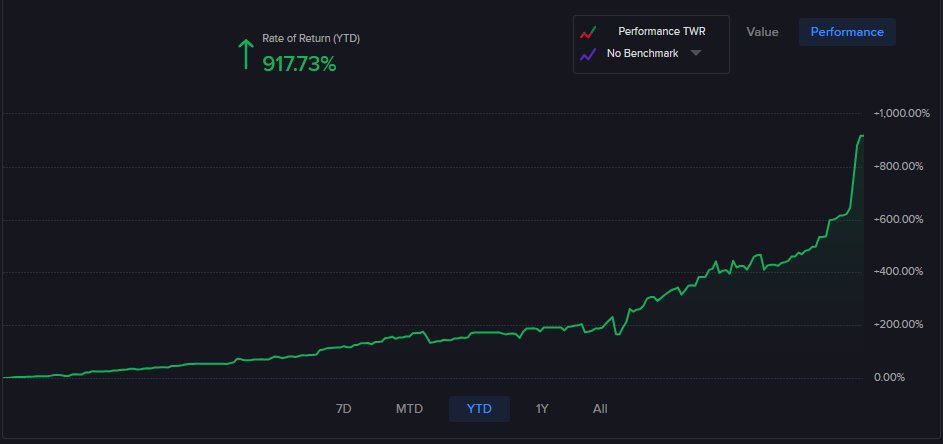
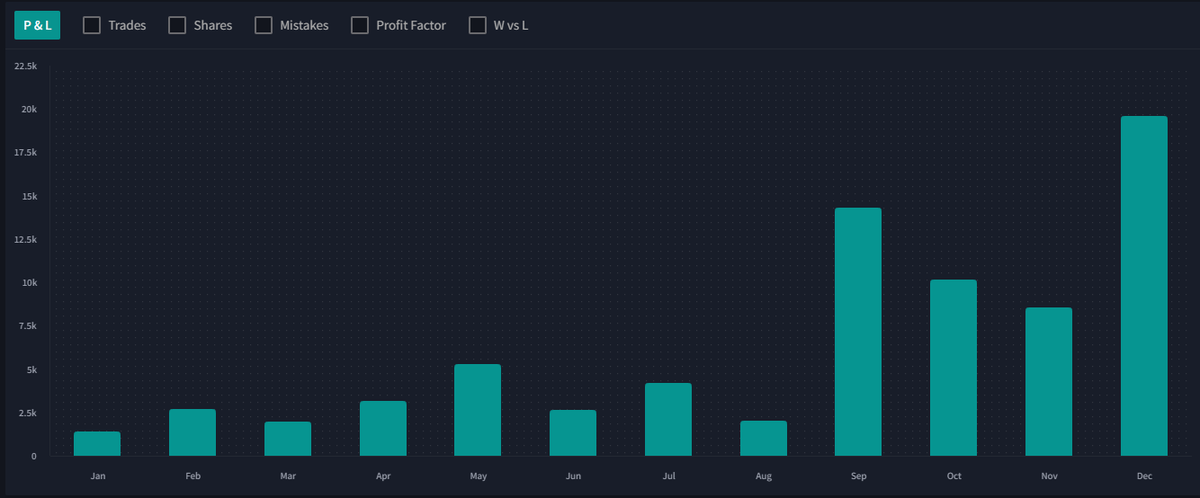
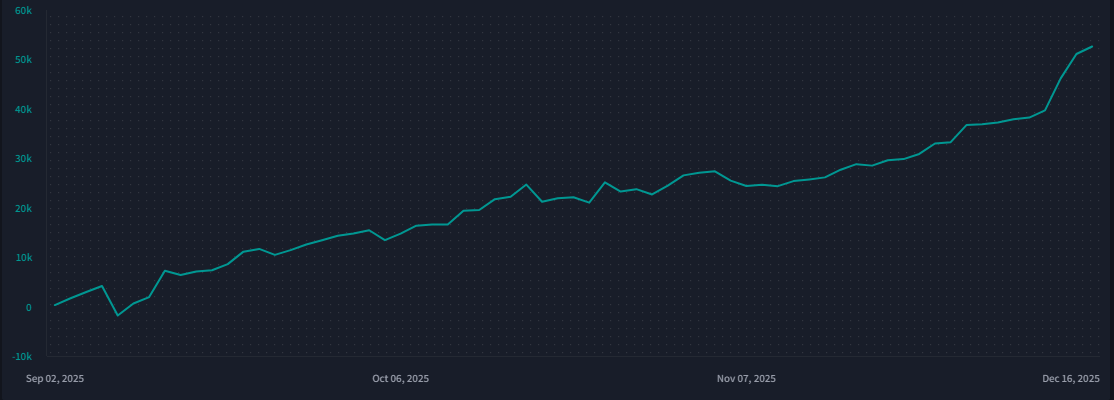
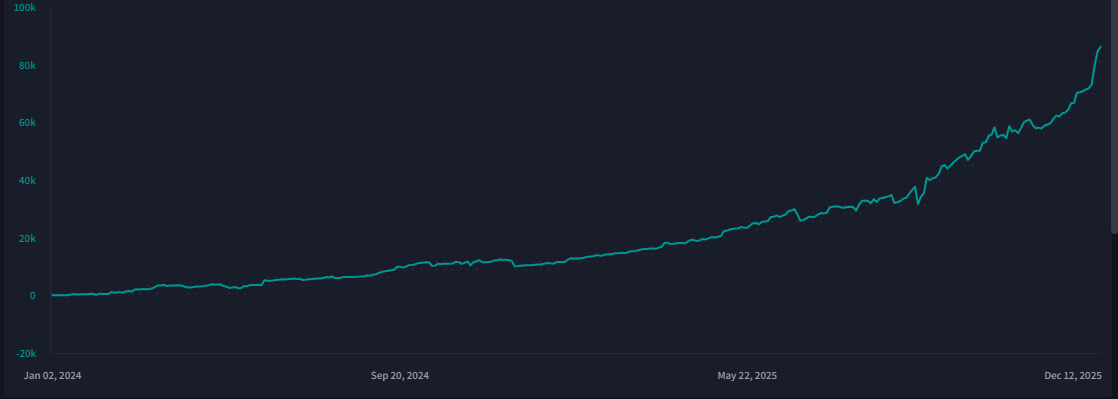


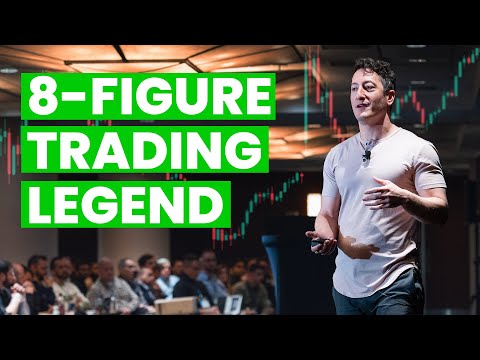
EASY MONEY TRADES EXPLAINED I keep on getting tagged in this. I originated the concept of “easy money trades” at @smbcapital. My short answer to this is that OP is missing the point of what these trades are and why. To put this in poker terms, OP is pretty much saying he only wants to play Aces. Obviously we know that in reality no pro poker player only does that. Why? Because there are tons of other hands with positive expected value that are far more frequent that you can hit singles on. Why is that important? Because hitting those singles lowers your variance and gives you more chips to bet on the pocket aces. It is the mathematically optimal way to maximize PNL, especially coupled with what I call “exponential bet sizing”. That is a mathematical fact. Additionally, if you are a newer trader, you can’t just sit around waiting for home runs. You have bills to pay. These last couple years have been INSANELY active and opportunistic. Traders are making maybe 5x more these years than in normal years and prob 10x more versus difficult years. What do you do when the market slows down? You need a diverse playbook of smaller easy money trades to survive the slow times. I think most long-term traders have experienced these times where there just aren’t a ton of big opps and you need to put pnl on the board (2011, 2012, 2016, 2019, 2022 for example). Additionally, from training 100s of traders (yes, literally direct work with 100s by now!)… “easy money trades” help traders grow faster. It gives them reps and confidence and pnl cushion for the home runs. That is exactly what we saw w @brandonsochacki and Stephen H at @smbcapital (two of the fastest-growing and most successful rookies I’ve ever seen!). Brandon self-proclaims it was his “easy money” scalping playbook that rocketed his growth by giving him pnl to bet more on the Aces. So yes, experienced traders w lot of pnl behind them might want to only trade the home runs. In fact, that is exactly what I do now. But for developing traders, I strongly believe the growth-maximizing and pnl-maximizing strategy is to barbell your trading between “easy money trades” and the home runs. Finally, I’ll say no trade is literally “easy”. To make money at all in trading takes immense skill. But there are tons of small scalps and little singles that are far easier to execute than trading $CRCL or $OPEN. Not necessarily higher EV, but you can consistently make your $200 or $2k and stack up some chips in between home runs. (A lot of what is “easy” base hit is relative to the trader of course.) Ask FinTwit how much fun they had fighting $CRCL frontside or fighting the $245 buyer. That wasn’t easy but it was a home run opp. Far cleaner is a little scalp or a basic technical pattern. (And yes, sometimes the home runs can also be easy money trades. Becomes a bit semantic and how one defines. But some home runs def can be “easy money trades” too!) Finally… I’m not sure some of OP claims are even true. The best market wizards only traded the big opps and nothing in between? Data and examples needed. Bc I don’t recall that to be accurate at all. Absolutely they tended to bet exponentially bigger on the best trades. But they ONLY traded the big opps? Yea, data needed for that claim 🙄 The full video explaining the concept is here. I suspect there is a reason why it has 250k views. youtu.be/_Xw5ebn6XqU?si…

The irony of the “easy money trades” concept shared by SMB capital circle is that: They are often far more difficult to make money from than the big blockbuster trades in my experience, Including all processes related to: idea discovery (scanning), trade execution, risk management, and robust rule creation (to achieve more consistent results)… Two Jesse Livermore quotes come to mind when reflecting on my failure to integrate “easy money trades” into my trading over the last few months: 1) “The big money was not in the individual fluctuations but in the main movements—that is, not in reading the tape but in sizing up the entire market and its trend.” 2) “It is literally true that millions come easier to a trader after he knows how to trade, than hundreds did in the days of his ignorance.” - (often due to their ignorance regarding the truth in the first quote) It has generally been my experience that these theoretically easy, repeatable, fast turnover trades, are both: A) very difficult to find, and execute on (not so easy…), and B) that they are much lower expected value bets, if even positive EV at all; and the only time they have a really positive EV, is when they are setup in the context of a major movement… In which case, why the fuck should I even bother…? My experience with this also checks out with game theory, in that: 1) Almost everyone wants to make money here and now, and at a repeatable and high frequency (as opposed to spontaneously and in large lump sums) 2) That widespread desire then results in a very crowded, and competitive environment for those repeatable trades (lower timeframes); resulting in more noise, and lower EV bets in these scenarios. If u study the best performance periods of the best market wizards… it is often the case that they traded only the big opportunities, with big size/ risk, and completely passed on any of the small fry, repeatable, “easy money” trades. With that said, i might be done trying to go after “easy money trades” for good, as what i really want from markets is to make huge sums of money… and between my experience, market wizards’ experience, and my own logic… going after “easy money trades” does not seem like a productive means to achieve that goal; rather, it seems like a means to achieve: being a busy body, clicking buttons for fun, damaging mental capital, and taking negative EV bets (all things accounted for). Ed Seykota: “Win or lose, everybody gets what they want out of the market.”
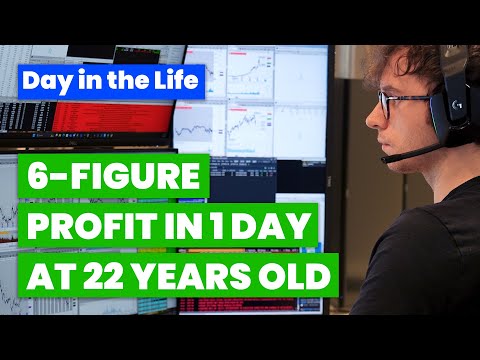
It is rare to find young role models in trading from whom you can learn. A young trader actually thriving. In this video, there is so much for young traders to learn from a first-year trading success at SMB. Brandon shows you the way... Day in the Life of Rising Star Prop Trader youtu.be/nuzFNPwnelI?si… via @YouTube


THE BIG QUESTION IN MY MIND… Using the Nasdaq as a proxy for risk assets…. did we structurally put in a lower high when we broke prior daily bar lows today? If so, huge implications for how we structure shorts in the most euphoric underlying components. We shall see!