Brendan King Co-founder Vendasta

5.6K posts
Brendan King Co-founder Vendasta banner
Brendan King Co-founder Vendasta

Brendan King Co-founder Vendasta

@brendanking

CEO of Vendasta, the #1 platform for selling digital solutions to local businesses. We help grow local economies. #VendastaEveryWhere #ConquerLocal

Saskatoon, SK, CA, S7H3M6 Katılım Temmuz 2008
777 Takip Edilen2.2K Takipçiler
Brendan King Co-founder Vendasta
Check out our new Vendasta CRM—built to actually work for you, not add to your workload. Say goodbye to seat-based pricing and endless manual updates. Vendasta CRM updates itself, letting you focus on closing deals, not data entry. Experience a CRM that truly delivers on automation and efficiency. 1l.ink/F7DTHW8
Brendan King Co-founder Vendasta tweet media
English
0
0
0
18
Brendan King Co-founder Vendasta
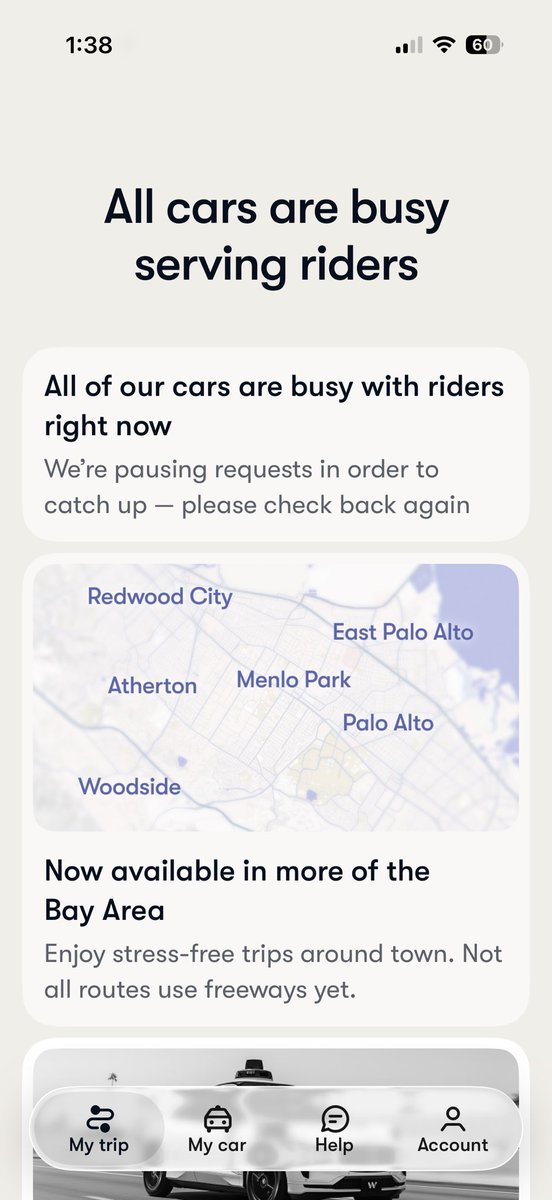
@chamath Independence is really old school reason (along with my age) why I will always own my own vehicle
Saskatoon, Saskatchewan 🇨🇦 English
0
0
0
86
Chamath Palihapitiya
Chamath Palihapitiya@chamath·
I went home for lunch and now I’m stuck at home.
Chamath Palihapitiya tweet media
English
116
11
390
192.2K
Brendan King Co-founder Vendasta
I need to ask. Is the Google 10 Pixel Ad where all the young people need to ask AI how to boost a car battery indicative of reality today? How can they not know? Or is this just a San Francisco thing?
English
0
0
0
101
Brendan King Co-founder Vendasta
Welcome to the Era of Liquid Software 🌊 For decades, we’ve been forced to bend our businesses to fit the rigid logic of the software we rent. You buy a "Standard SaaS" tool, and if you need a new button or a custom workflow, you submit a feature request and wait six months for the next version. That era is officially over. At Vendasta, we’ve coined a new term for this technology shift: Liquid Software. What is Liquid Software? In the old paradigm, software was a "solid state" object-static and fixed. Liquid Software exists in a state of permanent flux. It is continuously rewritten by AI to match the changing context and needs of the user in real-time. Instead of the business changing how it works for the software, the software changes for the business. This is powered by "Vibe Coding"-a term popularized by Andrej Karpathy that we are bringing to the SMB world. It shifts the human role from writing technical syntax to simply describing problems and desired outcomes in natural language. 👉 Need your CRM to work a certain way? Just ask. (Vibe code it) . 👉 Need a different dashboard? Describe it. (Vibe code it) . 👉 Need a custom automation for a niche industry? Define the "vibe.". I recently heard Guido describe this as  "extensible software" on an AZ16 Podcast. We call it Liquid because it flows around your business needs effortlessly. It’s Not Science Fiction-It’s Happening Now. The barrier to creation is dropping to near-zero. We are already seeing pioneers, like the former Amazon exec who vibe-coded a custom CRM for a 100-person startup, proving that bespoke software is no longer a luxury for the elite. At Vendasta, we are building the base infrastructure- data collection, maintenance, & history, AI model agnostic infrastructure,  security (SOC 2), and payment rails-to ensure that when you "vibe" an application into existence, it is secure, integrated, and works immediately. The age of renting tools is ending. The age of generating outcomes has begun. Welcome to 2026. 🚀 #LiquidSoftware #VibeCoding #AIWorkforce #SMBTech #Vendasta #TheSeventhShift
English
1
1
1
118
Brendan King Co-founder Vendasta retweetledi
Ethan Mollick
Ethan Mollick@emollick·
Teaching an experimental class for MBAs on “vibefounding,” the students have four days to come up and launch a company. More on this eventually, but quick observations: 1) I have taught entrepreneurship for over a decade. Everything they are doing in four days would have taken a semester in previous years, if it could have done it at all. Quality is also far better. 2) Give people tools and training and they can do amazing things. We are using a combination of Claude Code, Gemini, and ChatGPT. The non-coders are all building working products. But also everyone is doing weeks of high quality work on financials, research, pricing, positioning, marketing in hours. All the tools are weird to use, even with some training, but they are figuring it out. 3) People with experience in an industry or skill have a huge advantage as they can build solutions that have built-in markets & which solve known hard problems that seemed impossible. (Always been true, but the barriers have fallen to actually doing stuff) 4) The hardest thing to get across is that AI doesn’t just do work for you, it also does new kinds of work. The most successful efforts often take advantage of the fact that the AI itself is very smart. How do you bring its analytical, creative, and empathetic abilities to bear on a problem? What do you do with access to a very smart intelligence on demand? I wish I had more frameworks to clearly teach. So many assumptions about how to launch a business have clearly changed. You don’t need to go through the same discovery process if you build a dozen ideas at the same time & get AI feedback. Many, many new possibilities, and the students really see how big a deal this is.
English
80
183
1.8K
125.6K
Brendan King Co-founder Vendasta
I totally get why you’re feeling heavy right now. We’re going from a world where code was scarce to one where intelligence is everywhere. It’s only natural to feel like your value is taking a hit when the thing you’re good at suddenly becomes abundant. But honestly? You are definitely not becoming useless. I think what we’re actually seeing the opposite: while AI makes creation easier, it makes true engineering way more valuable. Here is why you shouldn't be worried (and why you’re actually about to become more important): You’re an Architect now, not a Bricklayer: For years, the bottleneck was just writing syntax. That’s gone. You aren't being asked to build the machine anymore; you're building the machines that build the machines. You’re shifting from a "Coder" to a "Systems Architect." The boring rote work is out, leaving the high-level conceptual work for you. The Heavy Lifting is Still You: Sure, a non-tech person can "vibe code" a pretty interface now. But the stuff below the surface—the security, the data pipelines, the speed? All that shit that someone like I can't do I don't think AI can’t structure that. It can write a function, but it can’t architect a secure ecosystem that holds a business together. That requires deep engineering. Cheaper Code = More Software: It’s the Jevons Paradox. When code gets cheap, demand goes through the roof. We are moving toward "Liquid Software" that constantly rewrites itself. Managing that kind of living system requires a level of human oversight and rigor we haven't seen before. The "Trust" Factor: Big companies aren't going to run their business on a wrapper built by a hallucinating AI. They need safety and guardrails. The engineers who can build that "Trust Moat" are going to be the most valuable people in the room. The bottom line: Don't be depressed. You spent 10,000 hours mastering the logic of systems, not just the syntax of a language. Syntax is a commodity now, but system logic is gold. It isn't simplifying engineering; It's accelerating it. Your job isn't gone its just a massive promotion.
English
0
0
0
13
Duca
Duca@big_duca·
I am not sure if other developers feel like this. But I feel kinda depressed. Like everyone else, I have been using Claude code (for a while, it’s not a recent thing lol). And it’s incredible. I have never found coding more fun. The stuff you can do and the speed you can do it at now. Is absolutely insane. And I’m using it to ship a lot. And solve customer problems faster. So all around it’s a win. But at the same time. The skill I spent 10,000s of hours getting good at. Programming. The thing I spent most of my life getting good at. Is becoming a full commodity extremely quickly. As much fun as it is. And as much as I like using the tools. There’s something disheartening about the thing you spent most of your life getting good at. Now being mostly useless.
English
1.2K
425
7.6K
1.2M
Andrej Karpathy
Andrej Karpathy@karpathy·
I've never felt this much behind as a programmer. The profession is being dramatically refactored as the bits contributed by the programmer are increasingly sparse and between. I have a sense that I could be 10X more powerful if I just properly string together what has become available over the last ~year and a failure to claim the boost feels decidedly like skill issue. There's a new programmable layer of abstraction to master (in addition to the usual layers below) involving agents, subagents, their prompts, contexts, memory, modes, permissions, tools, plugins, skills, hooks, MCP, LSP, slash commands, workflows, IDE integrations, and a need to build an all-encompassing mental model for strengths and pitfalls of fundamentally stochastic, fallible, unintelligible and changing entities suddenly intermingled with what used to be good old fashioned engineering. Clearly some powerful alien tool was handed around except it comes with no manual and everyone has to figure out how to hold it and operate it, while the resulting magnitude 9 earthquake is rocking the profession. Roll up your sleeves to not fall behind.
English
2.6K
7.5K
56K
16.7M
Brendan King Co-founder Vendasta
2026 is going to be a defining year at Vendasta. I have been involved in technology since I graduated with a physics/geophysics degree. After a brief stint in mining, I started a business assembling PCs from 1989 to 2000. I moved into SaaS in 2000, and Vendasta was born in 2008. I have witnessed immense technological change. When I started my first company, phones were tethered to walls, and you could literally hear the internet connecting on a modem. Today, we are no longer just building software; we are building an AI workforce platform for SMBs that redefines how they work and grow. While the change over these 35 years has been steady, the shifts driven by AI in the last two years dwarf the 33 years prior. The entire world is transitioning to a model where AI does the work, and people orchestrate it. The Fear Factor Rapid change inevitably brings fear and uncertainty. While I feel overwhelming excitement (and a bit of FOMO), the fear for many is visceral. Nearly 50% of Canadians see AI as a threat, fearing job loss and loss of control. Only about 25% of Canadian companies have implemented AI, lagging behind global counterparts. A KPM report highlights that Canada trails in AI literacy, leaving employees feeling unprepared. There is a fierce debate between pessimists who say "better safe than sorry" and optimists who warn we will fall behind. The Lesson from Saskatchewan To understand the future, I looked to the past—specifically, a massive change close to my heart. By 1930, Saskatchewan had grown to 1 million people, becoming the 3rd most populous province in Canada. Small towns dotted the landscape every 10 miles. Then came the mechanization of farming. It had a massive, disruptive impact on the rural way of life, and many opposed it. But looking back, the result was miraculous: by 1970, this shift provided the world with a massive surplus of food. The Verdict AI will do more for humanity than anything before it. We cannot afford to slow down; the benefit to the world is simply too great. Aside: The Speed of Innovation To model this historical shift, I turned to AI (Gemini 3 Pro Canvas) to build a simulation. You can see the historic effects of mechanization and play with the variables to create an "alternate history." Here is the kicker: I "three-shotted" this simulation (used only three prompts). It took me 10x longer to write this post than it took the AI to build the simulation. lnkd.in/g_57FK3T
English
0
1
1
104
Brendan King Co-founder Vendasta
@elonmuskTN I am saying 39. I will break it down. pair of earbuds = 10 (single = 5) basic man = 5 pair of watches = 4 (single =2) answer: + single earbud 5 + non basic man (5+ pair ear buds 10 +single watch 2) = 17 X single watch 2. Do multiplication first 2*17=34 then add 5 = 39
English
12
3
322
64K
Brendan King Co-founder Vendasta
I am humbled, excited, and ready to learn. We had the opportunity to meet in person last week, and I walked away thinking one thing: Not only are Eric Johnson and Brent Remai incredibly successful and brilliant, but they are also genuinely some of the nicest people in the world. When leaders of this caliber from SurveyMonkey and Cloudflare choose to join your mission, it is a humbling moment. I am so appreciative to have them join me, Paul Hollands, Paul Lee , Brad Feld, Lisa Reeves, Amy Rae, Andrew Lugsdin and ⛵️Chris Nicola on our board. The opportunity to learn from their experience is priceless, but the opportunity to work with such good humans is the real win. Welcome to the team, Eric and Brent. Let’s go!  @hashtag#VendastaAI
Vendasta@Vendasta

Big news: Eric Johnson (CEO, SurveyMonkey) and Brent Remai (CMO, Cloudflare) have joined Vendasta’s Board of Directors! Huge moment for our AI Workforce mission. 🥳 vendasta.com/press-releases…
English
1
0
2
201