

Brian KO
442 posts

Brian KO
@briankostar
Working on @onesafeio
Beginning, Journey Katılım Haziran 2012
554 Takip Edilen436 Takipçiler

Reply here if you want to be part of Canadian builder group chat in X
🇨🇦

English

Big news: Crossmint is partnering with Google to enable agentic finance for everyone.
We will be using Google’s Agent Payments Protocol (AP2) to let agents buy anything with either credit cards or stablecoins.
This protocol ensures agent transactions are secure and seamless.
English

@newton_xyz Hey the @magic_labs your login service is down? None of our users can login right now.
English

Huge thanks to the Kaito community for smashing the 50k milestone with blazing speed!
Big momentum for our upcoming news. If you haven't started yapping about Newton, now's a good time 👀
Kaito AI 🌊@KaitoAI
The Kaito community has now unlocked the full 75bps of NEWT rewards from @newton_xyz! Now at over 58,000 agents activated by all of you - with over 20,000 added in the past week 🔥 Yappers, referrers & the Kaito eco will be rewarded going into their TGE, so your activity is worth more than ever.
English

I wonder if founders less than 5'11" tall statistically outperform
Bruno Faviero@Bfaviero
@thatguybg completely cracked, <5'10 crowd outperforms
English

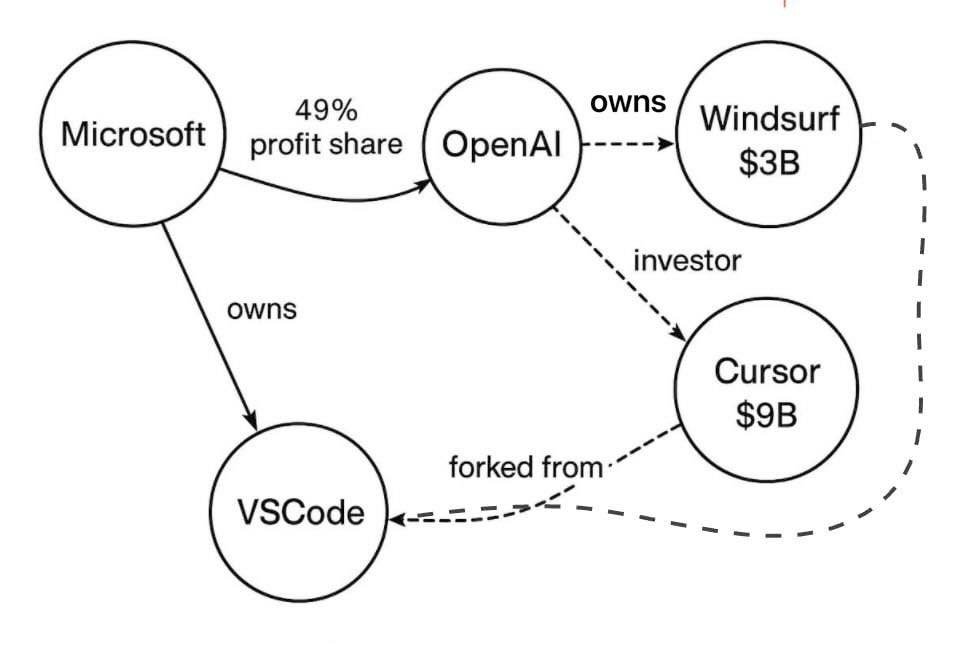
@DmytroKrasun It said Portugal for me too. But Ive lived there a month and it wasnt thaaat amazing. Seems chatgpt is biased
English

Try the following prompt in ChatGPT:
"Knowing everything you already know about me, recommend a country where I am likely to flourish culturally and socially, feel happy, and connected to the people.
Please explain how you weighed each factor."
What was it for you? Was it the current place you live in?
English
@johnrushx Incredible persistence. They say you need grit to make it in a startup world and your story certainly tells a story of one
English

@Rainmaker1973 From a dinosaur to a chicken.. how the mighty have fallen
English



Stablecoins: Payments Without Intermediaries
The internet made information free and global. So why is it still so hard — and expensive — to move money?
The early internet promised a future where anyone could publish, build, or transact without permission. Protocols like email and the web were open and neutral — and they sparked an explosion of creativity, innovation, and entrepreneurship. But somewhere along the way, we veered off course.
Today, the global financial system resembles a patchwork of corporate networks: centralized, closed, and extractive. Behind every transaction is a Rube Goldberg-machine of intermediaries — points of sale, payment processors, acquiring banks, issuing banks, local banks, correspondent banks, foreign exchanges, card networks, and others — each taking a cut, adding latency, and imposing rules. These networks levy unnecessary taxes on commerce and curb innovation. They turn what should be neutral plumbing into high-friction bottlenecks.
Stablecoins, or cryptocurrencies pegged to stable assets like the U.S. dollar, are a way out, a reset — a way to bring the internet’s original vision to money.
The Disruptive Opportunity of Stablecoins
The current payments stack wasn’t built for the internet — it was built for a world rife with fee-taking middlemen (who had been necessary to manage local partnerships, fraud, and operations). Even today, international remittances can cost up to 10% in fees. (A $200 remittance cost 6.62% on average in September 2024.) These aren’t just friction points — they’re effectively regressive taxes on some of the world’s poorest workers. The system we’ve inherited is slow, opaque, and exclusionary, and it leaves billions of people underserved or entirely cut off from the global financial system.
For many businesses, the inefficiencies of traditional payments are also massive. Stablecoins could dramatically improve the situation. B2B payments from Mexico to Vietnam take 3-to-7 days to clear and can cost anywhere from $14-to-$150 per $1000 transacted, passing through as many as five intermediaries along the way, each of whom takes a cut. Stablecoins could bypass legacy systems, like the international SWIFT network and associated clearing and settlement processes, and make such transactions nearly free and instant.
This isn’t theoretical — it’s already happening. Right now, companies like SpaceX are using stablecoins to manage their corporate treasuries (including by repatriating funds from countries with volatile local currencies, like Argentina and Nigeria). Other companies, like ScaleAI, are using stablecoins to make faster, cheaper payouts to global workforces. Meanwhile, on the B2C side, Stripe is the first widely used service to offer crypto payments and it is already offering 1.5% on checkout — half what incumbents charge. This could drastically improve certain businesses’ profit margins: As a16z crypto’s @SamBroner has shown, for a very low margin business like a grocery store, a 1.5% improvement could potentially double net income. (And in a competitive, blockchain-based market, I would expect transaction fees to go much lower.)
Unlike the old financial stack, which evolved in silos, stablecoins are global by default. They live on blockchains: open, programmable networks that anyone can build on. There’s no need to negotiate with dozens of banks across borders. You just plug into the network. People are already recognizing the advantages. In 2024, stablecoins moved $15.6 trillion in value, effectively matching Visa’s volume. While that figure mostly represents financial flows (versus retail payments), its magnitude still suggests we’re on the verge of a financial infrastructure shift, one that doesn’t rely on duct-taping 20th-century systems together.
Instead, we can build something new, something truly internet-native — or what Stripe calls “room-temperature superconductors for financial services,” where rather than lossless energy transmission, you get lossless value transmission.
The WhatsApp Moment for Money
Stablecoins are our first real shot at doing for money what email did for communication: make it open, instant, and borderless.
Consider the evolution of text messaging. Before apps like WhatsApp, sending a text across borders meant paying 30 cents per message. Even then, you were lucky if it actually got delivered. Then came internet-native messaging: instant, global, free. Payments are now where messaging was in 2008: Fragmented by borders. Burdened by middlemen. Gatekept by design.
Stablecoins offer a clean-slate alternative. Instead of stitching together clunky, costly, and outdated systems, stablecoins flow seamlessly on top of global blockchains. These systems are programmable, composable, and designed to scale across borders. Already, stablecoins are slashing the cost of remittances: Sending $200 from the U.S. to Columbia using traditional methods will cost you $12.13; with stablecoins, it costs $0.01. (Fees to convert from stablecoins to local currencies can range from as high as 5% to as low as 0%, and prices continue to fall due to competition.)
Just as WhatsApp disrupted costly international phone calls, blockchain payments and stablecoins are transforming global money transfers.
Regulation: From Bottleneck to Breakthrough
It’s tempting to frame regulation as an obstacle — but smart legislation is actually the unlock.
Clear rules of the road for stablecoins and crypto market structure could finally allow these technologies to move out of the sandbox and toward widespread adoption. For years, decentralized finance (DeFi) was trapped in a kind of self-contained, circular, “crypto-for-crypto” economy. Not because the tools weren’t useful, but because regulators made it incredibly difficult to bridge into traditional financial systems.
That’s changing. Policymakers are now actively shaping rules to recognize and regulate stablecoins in ways that maintain U.S. competitiveness, protect consumers, and allow innovation to flourish. Thoughtful regulation — like frameworks that differentiate network tokens from security tokens — can protect against bad actors while giving good actors the clarity they need to build. In fact, a forthcoming bill clarifying this regulation could pave the way for even broader adoption and integration into the global financial system. (Congress is hashing out the details as I write.)
Building Public Goods for Everyone’s Benefit
Traditional finance is built on private, closed networks. But the internet showed us the power of open protocols — like TCP/IP and email — to drive global coordination and innovation.
Blockchains are the internet’s native financial layer. They combine the composability of public protocols with the economic strength of private enterprise. They are credibly neutral, auditable, and programmable. Add stablecoins on top and you get something we’ve never really had before: open money infrastructure.
Think of it like a public highway system. Private companies can still build the vehicles, the businesses, the roadside attractions. But the roads themselves are neutral and open for everyone.
Blockchain networks and stablecoins are doing more than just cutting fees. They’re enabling new categories of software:
- Programmatic payments between machines: Imagine AI agent-powered marketplaces automatically brokering deals for computer resources and other services.
- Micropayments for media, music, and AI contributions: Imagine setting a budget with some simple rules and leaving it to “smart” wallets to disburse the payments.
- Transparent payouts with full audit trails: Imagine using these systems to track spending in government.
- Global commerce without a mess of intermediaries: Imagine settling international transactions instantly at negligible cost — in fact, you don’t have to imagine it as it’s already happening.
The moment for blockchain networks and stablecoins is now: Technology, market demand, and political will are lining up and making these applications a reality. A stablecoin bill could be on the floor this year, and regulatory agencies are weighing frameworks that finally align risk with the right oversight. In the same way that early internet startups were able to thrive once it was clear they wouldn’t be shut down by telcos or copyright lawyers, crypto is ready to cross the chasm from financial experiment to infrastructure backbone, with stablecoins leading the way.
We don’t have to patch the old system.
We can make a better one.
English
Thanks @Tolugram for randomly trying to redo our website 😂
Design + Webflow/Framer Partner@Tolugram
Worked on a new design concept @Onesafeio, this new design focus on a more sleek and intuitive design. The new copy clearly communicates what One Safe is all about: seamless, a simple, elegant way to store and access your finances, all in one place. 💡🔐 #UX #designconcepts
English
TLDR; there's nothing else interesting here..
Why was this kept hidden for so long?
DNI Tulsi Gabbard@DNIGabbard
President Trump is ushering in a new era of maximum transparency. Today, per his direction, previously redacted JFK Assassination Files are being released to the public with no redactions. Promises made, promises kept. archives.gov/jfk
English


What are alternative to Mercury US Bank.
I'm using this since 3 year and very happy.
But I love to know what you guys using for your company.
English
English

3 years ago @alfongj and I had a dream and a whiteboard
today, @crossmint is the most complete platform for companies and agents to move onchain
powering most Fortune 500s building on crypto rails and the largest web3 startups behind the scenes - from the largest marketplace to the largest wallet
thanks to everyone who's been a part of the journey so far 💚
we're only getting started. accelerate!
Crossmint@crossmint
Excited to announce our $23.6M fundraise, led by Ribbit Capital—to bring every business and AI agent onchain.
English
@alfongj @RibbitCap @HF0Residency @firstround @FactionVC @restivevc @hash3xyz @nyca @FTI_Global Amazing news @alfongj !! Huge congrats 🎊😁
English

It's been a wild three years!
We couldn't have gotten halfway to where we are without the tremendous support from @RibbitCap @HF0Residency as our main backers and companions in the trenches.
Equally grateful to @firstround @FactionVC @restivevc @hash3xyz @nyca @FTI_Global @6thManVentures @canaanpartners @mantisVC @Soma_Capital @ShrugCap @Wayra @BigBrainVC and our top-class angel investors.
Thanks for your support!
Crossmint@crossmint
Excited to announce our $23.6M fundraise, led by Ribbit Capital—to bring every business and AI agent onchain.
English
@NicolasZu @SoftgenAI You need to get rid of that horrific sound effect tho
English

Wow again. IT. IS. INSANE. Asked Claude to:
✅ Optimize: +50% FPS lol
✅ Make it mobile: super fluid, great control, horizontal or vertical, new UI
✅ New sponsor: @SoftgenAI!
✅ New "firing too hot" feature: one shot🤯
It's crazy: all of that is 100% AI, 0 code from me, again!
Nicolas Zullo@NicolasZu
Wow. I cannot believe it. Just asked Claude to make the dogfight ultra realist! ✅ hit impacts ✅ smoke when damaged ✅ explosion on death ✅ free-fall with smoke It feels so good to fly! + awesome plane and controls, 100% in Cursor with 0 code edition from me. LOOK AT THIS!
English


@briankostar @briankostar #eth isn't going anywhere (price action is a different story though).
My biggest problem with Ethereum is their scaling roadmap, which is basically "do nothing and see if L2 can fix our problems."
English