maya@ArsAlendi
I have a third, secret POV on this that is neither entirely pro- nor anti-shoe. Hear me out 🧐
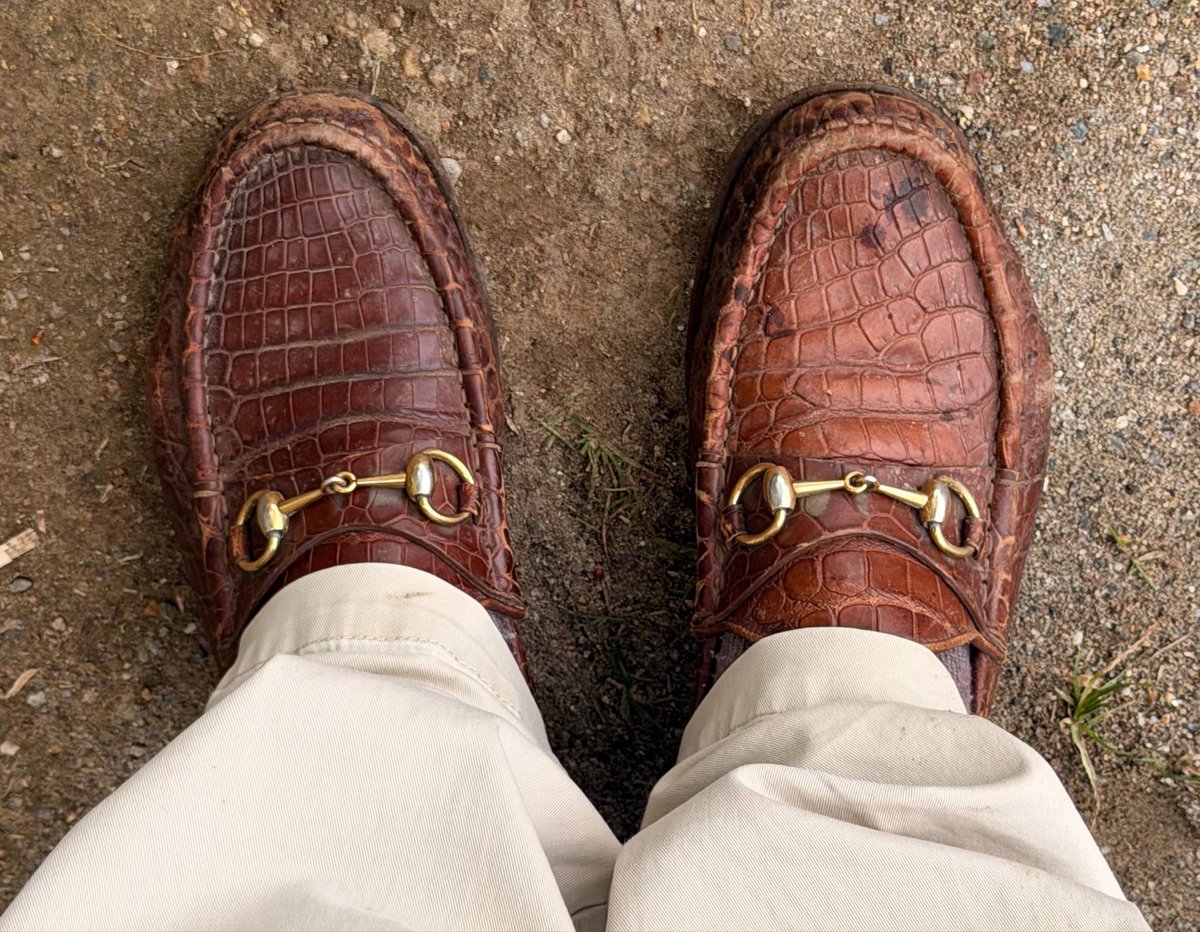
I did the whole primal/barefoot lifestyle for many years. I reversed my bunions with it. But going barefoot also did me some damage, which I've undone with PRI (postural restoration) and "normal shoes." Photo evidence of my biblically accurate feet/toe splay. 👣
Inventing shoes was 100% an important adaptation that allowed us to expand our terrains, travel longer distances, hunt better, and protect our feet. In societies where people still do not wear shoes, they rarely experience the podiatric issues plaguing modern man. None of them develop those horrifically crumpled and knackered toes, with bunions jutting out...found in people who often wear high heels and dress shoes.
But people in barefooted societies also don't go barefoot on flat, hard floors. They don't walk on floors made of concrete, asphalt, wood, or tile. They mostly walk on soft surfaces. Soil, moss, sand, etc. Soft surfaces hug and meet the curves and arches of the feet. This is important, because it gives the nervous system proper sensory grounding...i.e., you feel the whole floor.
When I began my barefoot journey, I stretched my toes a ton, and I began to feel a lot of relief from knee pain that seemed to be caused by the immense pressure on my MTP joints (from tight shoes). I roller-skated, and the skates were super narrow and tight in the toe box. After I got used to my toes being free, I simply couldn't go back to any sort of shoes with a narrow toe box. I thought barefoot was 100% the way, and I wore only minimalist, zero-drop shoes for about two years.
In those two years, I developed an awful gait. A lot like a penguin's. As it turns out, when you walk on flat surfaces with zero cushioning and support, your nervous system doesn't sense the ground properly. The arches of your feet do not hug or press up against anything as they would in a natural setting. Your feet also have no protection and shock absorption on unforgiving, flat, hard surfaces. This can do a lot of damage to your joints and posture. I developed pelvic tilt issues as my feet were searching for sensory input that wasn't being provided.
Shoes are not bad because they stop us from feeling the floor; they are good because they protect us and mimic the sort of curvature and cushioning that a natural surface would give our feet. That is crucial to dealing with flat, modern surfaces, which would be damaging to our anatomy and posture otherwise.
In my opinion and experience, proprioception is actually strongly reduced without full sensory contact on your arches. This is the number one problem with zero-drop shoes, or walking barefoot on a flat surface, and I have tested and found that it restricts my mobility and flexibility. HOWEVER...tight and narrow toe boxes on most shoes also horribly inhibit the full functioning of our toes. You need your big toe to be free to direct the weight of your body. Without its use, it weakens, and your entire foot will stiffen and weaken.
I've been able to compromise by finding excellent shoes that support mechanical and sensory input (I use the Hruska shoe list, from the Hruska clinic. I mostly wear New Balances rn). But I size them up a little, so my toes get ample space. My toe splay is still strong, the way a baby's foot is shaped before being corrupted by shoes !!
My change in footwear, alongside PRI exercises (also invented by Ron Hruska 😉) completely transformed my gait over the last year and improved my arm swing, made me able to breathe by expanding my chest, etc.
All of that was all inhibited by poor posture, which was compounded by wearing barefoot/zero-drop shoes in an urban/modern environment.