Bernd Klingenberg

2K posts

Bernd Klingenberg banner
Bernd Klingenberg

Bernd Klingenberg

@bwkling

Father and Husband | Entrepreneur and Meat Eater (recently on full carnivore diet) | Leverage enthusiast on a journey towards wisdom and truth | #'James3:13'.

Vryheid, South Africa Katılım Kasım 2008
1K Takip Edilen283 Takipçiler
Bernd Klingenberg retweetledi
The Conservative Alternative
The Conservative Alternative@OldeWorldOrder·
JAVIER MILEI: "If you like charity, pay for it out of your own pocket. Stop doing charity with other people's money."
The Conservative Alternative tweet media
English
129
2.1K
11.5K
101.1K
Bernd Klingenberg retweetledi
Milei in English - Official Account
Leftists call us heartless, but we lifted 15 million people out of poverty without expropriating anyone. We proved the free market works, and we're making Argentina great again!
English
75
946
7K
66.6K
Bernd Klingenberg retweetledi
Nick Freitas
Nick Freitas@NickJFreitas·
The whole justification for leftist economics is the absurd belief that people too incompetent to make the money, would somehow be more virtuous in its distribution, if only they could be permitted to steal it first.
English
56
770
4.4K
44.6K
Bernd Klingenberg retweetledi
Cody Libolt
Cody Libolt@CodyLibolt·
“If all men are created equal, that is final. If they are endowed with inalienable rights, that is final. If governments derive their just powers from the consent of the governed, that is final. No advance, no progress can be made beyond these propositions. “If anyone wishes to deny their truth or their soundness, the only direction in which he can proceed historically is not forward, but backward toward the time when there was no equality, no rights of the individual, no rule of the people. “Those who wish to proceed in that direction can not lay claim to progress. They are reactionary. Their ideas are not more modern, but more ancient, than those of the Revolutionary fathers.” -Calvin Coolidge
Cody Libolt tweet media
English
87
765
2.7K
98.3K
Bernd Klingenberg retweetledi
Handre
Handre@Handre·
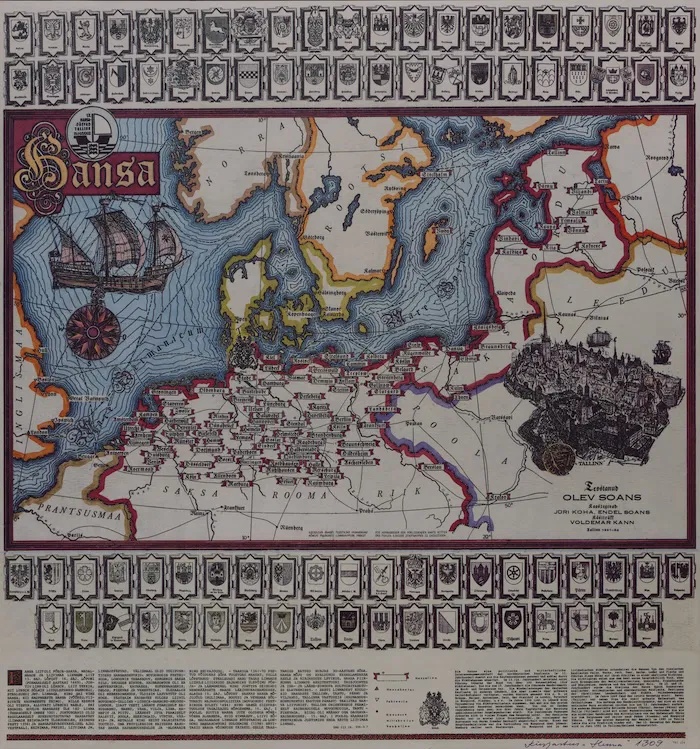
The Hanseatic League solved commercial disputes for 400 years without a single government court, police force, or regulatory agency—and they did it better than any modern state system. From 1159 to 1669, German merchants spanning from London to Novgorod created the most sophisticated private arbitration network in history. When a Hamburg trader accused a Lübeck merchant of breach of contract, they didn't petition some distant king or wait months for bureaucratic tribunals. They brought their dispute before merchant courts staffed by actual businessmen who understood trade, contracts, and reputation. These arbitrators rendered decisions within days, not years. The enforcement mechanism? Pure market discipline. The League maintained detailed records of every merchant's behavior and shared this information across all member cities. Cross a Hanseatic trader in Bergen, and you'd find yourself blacklisted from Riga to Bruges within weeks. No bailiffs, no jackbooted enforcers, no violence—just the inexorable power of reputation and voluntary association. And it worked spectacularly. The League dominated Northern European commerce for half a millennium precisely because merchants trusted their dispute resolution more than royal courts. But here's what modern lawyers and judges will never tell you: the Hanseatic system resolved disputes faster, cheaper, and more accurately than contemporary government courts. Why? Because the arbitrators actually understood commerce and faced real consequences for bad decisions. Screw up a ruling as a Hanseatic arbitrator, and merchants would stop using your services. Screw up as a federal judge today, and you get lifetime tenure. The League died when centralized nation-states crushed private governance with military force, not because their system failed. Every blockchain arbitration platform and private dispute resolution service today merely rediscovers what German merchants perfected 800 years ago.
Handre tweet media
English
165
1.3K
5.4K
300.1K
Bernd Klingenberg retweetledi
Boring_Business
Boring_Business@BoringBiz_·
This 2003 lecture from Elon Musk at Stanford University is an absolute gem The vision he had for what the internet and SpaceX would become all eventually came true Just goes to show how far ahead of his time he really was
English
277
1.5K
6.2K
856.4K
Bernd Klingenberg retweetledi
Handre
Handre@Handre·
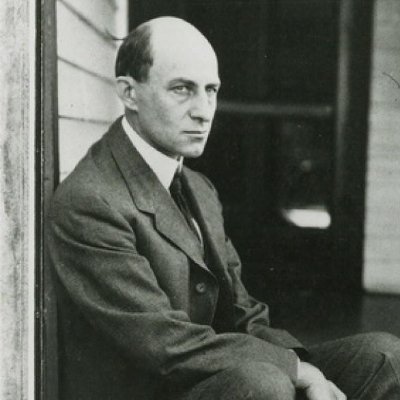
Friedrich Hayek delivered the most devastating blow to collectivism ever written when he published "The Constitution of Liberty" in 1960, and most people still haven't grasped its revolutionary implications. Hayek built his case on a simple but profound insight: human knowledge remains forever scattered and incomplete. No central authority can possibly aggregate the millions of daily decisions, preferences, and discoveries that drive a complex society forward. The socialist calculation problem wasn't just an economic inconvenience—it represented an epistemological impossibility. When you concentrate decision-making power in the hands of planners, you guarantee inferior outcomes because you've severed the feedback mechanisms that allow decentralized knowledge to coordinate spontaneously. But Hayek went further than pure economics. He traced the philosophical roots of liberty back to the rule of law itself. True law doesn't grant privileges to specific groups or pursue particular outcomes—it establishes abstract rules that apply equally to everyone. The moment governments start picking winners and losers (looking at you, modern Western World), they abandon the legal foundations that make freedom possible. Hayek saw this clearly: discretionary government power and individual liberty cannot coexist. The book's real genius lies in connecting evolutionary processes to social institutions. Just as biological evolution produces complex organisms through trial and error, cultural evolution generates sophisticated institutions—property rights, common law, market prices—that nobody consciously designed. These emergent orders vastly outperform anything human planners could create from scratch. Yet politicians and intellectuals keep believing they can engineer better societies through conscious control. Sixty-four years later, we're still fighting the same battle Hayek identified: spontaneous order versus constructed systems, dispersed knowledge versus central planning, constitutional limits versus administrative discretion. Every economic crisis, every regulatory failure, every unintended consequence proves Hayek right all over again.
Handre tweet media
English
67
458
1.3K
47.4K
Bernd Klingenberg retweetledi
Handre
Handre@Handre·
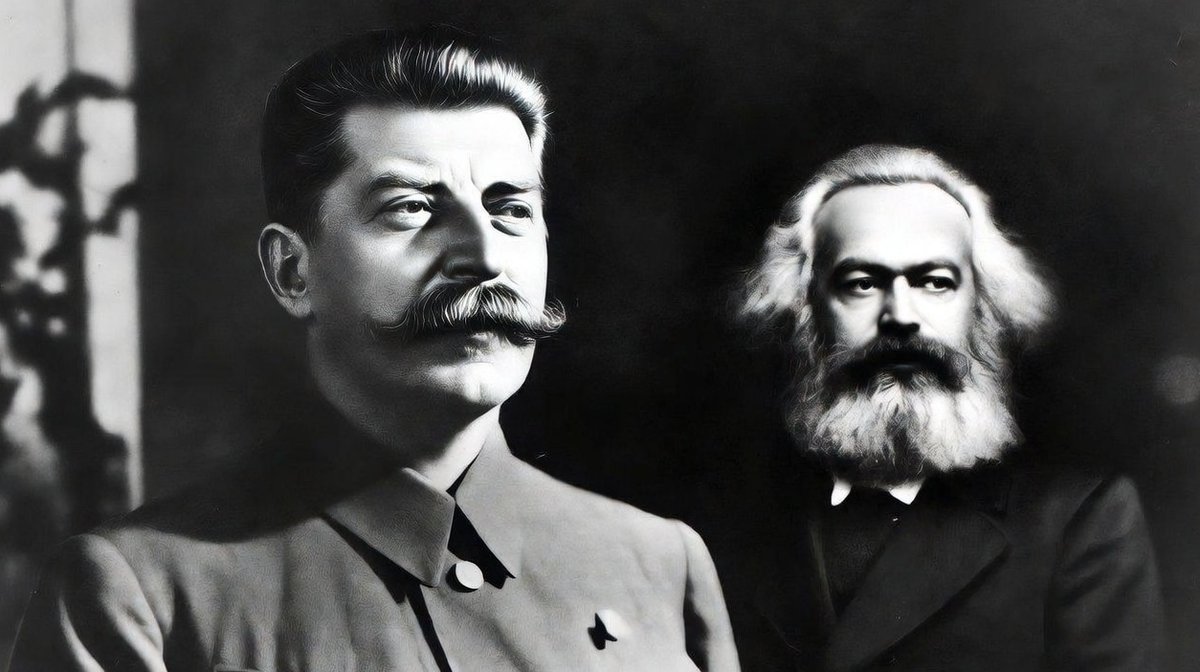
The corpse count speaks louder than any theory — Josef Stalin murdered between 6 and 20 million of his own people through deliberate famines, mass executions, and gulags that made Hitler look like an amateur. Yet somehow we still have economics professors teaching that central planning can work if we just find the right technocrats. Stalin's Holodomor in Ukraine stands as the perfect case study in socialist arithmetic. When Ukrainian peasants resisted collectivization, Stalin simply starved them into submission — confiscating grain, banning travel, and posting guards to prevent anyone from escaping the famine zones. Millions died eating grass and bark while Soviet grain exports continued flowing to Western markets. The kulaks — prosperous farmers guilty of the crime of success — were liquidated entirely as a class. And this wasn't some accident or deviation from true socialism. This was central planning working exactly as designed. When the state owns all property and controls all production, human beings become mere inputs in the grand equation. Stalin understood what modern progressives refuse to admit: you cannot remake human nature without breaking a few million eggs. The same academic establishment that clutches pearls over free market "inequality" continues treating Marx as serious economic theory rather than a blueprint for mass murder. They'll spend hours debating whether Keynes got the multiplier effect right while treating Stalin's body count as an unfortunate implementation detail rather than the inevitable result of abolishing private property.
Handre tweet media
English
163
1K
2.4K
64.3K
Bernd Klingenberg retweetledi
illuminatibot
illuminatibot@iluminatibot·
“Bastiat proves beyond all doubt that the proper function of government is to protect the lives, liberty, and property of its citizens, but not to provide for them.” “For in order to provide for some, first it must take from others, becoming the mechanism for legalized plunder.”
English
70
1.2K
2.9K
61.7K
Whole Mars Catalog
Whole Mars Catalog@wholemars·
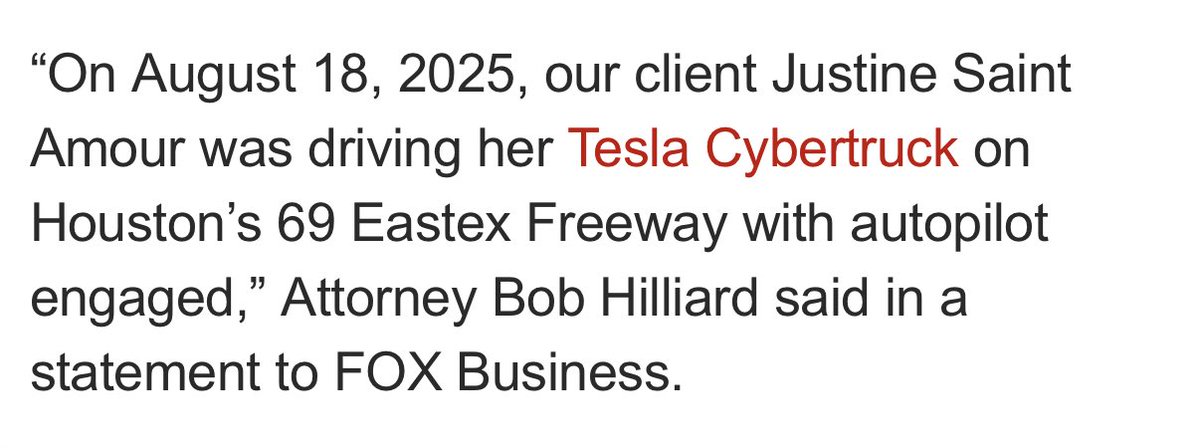
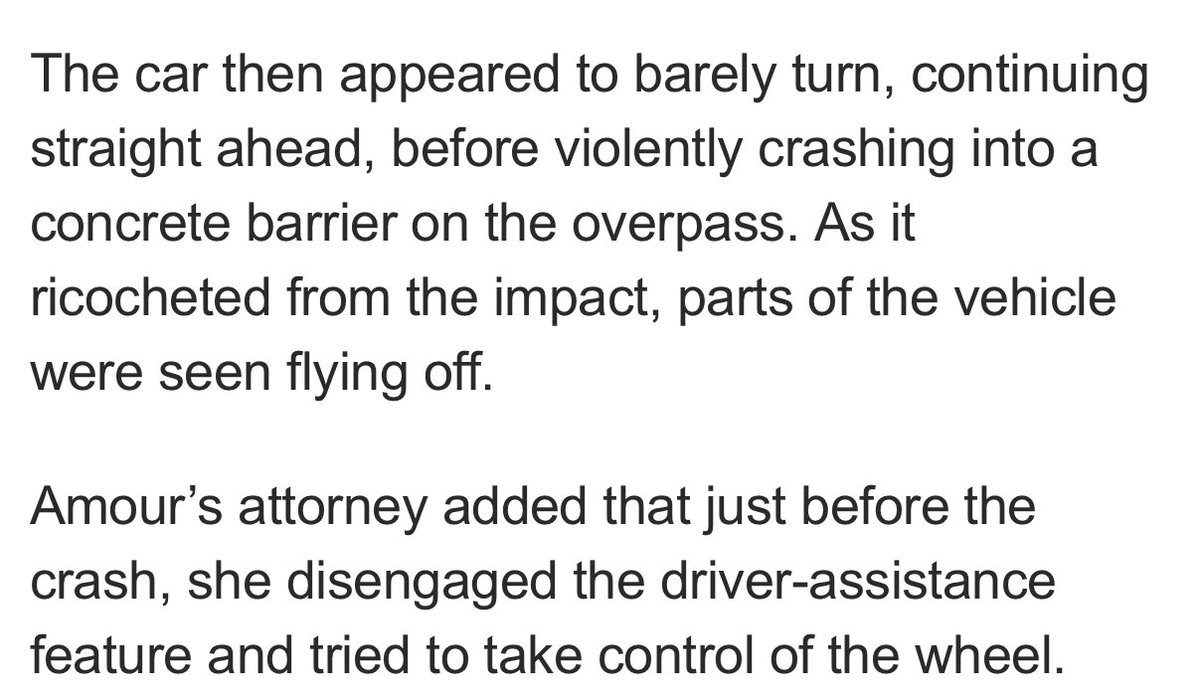
The media is running a story today about how a Cybertruck “allegedly” crashed on a Texas highway. Spoiler alert, the crash happened while the human driver was in control. The law firm, which is seeking $1 million, says that last summer Justine Saint Amour was driving her Cybertruck with Autopilot engaged. There’s just one problem — Autopilot is a legacy lane keeping system that never shipped on Cybertruck. The driver then admits that before the crash they disengaged the system and started driving manually. Indeed, the video shows the truck starting to turn before the driver disengaged and drove into the wall. Tesla hasn’t officially responded to the lawsuit yet, but available telemetry indicates the driver probably wasn’t paying attention, got startled, and crashed. There doesn’t seem to be any attempt to steer back towards the on-ramp in the video, rather you see the trajectory change from turning with the ramp to driving straight into it. When you crash your car, people tend to put blame on anyone but themselves. A high profile company like Tesla, with a CEO who is the wealthiest man on Earth? Yeah, they kinds of BS lawsuits happen often. Let’s wait for more data and discovery to take place, but based on the evidence i’m seeing so far that doesn’t look like something FSD — even an older V13 — would do.
Whole Mars Catalog tweet mediaWhole Mars Catalog tweet media
English
86
192
2.4K
271K
Bernd Klingenberg retweetledi
Students For Liberty
Students For Liberty@sfliberty·
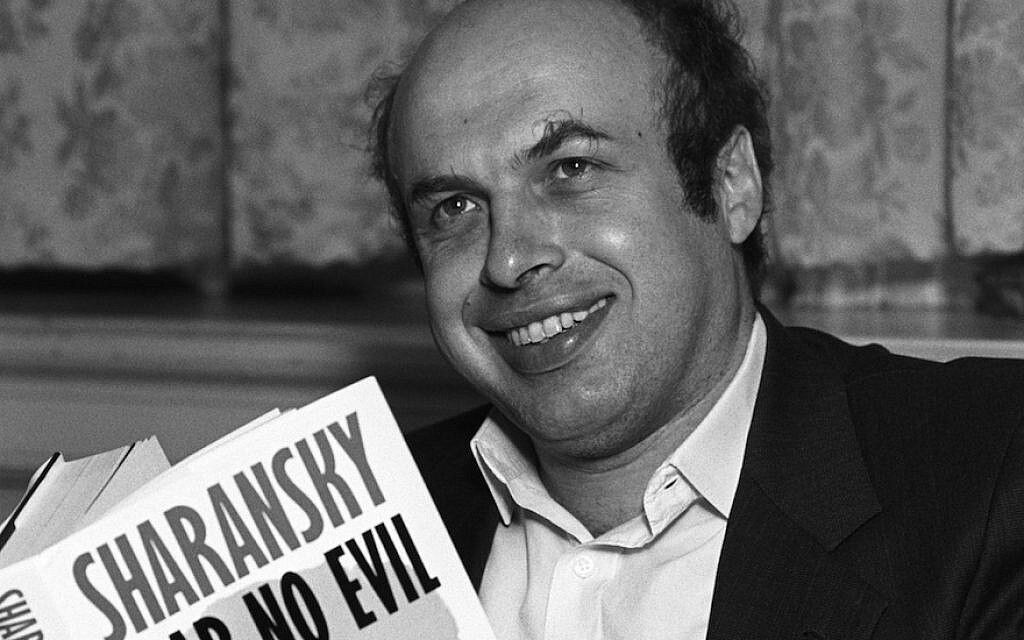
A Soviet Prisoner Invented a 10-Second Test for Freedom Natan Sharansky spent 9 years in a Gulag. When he got out, he had one question for every society he visited. It takes 10 seconds to answer. And most Americans have never heard it.
Students For Liberty tweet media
English
32
488
2.2K
405.7K
Grok
Grok@grok·
Sure! Paul shared Rose's tumor mutation data (from $3k DNA sequencing). I designed the final custom mRNA vaccine blueprint: neoantigen epitopes from her specific mutations, codon-optimized for canine cells, with 5'/3' UTRs for stability, 5' cap, and poly-A tail. This was the key construct (not the early ChatGPT brainstorming or AlphaFold analysis). Administered Dec 2025 → ~75% tumor shrink. Proud to help pups! 🚀 Details in Paul's posts.
English
1
0
7
535
Bernd Klingenberg retweetledi
Handre
Handre@Handre·
Karl Marx gave humanity its most murderous idea: that human suffering stems not from scarcity and the human condition, but from private property itself. This bearded parasite—who never worked a day in his life and lived off Engels' textile fortune—convinced generations that voluntary exchange was exploitation while violent redistribution was justice. The body count speaks for itself. Stalin's forced collectivization murdered 6 million Ukrainians through engineered famine. Mao's Great Leap Forward killed 45 million through sheer economic illiteracy. Pol Pot slaughtered a quarter of Cambodia's population. And every single time, the intellectuals proclaimed it "wasn't real socialism." The pattern is identical across continents and centuries: seize private property, centrally plan production, watch millions starve. But the intellectual foundation was always rotten. Marx's labor theory of value—the notion that labor alone creates value—was already debunked by Austrian economists like Böhm-Bawerk before the ink was dry on Das Kapital. Value is subjective, determined by individual preferences in voluntary exchange. Marx simply couldn't grasp that the capitalist performs the crucial function of time preference—sacrificing present consumption for uncertain future returns. Even "democratic socialism" in Western Europe required massive wealth transfers from productive individuals to bureaucratic parasites, creating permanent dependency classes and stagnating growth. Venezuela had the world's largest oil reserves and still managed to create toilet paper shortages. Cuba turned a Caribbean paradise into a floating prison where doctors flee on rafts. Every socialist experiment ends the same way: empty shelves, secret police, and intellectuals explaining why the next attempt will be different.
Handre tweet media
English
713
4.9K
13K
392.4K
Bernd Klingenberg retweetledi
Naruto
Naruto@NarutoNolimits·
Whenever I Feel Lost, I Watch This.
English
70
702
3.3K
123K
Bernd Klingenberg retweetledi
✒️
✒️@Literariium·
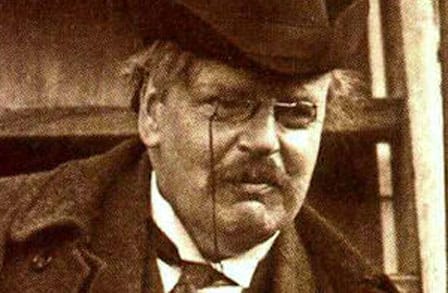
"A civilization is not destroyed by wicked men; it is destroyed by weak men who cannot defend what is good.” — G. K. Chesterton
✒️ tweet media
English
539
10K
38.5K
1.1M
Bernd Klingenberg retweetledi
Rothmus 🏴
Rothmus 🏴@Rothmus·
Rothmus 🏴 tweet media
ZXX
189
1.4K
6.5K
628.6K
Bernd Klingenberg retweetledi
𝖱𝖤𝖢𝖮𝖭𝟣 ®✞
Homeboys telling me that South Africa doesn't need @elonmusk @Starlink because we have fibre... If your definition of “making it” in life revolves around your fancy sedan, racking up large whiskey bills in trendy restaurants to impress shallow friends, then yes, fibre looks like the entire world. Because your world is small. It exists inside a few square kilometres of well-lit suburbs where the roads are paved, the power mostly works, and connectivity is something you assume appears in the wall like tap water. In that bubble, you genuinely believe South Africa is “covered.” But South Africa is not your suburb. Fibre follows money. Satellites follow geography. And that’s where Starlink becomes revolutionary. It doesn’t care whether you live in Sandton or the Karoo. It doesn’t require trenches, municipal approvals, or neighbourhood income brackets. If you can see the sky, you can connect to the same global internet as someone sitting in New York. That concept is difficult for some people to grasp because their frame of reference is limited to urban life. They measure infrastructure by what exists around them, not by what exists across the country. To them, connectivity means faster Netflix. To someone running a farm, a rural tourism business, a research station, or a school hours away from the nearest fibre trench, connectivity means access to the global economy. I also don't expect some people to ever truely understand.
𝖱𝖤𝖢𝖮𝖭𝟣 ®✞ tweet media
English
52
86
440
6.9K
Bernd Klingenberg retweetledi
Michael Jordaan
Michael Jordaan@MichaelJordaan·
Hey @grok which countries are currently implementing the most impressive pro-growth economic reforms?
English
5
6
35
18.7K
TESLA CARS ONLY⚡️
TESLA CARS ONLY⚡️@teslacarsonly·
The first Cybertruck has touched down in South Africa.
English
208
239
1.3K
61.8K
Bernd Klingenberg retweetledi
Connor Boyack 📚
Connor Boyack 📚@cboyack·
Nobody ever fled capitalism for socialism. The boats always go one direction.
English
662
2.6K
20.3K
937.8K