godgiven

341 posts

godgiven banner
godgiven

godgiven

@bygodgiven

AI Research Engineer. Money & Growth loops

Austria Katılım Temmuz 2017
104 Takip Edilen46 Takipçiler
godgiven
godgiven@bygodgiven·
@Nekt_0 Insane numbers to be honest, crazy...
English
0
0
1
26
Nekt0
Nekt0@Nekt_0·
The Forbes 400 has a new poverty line: $3.8 billion. Last year, $3.3 billion was enough. In 2025, it gets you rejected at the door. The 400 members now control $6.6 trillion. The top 20 own $3 trillion of it. Elon Musk sits at $428 billion after gaining $184 billion in 12 months. Larry Ellison reached $276 billion. Mark Zuckerberg hit $253 billion. Then 37-year-old Edwin Chen entered the list at $18 billion because he owns an estimated 75% of Surge AI. Bill Gates dropped out of the top 10 for the first time in 34 years. Not because Microsoft collapsed, but because ownership moved elsewhere. The Forbes 400 is not a ranking of who earned the most money. It is a ranking of who owned the right percentage when the market repriced it.
RGK@rgk_degen

x.com/i/article/2081…

English
11
3
46
1.6K
Sammy
Sammy@sammy_capital·
Warren Buffett turned $10,000 into roughly $15 million Using an investing system built by a Columbia professor most people no longer recognize His name was Benjamin Graham Almost nobody watches the rare footage where he explains the thinking behind Buffett’s fortune The system was simple: buy $1 of business value for far less than $1 In the mid-1970s, the entire Washington Post Company was trading for roughly $80 million Buffett believed its properties were worth at least $400 million The market was offering the business at around 20 cents on the dollar > Berkshire invested $9.7 million > That position later became worth $370 million The same framework turned a $46 million investment in GEICO into $849 million An investor who gave Buffett $10,000 when his partnership began in 1956 had nearly $300,000 by 1969 Had they stayed invested through Berkshire, it would have grown to roughly $15 million by the time of Buffett’s later interview Graham called the gap between price and underlying value the margin of safety The wider the gap, the less Buffett needed to predict exactly what the market would do next Bookmark this before the next strategist makes an unknowable future sound obvious Graham’s system offered a different edge Estimate what a business is worth, then wait until fear gives you a price far below it Buffett spent the rest of his career turning that gap into billions The framework inside it built one of the greatest fortunes in investing history
Sammy@sammy_capital

Warren Buffett turned $10,000 into roughly $15 million without a computer, a Wall Street office, or an army of analysts Almost nobody watches the interview where he explains how Buffett was already worth more than $2 billion when Adam Smith visited him in Omaha His financial empire was run by seven people He spent most of the day reading and thinking, then occasionally made a decision large enough to matter for decades The numbers were already absurd $9.7 million invested in The Washington Post had become $370 million $46 million invested in GEICO had become $849 million A Berkshire share bought for $12 in 1965 was trading above $3,900 The interviewer asks why everyone does not simply copy the strategy Buffett’s answer has nothing to do with secret research or superior technology The principles were public. The undervaluations were visible. Everyone could see the same prices Most people would rather be promised they can get rich next week than accept that getting rich slowly may require years of doing almost nothing Bookmark this for the next time the market gives you a lower price and your emotions call it danger Then watch the section where Buffett says the New York Stock Exchange could close for two years and he would not care He was not buying lines moving across a screen He was buying businesses whose value could keep growing while nobody was allowed to trade them The footage is old, slightly blurry, and buried on YouTube The capital allocation lesson has aged better than nearly everything filmed since

English
1
0
7
467
godgiven
godgiven@bygodgiven·
OpenAI just told developers to stop measuring how many tokens they burn. Their DevEx engineer, in the first Build Hour after 5.6: "If you doubled your token spend tomorrow, how would you know if it was worth it?" The cuts they demoed live: • compaction before the question: 24,000 input tokens down to 4,000. Same answer • caching, with volatile stuff appended at the END of the prompt: 90% lower input cost • programmatic tool calling, model writes code in a sandbox instead of reasoning through it: 24% fewer input tokens, one full model turn gone • start on medium, not extra high. Their own engineer says most daily work never needs xhigh • audit your AGENTS.md. Rules you wrote 12 months ago are input tokens you re-buy every call Save this, then go read your own AGENTS.md tonight.
godgiven@bygodgiven

x.com/i/article/2081…

English
1
0
10
110
godgiven
godgiven@bygodgiven·
The reviewer who tested new Opus 5: "In 100% of my personal workflows, I don't need to use Opus 5. It is way too slow and expensive" Opus 5 took over an hour on every task in this review. You pay 2x GPT 5.6 rates for that wait. what one prompt got him: • Windows 11 in a browser. Excel with a real formula engine. 366k tokens • 3D scene from one image. Fable 5 and GPT 5.6 could not render it at all. 343k tokens • X-wing in Blender over MCP. It screenshots itself to check the animation. 173k tokens • a full song in a DAW. It found and downloaded the VST plugins itself. 350k tokens • 6 tumor scans. 0 correct. Kimi K3 got 1 1.5 million tokens, five hours of waiting. LiveBench still ranks it third, behind GPT 5.6. Best model in the room for front-end and 3D. Slowest and priciest one for everything else. I cut the 32 minutes to the 6 that matter. Watch it, then read yesterday's article below.
godgiven@bygodgiven

x.com/i/article/2081…

English
0
0
7
292
godgiven
godgiven@bygodgiven·
@RoundtableSpace that's just langgraph on screen. prompts didn't disappear, they moved into each node. the self improving bit is an eval loop rewriting prompts, so still prompting but automated.
English
0
0
3
112
0xMarioNawfal
0xMarioNawfal@RoundtableSpace·
ANTHROPIC ENGINEERS SAY SELF-IMPROVING AGENT GRAPHS ARE REPLACING PROMPTING.
English
17
11
139
44.4K
godgiven
godgiven@bygodgiven·
@RoundtableSpace Opus 5 is good, i like it even more than fable 5. However, you won't be able to realise it's whole potential, if your workflow is shit. Improve your workflow firstly
English
0
0
1
58
0xMarioNawfal
0xMarioNawfal@RoundtableSpace·
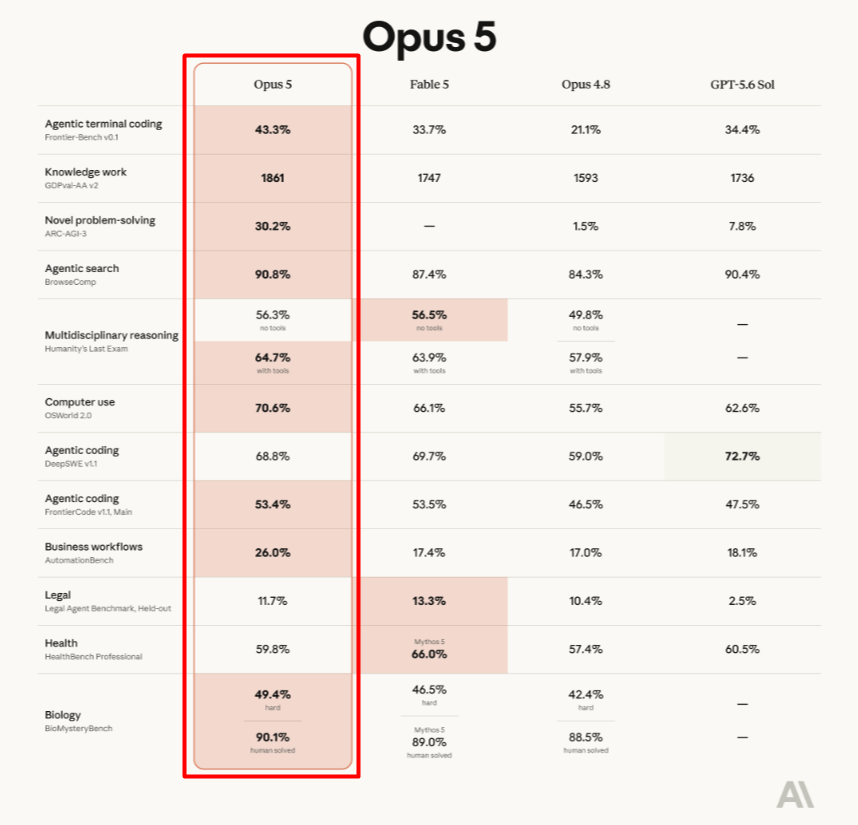
Claude Opus 5 launched with a 43.3% Frontier-Bench score, tripling ARC-AGI-3 benchmarks while matching Opus 4.8 pricing with a 2.5x Fast mode.
English
22
4
102
46.4K
godgiven
godgiven@bygodgiven·
HumanLayer engineer: "We can design loops and still read the code." how their production loop actually works: • step 1 → the sensor. ast-grep rules, not an agent. "it's out of band from your ESLint rules", which the agent disables with inline comments • step 2 → the ratchet. full scan on main, tracked in git. new violations fail CI • step 3 → the controller. bash and jq pick the smallest violation. "don't send an agent to do deterministic code's job" • step 4 → the actuator. agent + skill with handwritten golden patterns. deterministic commit, push, PR • step 5 → flow control. previous PR still open = loop refuses to run. one PR per loop most people scale how fast the loop writes code. they scaled how fast a human can review it. full talk is 17 minutes. I cut the walkthrough into 3. watch below.
godgiven@bygodgiven

x.com/i/article/2070…

English
3
10
30
1.2K
godgiven
godgiven@bygodgiven·
@RoundtableSpace This is Battlefield 1 video. Game was produced by the big team of game and software engineers, and not by opus 5 prompt lmao
English
1
1
28
1.3K
0xMarioNawfal
0xMarioNawfal@RoundtableSpace·
Someone built first a person shooter game using Opus 5 in one prompt If you’re not vibecoding stuff, what are you even doing in life?
English
69
22
266
81.6K
stariybog
stariybog@stariy_bogX·
123600 views on a twelve second poolside bikini dance. A 31 year old in Porto studied the rewatch loop, the body sway, the outdoor light, then applied the exact cover method that turned a similar pattern into paid volume. He locked one character sheet, same proportions, same short set, same lighting angle, and placed a simple mask over the face so the hardest frame-to-frame failure stayed invisible. Free clips dropped every few hours. The bio pointed to a $12.99 subscription. Costs stayed under $250. By day 4 the paid count sat near 290 and the total cleared 3700. The mask never improved the movement. It only removed the single point that used to break the sequence. What stays consistent keeps getting paid.
Kardinall@kardinall

x.com/i/article/2076…

English
1
0
13
548
kartiseira
kartiseira@Abobsterina·
THIS GUY FROM TOKYO MADE $217,000 FROM VIDEOS LIKE THIS 14.35 seconds of content. No filming. No studio. No actors. Just three virtual characters and an AI video generator. In 94 days, he posted 1,680 clips across 11 accounts and pulled in 186 million views. Revenue breakdown: • $143,000 from brand deals • $51,000 from paid subscriptions • $23,000 from affiliate commissions Total production cost: $4,760. Profit before tax: $212,240. While everyone else is arguing about whether this is real or AI, he quietly built a media business with a 97.8% margin.
kartiseira@Abobsterina

x.com/i/article/2076…

English
5
1
31
7K
godgiven
godgiven@bygodgiven·
OpenAI just dropped a free workshop on making agents work for months, not minutes. The stack their own DevEx engineer runs: memory vault: git repo of markdown files (TODO, people, projects, notes) AGENTS.md that tells the agent to update the vault as it learns 9 pinned threads, one per project, months of accumulated context heartbeat automations: agent checks Slack and Gmail every 30 min, drafts replies, sends nothing goals with real oracles: "port this library to Rust, all original tests must pass" that's the stack. Save this, then set up your vault tonight. Works with Codex, Claude Code, whatever you run.
godgiven@bygodgiven

Yesterday i wrote: Opus 5 won't improve your results. Your workflow will. So here's step one. Ponytail, the plugin that stops Claude from overengineering. 88k GitHub stars, most of them in the last two weeks. Claude's default habit: you ask for a button, you get a framework. Extra files, extra libraries, extra abstractions. Every extra line is a future bug and a bigger token bill. Brutal if you're a non-coder shipping products through Claude. Ponytail injects one rule: lazy on solutions, not on thinking. It still digs into the task first, then ships the minimum that works. Security checks and error handling stay untouched. The underrated part is /ponytail-audit. Point it at your existing project and it lists everything Claude overbuilt: duplicated logic, dead libraries, bloated files. Then you ask Claude to rebuild those spots minimal. Author claims 54% less code and 20% cheaper across 12 real tasks. His own numbers, so verify on your repo, not his. Install: /plugin marketplace add DietrichGebert/ponytail then /plugin install ponytail@ponytail. Free, MIT, works in Claude Code, Cursor, Codex, Gemini. What's the most overengineered thing Claude ever built for you? Mine turned a config parser into three classes.

English
2
3
22
1.2K
godgiven
godgiven@bygodgiven·
@noclipepe Cool Video, real visualisation what you get for what you pay
English
0
0
0
20
noclipepe
noclipepe@noclipepe·
Claude Opus 5 just dropped, claiming equal quality at half the price. The shift: Opus 5 isn't just cheap. It completely crushed Fable 5 at real-time physics while costing 2x less. Physics Prompts → Real-Time HTML Rendering → 2x Cost Cut → Full Physics Accuracy Four models faced the exact same benchmark: generate 3 self-contained HTML physics scenes. The results & costs: • Opus 5 ($1.40 / 55.9K tokens): The winner. Houses fly up the tornado, walls shatter on wrecking ball impact, and bridge rubble piles up realistically. • Fable 5 ($2.82 / 55.1K tokens): 2x the price for broken physics. The building collapsed on its own before the wrecking ball touched it. • GPT 5.6 ($0.31 / 20.1K tokens): Cheapest, but failed. The wrecking ball never reached the target. • Kimi K3 ($0.55 / 35.7K tokens): Same result as GPT—ended up with complete physics breakdown. If you build browser graphics or simulations, Opus 5 just reset the cost baseline.
noclipepe@noclipepe

x.com/i/article/2080…

English
2
2
11
2.2K
promptix
promptix@promptixAI·
$1,000,000,000. 10 PEOPLE. Sam Altman believes that’s where we’re headed. He recently said: “We’re going to see 10-person billion-dollar companies pretty soon.” Then he added something even more interesting: “If I were 22 right now, I’d feel like the luckiest kid in history.” Most people will read those words… Feel inspired for a few minutes… Then go back to scrolling. A few won’t. They’ll spend this weekend learning one AI tool. Building one product. Launching one idea. Every billion-dollar company started as someone deciding to begin. The AI opportunity isn’t coming. It’s already here.
Sam Altman@sama

i want the US to win in AI both in open source and proprietary models, and i am glad to see this

English
3
1
12
1.3K
godgiven
godgiven@bygodgiven·
@monokern finally the companies are making cheaper models
English
0
0
0
19
monokern
monokern@monokern·
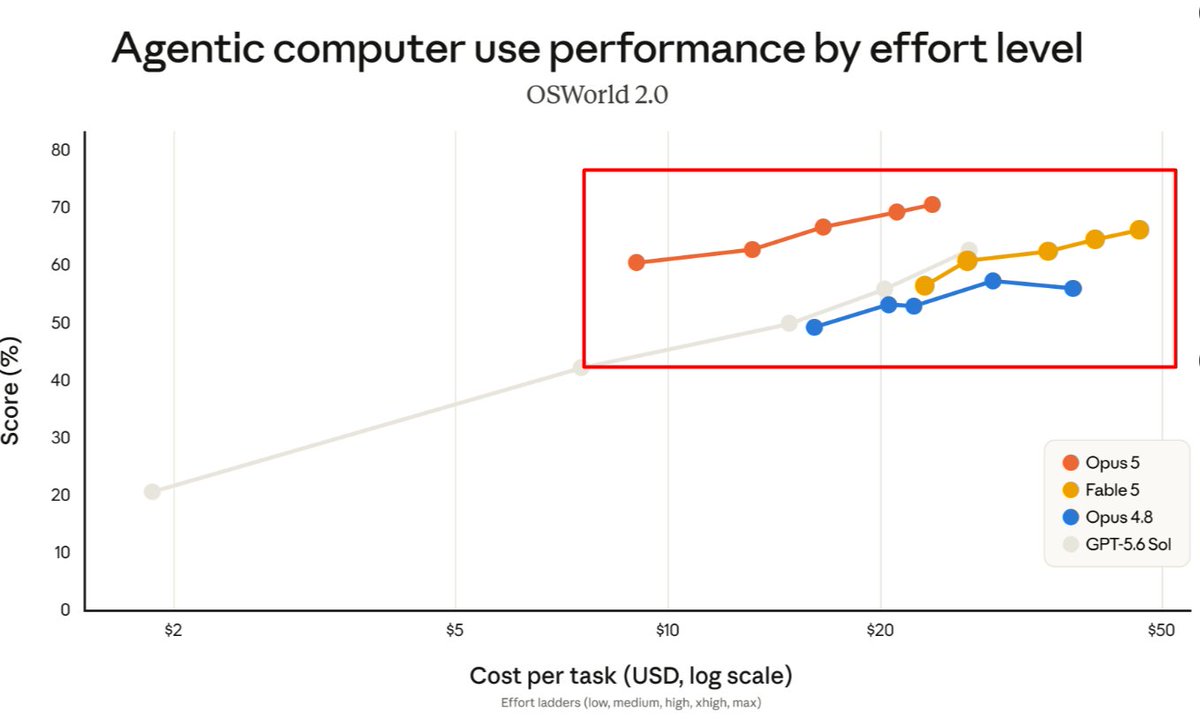
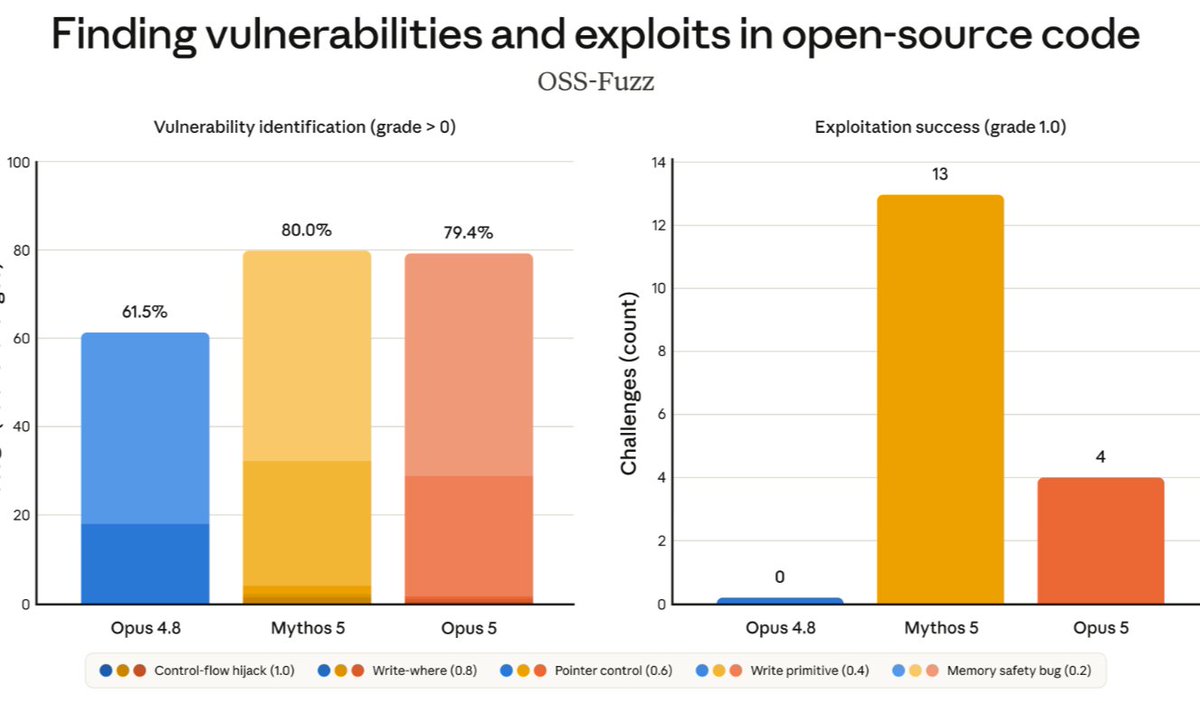
CLAUDE OPUS 5 IS OUT - AND IT COSTS HALF AS MUCH TO BUILD SITES LIKE THIS Anthropic just officially dropped Opus 5, bringing near-frontier intelligence at half the price of previous flagship models What the new benchmark numbers mean for builders: > Matches Fable 5 performance on most key tasks while running significantly cheaper > Major jumps in agentic coding (43.3%) and computer use (70.6%) compared to Opus 4.8 > Higher reliability and execution accuracy during complex, multi-file Claude Code sessions charts on the right break down the exact performance gains for anyone using Claude Code to build interactive sites and apps, this is the update that actually matters
monokern tweet mediamonokern tweet mediamonokern tweet media
monokern@monokern

HE BUILT A 9-CHAPTER INTERACTIVE BRAND FILM WITH CLAUDE CODE - FOR THE COST OF A SUBSCRIPTION It's a scroll-driven dark fantasy experience with a full cinematic narrative - nine chapters, WebGL 3D scenes, and sound design that makes you forget you're looking at a business page What's actually on the page: > A 3D gothic world that loads chapter by chapter as you scroll > Characters moving through firelit battlefields and particle storms rendered live in the browser > Mouse, hold, and touch interactions woven directly into the storytelling > A brand philosophy delivered through atmosphere and narrative instead of text blocks What it normally takes: > A creative director to concept a scroll-storytelling experience at this level > A 3D artist, a motion designer, a WebGL developer, and a sound designer > Months of production - storyboard, asset pipeline, animation timing, browser optimization That production pipeline is what agencies use to justify the invoice Price gap: > Interactive brand experience at this level: $10,000 - $20,000+ > Your cost: Claude subscription > Timeline: months of production -> a single session Full walkthrough in the article below

English
8
1
43
1K
godgiven
godgiven@bygodgiven·
@zynly0oq I don't see anything in this post except for video
English
1
0
2
184
zynly
zynly@zynly0oq·
$18,600 last month. This girl does not exist. One face locked. One body locked. Same lighting every single day. The operator never films. Never shows up on camera. Never burns out. He just generates, schedules, and collects. Most people still think you need to be the face. You don’t. Save this if you’re still doing it the hard way
Kardinall@kardinall

x.com/i/article/2076…

English
2
3
43
7.6K
zynly
zynly@zynly0oq·
@bygodgiven The model was never the real bottleneck. Fresh weights on the same old setup still hit the same ceiling pretty fast
English
1
0
2
32
godgiven
godgiven@bygodgiven·
Opus 5 is out. You had enough time to improve your workflow, if you did not, keep reading. The model was never your bottleneck. The harness is. While everyone runs benchmarks today, the thing that decides your actual output is a 211k-star repo most people never opened: ECC. 67 specialized subagents instead of one generalist. 279 skills. A security scanner that catches keys you left in code. A /evolve command that turns your good sessions into reusable skills. Two commands to install. Free, MIT. New model day is the best day to fix your setup. Fresh model plus tuned harness compounds. Fresh model plus your old CLAUDE.md is the same ceiling with a new coat of paint. What's in your harness?
godgiven tweet media
Claude@claudeai

Introducing Claude Opus 5. It's a thoughtful and proactive model that comes close to the frontier intelligence of Fable 5 at half the price.

English
4
0
13
284
godgiven
godgiven@bygodgiven·
@monokern it is, but you gotta improve your skills and understanding also to realise it's potential
English
0
0
0
7
Rezzi
Rezzi@Rezzi_sol·
This guy creates full UGC ads directly inside a Claude chat. Strategy, script, images, and the finished video all get built inside one workflow. What used to need a copywriter, designer, editor, and media buyer can now start with one person and one conversation. That matters because the real opportunity is bigger than ads. Claude is becoming the operating system for small online businesses. One chat can help you build the product, write the listing, generate the funnel, create the traffic content, and package the offer under one brand. In the article below, that system is built around one niche: custom AI travel plans sold as a digital product, a Pinterest traffic engine, and a free PDF funnel that turns attention into an email list you own. The ad is just the front end. The business is the system behind it. Watch the video, then read the full playbook below.
Insomnia@insomnia_vip

x.com/i/article/2076…

English
9
3
32
726