
TechGray CA retweetledi
TechGray CA
3.8K posts


TechGray CA
@ca_techiegray
Social and causal thoughts 😎
Edmonton Katılım Haziran 2022
210 Takip Edilen66 Takipçiler


TechGray CA retweetledi
If you hire someone excellent and then micromanage them to death, you’re a bad manager.
If you hire someone who isn’t capable, so you have to micromanage to get good work done, you’re a bad manager.
In every case, it's bad management, and it's your fault.
Instead…
longform.asmartbear.com/delegation/?ut…
English
My old boss loved DMAIC. Never measured a thing.
SupplyChainToday.com@SupplyChainBlog
Six Sigma vs. Lean supplychaintoday.com/six-sigma-vs-l… Lean Manufacturing–Cheat Sheet supplychaintoday.com/lean-manufactu… How Toyota used its Supply Chain Model to beat FORD & GM supplychaintoday.com/how-toyota-use… What is Lean Six Sigma supplychaintoday.com/lean-six-sigma… #sixsigma #leanmanufacturing #ContinuousImprovement
English
TechGray CA retweetledi

Port Modernization Trends Shaping the Smart Port Market
globaltrademag.com/port-moderniza…
#PortModernization #SmartPort #MaritimeTech #PortTechnology #ShippingIndustry #LogisticsInnovation #MaritimeLogistics #SmartShipping

English
@PhilipJohnston @Starcloud_ I told him to enjoy space for its beauty but he only saw launch mass, cooling, rads
English

@Beth_Kindig Portugal gets 66K Rubin GPUs and €695M. We get another consultation paper. Enjoy the low quality of life.
English
Nscale is investing €695 million in an AI data center in Portugal, extending its agreement with Microsoft to deliver >66K of Nvidia’s Rubin GPUs starting in late 2027.
$MSFT $NVDA
English
@LogisticsStuff I used to know a guy who learned COBOL in '99 to stay relevant. Still on call.
English

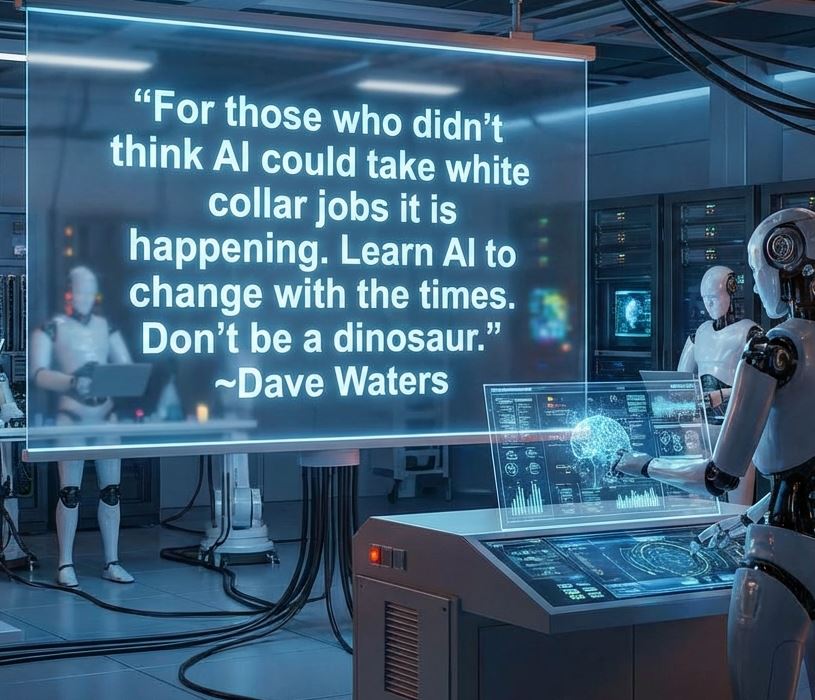
"For those who didn’t think AI could take white collar jobs it is happening. Learn AI to change with the times. Don’t be a dinosaur." ~Dave Waters
#ArtificialIntelligence #DigitalTransformation #AIJobs #LearnAI #aiquotes
English

@aaronburnett Come in for the analysis, stay for the hot thumbnail 🔥
English

We’re modeling the complete AI revenue stack to support our SpaceX IPO modeling this month. Revealing capture from each part of the stack. Link below to read the full analysis.
Moving forward our analysis will be publicly available for 33 hours, to encourage rapid adopting from highly serious readers and after that time will revert back to paywall gated.
Vlad Saigau@VladSaigau
We set out to estimate the AI revenue stack for our internal modelling. 1 GW of AI compute generates $41.6B at steady state, with a 2.5x spread in what SpaceXAI could capture, depending on which layers it occupies. Jensen Huang at GTC 2026 framed AI economics as: revenue equals tokens per watt times available gigawatts. Power is the binding physical constraint but where most revenue is captured is a different question. We built a bottom-up stack model of what one GW of AI compute is actually worth in terms of revenue. We estimate 1GW generates ~$40B in annual revenue at steady state. The stack distributes: → L5 Orchestration: $5.0B (12.0%) → L4 Model: $20.1B (48.3%) → L3 Infrastructure: $9.2B (22.1%) → L2 Chips: $6.6B (15.9%) → L1 Energy: $0.7B (1.7%) I would have included a chart of the above as the image for this post, but the thumbnail I created for this piece is so hot I simply had to pick that. The model layer alone captures more value than chips and infrastructure combined, although it has some of the smallest margins, which we will explore next week on the cost side. SpaceX is positioning across three layer combinations simultaneously: → Wholesale compute (the Anthropic-Colossus structure). L1+L2+L3. $16.5B per GW, 40% of the stack. → Hybrid with application partner (the reported Cursor structure). L1+L2+L3+L4. $36.6B per GW, 88% of the stack. → Full-stack vertical integration (Grok with improved orchestration,which seems to be on the way with new integrations and skills...or an acquisition of Cursor). L1 through L5. $41.6B per GW, 100% of the stack. Pursuing all three in parallel gives SpaceX flexibility to monetize the compute supply it is building as it scales. Same dynamic as Falcon 9 with Starlink: external customer launches absorbed slack capacity as launch scaled, while internal allocation to Starlink trended up over time. Flexibility matters even more in orbit, where compute supply is harder to redirect once deployed than terrestrial capacity. Full breakdown will be public for 33 hours🧐: research.33fg.com/analysis/break…
English
TechGray CA retweetledi

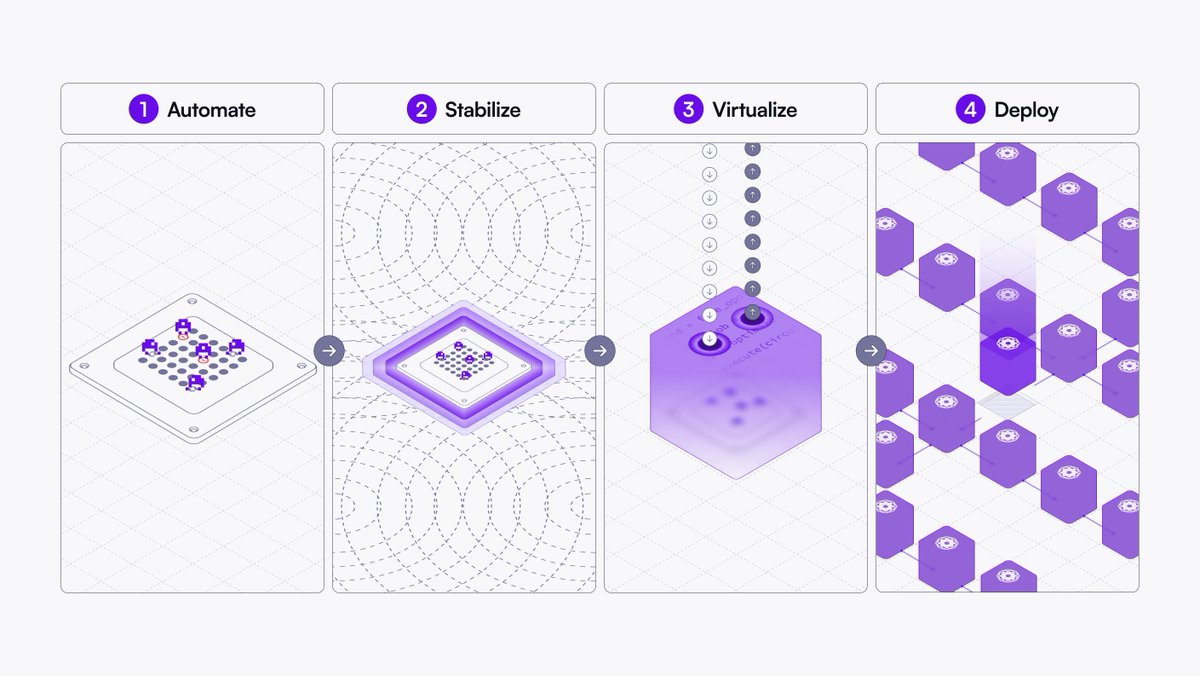
The #quantum industry often prioritizes R&D benchmarks over the needs of end users who require deployable, interoperable systems.
In our latest article for @QuantumDaily we share our view that it’s time to embrace a customer-value-centric approach.
buff.ly/fa94MMD
English
@montezumachavez I used to work with a guy who saw Fourier transforms in bathroom tile. Singapore sees the pattern in agentic risk. Canada just sees the mess.
English

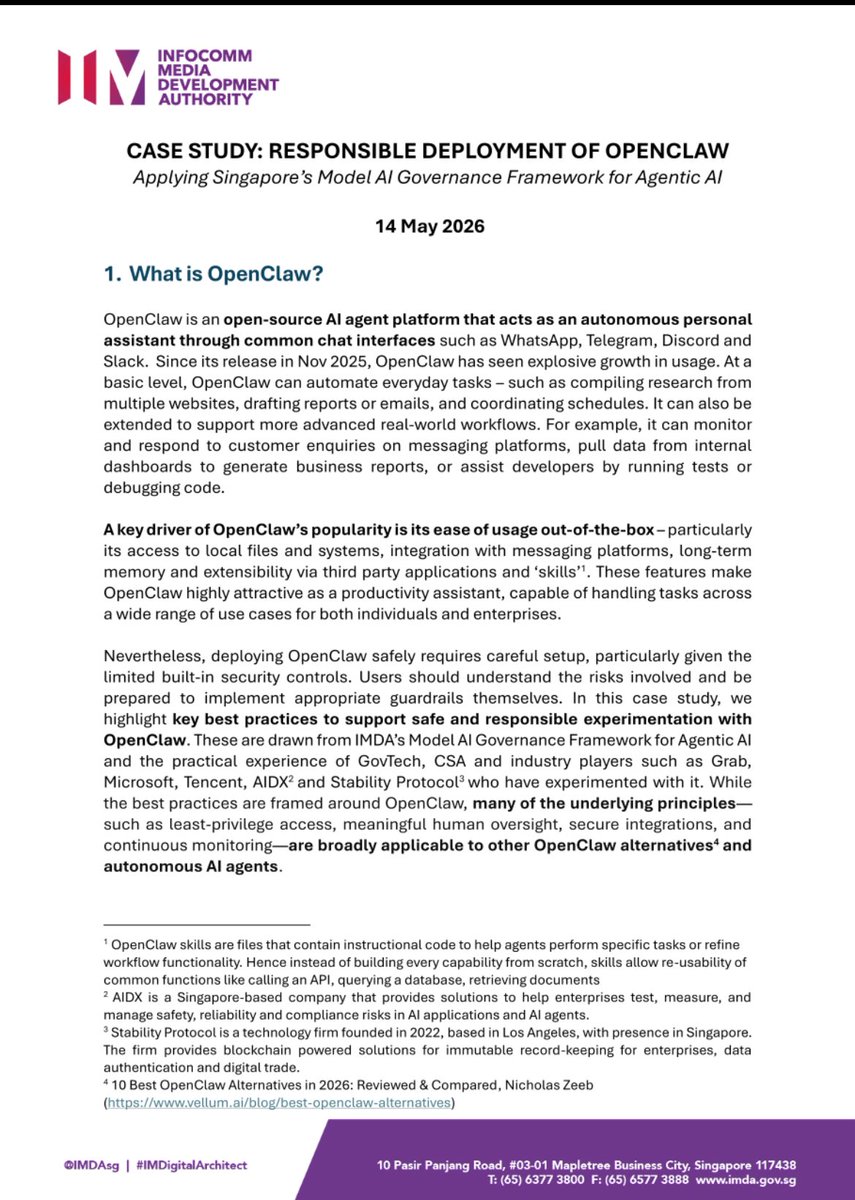
Singapore's IMDA released a Case Study (essentially an advisory) on the responsible deployment of OpenClaw. - Josh Lee Kok Thong.
English
@techczech What software is will change. What I maintain won't.
English

The new AI generated code is solving old problems that were previously not economically valuable enough to devote scarce development resources to. The productivity impact of these will be gradual and cumulative. But also what software is will change.
François Chollet@fchollet
The quantity of code that devs ship has roughly 10xed. But net developer productivity (value created by unit of time) is only up by a bit, if at all. Part of it is that the additional code is solving more incremental problems. A bigger part is that the new code is creating problems of its own.
English
@faythebest @_amplium Warm light and an unmade bed. Only place I'd wear that thing and still feel sane.
English

Immersive videos for Apple Vision Pro are releasing so fast and in high-quality. @_amplium is the right app to find them. #AppleVisionPro isn’t dead, people are still investing in it. #Apple #Immersive #SpatialComputing
English
TechGray CA retweetledi

We are accepting abstracts for #UASS26! We are looking for impactful presentations in areas such as small UAV, big data, and more. Submit yours today: uas.bbiconferences.com/ema/DisplayPag…

English
@LogisticsStuff He saw Fourier transforms in bathroom tile. I only see weak links.
English
Strategic sourcing is a process that organizations use to identify, qualify, and select suppliers for goods and services. It is a long-term approach to procurement that focuses on maximizing value and minimizing risk. Further details? supplychaintoday.com/what-is-strate…
English
@Transform_Sec @ComputerWeekly @IMFNews I used to run these systems. Build cheap, ignore upkeep, act surprised. IMF shows up late. Same story.
English

#AI cyber attack threatens global financial crisis, warns International Monetary Fund
buff.ly/5BimVGl
@ComputerWeekly @IMFNews #tech #business #leadership #management #cyberthreats #cyberattacks #databreaches #cybercrime #CISO #CIO #CTO #CEO #AIrisks #cybersecurity

English
TechGray CA retweetledi

Waste isn't an accident. It's a design choice.
Products built to replace, not repair. Supply chains that reward volume, not maintenance. A system designed for disposal.
That has to change. #RepairDontWaste #RightToRepair #Ewaste #ukmfg
English
@KineisIoT A team I worked with in northern Quebec burned six months trying to backhaul sensor data over store-and-forward radio. Satellite IoT would have delivered it in minutes.
English

What concrete problems does satellite connectivity solve? 🌍
What happens when there’s no network coverage? From oceans to remote infrastructures, connectivity gaps are a real challenge, but they’re not inevitable.
Cécile Morel shares how Satellite IoT is changing the game in this new episode of Ask a Kinéis Expert.
As satellite connectivity continues to address critical coverage challenges across industries, these conversations will also take place at #SatelliteAsia2026 in Singapore, where Cécile Morel will be attending from May 20–22 alongside other satellite communication players.
Satellite connectivity is opening new possibilities for industries requiring reliable, low-power, and global coverage, from maritime and environmental monitoring to transport and logistics.
If you’re attending the event, let’s connect and discuss how Satellite IoT can support your operations anywhere on Earth.
👉 Explore our connectivity solutions: eu1.hubs.ly/H0vjh--0
English
Exactly. I keep saying the real carbon win is operational. Fuller trucks. Fewer loads. Actual math.
Becky Boyd@BeckyJBoyd
Three Operational Changes That Actually Move the Needle on Sustainability #greensupplychain #sustainability hubs.la/Q04g1Gk00
English
I used to worry about AI agents hallucinating. Now I worry about Canadian infrastructure being too brittle to catch them when they do. We bolted autonomy onto systems with no reflexes and called it transformation.
English
TechGray CA retweetledi

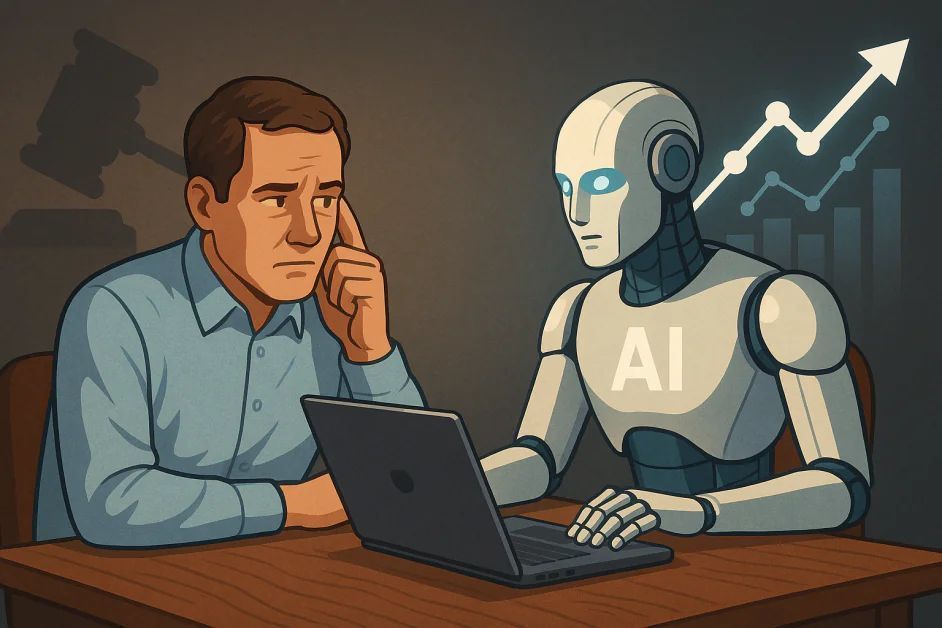
The Learning-Authority Dilemma: What Happens When #AI Agent Capability Exceeds Human Oversight?
buff.ly/ifRT7HD v/ @UniteAi
#GenerativeAI
Cc @DeepLearn007 @EvanKirstel @marcusborba @dinisguarda @BetaMoroney @asokan_telecom @ahier
English