Calum Miller

21.5K posts

Calum Miller

Calum Miller

@calummiller

Where Independent minds collide

Prestonpans Katılım Şubat 2009
706 Takip Edilen754 Takipçiler
Calum Miller
Calum Miller@calummiller·
“Managed decline”? More wilful free-fall
Annemarie Ward 💜@Annemarieward

This is what managed decline looks like when it’s dressed up as concern. Six billion pounds. Let that sit for a second. Not a rounding error, not a line in a budget, but the price tag of a system that has quietly made peace with failure. And still, the language is careful, polite, almost apologetic. “The price of inaction is too high.” No. The price of this action is already catastrophic. You’ve got rising deaths, the worst rate in Europe, billions drained from the public purse, and what’s the response? More of the same. More process. More programmes. More carefully worded sentences about “widening access” while the outcomes move in the wrong direction. This is the part no one wants to say out loud. If your strategy costs billions, produces worse results year on year, and still calls itself progress, it’s not a strategy. It’s a belief system. And belief systems don’t respond to evidence, they absorb it. “Drug harms are avoidable,” the report says. Quite right. But only if you’re willing to confront the uncomfortable truth that managing addiction is not the same as treating it, and stabilising chaos is not the same as restoring a life. Instead, we get theatre. Consumption rooms presented as solutions, naloxone handed out like a long-term plan, and an entire ecosystem of organisations whose survival depends on the crisis never actually ending. And here’s the sting in the tail. The real cost isn’t six billion. That’s just the number you can print. The real cost is the quiet decision, made over years, that some people will never recover, and that the best we can do is keep them alive just long enough to count them in next year’s statistics. You don’t spend six billion pounds a year because the problem is unsolvable. You spend it because you’ve stopped trying to solve it. Instead, we have built an entire architecture that can explain failure, fund failure, and survive failure, but cannot end it. The tragedy here is not just the deaths, though God knows that is enough. It is the shrinking of our moral ambition. We have gone from believing people can recover, to hoping they survive, to quietly planning around the assumption that many never will. If that is the settlement, then let’s at least be honest about it. But don’t call it progress. Don’t call it evidence-led. And for heaven’s sake, don’t call it compassionate. Because real compassion does not lower the bar to meet despair. It raises people out of it.

English
0
0
0
7
Calum Miller retweetledi
Matt Ridley
Matt Ridley@mattwridley·
Which is exactly why home produced gas would be much cheaper. Liquefying the stuff and transporting it is very expensive. Good grief, do people not know this?
Tara Singh@RenewableUKCEO

@afneil Hi Andrew — you’re right there are regional hubs. But the UK NBP increasingly relies on LNG to balance the system, and cargoes go to the highest bidder globally. So the price here is increasingly set by the marginal LNG cargo — i.e. a global price, not a domestic one 1/2

English
24
96
538
30.2K
Calum Miller
Calum Miller@calummiller·
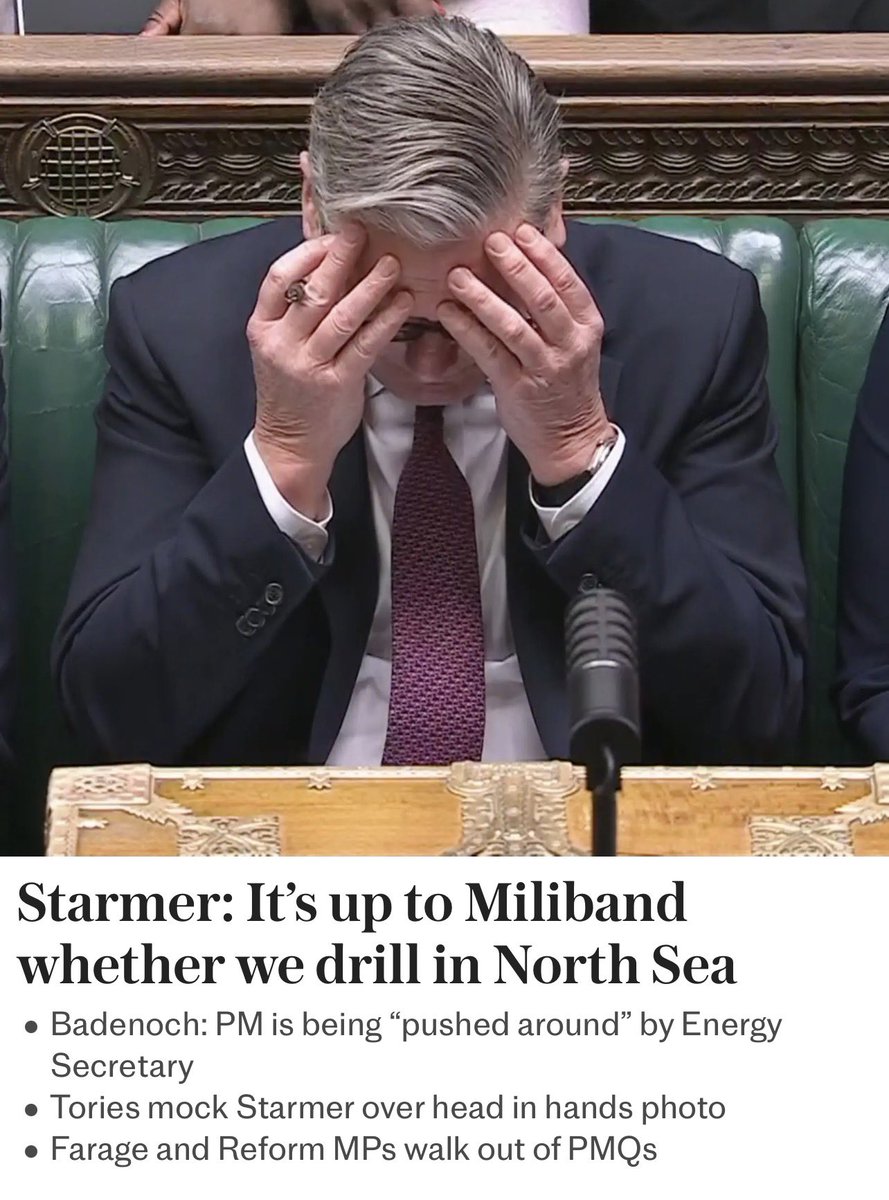
Unlike Scottish North Sea Oil & Gas workers, Starmer will return home not having to explain why he’s lost his job to the Climate Cult.
Calum Miller tweet media
English
0
0
0
15
Calum Miller
Calum Miller@calummiller·
The last energy crisis taught the UK government nothing about preparedness for the current: systemic failure is on auto repeat.
English
0
0
0
19
John Stepek
John Stepek@John_Stepek·
Gold. It's a geopolitical hedge. A good asset for bad times. You know, the sort of portfolio diversifier you might expect to hold up reasonably well during times of war. So why has it tanked? bloomberg.com/news/newslette…
English
19
6
33
8.4K
Calum Miller retweetledi
Kathryn Porter
Kathryn Porter@KathrynPorter26·
This chart illustrates the problem with weather-based renewables and why @Ed_Miliband is wrong to suggest we should base our energy policy around them Over the past week we barely generated half the potential we have installed - only 3% of the time was output above 16 GW (we have about 32 GW installed) However for a third of the time (32%) output was below 10% ie of the 32 GW installed we were actually generating less than 3.2 GW Clearly we relied on gas to fill in the gaps. There is no storage technology that could fill such a large hole for such an extended period Now consider the £billions we're spending on renewables. This chart shows just what a bad deal we're getting: expensive and insecure energy Time for a new plan (and a new Energy Secretary) @ClaireCoutinho @AndrewBowie_MP @griffitha @NJ_Timothy @DavidGHFrost @mattwridley @cmackinlay @Iromg @AllisonPearson @afneil @EdConwaySky @MerrynSW @mattotele
Kathryn Porter tweet media
English
49
456
1.1K
16.4K
Calum Miller retweetledi
Jim Sillars
Jim Sillars@NaeFear·
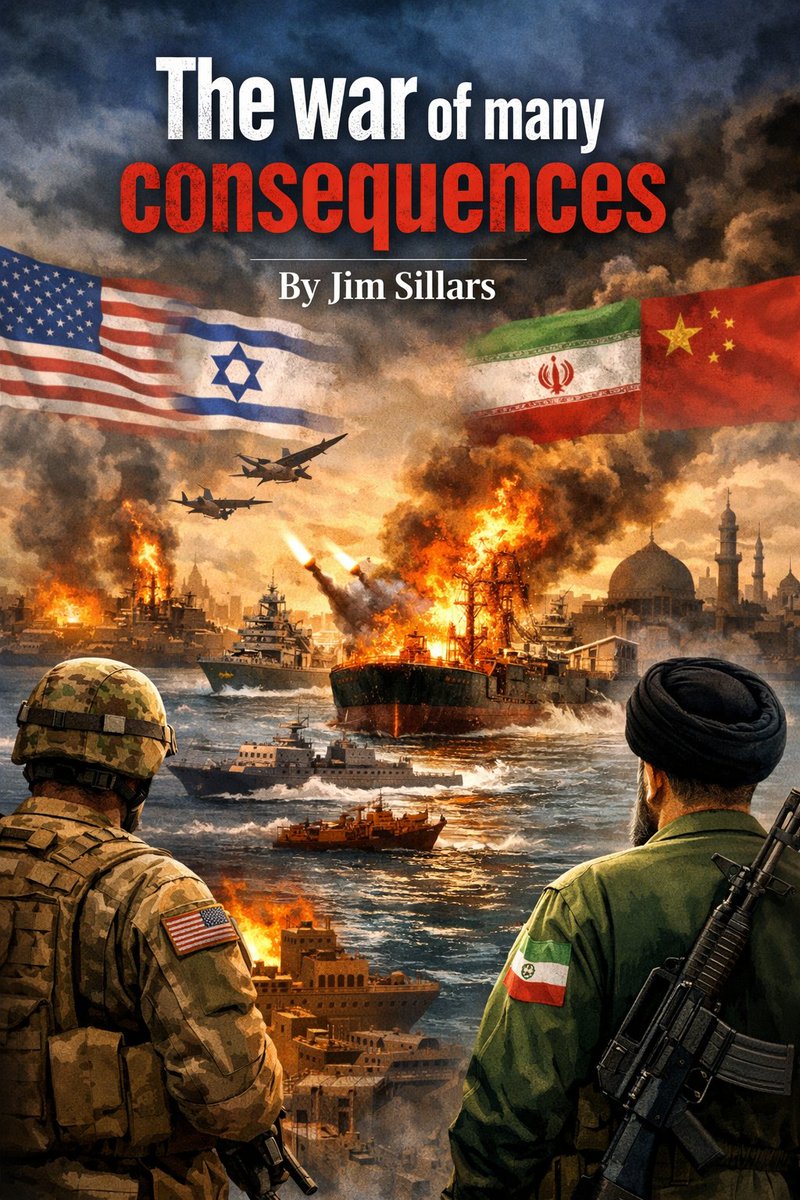
Another Yessay on the YesThink Website.
Jim Sillars tweet media
English
1
4
2
551
Calum Miller retweetledi
Mario Nawfal
Mario Nawfal@MarioNawfal·
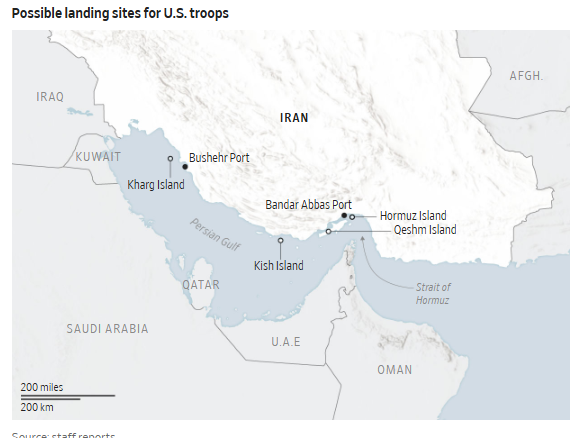
🇺🇸🇮🇷 The island play might be Trump's only clean exit... The USS Tripoli is a week away with 2,200 Marines and F-35Bs. Three islands are reportedly in play. Kharg Island handles 90% of Iran's oil exports. Seize it and you hold Tehran's revenue hostage without wrecking global markets. Qeshm Island sits at the mouth of Hormuz with tunnels packed with fast-attack boats and missiles. Take it and you control the chokepoint itself. Hormuz Island hosts the small naval craft harassing shipping. Clear it and tankers can move again. None of them are technically Iranian mainland, which lets Trump claim "no boots on the ground in Iran" while Marines plant flags offshore. And the deeper play: every barrel of Iranian crude bound for China passes through these waters. Control the islands, control Beijing's energy supply. No tariff could ever match that leverage. Source: WSJ @x4rius
Mario Nawfal tweet mediaMario Nawfal tweet media
Mario Nawfal@MarioNawfal

Tonight will be a bad night for the Gulf Iran will retaliate hard for the strikes on their largest gas field

English
260
384
1.8K
275.7K
Calum Miller retweetledi
John Stepek
John Stepek@John_Stepek·
This is depressingly good
Polemic Paine@PolemicTMM

Today's Post Hormuz: Britain's Second Suez, Not America's First polemicpaine.substack.com/p/hormuz-brita… In 1956 America threatened the pound and Britain had to stop. Now America threatens to withdraw the shield and Britain has to join in. Same mechanism. Different instruction. In the Suez crisis Britain risked humiliation. This time it risks being left defenceless. The government has spent years building policy silos precisely so the contradictions never meet. Hormuz just knocked the walls down

English
3
8
35
5.7K
Calum Miller retweetledi
Electroverse
Electroverse@Electroversenet·
Europe's official grid authority has released its report on the nationwide blackout that hit Spain last year. And while the report treads carefully politically, its data make the cause clear. Wind and solar triggered the collapse. Within the first 80 seconds, Spain lost 2.5 GW of generation, around 10% of its national supply, with every MW of that early loss coming from renewables. Gas and hydro remained stable until the cascade was already underway. The report calls it an unprecedented speed of blackout. This was a textbook inverter chain failure, with renewables dropping so fast that the grid's stabilizers never had time to react. By midday, Spain's grid had virtually no inertia, nothing spinning fast enough to hold frequency steady. But to admit that outright would mean questioning Europe's green transition itself, something the report appears unable to do. So the event is officially described as "a rare local disturbance," rather than what it actually was... A systemic failure of weather-dependent power.
English
206
3.5K
7.4K
611.6K