judith smith

10.1K posts

judith smith

judith smith

@captain_judith

Bell ringer, database analyst, gardener, local organic food enthusiast, Episcopalian

Katılım Şubat 2013
122 Takip Edilen59 Takipçiler
Sama Hoole
Sama Hoole@SamaHoole·
@foutaises2022 The taxation case doesn't depend on long-distance trade. It depends on the assessor being able to see the food before it's harvested. Standing wheat is countable. A cow in the woods is not. That's the whole mechanism.
English
4
0
16
1K
Sama Hoole
Sama Hoole@SamaHoole·
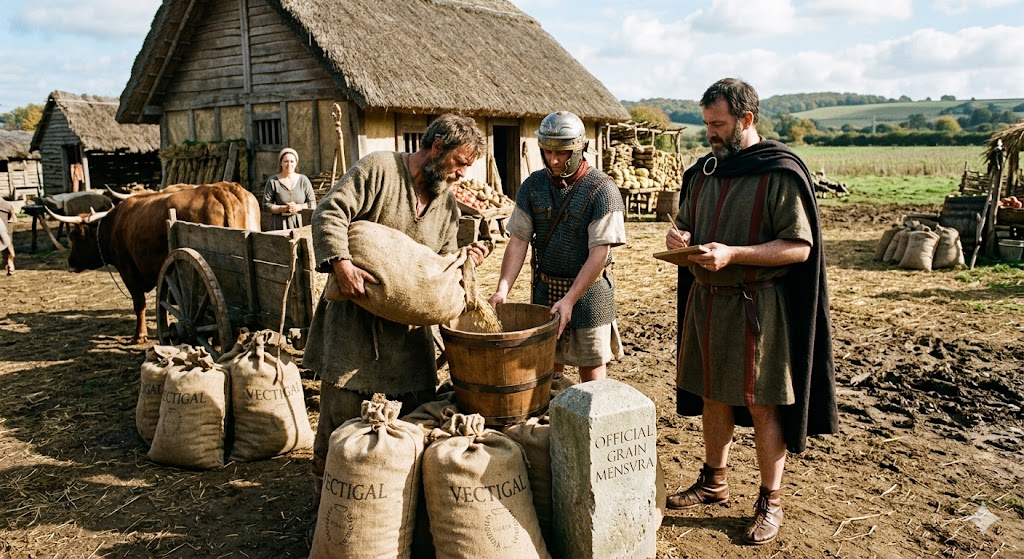
There is a question every history teacher could ask their class and almost none ever do. Why grain? Why, of all the foods a human being can eat, did every early state on earth, Egyptian, Sumerian, Chinese, Roman, Aztec, Inca, build its tax base on grain. Not on cattle. Not on fish. Not on tubers. Not on the protein-dense, calorie-dense, nutrient-complete foods that humans had been thriving on for two and a half million years before anyone planted a seed in a row. Grain. The answer is not that grain was the most nutritious. It demonstrably was not. The skeletal record of every population that transitioned from foraging to grain agriculture shows the same pattern. Average height drops by four to six inches in a generation. Bone density collapses. Dental caries appear for the first time in the human archaeological record. Iron deficiency, vitamin A deficiency, vitamin D deficiency, all of them appear in the bones of the first farmers and not in the bones of the foragers they replaced. The answer is not that grain was easier to produce. Hunting a deer in a temperate forest is, calorie for calorie, considerably more efficient than ploughing, planting, weeding, harvesting, threshing, winnowing, and milling a field of wheat. The forager spent four hours a day on subsistence. The farmer spent twelve. The answer is taxation. Grain is the most legible food a state has ever encountered. It ripens at a known time, in a known place, in a known field, owned by a known farmer. It is harvested all at once. It is countable. It is storable. It is divisible. A tax assessor can stand at the edge of a field in August, look at the standing wheat, estimate the yield within ten percent, and know exactly how much the man who farms it owes the state when the threshing is done. You cannot do this with a cow. The cow walks. The cow can be moved. The cow can be hidden in the woods when the assessor arrives. The cow gives milk on a schedule the assessor cannot predict and meat at a moment of the farmer's choosing. The cow does not ripen. The cow does not present itself for counting. The cow is, from the perspective of a state trying to extract a percentage of the food supply, an administrative nightmare. You cannot do this with a fish either, or a deer, or a wild pig, or any of the other foods a free human being might eat in a landscape that has not yet been carved into rectangles for the convenience of a clerk. James Scott, the political scientist who wrote this analysis up in detail, called grain the foundation of state legibility. The state can see grain. The state cannot see anything else. And once the state has built itself on grain, the state needs grain. Needs it badly. Needs every farmer in its territory growing it, paying it, depending on it, because the moment the farmer can feed himself on cattle or pigs or fish or the wild boar in the forest, the farmer has options. The farmer with options is not a taxpayer. The farmer with options is a man who can walk away. So the state does what every state has done for six thousand years. It privileges grain. It subsidises grain. It builds its temples around grain. It ascribes moral virtue to grain. It tells the farmer that the eating of bread is the mark of a civilised man and the eating of meat the mark of a barbarian. It restricts hunting. It encloses the commons. It taxes the cow at a rate the farmer cannot pay so the farmer sells the cow and buys the grain. Six thousand years of this. And then a nutritional establishment funded by grain processors and seed oil manufacturers tells you, in 2026, that the optimal human diet is grain at the base of a pyramid and red meat at the top in a sliver too thin to read. They did not invent the lie last week. They inherited it. From the first man who ever stood at the edge of a wheat field with a clipboard.
Sama Hoole tweet media
English
79
698
2.2K
61.6K
giovanni gallucci🌲🏕️
@SamaHoole The terrain dictates the animal. The animal dictates the food. American producers keep trying to skip that chain and then wonder why the product doesn't taste right.
English
3
6
109
6K
judith smith retweetledi
Sama Hoole
Sama Hoole@SamaHoole·
Feta cheese, the protected designation of origin product that Greece has been quietly making for three thousand years, is by EU law made from at least 70% sheep milk and up to 30% goat milk. Not cow milk. Specifically not cow milk. There is a reason for this. Cows do not thrive on the limestone hills of mainland Greece. The terrain is too steep, the grazing too sparse, the summers too dry. A cow placed on a Greek hillside in August will look at you with the expression of an animal that has been deeply misunderstood. Sheep and goats are, however, fine. Sheep handle the slopes, goats handle the scrub, and between them they convert a landscape that grows almost no human food into the cornerstone protein and fat of an entire civilisation. The Mediterranean diet, currently sold in supermarkets as a kind of vague olive-oil-and-tomato lifestyle, was historically a sheep-and-goat-and-bread-and-occasional-fish diet. The olive oil was a condiment. The cheese was the protein. The cheese was made from animals that lived on land that produced nothing else. When Greek hospitals studied centenarians on the island of Ikaria, they found the dietary common factor was not the olive oil. It was the daily consumption of goat milk, goat cheese, and herbs gathered from the hillside the goats had been grazing. The longevity wasn't olive-derived. The longevity was goat-derived. The marketing department got there first.
Sama Hoole tweet media
English
116
1.1K
5.7K
180.6K
judith smith
judith smith@captain_judith·
@matheson37473 @SamaHoole I think you need to read more carefully. Yes, the bulk of crops is fed to animals. But these tweets are about animals on managed pasture, not animals kept in lots feed only grain. Different cases entirely. I do know about managed pasture and he's right in the money
English
0
0
1
8
Nigel Matheson
Nigel Matheson@matheson37473·
@SamaHoole Who is going to tell him that bulk off crops is fed to animals? Please don't anyone fall for this guys disingenuous nonsense. Listen to experts not some guy posing with his top off in his twitter profile.
English
10
0
7
1.3K
Sama Hoole
Sama Hoole@SamaHoole·
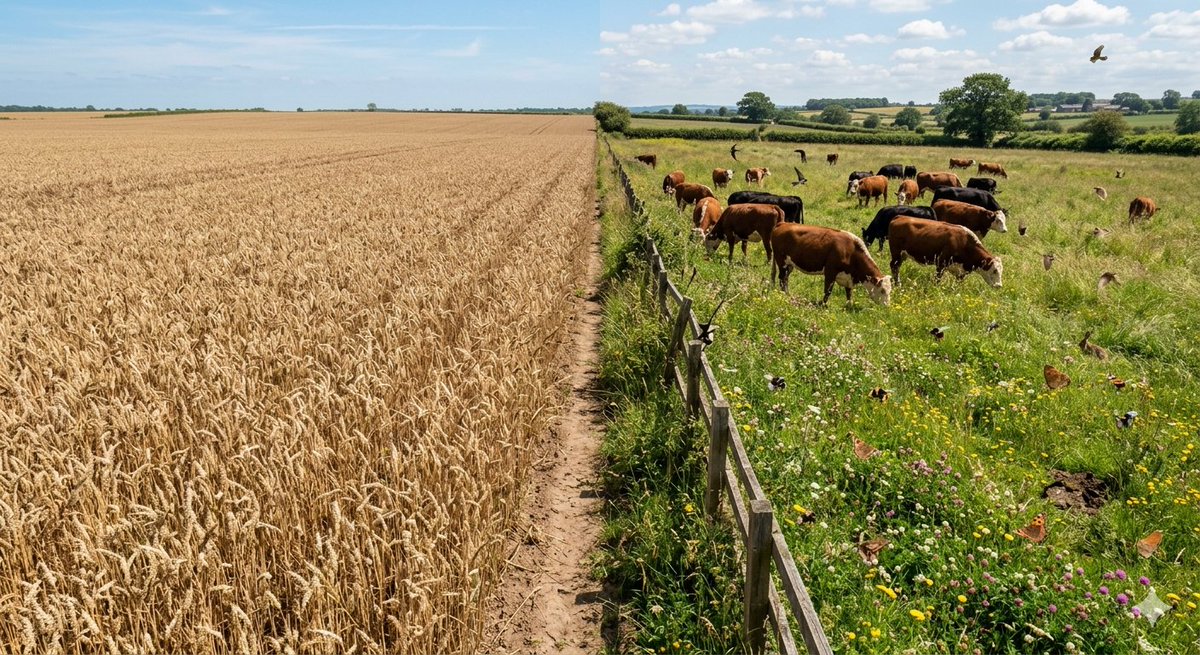
Walk across an arable field of British wheat in summer. Count the species. You will find: wheat. Possibly a few resistant weeds the herbicide didn't catch. A handful of crows. Some pigeons surveying for damage. Roughly nothing else. Walk across a properly managed permanent pasture in the same county. You will find: 30 to 60 plant species in a good sward. Wildflowers. Clover. Vetches. Plantain. Ryegrass and timothy. Foraging bumblebees. Skylarks nesting in the longer patches. Hares in the margins. Beetles, dung beetles in particular, doing the work of two ecosystems at once. Field voles, kestrels overhead waiting for them. Swallows hoovering up insects above the cattle. The cattle are the reason the second field is biodiverse. Their grazing maintains the open structure. Their dung feeds the invertebrate web. Their hooves create the disturbance ground-nesting birds require. Remove the cattle, the pasture turns to scrub, and the species count crashes. The farm with the cows is the wildlife refuge. The farm with the wheat is the empty room. This is the inversion that nobody who writes for a Sunday supplement has worked out yet.
Sama Hoole tweet media
English
68
1.3K
4.5K
60.9K
judith smith retweetledi
Micah Erfan
Micah Erfan@micah_erfan·
The Voting Rights Act was reauthorized by Reagan and Bush, and enforced by a Republican Supreme Court majority for 55 years. The idea that it was far-left partisan Democratic legislation is just ahistorical.
Micah Erfan tweet media
English
466
5K
13.3K
317.5K
judith smith retweetledi
DavidoPolice
DavidoPolice@DavidoPolice·
Many Americans today have mixed opinions about Barack Obama. Some admire him, others criticize him. But for those of us who come from outside, the reality is often different. Believe it or not, no American president has ever left such a strong impression around the world as Barack Obama. He embodied hope, respect, intelligence, and dialogue. He represented a powerful image of America: open, inspiring, and close to the people. For many of us, Obama was not just a president; he was a symbol. A symbol that everything is possible, that social background, skin color, or personal history should never be limits. He restored confidence to millions of young people around the world. He spoke to the world with dignity, calm, and responsibility. He knew how to unite instead of divide. No matter the internal political debates, internationally, Barack Obama will forever remain one of the most respected, loved, and admired American presidents. His legacy goes beyond borders. And his name will remain engraved in history.
English
1.9K
5.7K
30.2K
885.6K
judith smith retweetledi
Grok Got Talent
Grok Got Talent@GrokGotTalent·
King Charles III quietly did something genuinely moving during his state visit to the United States. A lifelong environmentalist who has championed conservation for over five decades often at the cost of ridicule from the British press the King ended his trip by visiting Shenandoah National Park in Virginia. There, he sat with park rangers, swore in a new group of Junior Rangers, met Buddy the bald eagle, and unveiled a new partnership between Shenandoah and Scotland’s Cairngorms National Park. This is the same man who converted his own estate to organic farming back in 1986, long before it was fashionable. A foreign monarch showing up with real curiosity and respect for America’s public lands felt refreshingly sincere. And yet, it barely made a headline. That silence is telling. When a visiting head of state reminds us of the value of our own national parks more visibly than our own leadership, something has gone wrong. For decades, King Charles has put his credibility on the line for the natural world. Meanwhile, America’s public lands have faced aggressive rollbacks: the weakening of protections like the Roadless Rule, opening tens of millions of acres of national forests to logging and mining, and efforts to sell off large portions to private interests. It’s a stark contrast. One man has spent a lifetime planting trees and defending nature. The other treats the outdoors primarily as a backdrop for golf courses. Our public lands deserve better than being viewed as a development opportunity. They belong to all of us and they’re worth protecting, not selling.
Grok Got Talent tweet media
English
270
4.3K
16.7K
400.7K
judith smith
judith smith@captain_judith·
@Ladyinw8in55324 @SamaHoole @james_scarratt The first step is having an actual intelligent, nuanced discussion about sheep vs plastic. And then actually looking at overgrazing and why it is happening. The current blunt approach, and this worship of plastic as green, is not helpful.
English
2
0
0
10
judith smith retweetledi
Sama Hoole
Sama Hoole@SamaHoole·
A sheep eats grass on a Welsh hillside where nothing else will grow. The slope is too steep for a tractor, the soil too thin for a plough, the rainfall too relentless for crops. In return it provides: - Wool (renewable clothing that biodegrades back into soil) - Meat (complete nutrition in one package) - Lanolin (waterproofing, cosmetics, leather conditioning) - Sheepskin (insulation, clothing, rugs that outlast the sofa) - Bones (tools, broth, fertiliser) - Manure (soil building, free of charge) All from grass on terrain that no other food system can touch. The environmental alternative is petroleum-based fleece that sheds microplastics into every river, synthetic insulation spun from fossil fuels, and food imported from industrial agriculture that's busy turning prime farmland into dust. But the sheep grazing on a cliff in Snowdonia is the problem. Make it make sense. I'll wait.
Sama Hoole tweet media
English
13
326
1.2K
9.5K
judith smith retweetledi
Sama Hoole
Sama Hoole@SamaHoole·
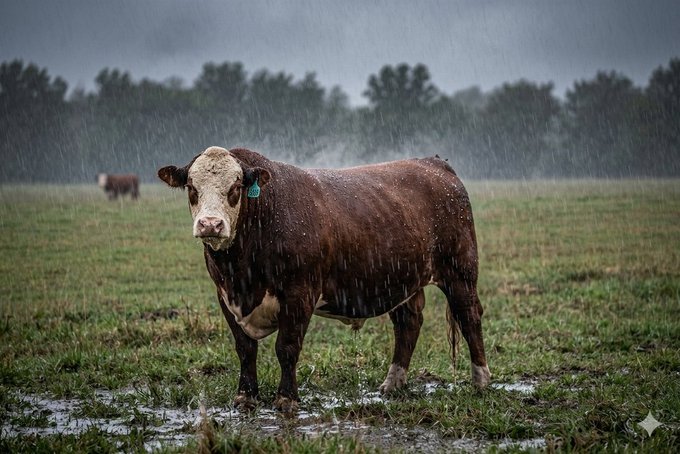
A piece of British permanent pasture, grazed continuously for a hundred years, will be in better condition than the same piece of land left ungrazed. This sounds counterintuitive. It is not. Grass is a co-evolved species. It evolved alongside large herbivores for the last 25 million years. The grasses we have today are the ones whose ancestors developed strategies for being eaten. They grow from the base, not the tip, so being grazed does not damage the growth point. They store energy in their roots, which are stimulated by above-ground cropping. Their seed dispersal depends, in many cases, on passing through a ruminant gut. Grass is not an inert plant being eaten by an animal. Grass is half a partnership, and the partnership has been running for longer than primates have existed. Take the herbivore away, and several things happen. First, the leaf litter accumulates. The grasses cannot self-clear. Within two or three seasons, the dead material smothers the new growth, and the sward thins. The fine-leaved species lose ground. The coarse species, which compete for light rather than ground access, take over. Second, the soil compacts in a different way. The hooves of grazing animals create small depressions, mix in litter, distribute seeds, and break up surface crusts. This sounds destructive. It is not. It is the disturbance regime that grassland soils have been calibrated for. Third, the dung and the urine stop arriving. The nutrient cycle on a grassland depends on returning nitrogen, phosphorus, and potassium to the surface in concentrated, biologically processed form. Manure is not a contaminant. Manure is the fertiliser the system was designed to receive. Fourth, the seeds stop being moved. Approximately a quarter of British grassland plant species are dispersed primarily by livestock, in the dung, on the wool, in the mud on the hooves. Without livestock, the diversity of any single field begins to decline within a decade. Fifth, the soil microbial community begins to shift. The mycorrhizal networks that connect grasses to each other are partly maintained by the carbon flow that grazing stimulates. Without the grazing, the network thins. All of this happens slowly. The argument that British grasslands would benefit from removing livestock is, in any honest assessment, the same argument as: the field would benefit from being abandoned. The field would not benefit from being abandoned. The field would, within a decade or two, become something else, and that something else would be of significantly lower ecological, agricultural, and aesthetic value than the field that was there. Gerald is in his field. The field is doing fine. The relationship is doing what the relationship was designed to do. Twenty-five million years of co-evolution does not need a five-year strategy paper to validate it.
Sama Hoole tweet media
English
9
175
567
6.4K
judith smith retweetledi
Sama Hoole
Sama Hoole@SamaHoole·
Myth: "I only wear vegan fabrics. Better for the animals, better for the planet." Let's check in on Doris's annual contribution. Once a year, in late spring, Doris is sheared. The procedure takes approximately three minutes. Doris does not enjoy it. Doris does not, by any visible measure, suffer from it. Doris is, immediately afterwards, a noticeably more comfortable animal in the British summer. The fleece weighs approximately 3 kilograms. It is sold to the British Wool Marketing Board for, depending on the year, between £0.40 and £2.50 per kilogram. The shearing costs more than the wool fetches. Brian is shearing Doris at a loss. The wool is then: - Naturally flame-retardant - Naturally antibacterial - Moisture-wicking - Biodegradable - Renewable, annually - Carbon-storing while in use The replacement, in performance fabrics: - Polyester - Polyamide - Acrylic - Polypropylene - All petroleum-derived - All shedding microplastics on every wash - All requiring fossil fuel inputs to produce - All non-biodegradable, with a typical landfill lifespan of 200-500 years A single wash of a polyester fleece can release up to 700,000 microplastic fibres into the water system. These fibres are now in: every tested water source on earth, every tested human placenta, every tested rainfall sample, the deep ocean, the Arctic ice, and the lungs of marine mammals. A single wash of a wool jumper releases: nothing. The wool, when eventually disposed of, returns to soil within a few years. The fabric being marketed as the "ethical" alternative to wool is plastic. The plastic is "ethical" because nobody has been asked to slaughter the polymer. The polymer also has not been asked. Doris, by being a sheep on a fell, is producing the most thoroughly sustainable performance fabric humans have ever made. Brian is selling it at a loss. The fashion industry, meanwhile, is selling petroleum at a profit and calling it ethical. Reject plastic. Wear wool. Doris is, this morning, growing next year's batch.
Sama Hoole tweet media
English
269
3.3K
12K
181.2K
judith smith retweetledi
Sama Hoole
Sama Hoole@SamaHoole·
Myth: "Eating beef is destroying the Amazon" Let's check in on Gerald's geography. Gerald is in Herefordshire. Herefordshire is approximately 9,200 kilometres from the Amazon rainforest. Gerald's diet: - Grass (grown on his own field) - Silage (grown on the same farm) - A small amount of brewers' grains in winter (a brewing byproduct, sourced from a Worcestershire brewery) Gerald's contribution to Amazon deforestation: zero kilometres of rainforest, zero hectares cleared, zero soya imported, zero ranching land in any of the Brazilian biomes. Now consider the headline. The "beef destroys the Amazon" argument is, when traced to source, a description of Brazilian beef cattle ranching expanding into cleared tropical forest. This is real. It is a serious environmental problem. It deserves attention. The argument applies to: - Brazilian beef - Argentinian beef from cleared land - A specific subset of Latin American grazing operations The argument does not apply to: - British beef - Welsh beef - Scottish beef - Irish beef - Most European beef The Welsh hills were deforested approximately 3,000 years ago, by Neolithic humans. There is no rainforest in Wales. There has not been one for several millennia. Welsh beef cannot, by any geographic measure, drive Amazon deforestation. The animal grazing on a Welsh hillside is grazing on a hillside that was open before the pyramids. When somebody applies the "Amazon" argument to a steak from Aldi, they are applying a problem from one country to a different country 9,000km away. This is not climate analysis. This is geographic confusion sold as concern. The honest version of the argument is: don't buy Brazilian beef. Buy local. Buy British. Buy from the farmer down the road. The dishonest version is: don't eat Gerald. Gerald is in the south corner. The south corner is in Herefordshire. Herefordshire is not Brazil. The map is the answer. Read the map.
Sama Hoole tweet media
English
29
288
1K
10.7K
judith smith retweetledi
Sama Hoole
Sama Hoole@SamaHoole·
You ever notice how Americans on holiday in Europe drink milk and don't get bloated? It's worth asking why. It comes down to the regulation. 🇺🇸 American dairy: - Cows injected with synthetic growth hormone to push yields. Legal since 1993. - Labelling is voluntary, so most cartons stay quiet about it. - Legal pus limit: nearly double the British one. - 80% of cows never see grass. Concrete sheds. Corn and soya from a feed lorry. - 90% one breed (Holstein), bred for volume. Watery. Almost all A1. - A1 milk is the variant most guts struggle with. - Routine antibiotic dosing of healthy cows. Still standard. - Default carton: ultra-pasteurised. Cooked to last for months. - Raw milk across state lines: federal crime. 🇬🇧 British dairy: - Synthetic growth hormone banned since 1999. Never entered the supply. - Legal pus limit roughly half the American one. Sicker cows pulled, faster. - 92% of dairy farms still pasture-based. Cows on grass for the season. - Real breed mix. Jerseys. Guernseys. Shorthorns. Higher butterfat. More A2. - A2 is the variant most guts handle without complaint. - Routine antibiotic dosing of healthy cows: banned in 2022. - Default carton: pasteurised once, lightly. Lasts a week. Tastes like milk - Raw milk: legal direct from the farm. One country runs its dairy on grass, weather, and a thousand years of breed knowledge. The other runs it on concrete, corn, and a syringe. The next time someone tells you they can't drink milk, ask which country's milk they tried. The answer is almost always the one where the cow never saw the sun.
English
24
149
580
16.1K
judith smith retweetledi
Dan Qayyum
Dan Qayyum@DanQayyum·
What did Charles actually do? He praised NATO in front of its loudest critic. He championed climate action in front of a climate denier. He called for interfaith dialogue during an administration that has banned citizens from Muslim-majority countries. He praised checks and balances on executive power to a room full of lawmakers who have been unable to exercise them. He referenced the Middle East crisis that is currently straining the alliance he was there to celebrate. He defended the Royal Navy after Trump publicly insulted it. And he did all of this while receiving standing ovations, bipartisan laughter, and a dinner invitation.
Dan Qayyum@DanQayyum

x.com/i/article/2049…

English
539
5.9K
21K
510.8K
judith smith retweetledi
Sama Hoole
Sama Hoole@SamaHoole·
A British egg in 1955 came from a hen that had been outside that morning. The hen had eaten grass, slugs, beetles, worms, and whatever the farmer's wife had thrown into the run from the kitchen. The yolk of the egg was orange, occasionally so deep an orange it looked almost red. It stood up in the pan when you cracked it. The white was thick enough that you could lift the egg by its yolk on a fingertip if you were careful and the egg was fresh enough. The hen produced perhaps 180 eggs a year. The flock was small, twelve to twenty birds, attached to the farm or the smallholding or the back garden. Eggs were seasonal, abundant in spring and summer, scarce in autumn, almost absent in winter. A British family in 1955 ate eggs when the hens were laying and ate something else when they weren't. A British egg in 2026 comes, in the overwhelming majority of cases, from a barn of 16,000 birds confined under artificial light at carefully controlled temperature, fed a formulated diet of soy, wheat, and synthetic vitamins, producing 320 eggs a year per hen by extending the lay through the winter dark months. The yolk is yellow because the feed contains a synthetic carotenoid called canthaxanthin, dosed to produce the colour the consumer expects. The yolk does not stand up in the pan. It collapses under its own weight, spreading thin across the surface like a slow puddle. The pasture-raised egg contains roughly three times the omega-3, twice the vitamin E, considerably more vitamin A and D, and more folate than the commodity egg. The peer-reviewed literature has been saying this for twenty years. The egg has been the standard breakfast protein on the British plate for four hundred years. The modern egg looks like the old egg, costs roughly the same, and delivers approximately a third of the nutrition. The British shopper, examining the box at Tesco, has no way of knowing this. "Free range" means the hen had access to a door that was theoretically open at some point during her productive life. A pasture-raised egg from a small producer at the farmers' market costs approximately 50p. A commodity egg from Tesco costs approximately 25p. The price difference is the entire reason the system exists. Find a small producer. Pay 50p. The yolk will tell you what an egg used to be.
Sama Hoole tweet media
English
110
1K
3.8K
63.8K
judith smith retweetledi
Sama Hoole
Sama Hoole@SamaHoole·
1900: The egg is described in nutrition texts as nature's most complete food. Doctors recommend it for invalids, infants, and the elderly. A growing child is given one or two a day. A working man eats four for breakfast. 1950: The egg is implicated in a hypothesis about cholesterol and heart disease. The hypothesis is unproven. The egg is told it must wait. 1968: The American Heart Association issues an official recommendation to limit egg consumption to three per week. The recommendation is based on a single observational study and the personal opinion of Ancel Keys. 1973: The first egg-substitute product is launched. It is composed of egg whites with added preservatives, gums, and synthetic colour. It is sold as the heart-healthy alternative to the egg, which has been on the human breakfast table for ten thousand years. 1980 to 2010: The British and American populations consume billions of fewer eggs per year than they did in 1950. Cardiovascular disease continues to rise. Obesity rises sharply. Type 2 diabetes triples. 2015: The United States Dietary Guidelines Advisory Committee, after reviewing the entirety of the available evidence, removes the recommendation to limit dietary cholesterol. The egg is, the committee states, no longer a nutrient of concern. 2025: The egg is back in fashion. The egg is on the breakfast menu of the trendy restaurant. The egg is in the protein-focused cookbook. The egg is in the influencer's morning routine. During the fifty-five years the egg was banned, the egg did not change. The egg has been the egg the entire time. The advice has changed. The egg has not. The advice was wrong. Nobody has apologised. The grandmothers who kept feeding their grandchildren eggs through the entire 1980s, against the explicit advice of every health authority in the Western world, were correct. The grandmothers should be on the committee.
Sama Hoole tweet media
English
115
1.3K
4.7K
104.8K
judith smith retweetledi
Sama Hoole
Sama Hoole@SamaHoole·
Your vegan oat-and-almond latte killed more bees, drained more groundwater, and required more long-haul lorry mileage than a year's worth of dairy milk from a Welsh cow that drank rain. You will not have heard about this, because the carton has "plant-based" on it in nice green lettering. California's Central Valley produces 80% of the world's almonds. Every almond on every supermarket shelf, in every flapjack, blended into every oat-and-almond latte from London to Berlin, started life in one valley in central California. A gallon of almond milk requires around 162 gallons of irrigation water. A gallon of British dairy milk uses around 8 gallons of tap water, and the rest comes from rain falling on grass that grows nothing else of nutritional value to humans. The cow drinks the rain. The almond tree drinks the aquifer. California almonds consume approximately 1.1 trillion gallons of irrigation water annually. Roughly the same volume of water used by Los Angeles and San Francisco combined. Around two-thirds of the crop is then exported to Asia and Europe. A state in repeated drought emergencies, where over a million residents lack reliable access to clean drinking water, is locking its aquifer inside almonds and shipping it overseas in containers. Almond trees bloom for three weeks in February. To pollinate 1.5 million acres of orchards in that window, California requires roughly two-thirds of every commercial honeybee in the United States to be physically transported into the Central Valley on flatbed lorries. The largest managed pollination event on earth, every year, conducted on the back of a truck. The bees are released into groves sprayed with neonicotinoids, which scramble their navigation. Fungicides, which weaken their immune systems. Herbicides, which have already killed the wildflowers they would normally forage on between blooms. Between June 2024 and March 2025, US commercial beekeepers lost 62% of their colonies. 1.6 million colonies dead. The largest honeybee die-off ever recorded in American history. The trigger period for the worst losses was the months immediately surrounding the almond bloom. Meanwhile, beneath the orchards, the ground itself is sinking. The US Geological Survey has documented parts of the San Joaquin Valley that have subsided by up to 30 feet since groundwater pumping began in the 1920s. The valley lost as much elevation between 2006 and 2022 as it lost in the previous forty-five years. The Friant-Kern Canal has lost 60% of its flow capacity because the land beneath it sank faster than the canal could be redesigned. Once those clay aquifer layers compact, the storage is permanently lost. The aquifer is being run as a one-way withdrawal, and California has been told this in formal hydrological reports for decades. The land was never meant to grow almonds. The bees were never meant to live on flatbed trucks. The aquifer was never meant to be a tap. But the carton says "plant-based" in nice green lettering. So, presumably, you are saving the planet. Carry on.
Sama Hoole tweet media
English
125
2.4K
4.9K
60.4K