@Dr_Keefer I wonder who’s going to run them? SMR to power a small village in remote Alaska? Who the heck is going to want to move up there to do it? Same thing with any remote SMR install. Staff is going to be a huge problem and what about security. Someone has to guard these plants too.
The SMR craze reflects a fundamental category error & combined cycle gas turbine envy.
It tries to map the attributes of a CCGT plant onto nuclear, where the underlying cost structure & physical infrastructure is fundamentally different.
A CCGT plant is essentially a jet engine bolted to a heat recovery steam generator and a smaller steam turbine. The critical point is where the complexity sits.
The gas turbine, which is the expensive & technically demanding component, is built in a factory, hot functionally tested & shipped to site as a finished machine.
Construction on site is largely installation, foundations, piping, electrical connection, using conventional materials & repeatable processes.
That architecture shifts risk into manufacturing & compresses timelines. Rather than building the hardest part on site you are simply installing it in 24-36 months.
Nuclear does not behave this way. It can incorporate modular components, but the NSSS is only 25-40% of cost. The dominant cost drivers sit elsewhere.
Civil works, excavation, basemat, containment, seismic qualification, remain site specific & labour intensive.
Nuclear grade quality assurance, documentation, & inspection add another layer of fixed overhead.
Safety systems with redundancy and independence are function driven, not size driven, so they do not shrink proportionally with output.
The nuclear steam supply system is not analogous to the gas turbine in a CCGT. It is not a fully integrated, factory proven machine that arrives ready to run.
The plant comes together on site, under regulatory oversight, with integration, testing & certification happening during construction & commissioning.
This is why economies of scale are so strong in nuclear. Many of the costs do not scale linearly with power. When you reduce reactor size, you reduce output & revenue, while a large share of the cost base remains.
Studies show that smaller reactors actually increase the relative share of on site construction because the civil works do not shrink in proportion to capacity.
The SMR thesis assumes nuclear can transition from a project to a product, capturing the modular, factory built economics of gas plants.
The constraint is that the parts of nuclear that dominate cost remain stubbornly project based.
None of this explains why the comparison is made in the first place. CCGTs are extraordinarily compelling. They are marvels of thermally efficiency, capital light, fast to deploy & supported by a global supply chain of standardized components.
They are the most successful large scale power plants of the past decades.
It is natural that nuclear developers would look at that model & attempt to emulate it but in so doing they are committing a grave category error, an error that sets the western nuclear industry up for decade(s) of disappointment.
Some SMRs will get built but they will not replicate the CCGT promise.
They will be mini versions of large reactors with mini revenues to pay off the significant inherent costs of nuclear.
I spoke to a guy who one could call a military expert on the Straight of Hormuz. Can't divulge his name or any more for concern he will be recognized, but he says we are seriously hosed. FWIW.
@DavidBCollum LOL! If I had a nickel for every "anonymous expert" who's opinions were based on nothing more than their hatred of the orange man, Elon Musk would be asking me if he could borrow ten bucks until payday.
That fact that you actually thought that was worth posting is a tell.
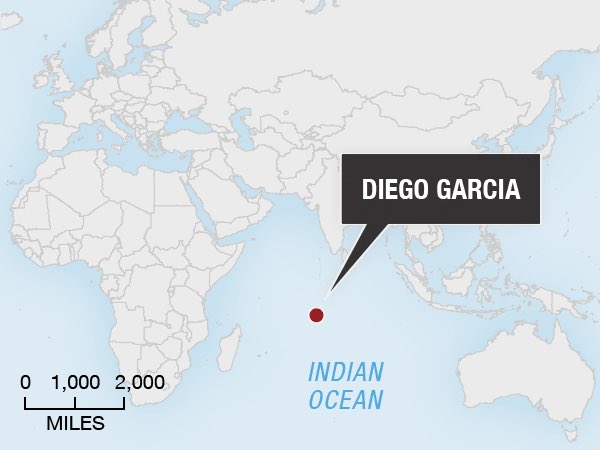
Iran fired a pair of intermediate-range ballistic missiles at Diego Garcia, a joint U.S.-UK base in the Indian Ocean.
One missile failed in flight, and another was engaged by a US Navy destroyer using an SM-3 missile.
@Millyardcoins One thought I had, kind of cheating, is that why would you grade a 52 nickel? It must be a 70. However I thought I could see a couple marks and scratches so I gave it a lower grade.
Coins like the Morgan $ are easier to grade due to its size and there is no need for magnification. Try grading this 1952 Jefferson nickel. See how much you have improved.
One of the reasons I bought my house in 2011 was all the beautiful live oaks in the back yard. About 20. Since then I have spent about 20k having them trimmed and cut down as they shed limbs and leaves and became dangerous as they grew. One fell and squished my shed in hurricane Howie or Merlin or whatever the fuck name it was a year ago. Trees have huge hidden costs in maintenance I did not realize. I have raked and mulched literally tons of leaves. Sure, they look pretty and shade is great, especially in Florida but that all comes at at a cost.
The U.S. Army Almost Chose This Pistol
One thousand Lugers were purchased by the U.S. Army for testing around 1900, making the American Eagle Luger a remarkable piece of early military firearms history.
We went hungry. We didn’t have to eat it but there was no second choice and if we put it on our plate, we had to eat it. My Mom never cooked anything that was “bad” or anything like that just maybe stuff kids might not like sometimes. We didn’t have to eat it but you went hungry if you didn’t.
We just saw the exact moment a star exploded for the first time ever.
Astronomers have achieved a rare feat: imaging the exact moment a massive star detonated—and the explosion was anything but spherical.
SN 2024ggi, a supernova located 22 million light-years away in the spiral galaxy NGC 3621, was detected a mere 26 hours after ignition. This extraordinarily early discovery allowed researchers to train the European Southern Observatory’s Very Large Telescope in Chile on the event while it was still in its infancy.
Using the technique of spectropolarimetry—which analyzes the polarization of light to reveal geometric structure—the team uncovered a surprising truth: the expanding shockwave was distinctly aspherical, elongated into an “olive” or prolate shape along one primary axis.
This asymmetry means the catastrophic rebound following the star’s core collapse did not propagate uniformly in all directions, directly contradicting the long-standing assumption that the deepest layers of a core-collapse supernova explode spherically.
The progenitor was a red supergiant 12–15 times more massive than the Sun that had exhausted its nuclear fuel, triggering gravitational collapse of its iron core. In most supernovae, the initial shape of this breakout is quickly obscured as the blast wave slams into the star’s outer envelope. Here, however, astronomers captured polarized light signatures of the still-unobscured ejecta, freezing the explosion’s geometry in time.
The discovery carries far-reaching consequences. It strongly suggests that asymmetry is common, if not universal, in the earliest phases of massive-star deaths. Current theoretical models, which often assume spherical symmetry at the core, will need significant revision. Moreover, these distorted explosions could help explain observed peculiarities in supernova remnants, the production of gamma-ray bursts, and the kicking of neutron stars and black holes to high speeds at birth.
By catching a star in the act of dying asymmetrically, SN 2024ggi has given us a vivid glimpse into the violent, chaotic physics that govern the final heartbeat of the universe’s most massive stars.
[🎞️ Artist’s animation of a supernova explosion]
[Unique shape of star’s explosion revealed just a day after detection. ESO, 2025]
The Insane "Wing-Slide" Technique of the 1930s.
The Soviet Tupolev TB-3, a legendary heavy bomber that served as the cradle for the Soviet VDV (Airborne Forces) long before modern safety standards existed, and the unique deployment method that predates the standardized jump doors and static lines we know today.
Before the invention of dedicated troop transport aircraft with side doors, Soviet strategists had to improvise. The paratroopers would climb out of the open cockpits and hatches while in flight. They would then walk along the corrugated metal fuselage-battling the slipstream to position themselves on the broad roots of the wings. At the pilot's signal, they would simply slide off the trailing edge of the wing, pulling their ripcords manually as they tell away.
Drove to Florida from Toronto in my buddie‘s van he lent me. My GF could not drive it because the shifter was so loose. I would get it up to speed on the highway and we would switch seats for her turn to drive. I was asleep in the back and she yells to wake me up as she‘s in 3rd gear at 5mph the van is jumpin and bucking as she approaches a traffic jam on I75. Had to do a quick seat change lol.
If you want to enjoy a full-auto experience without breaking the bank, this is the gun for you.
the recoil is virtually non-existent. It’s a "laser beam" effect, you can keep the entire burst on a silver dollar sized target without the muzzle climbing toward the sky.
It's not just a range toy. In the 1970s, it was actually marketed to law enforcement and prison guards. The logic was that while a single .22 LR round is small, 50 rounds hitting the exact same spot in two seconds can rip through targets.
A sole provider in Arizona is billing $76 million in Medicare out of his van!
He’s averaging 1000 claims a day!
A pediatrician is averaging 836 claims a day out of his apartment!
Doge dumped all the Medicare data online for everyone to come through it…. See more