Dave Carson

22 posts

Dave Carson

Dave Carson

@carson81022

Katılım Mart 2026
657 Takip Edilen4 Takipçiler
Dave Carson retweetledi
SIMPLE-MAN
SIMPLE-MAN@cassy_kumah·
@EdKrassen @JDVance needs to be sent on this negotiation this time around.
SIMPLE-MAN tweet media
English
2
19
300
29.9K
Dave Carson retweetledi
Gregg Carlstrom
Gregg Carlstrom@glcarlstrom·
Love the idea that they're "quietly weighing" Qalibaf when we've just had a daylong news cycle devoted to it They're very loudly weighing Qalibaf in order to make it appear there has been far more diplomatic progress than seems to exist
Dasha Burns@DashaBurns

SCOOP: The Trump administration is quietly weighing Iran’s parliament speaker as a potential partner — and even future leader — as it looks for a diplomatic endgame. An administration official tells me he’s a “hot option,” but says they’re still “testing” multiple candidates. Full story: politico.com/news/2026/03/2… w/ @EliStokols @diana_nerozzi


English
16
51
192
22.6K
NO CONTEXT HUMANS
NO CONTEXT HUMANS@HumansNoContext·
The joy I get in watching these is off the scale
English
33
80
2.3K
166.9K
DJ JC
DJ JC@CalcagnoJohndj·
@snopes Obama never quit playing basketball.
English
2
0
1
40
snopes.com
snopes.com@snopes·
✅ Yes, George W. Bush said he quit golf during the Iraq War because he owed "solidarity" to families. Here's the full quote: snopes.com/fact-check/gol…
snopes.com tweet media
English
4
2
23
2.9K
Dave Carson retweetledi
Naftali Hazony
Naftali Hazony@nhazony·
Satellite imagery shows something curious: While the United States and Israel dropped over 7,000 bombs on Iran over the past week, not a single munition struck the underground complex of Iran’s nuclear site in Isfahan. Why? 1/9🧵
English
104
414
2.2K
646.2K
Dave Carson
Dave Carson@carson81022·
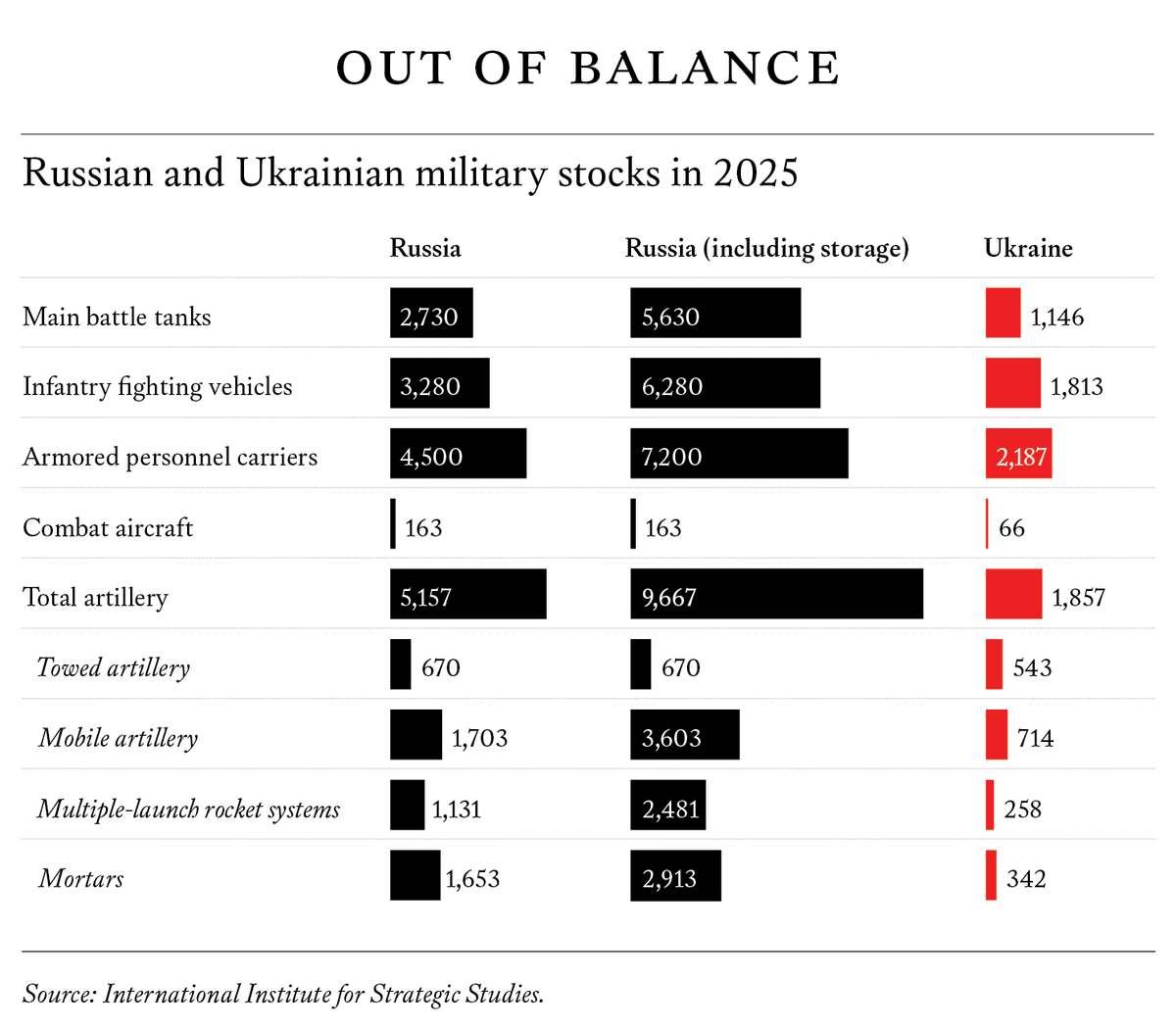
@ForeignAffairs That chart leaves out any reference to the most important weapons system on the battlefield, drones where Ukraine has a significant advantage.
English
0
0
1
37
Foreign Affairs
Foreign Affairs@ForeignAffairs·
“Russia’s objectives seem reasonably compatible with its capabilities and trends on the battlefield. Ukraine’s objectives, in contrast, seem beyond its reach,” writes Michael Desch. fam.ag/4aXCg9m
Foreign Affairs tweet media
English
42
5
27
26.8K
Ari Meirov
Ari Meirov@MySportsUpdate·
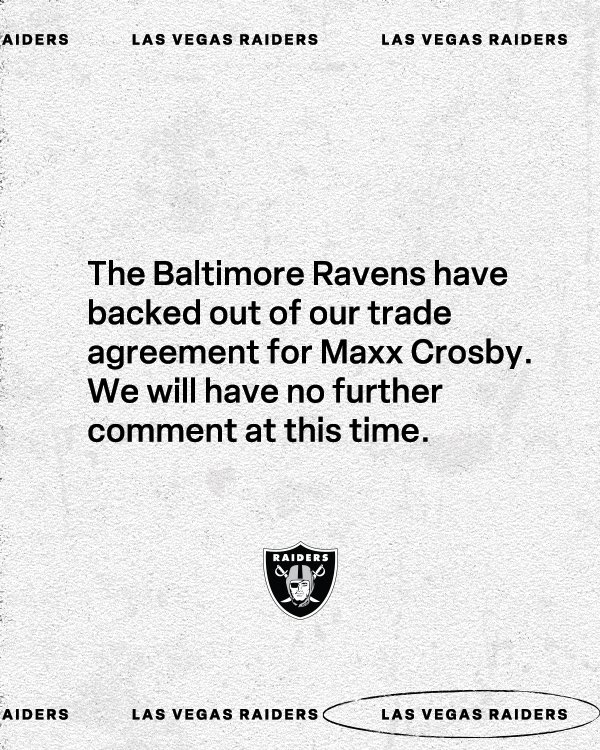
BREAKING: The Baltimore Ravens have backed out of our trade agreement for Maxx Crosby. We will have no further comment at this time.
Ari Meirov tweet media
English
775
716
5.9K
5.5M
Dave Carson
Dave Carson@carson81022·
Trump has decided mission accomplished right after a call with Putin, I wonder how long this will hold. The upcoming press conference ought clear everything up.
English
0
0
0
4
Dave Carson retweetledi
Afshin Ismaeli
Afshin Ismaeli@Afshin_Ismaeli·
Sources told me that the only development today was the KRG deploying forces to border cities to secure the area for security reasons. They said reports of a ground offensive are not true.
English
6
85
238
35.4K
Jennifer Griffin
Jennifer Griffin@JenGriffinFNC·
Thousands of Iraqi Kurds have launched a ground offensive in Iran: US official tells Fox. @FoxNews
English
731
496
2.2K
2.5M
Dave Carson retweetledi
Dimko Zhluktenko 🇺🇦⚔️
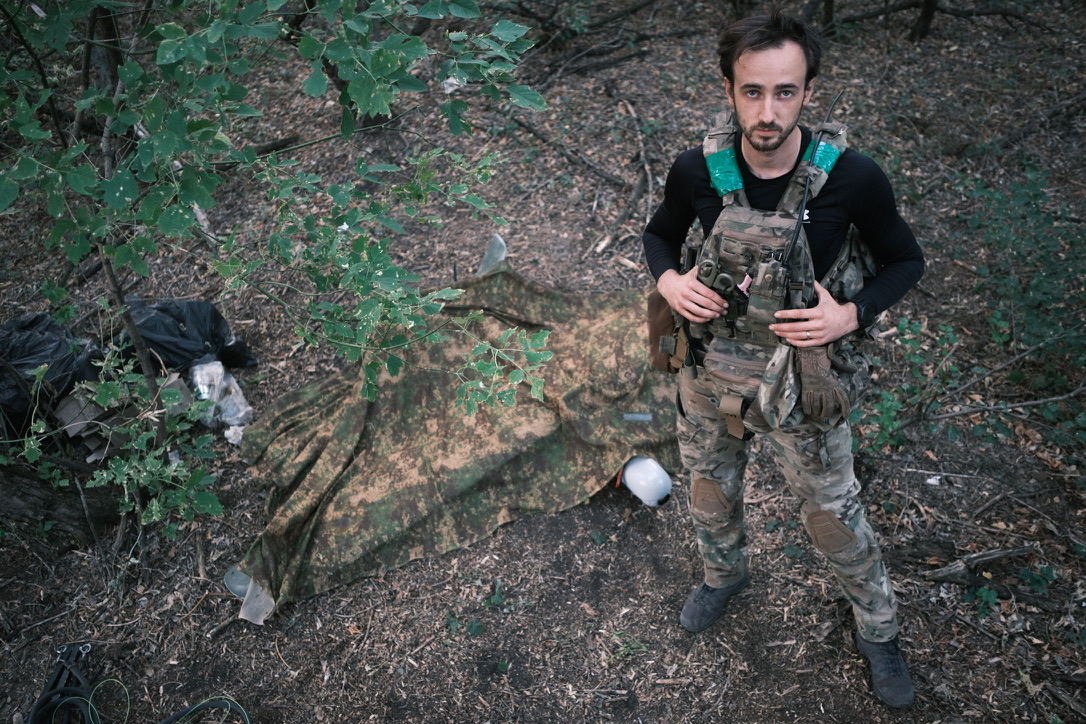
As Ukrainian soldier, I would love the honor to go and share the experience with our Allies. We've been fighting in this new war for 12 years and 4 years super intensively. We have tons of knowledge. Use it - that's how we can survive as Western civilization.
Dimko Zhluktenko 🇺🇦⚔️ tweet media
English
9
69
399
7.8K
Dave Carson retweetledi
Kateryna Lisunova
Kateryna Lisunova@KaterynaLis·
‼️MIDDLE EAST WAR EXPLAINED: A VERY INTERESTING EXPLANATION FROM ZELENSKYY OF WHAT THE WAR IN IRAN COULD LOOK LIKE IF IT DOESN’T STOP SOON "Right now we're seeing a massive attack. We talked about this. The world isn't ready. No Patriot air defense systems, even with as many batteries as the Middle East has, could withstand the number of Shaheds that Ukraine handles today. Why? Well, because 300, 500 is just impossible. There aren't that many missiles. Yes, Middle Eastern countries are wealthy, they have stockpiles, they have a lot, but eventually it all runs out. And how many PAC-3 anti-ballistic missiles are produced worldwide? 50-60 per month are produced in the United States. The largest primary manufacturer of these missiles. So this is a serious challenge. We need different weapons, we need to know how aviation fights drones, the experience that Ukrainians have. We need mobile fire groups, interceptor drones, the right systems and systems - what we have, - we change systems every six months, well, problems arise every year or two, and sometimes every three months at certain facilities - electronic systems, electronic warfare, radio-electronic warfare. Who in peacetime in the relevant countries we're talking about, who will be changing electronic warfare systems every six months? No one will. Of course, today they work, but in six months with new technologies, they no longer work. A very, very big challenge", - Zelenskyy on Mon, Mar 2nd
Kateryna Lisunova@KaterynaLis

‼️ZELENSKYY: MIDDLE EASTERN PARTNERS WILL FACE A SHORTAGE OF AIR DEFENSE. THEY’RE USING AIR DEFENSE AGAINST SHAHEDS. THERE ARE FAR MORE DRONES THAN MISSILES "If there's a long war, there will be a shortage of air defense. Middle Eastern partners will have a shortage of air defense then. You see they're using air defense against Shaheds. This shows that, well, look, there aren't as many missiles as Iran has drones, probably, so either way the consumption is very high. And so yes, these are risks for us, certainly, in terms of quantity. We haven't received any signals yet about program cuts, but we ourselves, thank God, can think logically and understand what the risks might be", - Zelenskyy on Mon, Mar 2nd


English
106
1.3K
4.9K
923.3K
Dave Carson retweetledi
Hamidreza Azizi
Hamidreza Azizi@HamidRezaAz·
A Day 3 recap of the war (with focus on Iranian strategic narrative): 🔹CENTCOM confirms that U.S. strikes on Iranian missile bases used B-1 bombers. The U.S. is trying to dismantle Iran’s fortified underground missile facilities. 🔹Iranian reports suggest Tehran has rejected multiple mediation attempts. Tehran’s apparent assessment is that it can sustain high-intensity conflict for 60-90 days, making early ceasefire acceptance strategically disadvantageous. 🔹Ali Larijani explicitly framed the war as a contest of endurance, stating Iran – unlike the United States – is prepared for a prolonged conflict. The objective appears to be altering Washington’s cost-benefit calculations over time. 🔹Iranian strategic discourse increasingly describes the conflict as a “war without rules” or a “game without red lines,” signaling deliberate unpredictability intended to reshape deterrence dynamics after leadership decapitation failed to halt Iran’s response. 🔹A related concept emerging in Iranian messaging is operating “one level above” adversary actions, i.e., delivering escalatory responses even to indirect threats in order to redefine escalation thresholds. 🔹This logic appears reflected in Iranian strikes toward British facilities in Cyprus, interpreted domestically as retaliation for London allowing U.S. access to Diego Garcia despite not joining offensive operations. 🔹One of the most consequential developments was the loss of three U.S. F-15 aircraft, initially claimed by Iran as shootdowns but later attributed to friendly fire from Kuwaiti air defenses, highlighting the growing risks of coalition battlefield congestion. 🔹Analysts close to Iranian security circles describe a layered missile strategy: first targeting radar systems, then launching low-cost drones and missiles to exhaust air-defense interceptors before deploying advanced weapons later. 🔹Iran’s continuous missile launches therefore appear designed less for immediate damage and more for attritional depletion of U.S. and Israeli defensive systems over time. 🔹Uncertainty over the size and dispersal of Iran’s advanced missile stockpiles may explain intensified U.S. and Israeli strikes against underground facilities and missile infrastructure. 🔹President Pezeshkian expanded emergency authorities across ministries and provincial administrations to ensure continuity of governance, deepening wartime decentralization already initiated before the conflict. 🔹Israel’s targeting pattern has become clearer: strikes now heavily focus on intelligence ministries, police headquarters, IRGC district bases, and internal security institutions, suggesting systematic erosion of regime coercive capacity. 🔹Parallel strikes against western border regions and Kurdistan province have fueled Iranian fears that external actors may seek to enable insurgent infiltration as an alternative to direct ground invasion. 🔹Iran has responded by striking areas in Iraqi Kurdistan while increasing pressure along its borders, indicating concern about a potential indirect ground dimension to the war. 🔹Iran-aligned Iraqi resistance factions – including Kataib Hezbollah, Harakat al-Nujaba, and Kataib Sayyid al-Shuhada – continue their operations on a limited scale, opening another attritional front against U.S. forces. 🔹Hezbollah formally confirmed its participation, firing rockets toward Haifa, though involvement remains limited due to degraded capabilities and domestic political constraints in Lebanon. 🔹Iranian sources claim prewar coordination between the Quds Force and regional partners defined phased entry into the conflict, suggesting activation of the “axis of resistance” is proceeding gradually rather than simultaneously. 🔹The IRGC has reportedly begun enforcing a de facto closure of the Strait of Hormuz, warning commercial vessels against transit and threatening missile strikes. This is a major escalation targeting global energy flows. 🔹Simultaneous attacks on Gulf energy infrastructure, including an Aramco facility near Ras Tanura and gas infrastructure in Qatar, indicate an effort to raise global energy prices and increase economic pressure on Washington. 🔹Iranian authorities signaled zero tolerance for dissent. IRGC intelligence warned that actions undermining stability during wartime would be treated as collaboration with the enemy, implying harsh internal repression. 🔹Negotiation signals remain contradictory. While Trump suggested a potential deal was possible, Larijani publicly rejected negotiations, reinforcing Tehran’s view that talks can occur only after strategic calculations shift. 🔹Iran’s sustained missile tempo against Israel appears designed to impose psychological as well as military pressure, keeping populations under prolonged shelter conditions while conserving firepower for a longer conflict. 🔹Overall, Day 3 shows the war evolving into simultaneous military, economic, psychological, and regional escalation far beyond bilateral confrontation. 🔹The key question now is whether expanding proxy involvement and energy warfare will force external powers into deeper participation or instead accelerate pressure for negotiated containment. --- P.S: Not sure how long I can keep doing this!
English
8
1.8K
9.5K
2.7M
Dave Carson retweetledi
Richard M. Nixon
Richard M. Nixon@dick_nixon·
First, Iran is not an imminent threat to the United States or Israel. The regime is brutal and repressive, but not suicidal. History and intelligence bear this out. There is no reason to do this now.
English
12
31
258
22.8K
Dave Carson retweetledi
The Montreal Expos
The Montreal Expos@Montreal_Expos·
Due to unforeseen circumstances, Ayatollah Khamenei Bobblehead Day on Sunday, April 12 has been cancelled
English
627
4.3K
50.7K
3M