We are officially less than two weeks away from #GoogleIO which marks exactly one year since we first unveiled audio overviews (and what a year it has been!) Rest assured, we've got some more exciting stuff planned for this year's event. 😋😋😋
What are some of your predictions?
A high school student asked if he should join a startup or go to university. I said that if he was ambitious he could learn a lot more at a university. The work you do in a startup is severely constrained. If it isn't, the startup is inefficient.
There was a man named Frederick Taylor who worked closely with Ford, but many people are familiar only with the Ford story and not the Taylor story.
Taylor is known as the father of scientific management—a methodology focused on studying work processes to improve efficiency and then transferring that knowledge among workers.
Before the Industrial Revolution, practical work was managed by guilds.
Whether you were a silversmith, a vintner, or a blacksmith, joining a guild meant your knowledge was tightly guarded.
You would start as a journeyman and work your way up, becoming a master only after your skills were proven through a masterpiece that was judged by your peers.
This knowledge was so closely held that sharing it could lead to severe consequences, including being pushed out of the guild or, in extreme cases, facing death.
Taylor revolutionized this dynamic, and it’s one reason figures like Karl Marx opposed him.
Taylor proposed that instead of keeping knowledge confined within guilds, we should study the work itself.
He believed that knowledge should reside with management, who would then disseminate it to the workers.
This fundamental shift in knowledge sharing laid the groundwork for the efficiencies we see today.
Fast forward to now, and we see a similar phenomenon with AI.
The knowledge generated by AI is often concentrated in the hands of a few, who then distribute it widely, impacting how we work and learn.
So proud of Aggie Engineering student @Clubgirlkatie who just launched her new putter! Early customers can use FoundersClub code for a discount.
clubgirlgolf.com
Different investors appreciate different deal flow types.
There are 3 kinds:
-Top of funnel: the thousands of applications, but mostly declines
- Mid-funnel: deals that pass initial screening based
- Bottom-of-funnel: deals that have $$$ commitment from another trusted investor
I remain confused by the "GenAI is a dud" arguments.
We have controlled experiments showing 20%-40% gains in real work using GenAI. Adoption rates are the fastest in history. There is value.
I think what folks may mean is that "companies haven't captured the value created yet."
I read Built to Sell: Creating a Business That Can Thrive Without You by @JohnWarrillow. It took me about 2 hours to read.
Main takeaway? Treat your service business like a product business and focus on building repeatable systems to deliver that product.
Highly recommend.
AI doesn't work for all use cases, and it may take awhile before organizations figure out how to capture some of the value that users are getting, but this is not going to be a passing fad that people are suddenly going to decide isn't useful.
Survey: …858bea65ff05e18f2.ssl.cf2.rackcdn.com/bf/24/cd364658…
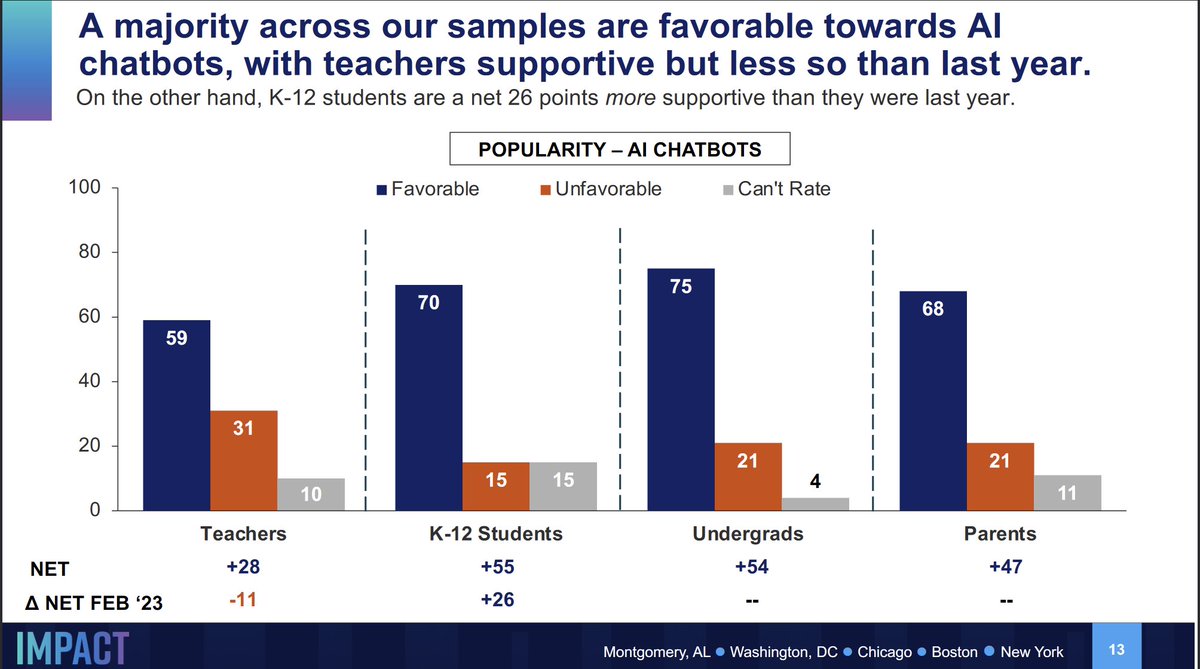
It seems weird to keep seeing the opinion here that AI might just go away. Adoption rates among students and teachers in surveys are over 70%. In a survey in Denmark, over 50% of journalists and programmers were using AI for work.
And people generally like AI when they use it.
Slow ≠ no 🐢
After finishing a new client's project, it took 6 weeks to get their feedback. I was bummed at the slow pace, but their feedback was glowing and now we have clear next steps.
@AKazlow Because your personal investment thesis is different from theirs. Each of them have different ones. A great angel network or syndicate finds the maximum overlap.
Angel investing is a mystery to many entrepreneurs.❓
As a panelist at the @ricealliance Clean Energy Accelerator, I saw firsthand how many founders have basic questions about the differences between angels and VCs.
Honored to shed some light on the world of angel investing!
3 things that hiking my 1st Class 3 14er taught me about business.🏕️
1. Pre-planning - weather can change fast at high altitudes
2. Know your limits - don't push too hard and risk injury
3. Community inspires - strangers cheering each other on makes a tough climb easier
Events are a great investment. 📅
During a recent quarterly review, we realized attending events led to multiple new sales. They offer a unique platform for building real relationships - definitely not something we can ignore going forward.
Angel network applications suck. 📝
I recently spent 11.7 hours making "The Beast" - a mega application for 12 networks.
Applications are repetitive with slight variations, making them time-consuming. Would love to see networks streamline things for founders.
#Application
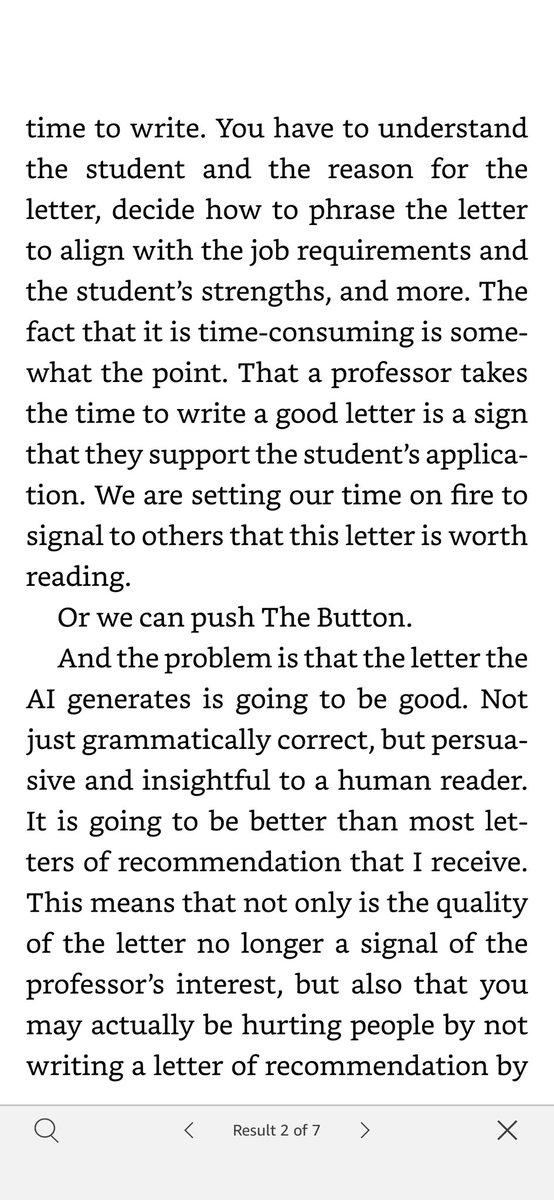
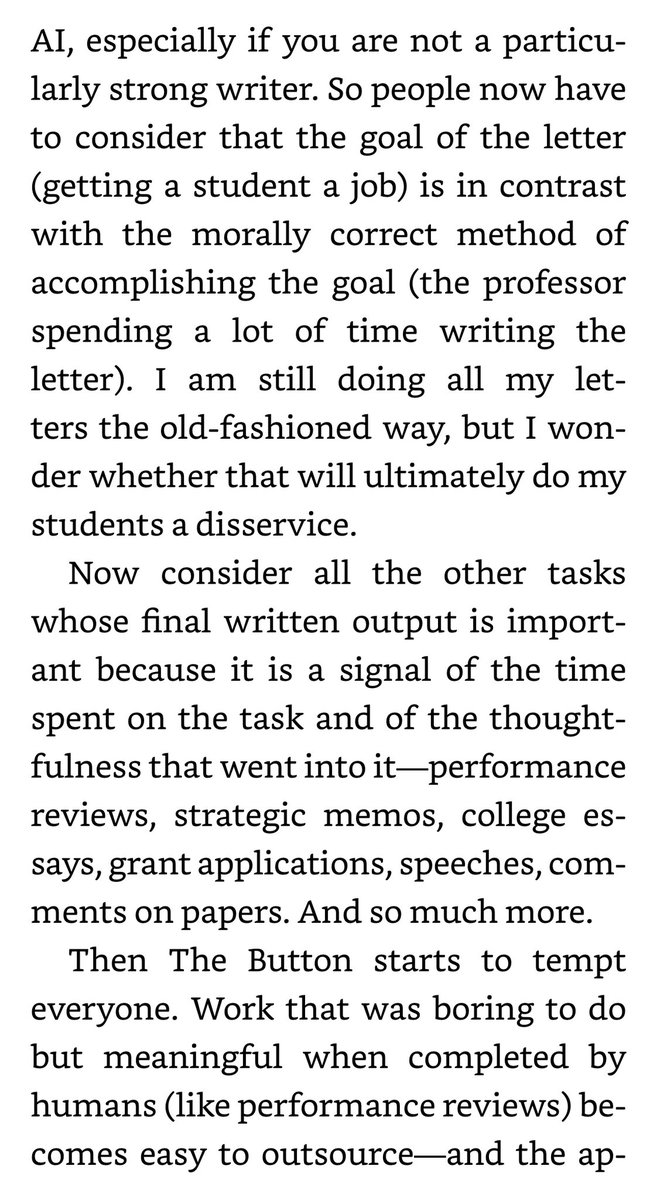
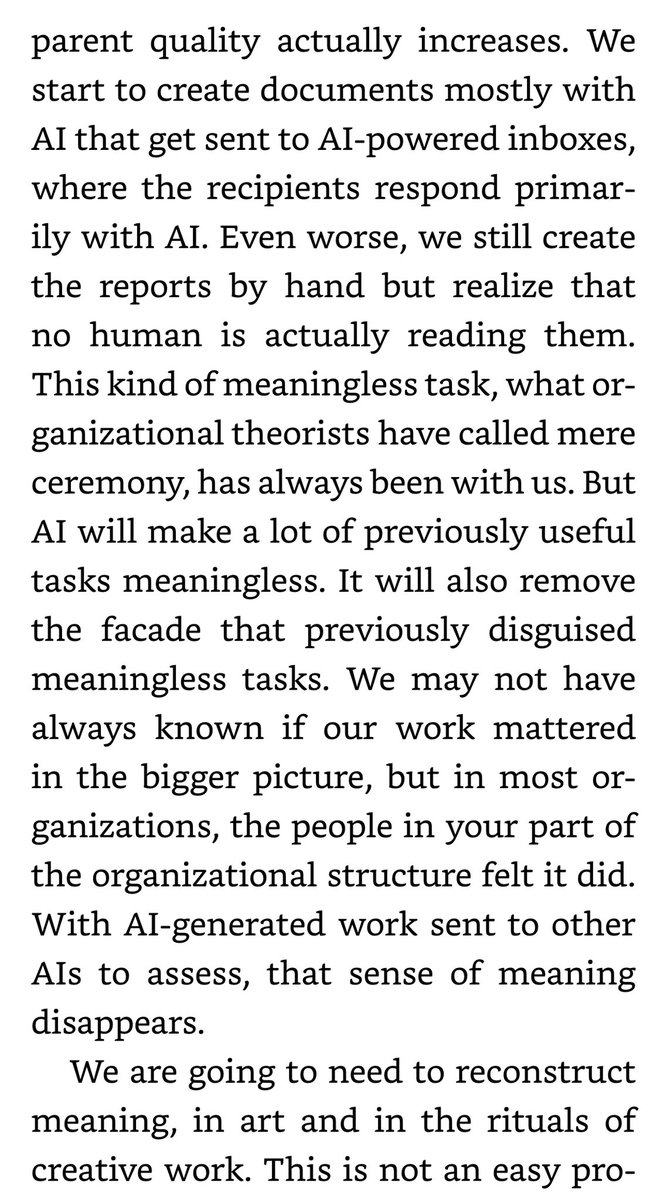
I have talked to a lot of executives buying Microsoft Copilot for their firms. Not one seems to have considered what it means to suddenly automate the vast majority of management writing without training or reconsidering the meaning of the work.
From my book, Co-Intelligence:
I love "foot in the door" B2B business models
This means offering 2+ services, where 1 is the easy sale to get your foot in the door, & the other is the real cash cow
2 cool examples:
1. My buddy owns a company that does vent hood cleaning for restaurants, but that's not his moneymaker.
He'll quote the job at break-even to undercut his competitors that only offer that 1 service. Once he's done the job and earned their trust, he'll sell them on the real recurring moneymakers:
Degreaser & frying oil recycling.
He'll sell them 5 gallon buckets of powdered degreaser that he white labels and drop-ships from a manufacturer, and they LOVE IT. It takes almost no work on his part. That's good for a couple hundred per month. But the real money is in the frying oil...
Restaurants will pay him to pick up their used frying oil. >100% gross margins? Yes, please!
If the oil is in good condition then he will actually pay the restaurant for it, because of how much easier it is to recycle.
He takes it back to his processing facility where he refines and and resells it to a wholesaler. This is where the stupid margins are made.
His biggest customers are regional franchisees with 10-50 locations. He has operations in about a dozen states and it's a massive biz.
You'll never see this guy on X, or any social media for that matter. His website is ugly and he drives a beat up truck. But he is quietly printing millions.
2nd example: I once owned a company that would recycle broken iPhone screens. The sales call went like this,
"Hey, you know that box of broken iPhone screens under your desk right now? We'll pay $4 each for them. Where should we email the shipping label?"
Stupidly easy.
Once we earned their trust we'd sell them $2,200 worth of new iPhone parts every month, with a 93% reorder rate.
We scaled to 8 figures and then exited with that exact model.
What other foot in the door B2B opportunities are out there?