Cuma Cevik@cevikfinance
Berk güzel bir konuya değinmiş. Ben de aşağıda her kategori için global ölçekte en öne çıkan şirketleri derledim.
1. Bağlantı Teknolojileri (Interconnect / Connectivity)
YZ veri merkezlerinde GPU’lar arası yüksek hızlı bağlantı (optik + elektrik).
• $ALAB Astera Labs: PCIe retimer ve CXL’de lider konumda, AI sunucularında çok güçlü.
• $MRVL Marvell Technology: Optik DSP ve interconnect’te en güçlü oyunculardan.
• $CRDO Credo Technology: Active Electrical Cable (AEC) pazarının lideri.
• $AVGO Broadcom: Yüksek hızlı networking chip ve silicon photonics’te çok dominant.
• $NVDA Nvidia: NVLink ile entegre interconnect çözümleri (daha çok kendi ekosistemi içinde).
• $MTSI MACOM Technology Solutions: RF, analog ve optik yarı iletkenlerde uzman. AI veri merkezi switch ve optik modüllerde kullanılan bileşenlerde güçlü.
• $LITE Lumentum: Optik motorlar, lazerler ve transceiver’larda aktif. AI networking’de optik tarafında rol alıyor.
• $COHR Coherent: Lazer ve fotonik bileşenlerde uzman. AI optik interconnect tedarik zincirinde yer alıyor.
• $AXTI AXT Inc: Indium Phosphide (InP) substrat tedarikçisi. Yüksek hızlı optik modüller için kritik malzeme sağlıyor.
Not: Bu alanda $ALAB ve $MRVL son dönemde en çok konuşulan isimler.
2. Gelişmiş Paketleme (Advanced Packaging)
AI çiplerinde (özellikle HBM + logic entegrasyonu) kritik alan (2.5D/3D packaging).
• $TSM TSMC: CoWoS teknolojisiyle açık ara lider (Nvidia Blackwell vb. çiplerin çoğu burada paketleniyor).
• $INTC Intel: EMIB ve Foveros teknolojileriyle güçlü alternatif (çöp diyenlere bakmayın).
• $ASX ASE Technology: Dünyanın en büyük OSAT şirketi, gelişmiş paketleme kapasitesi yüksek.
• $AMKR Amkor Technology: Önemli OSAT oyuncusu, özellikle ABD ve global müşterilerde.
3. Bellek (Memory - Özellikle HBM)
AI eğitim ve inference için en kritik bileşen (High Bandwidth Memory).
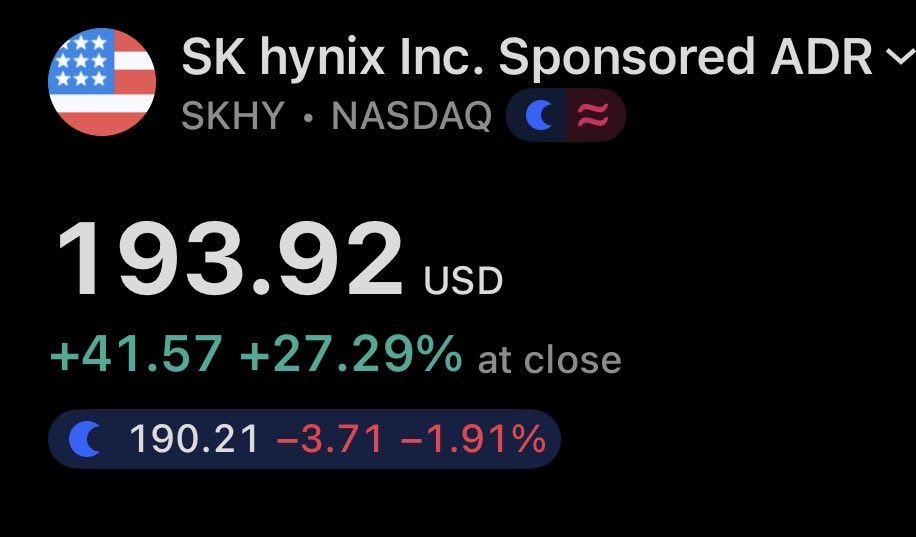
• $SKHY SK Hynix: HBM pazarında net lider (Nvidia’nın ana tedarikçisi, %50-60 civarı pazar payına sahip).
• Samsung Electronics: Çok büyük kapasiteye sahip, HBM3E ve HBM4’te güçlü.
• $MU Micron Technology: HBM3E ve HBM4’te hızlı ramp-up yapıyor, ABD merkezli tek büyük oyuncu.
• $SNDK SanDisk: Şu anda NAND tarafının en temiz pure-play’i. AI veri merkezlerinde yüksek hızlı enterprise SSD talebi çok güçlü.
• $SIMO Silicon Motion: NAND flash controller tasarlayan fabless bir şirket. Kendi NAND çipini üretmiyor ama SSD’lerin (özellikle enterprise ve AI odaklı olanların) “beyni” sayılan controller çiplerini yapıyor.
HBM segmentinde SK Hynix açık ara önde.
4. Yarı İletken Üretim ve Test Ekipmanları
Fab yatırımları ve fotonik tarafındaki kapasite artışıyla patlama beklenen alan.
Üretim Ekipmanları (Wafer Fab Equipment):
• $ASML : EUV ve High-NA lithography’de tekel konumunda (en kritik ekipman).
• $AMAT Applied Materials: Deposition ve materials engineering’de lider.
• $LRCX Lam Research: Etch ve thin film deposition’da çok güçlü.
Test & Inspection:
• $AEHR Aehr Test Systems: Burn-in ve güvenilirlik test sistemlerinde lider. Gelişmiş paketleme ve AI çiplerinin test sürecinde kritik.
• $KLAC KLA Corporation: Process control ve metrology’de lider.
• $TER Teradyne: Test ekipmanlarında öne çıkıyor.
Fotonik tarafı da büyüdüğü için bu ekipman şirketleri 2026-2027’de çok desteklenecek.
5. Enerji (Data Center Power)
• $BE Bloom Energy: Solid oxide fuel cell ile en hızlı kurulum yapan şirketlerden (aylar içinde devreye alınabiliyor). Data center’lar için onsite power’da lider konumda.
• $VST Vistra: Merchant power generator, AI veri merkezi yük büyümesinde çok güçlü. Üstelik şu an temel anlamda çok ucuz.
• $CEG Constellation Energy: Amerika'nın en büyük nükleer enerji üreticisi. Data center anlaşmaları yapan en önemli oyuncu.
• $GEV GE Vernova: Türbin motorlarda hızlı kurulum seçenekleri sunuyor. Aynı zamanda yapay zeka enerji altyapısında en önemli oyuncu.
• Siemens Energy: Benzer şekilde gaz türbini ve enerji çözümlerinde aktif.