Chad Ruffin, MD 🦻🏻

7.8K posts

Chad Ruffin, MD 🦻🏻 banner
Chad Ruffin, MD 🦻🏻

Chad Ruffin, MD 🦻🏻

@ChadRuffinMD

ENT and cochlear implant surgeon, first person born deaf to become a surgeon with #CochlearImplants. 🤟advocate. 🌈 🛩 He/Him

Seattle, WA Katılım Mart 2013
1.5K Takip Edilen3K Takipçiler
Sabitlenmiş Tweet
Chad Ruffin, MD 🦻🏻
Chad Ruffin, MD 🦻🏻@ChadRuffinMD·
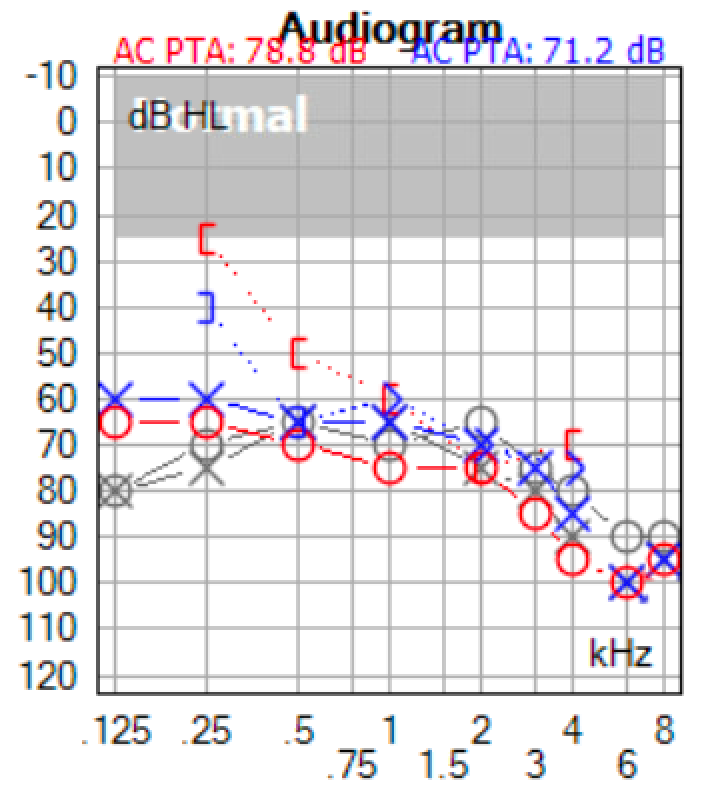
Which ear had the cochlear implant?! This is a postop audiogram prior to activation. Gray is the preoperative. Shared with permission. Crazy that this is a regular occurrence for me. I counsel patients, "It's possible but unlikely that you may lose your residual hearing"
Chad Ruffin, MD 🦻🏻 tweet media
English
6
1
44
0
Chad Ruffin, MD 🦻🏻 retweetledi
Isaac Saul
Isaac Saul@Ike_Saul·
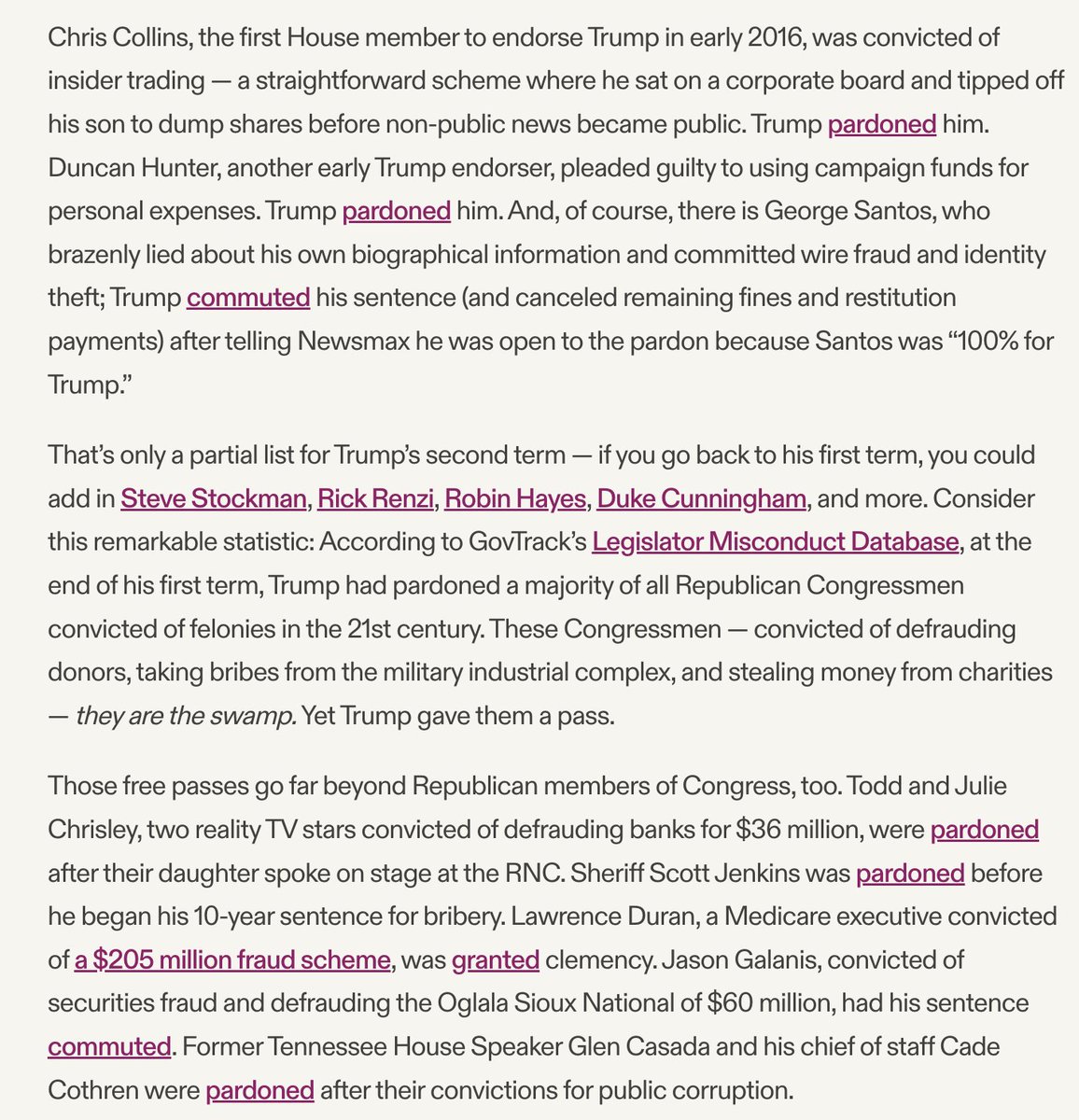
I haven't seen anyone tracking all of the alleged (or open) Trump corruption, self-dealing, and quid pro quos in one place. For the last 15 months, I've been tracking every single tip+story I can find and organizing it. Today, I published a 6,000 word piece with every example.
Isaac Saul tweet mediaIsaac Saul tweet mediaIsaac Saul tweet mediaIsaac Saul tweet media
English
384
9K
21.5K
542.5K
Chad Ruffin, MD 🦻🏻 retweetledi
Book Therapy
Book Therapy@Book_therapy223·
appreciate how far you’ve come
Book Therapy tweet media
English
0
19
78
2.2K
Chad Ruffin, MD 🦻🏻 retweetledi
Tom Oliverson, M.D.
Tom Oliverson, M.D.@TomOliverson·
To be fair, Medicare grossly underpays doctors while paying hospitals close to market rates. So while 300% Medicare charged by a hospital is unacceptable, it’s not the case for physicians. If you don’t believe me, just compare reimbursement rate increases over the last 40 yrs by Medicare for docs vs. hospitals.
PatientRightsAdvocate.org@PtRightsAdvoc

Using price transparency data, a union identified egregious pricing at NewYork-Presbyterian Hospital. @RepBrianFitz cites charges at 358% more than Medicare. “After this union dropped New York-Presbyterian from their network, they reportedly saved substantial resources.”

English
16
20
80
32.5K
Christina Farr
Christina Farr@chrissyfarr·
We spent $30 billion digitizing American healthcare. It got used for billing. New Lifers episode with @Farzad_MD, physician, former National Coordinator for Health IT, and CEO of @AledadeACO, on what went wrong, and why AI might finally fix the incentives, with co-host @Mike_Desjadon of Anomaly Health. Timestamps: (00:00) Intro (02:50) Disease hunter origins (04:33) From outbreaks to prevention (06:37) Digitizing care and incentives (09:05) Advice for AI builders (10:32) Payment reform bright spots (14:08) Sponsor: Granola (15:02) Deflation and CPT shakeup (17:21) Pay for outcomes not volume (20:08) Aledade explained and ACCESS pricing (22:15) Who can win under new rates (24:11) AI pays in value-based care (VBC) (25:41) Electronic health records copilot breakthrough (27:58) Rural care opportunity (31:07) Accountability drives adoption (32:40) Concierge vs community duty (34:25) Scaling primary care capacity (35:35) Doctors as entrepreneurs (37:56) Policy and civic innovation (39:35) Mission first focus (40:45) Predictions round robin (43:34) Bipartisan VBC
English
9
15
56
95K
The Feminist Agenda
The Feminist Agenda@thefemagend·
@ChadRuffinMD @Miazolam Really? You couldn't glean that she wants doctors to speak to her respectfully? She wasn't saying you shouldn't ask question or examine. She was saying you shouldn't ask condescending questions framed in disbelief and superiority. She clarifies that multiple times. It was clear.
English
2
0
6
162
Chad Ruffin, MD 🦻🏻
Chad Ruffin, MD 🦻🏻@ChadRuffinMD·
@thefemagend @Miazolam Yes, but we still have to ask the questions–we can't read your mind, and information in the chart is not always accessible. Patience and understanding goes both ways. But yes, I am sympathetic–finding an empathetic doctor is difficult.
English
1
1
1
159
Chad Ruffin, MD 🦻🏻
Chad Ruffin, MD 🦻🏻@ChadRuffinMD·
@EdGainesIII I play twice a week on average. Love it—feel insanely great mentally and physically. On weeks I don’t play, I feel the opposite. Hope I’m able to continue playing until “the end”.
English
0
0
1
29
Ed Gaines
Ed Gaines@EdGainesIII·
We #tennis players like to say the game is a game for life but here’s a long term observational study that changes that saying to tennis extends your life! I believe tennis players have always known this from experience. I play doubles with guys nearly every week who are in their late 70s & 80s who look, move and act like they’re 20+ years younger. Now we have all had (me included) multiple procedures w/ orthopedic physicians, but this is the price we pay. In tournaments, I have seen women who are in their 70s playing in the 40 & over state level matches who again appear to be much younger than their years. Oh, and I am officially ok that PB, table tennis and other racket sports are included—big tent baby! #GameOn!
Aakash Gupta@aakashgupta

Tennis players live 9.7 years longer than sedentary people. Not 9.7 months. 9.7 years. Nearly a decade. The Copenhagen City Heart Study tracked 8,577 people for 25 years and ranked every sport by how much life it adds. Badminton: 6.2 years. Soccer: 4.7. Cycling: 3.7. Swimming: 3.4. Jogging: 3.2. Tennis almost triples jogging. A separate study of 80,000 adults found racket sports cut all-cause mortality by 47% and cardiovascular death by 56%. Swimming hit 41%. Aerobics hit 36%. The question is why racket sports destroy everything else. Three mechanisms stack on top of each other. First, the physical demands. A tennis rally requires explosive sprints, lateral cuts, and sustained aerobic output. You're training fast-twitch and slow-twitch muscle fibers simultaneously. Most cardio only trains one system. Second, the cognitive load. You're reading spin, predicting angles, adjusting position, and executing motor patterns in real-time. Your brain is solving spatial puzzles at 80+ mph. That hand-eye coordination and strategic processing builds neural connections that protect against cognitive decline. Third, and this is the one researchers keep coming back to: you literally cannot play alone. Every racket sport requires another person on the other side of the net. That forced social interaction triggers neurochemical benefits that solitary exercise cannot replicate. Strong social connection alone increases your chance of longevity by 50%. Jogging is you and your thoughts. Tennis is you, a strategic opponent, and a community. Dr. Daniel Amen is right. The data is overwhelming. If you want the single highest-ROI activity for a longer life, pick up a racket.

English
2
2
3
1.4K
Mark Cuban
Mark Cuban@mcuban·
Almost right. It’s more expensive because CEOs of self insured companies, hire the biggest insurance companies to manage their spend on care. Resulting in them having no idea how they spend their money. Look up those same prices from transparent surgery centers. Or better yet, the cash price from the same hospitals they use If CEOs realized that every penny they save on healthcare goes right to the bottom line, they might get a clue So hospitals with monopoly power over charge. Absolutely. But even they would charge less if CEOs knew how their benefit costs worked Costpluswellness.Com
Matt Stoller@matthewstoller

Health care is expensive in America because of monopoly power. wsj.com/health/healthc…

English
48
45
384
135.3K
Chad Ruffin, MD 🦻🏻 retweetledi
NASA
NASA@NASA·
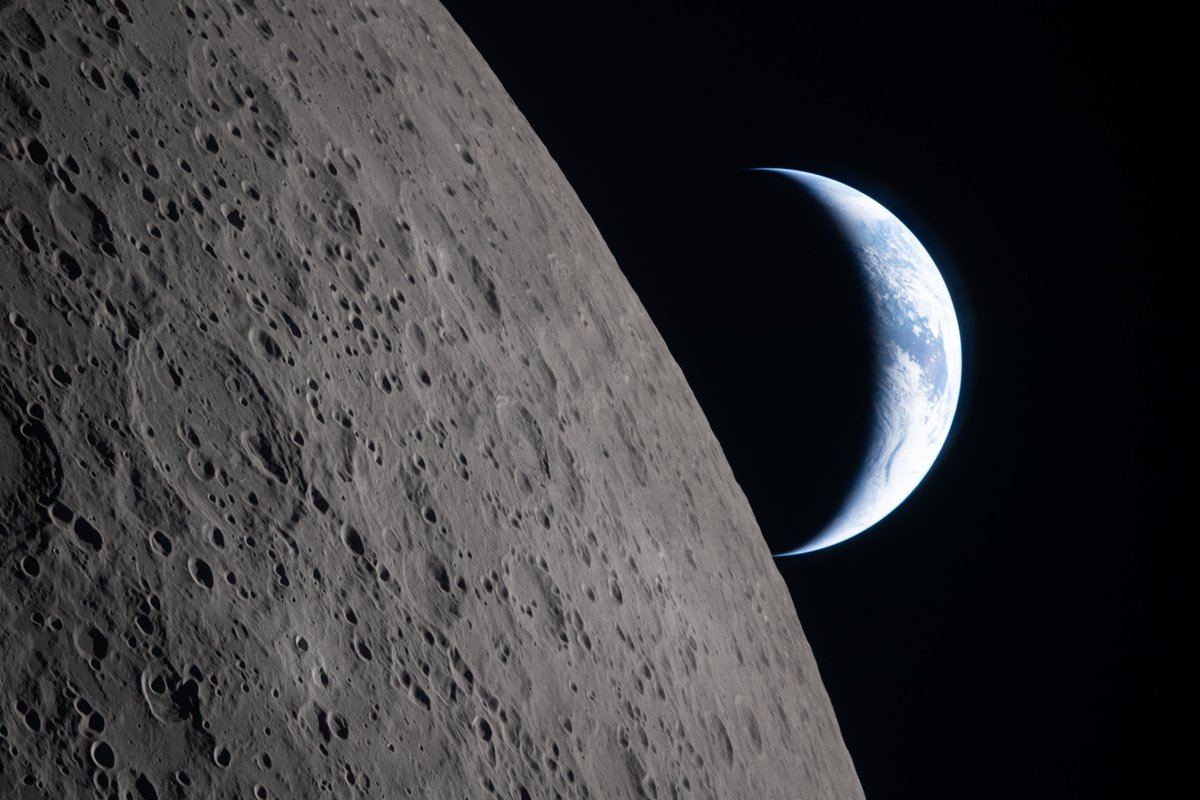
Hello, Moon. It’s great to be back. Here’s a taste of what the Artemis II astronauts photographed during their flight around the Moon. Check out more photos from the mission: nasa.gov/artemis-ii-mul…
NASA tweet mediaNASA tweet mediaNASA tweet mediaNASA tweet media
English
10K
174.9K
812.7K
29.4M
Chad Ruffin, MD 🦻🏻 retweetledi
Jeff Berardelli
Jeff Berardelli@WeatherProf·
“Look again at that dot. That's here. That's home. That's us. On it everyone you love, everyone you know, everyone you ever heard of, every human being who ever was, lived out their lives. The aggregate of our joy and suffering, thousands of confident religions, ideologies, and economic doctrines, every hunter and forager, every hero and coward, every creator and destroyer of civilization, every king and peasant, every young couple in love, every mother and father, hopeful child, inventor and explorer, every teacher of morals, every corrupt politician, every "superstar," every "supreme leader," every saint and sinner in the history of our species lived there--on a mote of dust suspended in a sunbeam. The Earth is a very small stage in a vast cosmic arena. Think of the rivers of blood spilled by all those generals and emperors so that, in glory and triumph, they could become the momentary masters of a fraction of a dot. Think of the endless cruelties visited by the inhabitants of one corner of this pixel on the scarcely distinguishable inhabitants of some other corner, how frequent their misunderstandings, how eager they are to kill one another, how fervent their hatreds. Our posturings, our imagined self-importance, the delusion that we have some privileged position in the Universe, are challenged by this point of pale light. Our planet is a lonely speck in the great enveloping cosmic dark. In our obscurity, in all this vastness, there is no hint that help will come from elsewhere to save us from ourselves. The Earth is the only world known so far to harbor life. There is nowhere else, at least in the near future, to which our species could migrate. Visit, yes. Settle, not yet. Like it or not, for the moment the Earth is where we make our stand. It has been said that astronomy is a humbling and character-building experience. There is perhaps no better demonstration of the folly of human conceits than this distant image of our tiny world. To me, it underscores our responsibility to deal more kindly with one another, and to preserve and cherish the pale blue dot, the only home we've ever known. — Carl Sagan, Pale Blue Dot, 1994”
NASA@NASA

We see our home planet as a whole, lit up in spectacular blues and browns. A green aurora even lights up the atmosphere. That's us, together, watching as our astronauts make their journey to the Moon.

English
3
25
109
5.8K
Chad Ruffin, MD 🦻🏻
Chad Ruffin, MD 🦻🏻@ChadRuffinMD·
Look how thin and tiny the thing is that keeps us alive–the atmosphere. Can see auroras top right, bottom left. Zodiacal light from scattering of the sun through the atmosphere.
NASA@NASA

These two images were taken by @astro_reid only minutes apart. The stark difference is the result of camera settings. In the first, a longer shutter speed let in much more light from Earth, while the shorter shutter speed in the second emphasizes our planet's nighttime glow.

English
0
0
0
52
Chad Ruffin, MD 🦻🏻 retweetledi
NASA
NASA@NASA·
These two images were taken by @astro_reid only minutes apart. The stark difference is the result of camera settings. In the first, a longer shutter speed let in much more light from Earth, while the shorter shutter speed in the second emphasizes our planet's nighttime glow.
NASA tweet mediaNASA tweet media
English
638
7.9K
51.4K
2.5M
RJ
RJ@northwoods1980·
My younger brother just canceled his son's surgery for thyroglossal duct cyst removal. He had specifically requested only the attending surgeon perform it but then found out multiple cases were being run simultaneously and a fellow was actually going to be doing it. Thoughts?
English
59
0
73
54.8K
Christina Farr
Christina Farr@chrissyfarr·
This is a great step and should be applauded. But is anyone on the list who lives in a rural area and qualifies for Medicaid? Love to suggest that for humble consideration.
English
3
2
8
3.2K
Jack Hall
Jack Hall@aspergian1·
My cherry has been popped. Read about it, looked at imaging but never have found one in the wild.
English
23
27
212
75.1K
Sharisse Stephenson
Sharisse Stephenson@drsharisse·
I stopped doing lumbar punctures in clinic once I realized the reimbursement didn’t even cover the cost of the kit. A relatively simple bedside procedure became financially unsustainable in an outpatient setting—so now it gets done in the hospital under interventional radiology at a much higher cost. Same procedure. Different setting. Dramatically different cost.
English
15
16
157
55.7K
Chad Ruffin, MD 🦻🏻 retweetledi
Sharkproof | Outsmart the system.Build real wealth
The wild part is how every layer of the system pushes hospitals into roles they were never built for - lender, bill collector, insurer, bureaucracy manager and then we blame the patient for the bill. A huge part of the dysfunction starts upstream: insurers design plans where the average deductible is now over $2,000 and nearly half of Americans can’t cover a $500 emergency. That gap forces hospitals to front the cost of care before they ever see a dollar. Then come the delays: prior auth backlogs, denials that get overturned 80–90% of the time on appeal, and payment ‘adjustments’ months after care is delivered. Every delay is an interest‑free loan from the hospital to the insurer and an administrative tax on the system. Hospitals respond the only way the math allows: facility fees, 340B arbitrage, site‑neutrality games, consolidation, and revenue engineering. Not because they’re greedy but because the reimbursement model punishes anyone who doesn’t scale, merge, or invent new billable categories. Meanwhile, the cost structure is upside‑down: administrative staff now outnumber physicians, and the fastest‑growing line item in healthcare isn’t medicine - it’s paperwork. Every new rule, denial, and clawback creates another layer of people whose job is to fight the system the system created. None of this resembles healthcare. It’s the predictable downstream math of a system where every incentive from premiums to prior auth to consolidation rewards complexity, delay, and financial engineering over actual care.
English
8
15
73
56.1K