Charles Stephen™
5.2K posts

Charles Stephen™
@charlessteve89
Theatre Creative,Lights &Sound Designer/Consultant,Award Winner K.T.A best Lighting Design
Nairobi Katılım Mart 2011
1.5K Takip Edilen1.5K Takipçiler
Sabitlenmiş Tweet

Use code 'charless12735ue'
For free Uber ride promo of upto 500Ksh.
@uber_kenya
Kenya 🇰🇪 English
Charles Stephen™ retweetledi

What sort of logic is this really? Fuel pricing is a predictable monthly event! Every single month we know the price will be reviewed! Shouldn’t you “protect Kenyans” when conducting the review in the first instance? We are seeing a pattern here where Kasongo throws us pain first then “reconvenes” to give us Panadol.
NTV Kenya@ntvkenya
CS Mbadi: Government will reconvene upon President Ruto's return from Azerbaijan to explore further interventions to protect Kenyans from soaring fuel costs. #FixingTheNationNTV @nationfmke @ericlatiff @mariambishar @blinkypenguin
English
Charles Stephen™ retweetledi


Been stuck there till around 3pm. Naskia the guys were terribly hit. Died on the spot .
MethoDman@polo_kimanii
Terrible traffic hapa kwa wale jamaa wa car spotting Naivasha. Some guy has been hit and collegues have decided no one is passing until they get a bumps
English

@bonifacemwangi I support the ban. The level of wrecklessness these ngayas have on the roads is absurd and needs to be stopped. The strobe lights they have are a menace when driving at night. We need order.
English

Graffiti is beautiful art, and the High Court ruling declaring graffiti on matatus illegal is backward, retrogressive, and lacks basic common sense. A matatu is not a judge’s car or a courtroom that must appear drab and dull.
As a creative who has mentored graffiti artists since 2010, I have helped a number of them to secure opportunities to travel the world and showcase their work. Kenyan graffiti artists are among the best in our continent. They have created beautiful murals at Jomo Kenyatta International Airport, the Central Bank of Kenya, Safaricom offices in Nairobi, and many other respected establishments.
In a country where millions of Kenyans have no jobs, this ruling will only result in creating more unemployment, kill an entire creative ecosystem, increase police harassment, and erase the beauty of our matatus, which has been acclaimed globally.
The only thing the government does very well is introduce rules and regulations that make it harder for Kenyans to work. It suppresses our creativity because it hates to see us building anything outside of its control. Kenyan leaders and administrators are incapable of creating anything. They only know how to steal and use their positions to award themselves lucrative government tenders.
The beautiful graffiti designs on our matatus have evolved into a culture - one that supports many people to earn an honest livelihood. The government has no business interfering with them as they harm no one. In fact, graffiti on matatus is akin to mobile advertising. Is the government going to outlaw that as well?
This ruling must be appealed immediately and common sense must prevail. All nganyas should pick a day and do a tour around Nairobi to make a statement that graffiti is beautiful and should not be declared illegal. I support graffiti in matatus, and when l take power those ugly pillars of the expressway (with dead plants) will have beautiful graffiti painted on them.
The only thing I would encourage graffiti artists to do is start painting the faces and stories of Kenyan and African heroes.

English
Charles Stephen™ retweetledi

That boy circled in green is Peter Edung. Fourteen years old. From Sosian Village, Laikipia North. From a family that has very little, except now they have even less. They have a funeral to plan.
Peter went to visit his uncle, a casual worker at Oldonyo Lemora Ranch. The ranch is owned by Ivan Tomlinson, a British - Kenyan dual national. It's the kind of place where tourists pay good money to forget the world exists.
Peter didn't go there as a tourist. He went there to see family.
He never came back.
According to police reports, the incident occurred on the night of April 21, 2026. A firearm was discharged. Peter sustained fatal injuries. The weapon, a Mark Four CZ 527 rifle, was licensed to Ivan Tomlinson. The person police have named in connection with the shooting is Lance Tomlinson; the 15-year-old son of the ranch owner.
One teenager shot another teenager. One is now at Rumuruti Funeral Home. The other is... not in custody. Probably watching Netflix somewhere.
The suspect is unaccounted for. The System is "Moving."
Here's what we know so far, based on publicly available information.
Ivan Tomlinson, the father and firearm owner, reported to the DCI offices in Laikipia West on Thursday. He came with legal representation. He recorded a statement. He was subsequently released on cash bail of KSh 100,000 for the alleged offense of allowing a minor access to a firearm, contrary to the Firearms Act.
Meanwhile, the juvenile suspect; Lance Tomlinson has not yet been formally apprehended. Police have stated that efforts to trace him are ongoing.
I hope we are together up to that point.
A 14-year-old boy is dead. A firearm registered to a British man was involved. The father has been questioned and released on bail.
The son named in connection with the shooting is still at large, and the official word is that the search is at "an advanced stage."
We are not investigators. We are not the court. We simply note the sequence of events and ask: If the roles were reversed, would the pace be the same?
Multiple sources have indicated that the young suspect was taken to Nanyuki Cottage Hospital for what has been described as a mental health assessment.
We do not know the medical history of the individual involved. We do not know the legitimacy or necessity of such an assessment. That is for medical professionals to determine.
But here is what we can observe: When a poor Kenyan teenager is named in connection with a violent crime, the path is generally direct; arrest, cells, court. There is rarely a private hospital visit in between.
Whether this assessment is standard procedure or something else, the public is watching. And the question is fair: Is this healthcare, or is this strategy?
This tragedy did not happen in a vacuum. It happened in Laikipia; a county where land, identity, and justice have been tangled for over a century.
More than half of Laikipia's land mass is occupied by large private ranches and wildlife conservancies. Many of these are owned by families of British descent; descendants of settlers who remained after independence.
Meanwhile, pastoralist communities who once moved freely across this landscape have, over generations, been squeezed into ever-smaller parcels.
Peter Edung was not part of any conflict. He was a 14-year-old boy. He was from an extremely poor family. He was visiting his uncle, a casual laborer, on a ranch his ancestors may once have walked freely.
And now he's dead.
We do not know all the facts of that night. We do not know what led to the discharge of the weapon. We do not know the full story and we may never know it completely.
But we do know the context. And context matters.
Where Are the Leaders?
This is the part that should disturb every resident of Laikipia County.

English
Charles Stephen™ retweetledi

First, let’s be clear this is not a PR conversation, it’s a legal and accountability issue.
You cannot ask artists to “get their facts right” while making sweeping claims that are not supported by transparent, verifiable evidence.
On CMOs:
You say the system is “fixed” and no law needed changing only implementation. That’s misleading. The challenges with Collective Management Organizations in Kenya have never been purely administrative; they are structural, legal, and fiduciary. CMOs operate under delegated authority, not ownership of rights. They are agents not principals and their legitimacy depends entirely on the consent, trust, and participation of artists. That trust has been broken repeatedly.
Now to the claim of a 70% payout to artists via eCitizen:
When exactly did this begin? Because as it stands today, there is no visible, industry-wide record of artists consistently receiving these payments through eCitizen. Not one verifiable dataset, not one transparent distribution report accessible to rights holders. You cannot legislate credibility through statements—show the audited disbursements.
And more fundamentally:
Why is artists’ money being routed through a government platform in the first place?
Under the Copyright Act (Kenya), royalties are private intellectual property income. CMOs are licensed to collect and distribute on behalf of members, not to surrender those funds into a centralized state-controlled system without explicit, informed consent of the rights holders. That raises serious constitutional and fiduciary questions:
•Where is the legal instrument authorizing this pipeline through eCitizen?
•Where was the artists’ participation or approval in restructuring this flow of funds?
•Under what provision does the government assume an intermediary role in private royalty distribution?
Because if artists did not consent, then we are no longer talking about administration we are talking about appropriation.
Let’s also address representation:
CMOs are not the “keepers” of our rights. They are service providers. They do not own our copyrights, and they do not inherently represent all artists only those who have explicitly mandated them. Any suggestion otherwise is legally inaccurate.
On MCSK:
If Music Copyright Society of Kenya is no longer licensed, that in itself raises even more urgency around clarity who is currently mandated, under what terms, and where are the public notices, tariffs, and distribution frameworks?
Finally, on engagement:
This is not about “coming to the office” for closed-door briefings or photo opps. This is a public matter affecting thousands of artists and millions in royalties going back to over 20yrs back, you think you can solve this by a visit to the office?
If you believe in facts and solutions, then let’s meet in the open. Call a press conference on JKLive or any national platform. Come with:
•Audited collection figures
•Distribution reports
•Legal framework authorizing eCitizen involvement
•List of paid artists and amounts disbursed
I will come with the law, the data, and the lived experiences of artists who have yet to see a single shilling.
Until then, statements without transparency are not facts they are narratives.
English

@KenyaPower_Care Good morning. Kindly respond to a DM shared.
Thank you.
English

What's happening with @Safaricom_Care
Network since afternoon
English

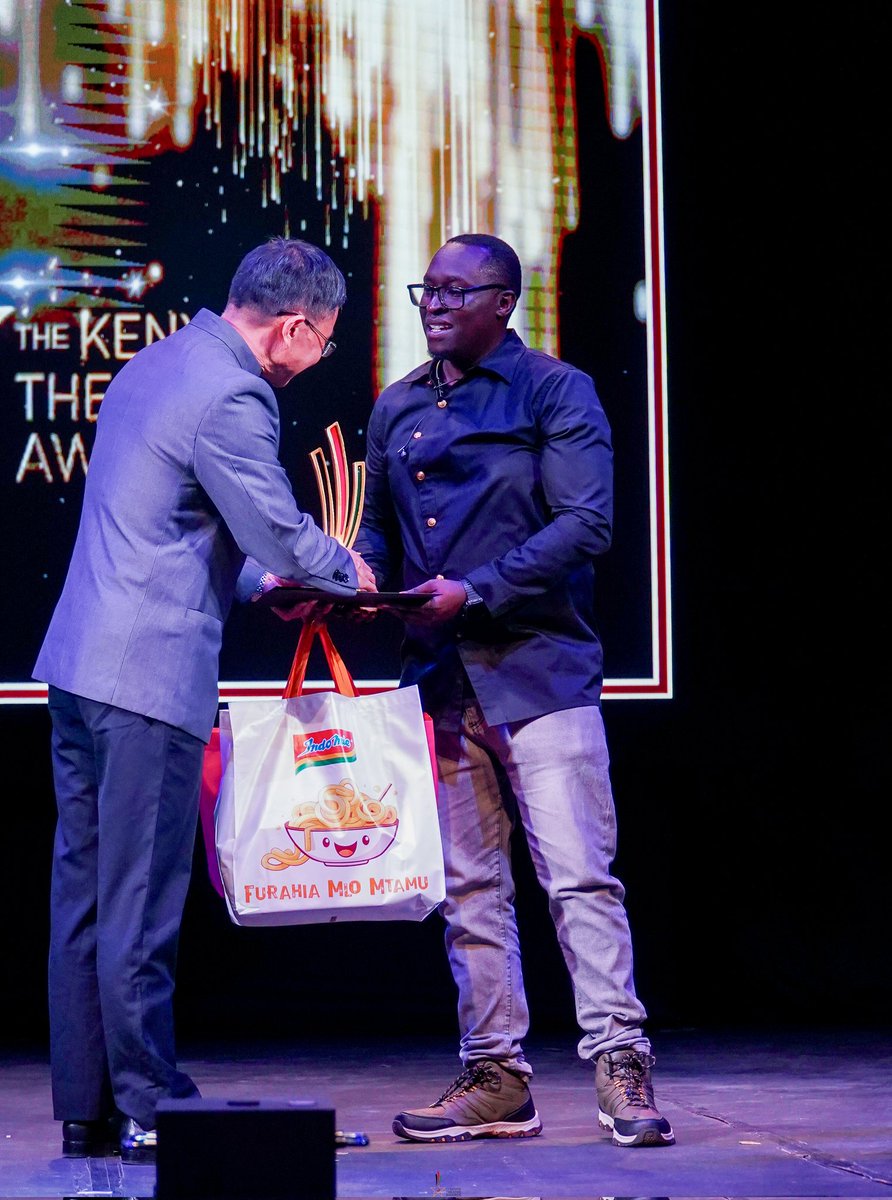
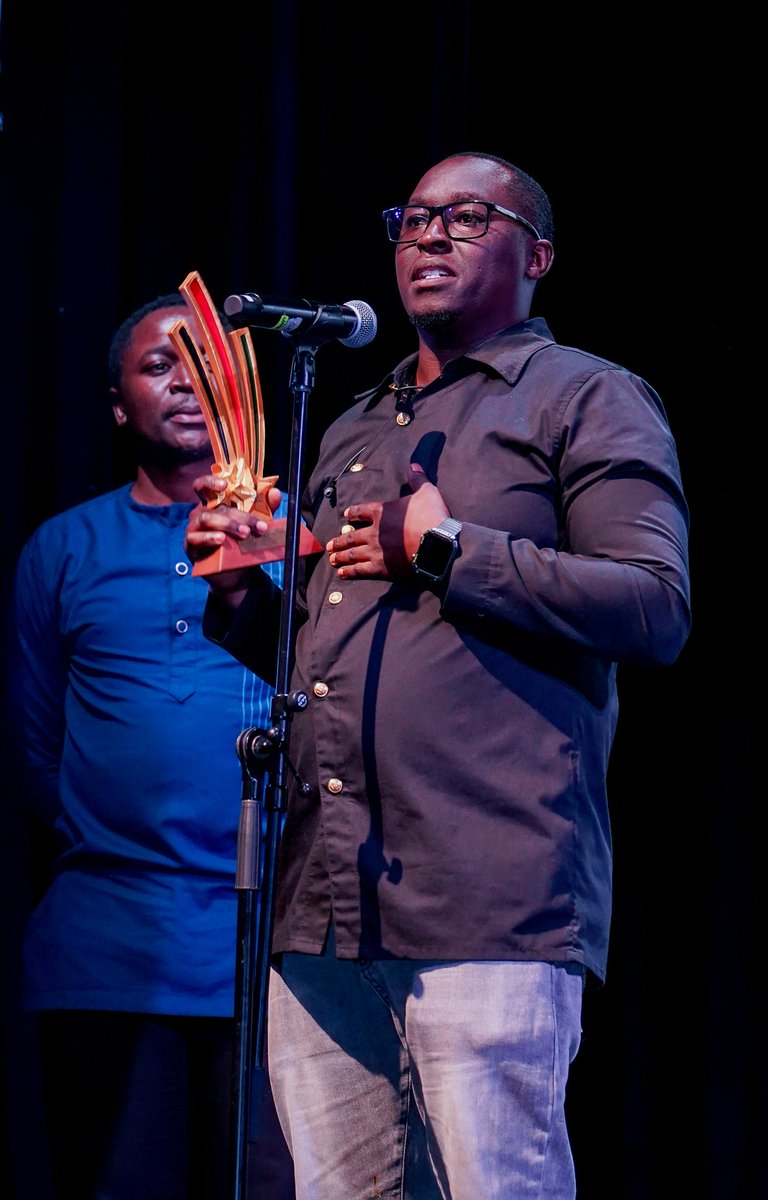
Last week I was privileged to receive the award for Best Lighting Design . Thank you @mainamind for trusting me to deliver . Thank you @KenyaTheatre for the recognition.
#midnightpoetry
#KTA2026
#Theatrelighting


English
Charles Stephen™ retweetledi

@SemaUkweliKenya @DCI_Kenya @NPSOfficial_KE 1/3
Under the Occupiers’ Liability Act, CAP 34, a person who controls premises (like a paid parking area in a building) owes a common duty of care to lawful visitors, including people parking their cars there, to take reasonable care that they are reasonably safe on the premises.
English
Charles Stephen™ retweetledi