

yk
5.5K posts
yk
@chiayong_
building high performance trading systems
Singapore Katılım Eylül 2019
3.4K Takip Edilen1.1K Takipçiler
Closed the $intc short
Apologies again, I'm overtrading a little. Like 2-3 trades a week.
If it bounces, I'll go short again.
In such environment, my whole goal is maintain portfolio value. Any gains are just bonus.
Chicken Genius@pakpakchicken
Short $intc Notational value $600k short Challenge portfolio attached
English

📍 I made a new drawing about Context Windows. About “lost in the middle”, how RAG affects it, tokenizers and more.
Understanding context windows help you debug and leverage LLMs most effectively. You see why people like Boris from Claude refresh the entire window at times.

English
Hi rest of the world.
In Singapore, we hate money.
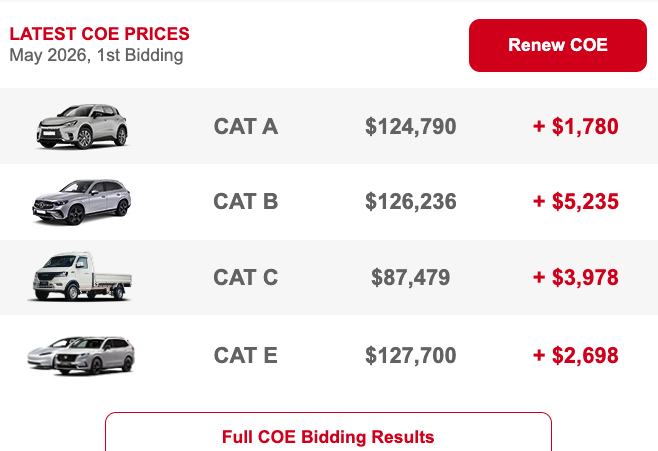
This picture is the cost of a car certificate that expires in 10 years.
ON TOP OF:
9% GST
$350 registration fee
320% of the Open Market Value
20% Excise Duty on the Open Market Value
Money means nothing. We hate money.
English


Periodic reminder to listen to this open.spotify.com/episode/5Us70M…
English

My argument is not that Groq’s deterministic compiler can be directly layered onto Nvidia’s GPU+HBM architecture. I agree that this would be structurally very difficult given HBM/DRAM’s non-deterministic latency and Nvidia’s SIMT model.
My point is narrower. Groq’s value may not lie only in the standalone LPU product, but also in its engineering know-how around low-latency inference, SRAM-centric execution, dataflow control, and compiler/runtime scheduling.
I’m not saying Rubin becomes a Groq LPU. I mean that parts of Groq’s expertise could be selectively reflected in Nvidia’s inference software stack, on-chip memory utilization, or future inference-specific products.
English
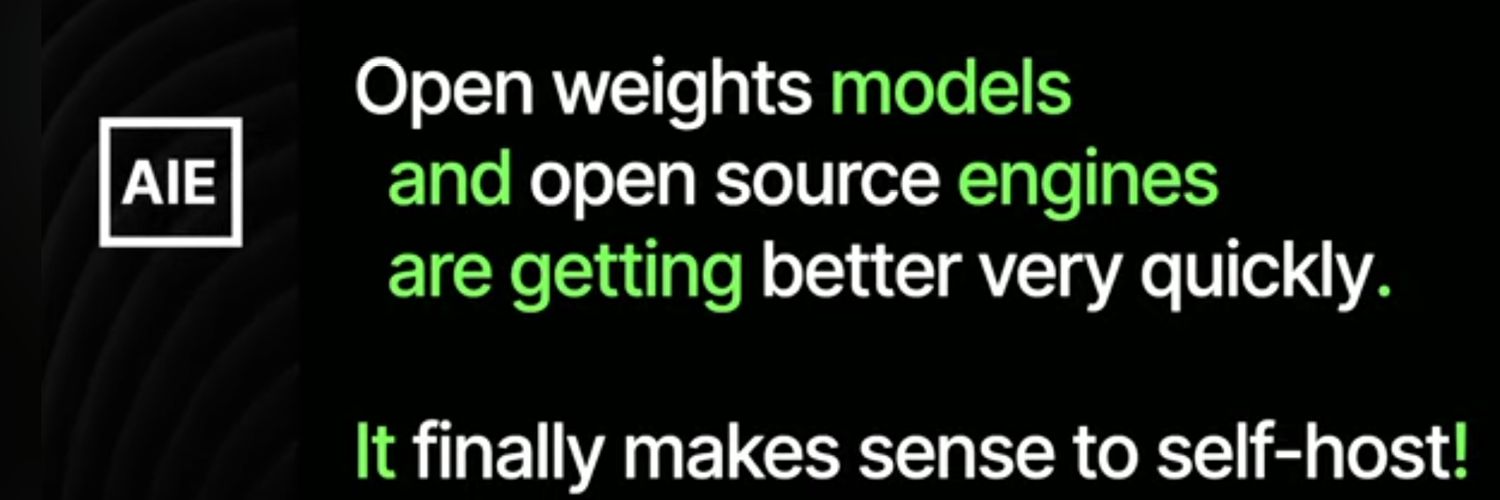
Something interesting I recently read from the sell side: Nvidia’s acquisition of Groq was not just about the LPU
- Rubin, which is expected to launch in 2H26, likely already has its hardware architecture largely finalized. However, Groq’s key talent is expected to work on optimizing Rubin’s software so that the already-expanded SRAM inside Rubin can be controlled more efficiently, almost like an LPU. The point at which Groq’s hardware design IP for fully controlling data flow within SRAM gets directly applied to chip design blueprints will likely be Rubin Ultra.
- Even if SRAM capacity increases significantly to 512MB in Rubin Ultra, SRAM is not meant to hold the entire model. Rather, it functions more like a large workbench where more data fetched from HBM can be laid out and processed at once. As SRAM gets larger, the number of times data needs to be fetched again from HBM decreases, which can sharply improve inference speed. However, the absolute amount of HBM capacity needed to store the full model is still expected to keep rising gradually as model sizes continue to grow.
$NVDA
English

yk retweetledi

This is the the quote I've been citing a lot recently.
kache@yacineMTB
you can outsource your thinking but you cannot outsource your understanding
English



Wrote up some flashcards and practice problems to help myself retain what @reinerpope taught.
Hope it's helpful to you too!
Suggest more below and I'll add them.
reiner-flashcards.vercel.app
Dwarkesh Patel@dwarkesh_sp
Did a very different format with @reinerpope – a blackboard lecture where he walks through how frontier LLMs are trained and served. It's shocking how much you can deduce about what the labs are doing from a handful of equations, public API prices, and some chalk. It’s a bit technical, but I encourage you to hang in there - it’s really worth it. There are less than a handful of people who understand the full stack of AI, from chip design to model architecture, as well as Reiner. It was a real delight to learn from him. Recommend watching this one on YouTube so you can see the chalkboard. 0:00:00 – How batch size affects token cost and speed 0:31:59 – How MoE models are laid out across GPU racks 0:47:02 – How pipeline parallelism spreads model layers across racks 1:03:27 – Why Ilya said, “As we now know, pipelining is not wise.” 1:18:49 – Because of RL, models may be 100x over-trained beyond Chinchilla-optimal 1:32:52 – Deducing long context memory costs from API pricing 2:03:52 – Convergent evolution between neural nets and cryptography
English
yk retweetledi

I first read this post on PTJ by @trengriffin more than a decade ago, and it's a great complement to the episode.
It's a collection of lessons and quotes, and remains one of the best summaries of how Paul approaches trading and what separates him from everyone else.
Well worth reading (or revisiting).
1/ "The secret to being successful from a trading perspective is to have an indefatigable and an undying and unquenchable thirst for information and knowledge."
2/ "Don't be a hero. Don't have an ego. Always question yourself and your ability. Don't ever feel that you are very good. The second you do, you are dead."
3/ "While I spend a significant amount of my time on analytics and collecting fundamental information, at the end of the day, I am a slave to the tape and proud of it."
4/ "I love trading macro. If trading is like chess, then macro is like three-dimensional chess. It is just hard to find a great macro trader. When trading macro, you never have a complete information set or information edge the way analysts can have when trading individual securities."
5/ "I really don't care about the mistake I made three seconds ago in the market. What I care about is what I am going to do from the next moment on. I try to avoid any emotional attachment to a market."
6/ "I am always thinking about losing money as opposed to making money. At the end of the day, the most important thing is how good are you at risk control."
7/ "I want the guy who is not giving to panic, who is not going to be overly emotionally involved, but who is going to hurt when he loses. When he wins, he's going to have quiet confidence. But when he loses, he's gotta hurt."
8/ "I've done really well on the short side. There's nothing more exciting than a bear market. But it's not a wonderful way for long-term health and happiness."
9/ "The sweet spot is when you find something with a compelling valuation that is also just beginning to move up. That's every investor's dream."

Patrick OShaughnessy@patrick_oshag
My guest today is Paul Tudor Jones (@ptj_official), one of the greatest macro traders of all time. He correctly predicted the 1987 stock market crash and shorted the Japanese bubble in 1990. For over 40 years, his flagship fund has had a negative correlation to the S&P 500. 100% of his returns are alpha. He says today's market has so many similarities to 2000, "the easiest bear market I've ever seen in my whole life." He makes the case for going long dollar-yen, why Bitcoin beats gold as an inflation hedge, and why he was wrong about Warren Buffett. But what I'll remember most from this conversation is Paul's zest for life. He's 71 and still wakes at 2:30 every morning to trade the London open. He works out for two hours a day. He walks with his wife every evening. He travels the country chasing peak spring and peak fall. He's so excited about the songs picked for his funeral that he wishes he could be there to hear them. Paul has lived five lifetimes in one. He's one of the most entertaining and interesting people I've met, and the conversation will leave you searching to be as passionate about what you do as he is about what he does. Enjoy! Timestamps: 0:00 Intro 1:00 The Kindest Thing 13:19 Trading vs. Investing 17:33 Lessons from Warren Buffet 22:24 The Existential Risks of AI 29:54 The Nature of Trading 31:46 Bitcoin 35:55 Bubbles 42:08 A Day in the Life of PTJ 46:00 Information Overload 47:07 Passion for Markets 50:49 The Robin Hood Foundation 54:18 The Workless World 56:03 Journalism 1:00:00 Principal Components of a Great Life 1:05:06 Kill Them With Kindness
English
yk retweetledi
Did a very different format with @reinerpope – a blackboard lecture where he walks through how frontier LLMs are trained and served.
It's shocking how much you can deduce about what the labs are doing from a handful of equations, public API prices, and some chalk.
It’s a bit technical, but I encourage you to hang in there - it’s really worth it.
There are less than a handful of people who understand the full stack of AI, from chip design to model architecture, as well as Reiner. It was a real delight to learn from him.
Recommend watching this one on YouTube so you can see the chalkboard.
0:00:00 – How batch size affects token cost and speed
0:31:59 – How MoE models are laid out across GPU racks
0:47:02 – How pipeline parallelism spreads model layers across racks
1:03:27 – Why Ilya said, “As we now know, pipelining is not wise.”
1:18:49 – Because of RL, models may be 100x over-trained beyond Chinchilla-optimal
1:32:52 – Deducing long context memory costs from API pricing
2:03:52 – Convergent evolution between neural nets and cryptography
English
@skgoodwin23 @ptj_official @patrick_oshag What are some of the best lessons U learnt!
Trading and in life
English

I spent a summer during college at Tudor learning trading tactics and life lessons from Paul that I’ve applied every day since. Thank you @ptj_official and @patrick_oshag for sharing some of these lessons on family, giving, trading, and risk with the world.
Patrick OShaughnessy@patrick_oshag
My guest today is Paul Tudor Jones (@ptj_official), one of the greatest macro traders of all time. He correctly predicted the 1987 stock market crash and shorted the Japanese bubble in 1990. For over 40 years, his flagship fund has had a negative correlation to the S&P 500. 100% of his returns are alpha. He says today's market has so many similarities to 2000, "the easiest bear market I've ever seen in my whole life." He makes the case for going long dollar-yen, why Bitcoin beats gold as an inflation hedge, and why he was wrong about Warren Buffett. But what I'll remember most from this conversation is Paul's zest for life. He's 71 and still wakes at 2:30 every morning to trade the London open. He works out for two hours a day. He walks with his wife every evening. He travels the country chasing peak spring and peak fall. He's so excited about the songs picked for his funeral that he wishes he could be there to hear them. Paul has lived five lifetimes in one. He's one of the most entertaining and interesting people I've met, and the conversation will leave you searching to be as passionate about what you do as he is about what he does. Enjoy! Timestamps: 0:00 Intro 1:00 The Kindest Thing 13:19 Trading vs. Investing 17:33 Lessons from Warren Buffet 22:24 The Existential Risks of AI 29:54 The Nature of Trading 31:46 Bitcoin 35:55 Bubbles 42:08 A Day in the Life of PTJ 46:00 Information Overload 47:07 Passion for Markets 50:49 The Robin Hood Foundation 54:18 The Workless World 56:03 Journalism 1:00:00 Principal Components of a Great Life 1:05:06 Kill Them With Kindness
English
Insane guy on the show
Must watch
Patrick OShaughnessy@patrick_oshag
My guest today is Paul Tudor Jones (@ptj_official), one of the greatest macro traders of all time. He correctly predicted the 1987 stock market crash and shorted the Japanese bubble in 1990. For over 40 years, his flagship fund has had a negative correlation to the S&P 500. 100% of his returns are alpha. He says today's market has so many similarities to 2000, "the easiest bear market I've ever seen in my whole life." He makes the case for going long dollar-yen, why Bitcoin beats gold as an inflation hedge, and why he was wrong about Warren Buffett. But what I'll remember most from this conversation is Paul's zest for life. He's 71 and still wakes at 2:30 every morning to trade the London open. He works out for two hours a day. He walks with his wife every evening. He travels the country chasing peak spring and peak fall. He's so excited about the songs picked for his funeral that he wishes he could be there to hear them. Paul has lived five lifetimes in one. He's one of the most entertaining and interesting people I've met, and the conversation will leave you searching to be as passionate about what you do as he is about what he does. Enjoy! Timestamps: 0:00 Intro 1:00 The Kindest Thing 13:19 Trading vs. Investing 17:33 Lessons from Warren Buffet 22:24 The Existential Risks of AI 29:54 The Nature of Trading 31:46 Bitcoin 35:55 Bubbles 42:08 A Day in the Life of PTJ 46:00 Information Overload 47:07 Passion for Markets 50:49 The Robin Hood Foundation 54:18 The Workless World 56:03 Journalism 1:00:00 Principal Components of a Great Life 1:05:06 Kill Them With Kindness
English


i am honestly shocked that singapore is the #1 country in the world in AI usage
like dyou know how crazy that is? population of 6m using more AI than USA (300+mm pop)
Jonathan Filbert@jonathanfilbert
🇸🇬 Singapore vs 🇮🇩 Indonesia on Claude AI usage — straight from Anthropic’s Economic Index (March 2026). Singapore ranks #1 out of 116 countries with a 5.53x usage index. Indonesia sits at #95 with just 0.30x. That’s a massive 18x gap. In SG 🇸🇬, people use Claude for building/debugging AI systems, advanced scientific research, and professional business analysis. In ID 🇮🇩, the top uses are academic assignments, creative fiction, religious/spiritual content, and data extraction. Every day my colleagues here in Indo rave about how Claude has changed their lives. I’m glued to podcasts like Dwarkesh and TBPN, thinking that ID is on the same AI wave as the rest of the world. Turns out… the rest of the country isn't. It’s just today that I realized — I’ve been living in a complete bubble.
English
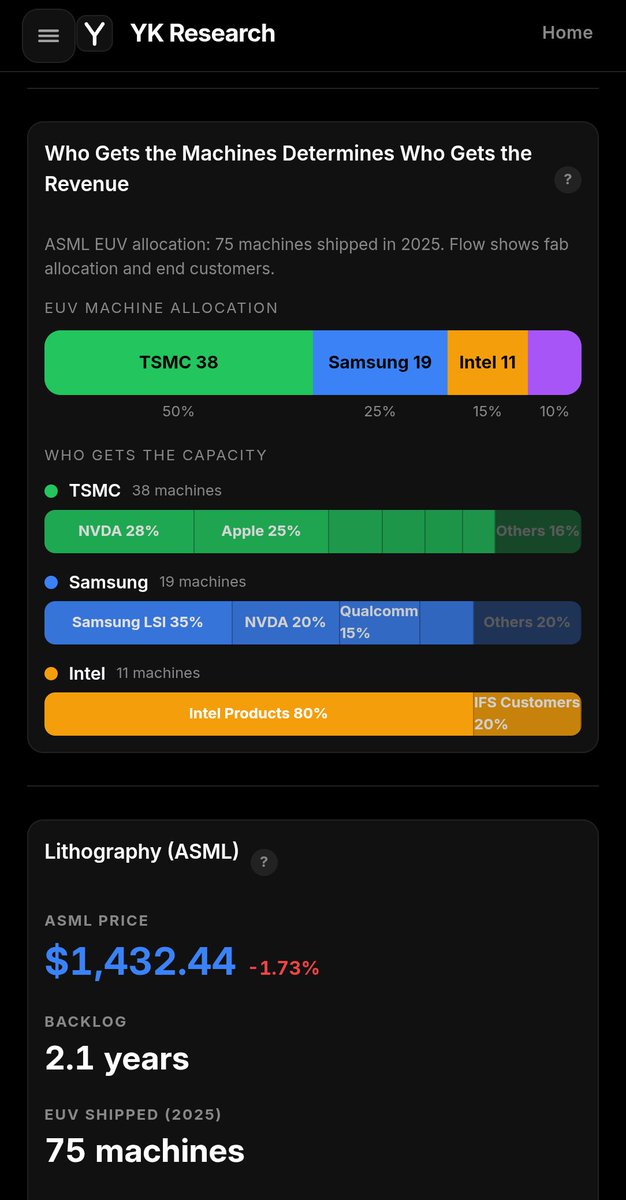
Even if people build more fabs, they'll realise that the bottleneck goes down to the smallest detail of the supply chain
photolithography machines ASML seems to be the bottleneck for now, tracking them is a proxy for who can scale up their capex ft @SemiAnalysis_
Jukan@jukan05
Two sell side firms I usually pay close attention to came out with a similar view today. Fubon Research: Even if TSMC wants to increase capex next year, EUV shortages may limit how much it can actually raise capex. Morgan Stanley: Around 2028, memory makers may try to execute unprecedented capex programs, and at that point EUV could emerge as the next bottleneck, potentially triggering a boom in the semiconductor equipment sector. Personally, I think the shortage won’t be limited to EUV. Semiconductor equipment broadly could become tight.
English

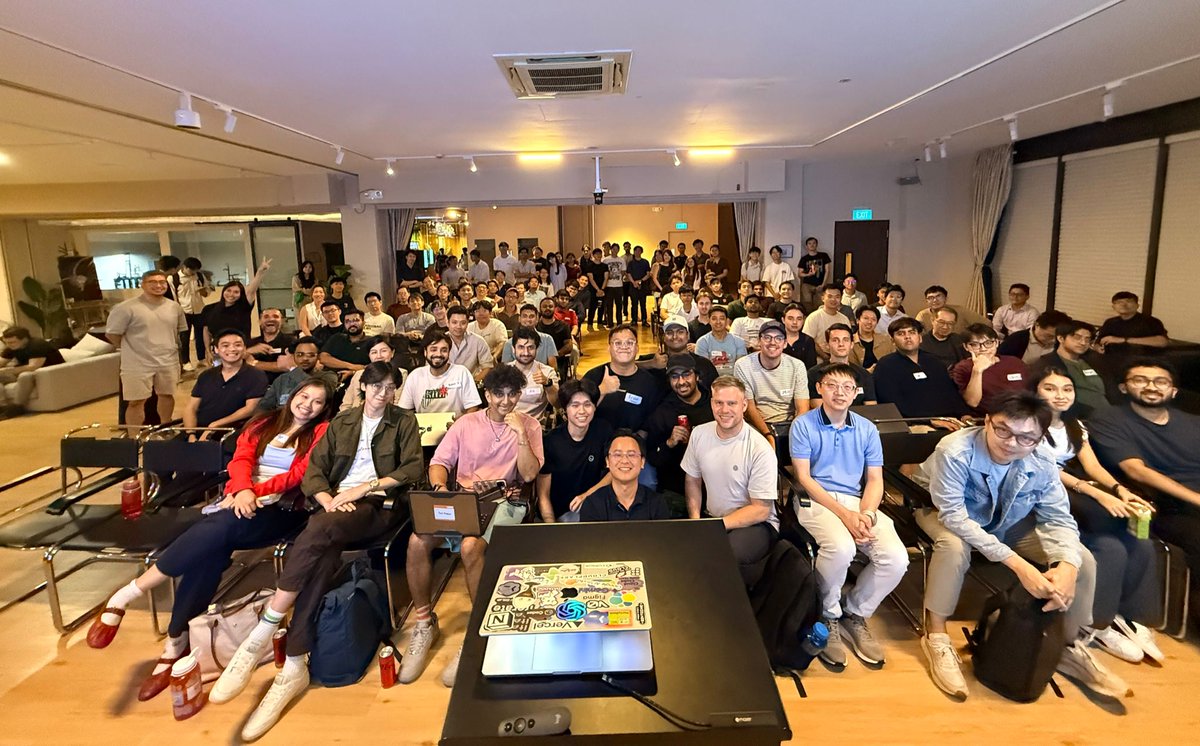
Codex Community Singapore Meetup #2
this one felt less like “ai can code now” and more like “what does real agentic engineering actually look like when people build around it?”
missed it? fret not! summary here 🧵👇
English