
Sabitlenmiş Tweet
BODUN'E
11.3K posts


BODUN'E
@chrisabbey121
Patient with others, yet impatient with status quo!
Lagos Katılım Mart 2016
2.2K Takip Edilen384 Takipçiler
BODUN'E retweetledi

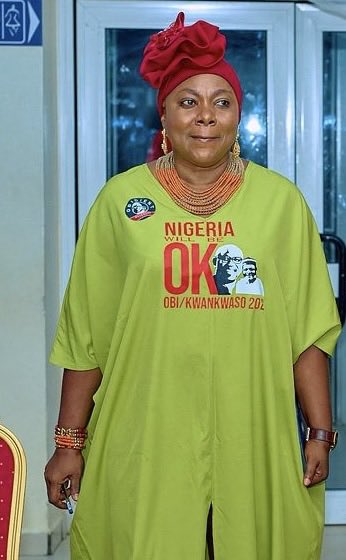
My Sunday sermon:
Happy Sunday Nigerians !!
I told you in my last sermon that Herod (Emilokan) could not kill baby jesus(OK) despite killing other children (other political parties), remember baby Jesus grew and saved his people.Hmm!!
I told you guys, yesterday I was vindicated when I heard Baby jesus(OK) is now in Bethlehem (NDC)
Hmm now I hear the 3 wise men(Nigerians) have gone to Bethlehem to greet him
The Bethlehemites said yesterday over 6million people entered their country.
Later when Herod found out he had been outplayed in his own game he was angry and he was upset so started destroying all with his army(courts)
What I am saying in essence on this my Sunday sermon is there is nothing new under the sun.
Too late Mr Emilokan Jesus has escaped.
NIGERIANS WILL BE OK!!!
English
BODUN'E retweetledi

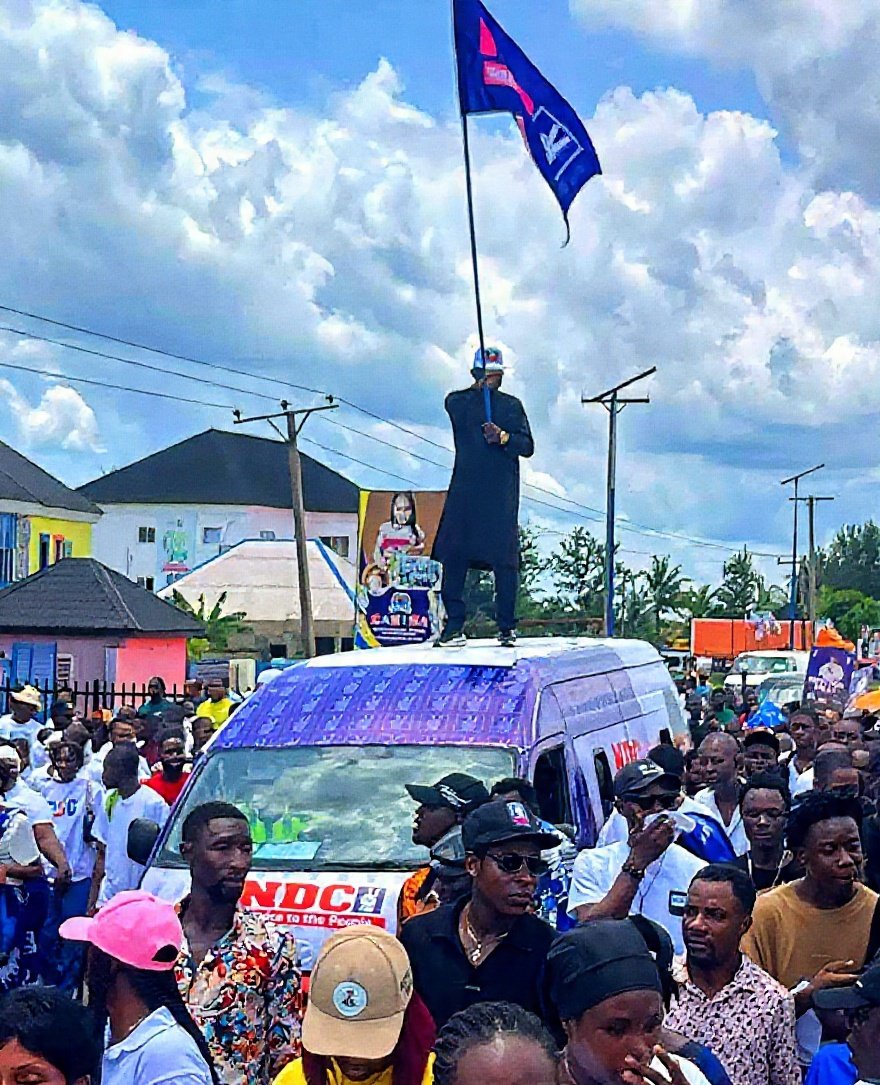
Wave your flag.
The flag of victory.
The flag of Democracy.
The flag of Hope.
English
BODUN'E retweetledi

BODUN'E retweetledi
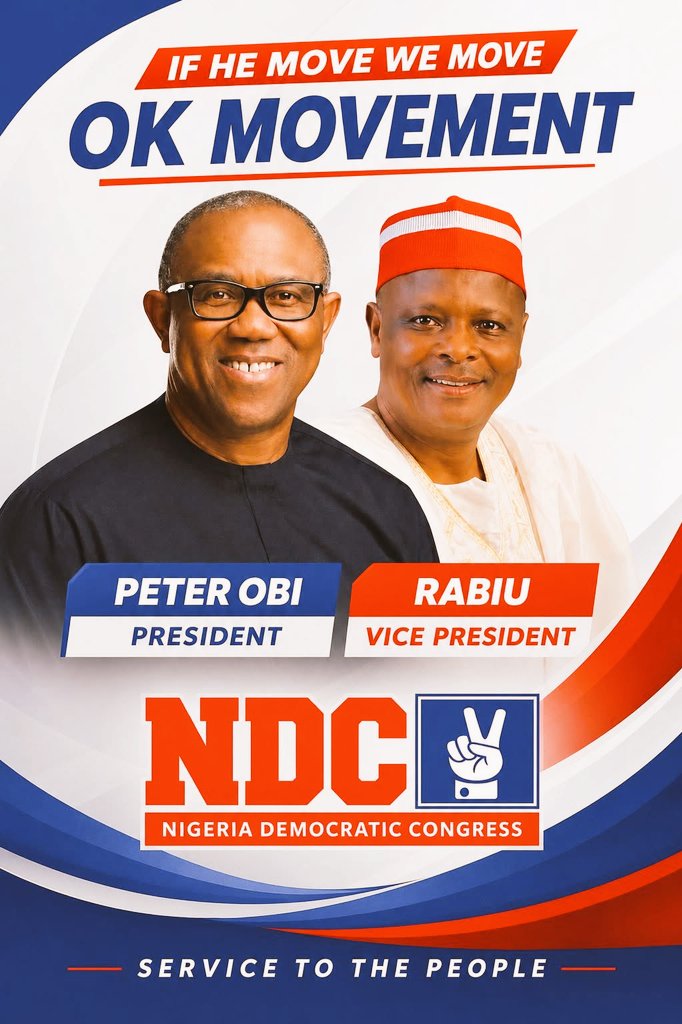
Breaking News.
They have collapsed their entire structure in South East, South South to NDC.
English
BODUN'E retweetledi

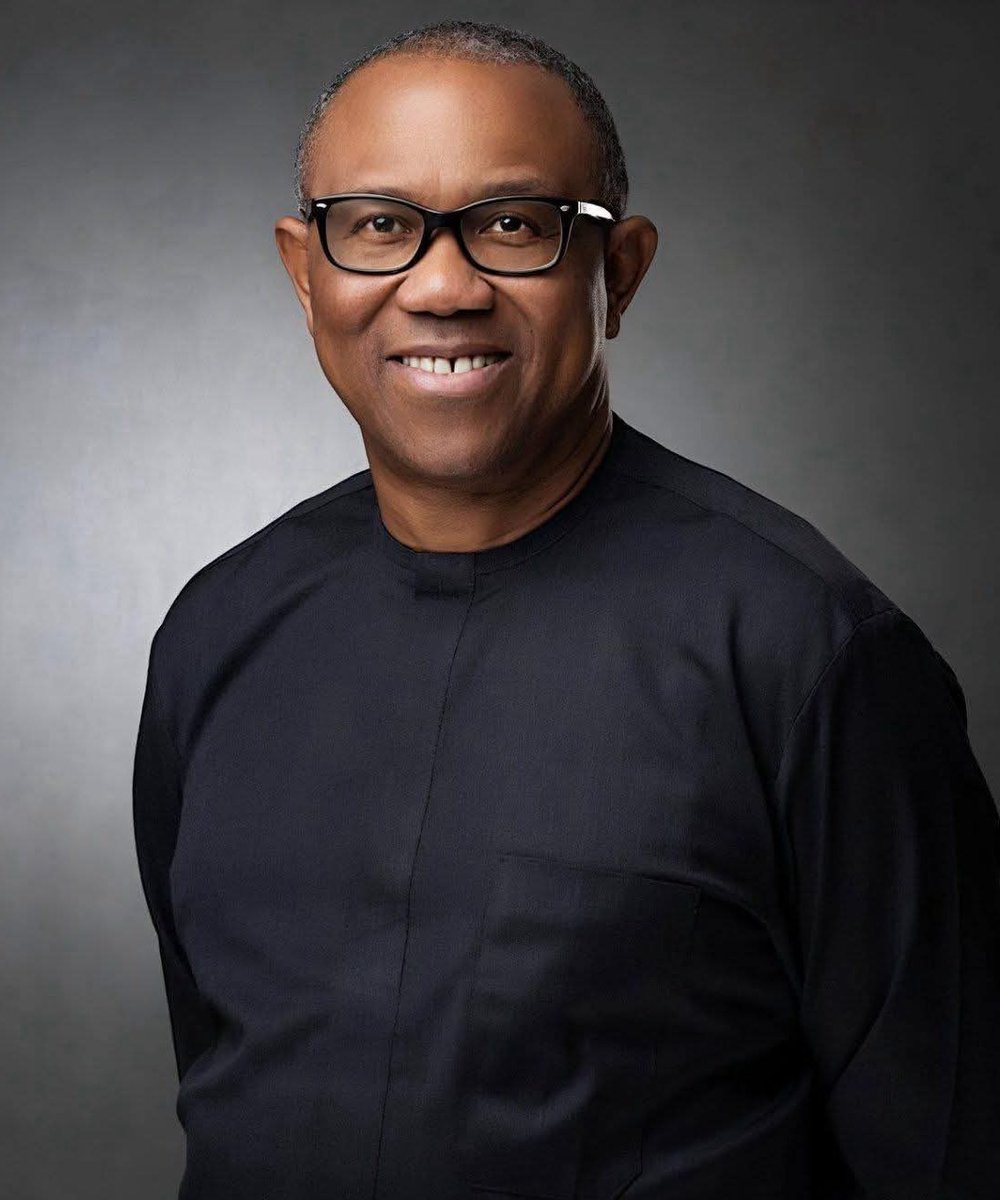
This is my political party.
Repost if we're on the same page.
English
BODUN'E retweetledi

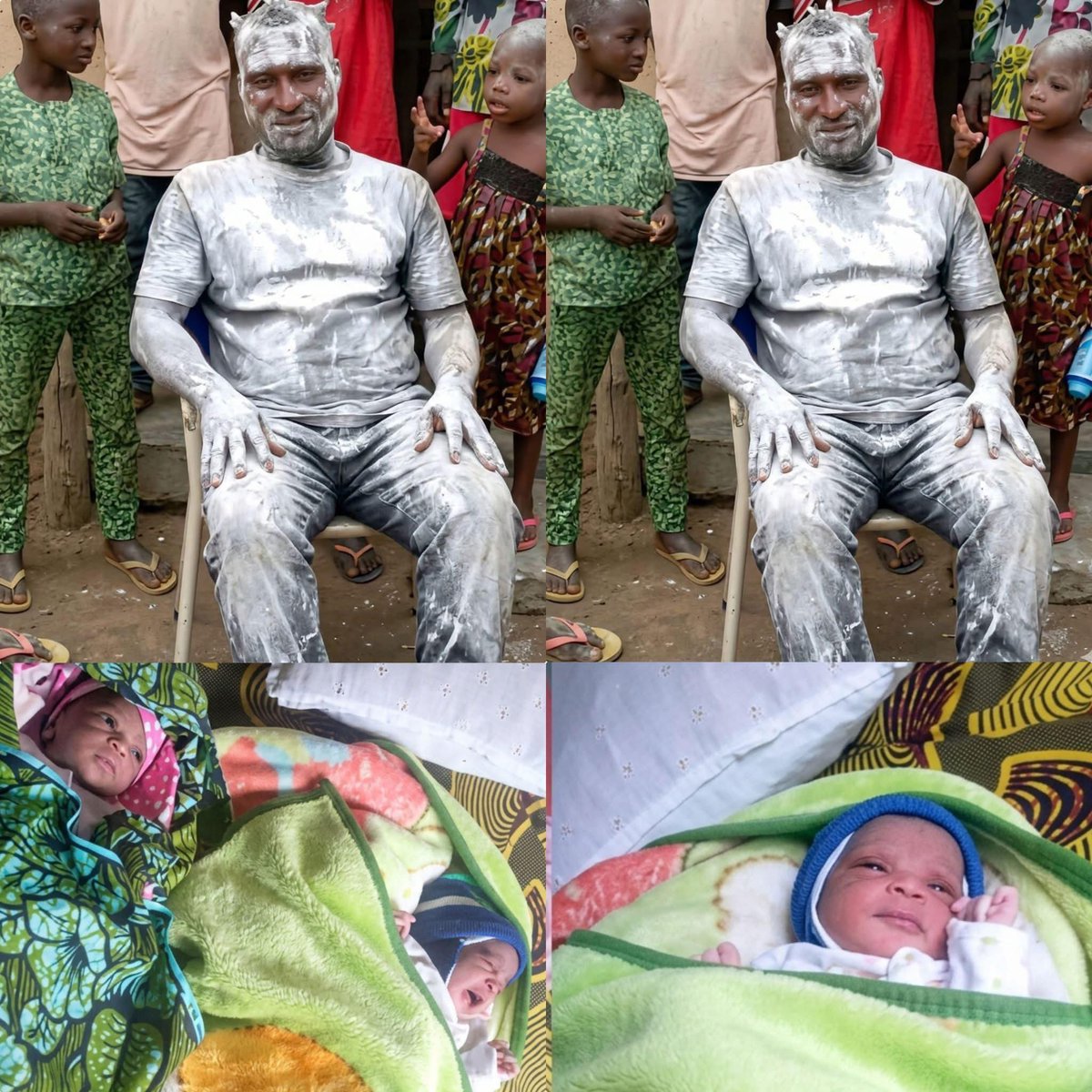
😭😭😭😭😭😭oh God oo!! My wife has survive CS for the first time after 14 years of waiting and suff€ring😭our triplets babies has arrived safely after 14 years of mock€ry😭😭😭😭Tell us congratulations,
please don't hold back your congrats,, You re next🙏🏻💃🥳
🙏🙏🙏
Congratulations 🎊 🍾
English
BODUN'E retweetledi

BODUN'E retweetledi
MTN @MTNNG data thievery is no longer a glitch, it’s system robbery cum extortion.
Nigerians are paying more for less every single day.
This scam must be put to an end!
Enough talk. It’s time to pick a date and #OccupyMTN.
English
BODUN'E retweetledi
10 million registered members already.
This is insane.
What's going on?
HE, Dickson, what kind of Heist is this?

English
BODUN'E retweetledi

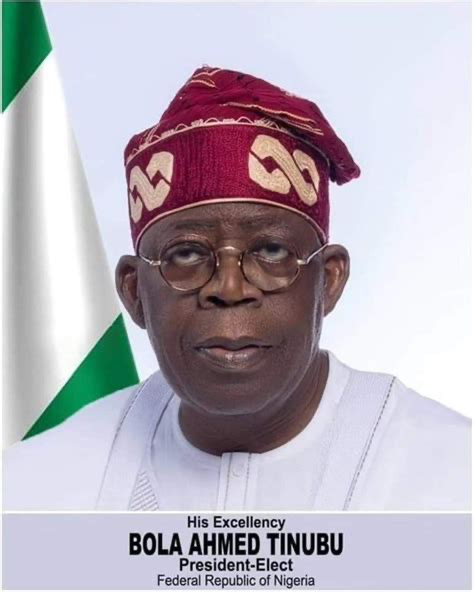
The Democracy Thief: How Bola Tinubu’s June 12 Legend Is Built on Sand
Nigeria’s president claims the mantle of a democracy hero. The documented record tells a far darker story of opportunism, shadowy finances, and a calculated myth built on a dead man’s sacrifice.
By Kio Amachree | Worldview International
A Nation Sold a Lie
Every year on June 12, Nigeria pauses to honour the memory of Chief Moshood Kashimawo Olawale Abiola — the Yoruba billionaire, the people’s candidate, the man who won the freest election in Nigerian history and was then robbed of his presidency, imprisoned, and ultimately killed for the audacity of insisting he had won. It is the most sacred date in Nigeria’s democratic calendar. And there is no man in Nigeria today who has more aggressively annexed that sacred grief for personal political capital than President Bola Ahmed Tinubu.
There is only one problem: the facts do not support the legend.
What the documented record actually shows is a politician who was, in the critical months of 1993, far more deeply entwined with the Babangida military machine than his self-serving narrative allows — a man whose mother enjoyed a personal relationship with General Ibrahim Babangida, who led a political organisation operating inside the Babangida administration, and who, in the very weeks Nigeria burned over the stolen mandate, was simultaneously settling a $460,000 forfeiture with American federal authorities who had linked his bank accounts to the proceeds of a heroin trafficking ring. A democracy hero who had to answer to the United States Drug Enforcement Administration while Nigeria’s democracy was dying is not a hero. He is a man with something to hide.
The Primrose Contradiction
Before June 12, before NADECO, before the exile mythology, there was the Primrose Group. During the Babangida administration — the same regime that would go on to annul Abiola’s mandate — Tinubu was actively leading an organisation called the Primrose Group, a political action body operating within Lagos that raised funds for community development programs.  This is not an accusation. It is a fact sourced from Tinubu’s own biographical record. The man who now presents himself as a resistance fighter against military rule was, in the years before June 12, embedded in the political ecosystem that Babangida built and sustained.
His mother, Alhaja Abibatu Mogaji, the Ìyálọ́jà of Lagos, had what even his own Presidency now concedes was “a personal relationship” with General Babangida. The State House, in its own defensive rebuttal of allegations made by former governor Sule Lamido, acknowledged that Alhaja Mogaji “once had a personal relationship with then-President Babangida.”  Tinubu’s defenders claim this relationship predated the crisis. But proximity to power leaves fingerprints, and in 1993 Nigeria, there was no more consequential power than Ibrahim Babangida’s.
What Sule Lamido Saw
Former Jigawa State Governor Sule Lamido is not a disinterested witness. But he is a direct one. He was the National Secretary of the Social Democratic Party — Abiola’s own party — in 1993. He sat in the room where it happened. And what he has said, publicly and on the record, is damning.
Speaking on Arise News, Lamido alleged that Tinubu was aligned with General Ibrahim Babangida at the time of the annulment — directly contradicting the narrative of Tinubu as a leading pro-democracy advocate.  More pointedly, Lamido stated: “His own mother Hajia Mogaji was organising Lagos market women to come to Abuja to pledge support for Babangida. Tinubu was actively hand-in-glove with Babangida. NADECO was a postulation formation to fight Abacha — not for June 12.” 
That last sentence is the most explosive and the most consequential. NADECO — the National Democratic Coalition, the organisation around which Tinubu has built his entire democracy credentials — was, according to Lamido, formed not to restore Abiola’s June 12 mandate, but to resist General Sani Abacha’s subsequent coup. There is a significant difference between opposing Abacha — which even some of Babangida’s own allies eventually did — and opposing the original annulment when it cost something to do so.
The Historian’s Version: A Plea, Not a Fight
Even the most sympathetic account of Tinubu’s 1993 conduct undermines his heroic self-presentation. British-Nigerian historian Max Siollun, writing in his 2019 book Nigeria’s Soldiers of Fortune: The Abacha and Obasanjo Years, provides what Tinubu’s defenders have cited as exculpatory. It is not.
Siollun recounts how Tinubu and his elderly mother travelled to Abuja to meet with Babangida and appeal for the annulment to be reversed. His mother, a devout Muslim, removed her headscarf in Babangida’s presence as an act of supplication. Newspapers published an iconic photograph of the grey-haired grandmother pleading with the younger president on Abiola’s behalf. The emotional appeals, Siollun notes, failed to persuade the military. 
This is offered as evidence of Tinubu’s loyalty to Abiola. In fact, it reveals something more troubling: that Tinubu’s approach to military power in 1993 was not resistance — it was petition. He did not organise protests. He did not call for civil disobedience. He went, hat in hand, to the man who had stolen the mandate, and he begged. And when the begging failed, he eventually found his way into NADECO — but only after the political landscape had shifted and opposition had become less immediately dangerous.
Meanwhile, the authentic resisters — the student leaders, the trade unionists, the journalists who went underground, the women who faced water cannons on the streets of Lagos — asked no one’s permission. Omoyele Sowore, then a student activist at the University of Lagos, was among those who stood on the streets. Sowore has said bluntly that “Tinubu, then a senator, was part of the political class that dined with the military, hopeful that Babangida would hand over power.” 
A $460,000 Question That Has Never Been Answered
And then there is Chicago.
In the summer of 1993, as Nigerians poured into the streets demanding that Abiola’s mandate be honoured, as Kudirat Abiola organised and Gani Fawehinmi lawyered and activists were beaten and arrested, Bola Tinubu was simultaneously navigating a federal asset forfeiture proceeding in the United States District Court for the Northern District of Illinois.
IRS Special Agent Kevin Moss, who personally investigated Tinubu’s financial activities, swore in an affidavit that there was probable cause to believe the funds in Tinubu’s American bank accounts represented the proceeds of narcotics transactions. The US Attorney for the Northern District of Illinois, Michael Shepard, filed a complaint for forfeiture of funds, asserting that Tinubu’s accounts held the proceeds of a heroin distribution organisation led by Adegboyega Mueez Akande. 
Records from 1993 reveal that Tinubu agreed to forfeit assets to U.S. authorities, sidestepping a potential trial on drug trafficking and money laundering charges. It has been over three decades since Tinubu forfeited $460,000 to U.S. authorities after an investigation tied him to alleged drug trafficking in Chicago. 
The US government subsequently agreed to a settlement. The agreement, reached in August 1993, stipulated that $460,000 from Tinubu’s account at Heritage Bank would be forfeited to the United States, with the remaining funds released to the Tinubu family. 
August 1993. The same month that Tinubu was reportedly making his Senate speech condemning the annulment, he was also settling a narcotics-linked asset forfeiture with American federal prosecutors. He has never, to this day, explained in detail where those funds came from, why federal agents found probable cause to link them to a heroin ring, or how a man employed as a treasurer at Mobil Oil Nigeria came to have over $1.4 million in American bank accounts investigated by the IRS.
Sahara Reporters noted the bitter irony: the forfeiture case came to its conclusion at the very peak of the struggle against Babangida’s annulment of the June 12 election — during which time Tinubu was simultaneously making “pro-democracy” trips to the United States, ostensibly to press for sanctions against the Nigerian junta. Whether those trips were actually connected to the June 12 struggle, the outlet concluded, was doubtful. 
A man laundering heroin money in Chicago while presenting himself to the international community as a pro-democracy exile is not a hero of the resistance. He is an opportunist running two tracks simultaneously.
The Appropriation of a Dead Man’s Sacrifice
Chief MKO Abiola died on July 7, 1998, under circumstances that have never been fully explained, while in military detention. His wife Kudirat was assassinated in June 1996, shot in the head in broad daylight in Lagos. His running mate, Ambassador Babagana Kingibe, made his own separate peace with Abacha and served as his Foreign Minister. His party’s leadership — SDP chairman Tony Anenih and secretary Sule Lamido — collapsed without resistance. The man himself was abandoned by virtually everyone who claimed to stand for him.
Bola Tinubu eventually went into exile. His Lagos home was bombed. He did fund NADECO operations abroad. These facts are real and they should be acknowledged. But they do not tell the full story, and they do not begin to justify the scale of the myth that has been constructed — a myth now enshrined in state power, with June 12 made a national holiday under Tinubu’s predecessor, and Tinubu himself now presiding as Nigeria’s president over the legacy of the man whose mandate his political class failed to defend.
The deepest obscenity is that Abiola cannot speak. He cannot correct the record. He cannot tell us who was truly at his side and who was playing both sides of the board. His silence has been colonised by the very class of politicians whose timidity, opportunism, and self-interest left him to die in a military cell.
What Democracy Actually Demands
Nigeria in 2025 and 2026 is governed by a man whose democratic credentials rest on a foundation of unresolved contradictions: a drug forfeiture he has never explained, a relationship with military power he has never fully disclosed, and a June 12 narrative that serious historians and direct participants have contested on the record.
President Tinubu’s Presidency responded to Lamido’s allegations by calling them “patently false” and “revisionism.” But the Presidency’s own rebuttal confirmed the personal relationship between Alhaja Mogaji and Babangida. It confirmed that Tinubu’s pre-NADECO conduct involved going to Abuja to petition the military dictator — not to resist him. And it offered no explanation whatsoever for the $460,000 that vanished into the United States Treasury in the same summer that Tinubu was claiming the mantle of democracy activist.
A government that jails activists, suppresses dissent, and presides over the arrest of NANS president Atiku Abubakar Isah for the crime of student protest has no claim to the June 12 tradition. A president who has never answered for a narcotics-linked asset forfeiture has no right to wrap himself in the flag of Moshood Abiola, who went to prison — and to his death — precisely because he refused to submit to illegitimate power.
June 12 belongs to the Nigerian people. It belongs to Kudirat Abiola. It belongs to Gani Fawehinmi. It belongs to the students who were beaten on the streets of Lagos. It belongs to the journalists who went underground.
It does not belong to Bola Ahmed Tinubu.
Kio Amachree is President of Worldview International, a Stockholm-based civic advocacy and accountability organisation. His commentary on Nigerian governance is republished by Vanguard, Sahara Reporters, and other major outlets.
English
BODUN'E retweetledi
The Jagaban Unmasked: How Nigeria’s Biggest Political Brand Was Built on Heroin Money, Stolen Revenue, and Manufactured Myth
By Kio Amachree
President, Worldview International
There is a title that has floated through Nigerian political discourse for two decades like incense smoke through a shrine — heavy, deliberate, designed to alter the atmosphere of any room it enters. “Jagaban.” Leader of warriors. The man with the blueprint. The godfather of Lagos. The unconquerable political genius who turned a failing megacity into Africa’s fifth-largest economy and then, inevitably, by the sheer force of his organizational brilliance, ascended to the presidency of the most populous Black nation on earth.
It is a magnificent story. It is also, in its essential architecture, a lie.
The title itself came from the Emir of Borgu in Niger State — a traditional honour conferred to mean “leader of warriors.” But the mythology constructed around that title, the almost religious conviction that Bola Ahmed Tinubu represents something singular and formidable in Nigerian political life, was not born in any emirate. It was manufactured in the back offices of a criminal enterprise, laundered through state apparatus, polished by complicit media, and imposed on a country that deserved far better than the man it received.
Let us begin where the story actually begins. Not in 1999, when Tinubu became governor of Lagos. Not in 1992, when he became a senator. But between 1988 and 1993, when, according to United States federal court documents, Bola Ahmed Tinubu controlled the activities of a white heroin trafficking network stretching from West Africa into the American Midwest. In 1993, the United States government named him as an accomplice in a narcotics-linked money laundering ring and moved against his assets. He forfeited nearly half a million dollars — $460,000 — to the U.S. Treasury Department. No formal charges were filed. He has denied the allegations. But the forfeiture is documented. The court records exist. The money was gone.
What is rarely asked — and what demands to be asked — is this: where did the money come from that allowed Tinubu to enter Lagos politics as a figure of substance? What was the source of the capital that permitted him to cultivate allies, finance campaigns, establish himself as a force within the Alliance for Democracy, and eventually claim the governorship of Nigeria’s most economically consequential state? The heroin trafficking timeline and the political ascent timeline are not parallel stories. They are the same story.
When Tinubu assumed the governorship of Lagos in 1999, he arrived not as a visionary administrator but as a man who understood, with deep professional clarity, how to extract resources from institutional structures and route them to himself. That expertise, first developed in the criminal networks of the late 1980s, was almost immediately applied to the machinery of the Lagos State Government.
In the year 2000, a man named Dapo Apara conceived and presented a proposal to the Lagos State Government for computerised revenue tracking — a system to modernise the management of the state’s internally generated revenue. It was an intelligent, necessary idea. Tinubu, then governor, approved it on one condition: that 70 percent equity in the resulting enterprise be assigned to his associates before the project could proceed. The company that emerged from that extortion, Alpha Beta Consulting, became the exclusive vehicle for tax computation, tracking, and revenue reconciliation across the entire Lagos State. It was not a public institution. It was, according to court documents filed by Apara himself, a private apparatus owned and controlled by Tinubu, operating as what Apara’s legal submissions called “a conduit pipe for massive money laundering, tax evasion, and official corruption.”
Alpha Beta collected commissions on everything it processed. For over two decades, while successive governors of Lagos administered the state and changed its skyline, Alpha Beta remained. It collected hundreds of billions of naira in commissions. By 2025, it was setting tax collection targets of 2.8 trillion naira for a single year, processing the revenues of Africa’s largest city through a private firm whose ultimate beneficial ownership traces back to the man now sitting in Aso Rock. In two recent years alone, Alpha Beta received commissions of 213 billion naira from Lagos State. The “Jagaban’s blueprint” for Lagos, on closer inspection, is a blueprint for extracting wealth from a captive city and routing it through private machinery into personal accounts.
This is what built the image. Not vision. Not administrative genius. Revenue predation, conducted through a private corporation embedded within the state like a parasite in a host body, generating infinite resources that could be deployed to purchase political loyalty, fund media narratives, and cultivate the next generation of compliant political figures.
The cult of personality followed the money. Tinubu deliberately groomed young politicians — Babatunde Fashola, Yemi Osinbajo, Akinwunmi Ambode, Rauf Aregbesola — positioning himself not as a peer among equals but as a patriarch whose favour determined futures. One analyst who studied his methodology observed that Tinubu consciously modelled himself on the logic of religious leadership: the cultivation of devoted followers through a hierarchical structure in which loyalty to the man is indistinguishable from loyalty to a cause. A critical Nigerian writer put it plainly: “Bola Ahmed Tinubu should have been the subject of intense interrogation by sociologists, psychologists, and political communication scholars as a case study in personality construction.”
He was not interrogated. He was celebrated. Media figures and opinion writers produced column after column affirming his genius, his durability, his irreplaceable organisational capacity. The Nation Newspaper — funded in part through financial arrangements that trace to his orbit — amplified his narrative. Reuben Abati, once a credible journalist, wrote fulsomely of “the narrative of Tinubu’s becoming.” Others followed.
What none of them interrogated was the foundation. They accepted that Tinubu had “transformed” Lagos without asking who paid for the transformation and who captured its proceeds. They praised his survival instinct without asking what tools a man with a heroin trafficking background brings to political survival. They celebrated his network without asking what oaths of allegiance are required to remain within it, or what happens to those who leave.
Former deputy governor Femi Pedro found out. He served under Tinubu, believed himself to be the natural successor, was passed over for a favoured relative, and was impeached days before the end of the administration on charges of gross misconduct — a man removed for the crime of expecting the loyalty he had given to be returned. He fled to another party, accused Tinubu of manipulation and betrayal, and alleged that Tinubu had spoken of assassinating him. Former deputy governor Sinatu Ojikutu, the first female deputy governor in Nigerian democratic history, convened a press conference on the eve of Tinubu’s presidential inauguration to declare that her life was in danger. She announced she was renouncing her Nigerian citizenship. She said that when her name was mentioned to Tinubu, he had responded: “Is she still around?” She said she had known this man for over twenty years and she knew precisely what those words meant.
These are not the fears of strangers or political opponents inventing grievances from thin air. These are the documented public testimonies of people who sat beside him in the governance of Lagos State — people who observed, from the inside, what this man’s power actually consists of and how it is maintained.
The allegations of occult practice and juju that attach to Tinubu’s name in Nigerian public discourse are not peripheral gossip. They are part of a long pattern of testimony from those who worked closest to him that something operates at the centre of his political life that is not explicable through ordinary categories of calculation and strategy. Tinubu himself, at the 2014 inauguration of Rauf Aregbesola as second-term governor of Osun State, publicly asked Nigerians to prepare their “charms and juju powers” for the 2015 elections — an extraordinary public invocation from a man who presents himself simultaneously as a devout Muslim. The remark was reported by Vanguard and other major Nigerian outlets. It was not a metaphor. It was not received as one.
The political opponents Tinubu has absorbed over the years — men who swore to bring him down and now call him a visionary reformer — are frequently cited as evidence of his genius. What they are, in fact, is evidence of the machinery. When a political opponent reverses course and begins extolling the man they once exposed, there are limited explanations. The most common one, in Nigerian political culture, does not involve a change of heart.
The presidency has simply applied the Lagos formula to the scale of the nation-state. Alpha Beta became the Chagoury contracts — billions in public infrastructure money directed to a man, Gilbert Chagoury, whose 1998 Swiss conviction for money laundering and whose documented links to Hezbollah-related financial networks have never been explained to the Nigerian public. The revenue extraction that characterized Lagos became the opacity surrounding NNPCL remittances at the federal level. The impeachments and political eliminations that cleared Tinubu’s Lagos became the declaration of a state of emergency in Rivers State, suspending a democratically elected governor, his deputy, and the entire legislature — an act of constitutional vandalism that even sympathetic legal analysts struggled to justify.
The DEA files that a United States federal court, before Judge Beryl Howell in Washington, ordered disclosed by June 1, 2026 — files that the FBI and DEA fought to suppress — do not concern a distant or tangential figure. They concern the sitting president of Nigeria. The FOIA litigation that compelled their disclosure was not conducted by enemies of Nigeria. It was conducted by those who believe that the documentary record of a head of state’s connections to narcotics trafficking belongs in the public domain.
The Organized Crime and Corruption Reporting Project, a global consortium of investigative journalists, ranked Bola Ahmed Tinubu the third most corrupt leader in the world in 2024. Third. In a world that includes Nicolas Maduro and assorted kleptocrats across three continents. Third.
There is no version of this record that supports the “Jagaban” mythology. There is no reading of the evidence — the drug forfeiture, the Alpha Beta extraction, the deputy governors fleeing in fear, the Chagoury contracts, the DEA files, the OCCRP ranking, the suppressed legislature in Rivers State — that produces the image of a statesman, a builder, or a warrior of anything except his own enrichment.
What produced the image is money, fear, and the determined laziness of a political culture that prefers mythology to accountability. The Emir of Borgu gave him a title. The heroin networks gave him capital. Alpha Beta gave him an endless treasury. Compliant media gave him narrative. Frightened politicians gave him loyalty. And a country exhausted by its own complexity gave him, in 2023, its presidency.
Bola Ahmed Tinubu is not a tough guy. He is a professional criminal of considerable organizational sophistication who learned, across four decades, to dress criminal logic in the language of governance. The “Jagaban” is a brand manufactured by a machinery of purchased allegiances, fabricated administrative legend, and the systematic silencing of those who saw clearly and spoke too plainly.
The machinery can be dismantled. It must be dismantled. Nigeria’s future — the future that men like my father, Chief Godfrey Kio Jaja Amachree, spent their lives trying to build — depends on Nigerians and the international community refusing the mythology and confronting the record.
The record is there. It has always been there. It is simply waiting for a country brave enough to read it.
Kio Amachree is President of Worldview International, a Stockholm-based civic and advocacy organisation focused on Nigerian governance, accountability, and diaspora engagement. He is the eldest son of Chief Godfrey Kio Jaja Amachree QC, Nigeria’s first Solicitor-General and the first African Under-Secretary-General of the United Nations.

English
BODUN'E retweetledi
You hear the story of Tinubu from a non-Nigerian and even as a Nigerian you will just simply cover your eyes in shame
English
BODUN'E retweetledi
I AM NOT A JOURNALIST. I AM A CITIZEN WITH A CONSCIENCE.
By Kio Amachree
Let me be clear about something that seems to be lost in translation. I am not a journalist. I have no press credentials, no editor, no deadline, no newsroom. I am a Nigerian citizen — a diaspora citizen — with a conscience that will not let me sleep, and a voice that refuses to be silenced by the weight of what I see happening to my country.
I am not marching into courtrooms. I am not storming prisons or standing on street corners holding placards in the Nigerian heat. I leave that to the brave men and women who do so at tremendous personal risk — activists like Olamide Thomas and the NANS president Atiku Abubakar Isah, arrested and brutalised simply for speaking truth to power. I salute them from a distance because that is the honest distance I must keep. What I have is this — the thing going through my head — and the ability to put it into words.
What I have come to understand, over a long life and an education that took me from Lagos to Eton to Wharton and eventually to Stockholm, is that Bola Tinubu is not a natural phenomenon. He is a manufactured one. He is a creature of the West — assembled, tolerated, and enabled by the very international system that now watches Nigeria bleed. A man with a fabricated past. A constructed identity. A family whose origins raise more questions than they answer. How a man arrested in the United States for heroin drug smuggling and money laundering — serious federal offenses — became the head of state of Africa’s most populous nation is not a mystery that Lagos can solve. That answer lives in Washington. Only the FBI and the DEA can explain why they chose to do business with such a man, and why, for decades, the silence around that business was so complete and so convenient.
This is not politics. This is not journalism. This is the testimony of a man who has never before felt compelled to raise his voice in this way — and that itself should tell you something.
I am Ijaw. I come from a lineage that includes men who built Nigeria’s legal architecture from the ground up — men of honour who believed in this nation with everything they had. For someone from my background, from my world, from my elitist remove, to become this publicly and passionately engaged means that something has gone profoundly, catastrophically wrong. I am not alone. There are many more like me — people in Stockholm, in London, in New York, in Toronto — who have watched from a distance and held their tongues, who are now moving quietly toward an opposition that no amount of dirty money and dirty tactics can purchase or intimidate.
The administration of Bola Tinubu has created the kind of emergency that draws out the reluctant. That is its most damning legacy.
Too many Nigerians have died — not in war, not in natural disaster, but in the quiet violence of a government that cares only for itself. A president who, by all available evidence, never knew his father, never attended a proper secondary school, survived his early years through hustle and criminality, and built a mindset in which the only thing that matters is the accumulation of personal power. Such a psychology does not suddenly become statesmanship when you add a presidential sash to it.
And the woman beside him — who calls herself a Christian, a pastor — whose love of motorcades and chieftaincy titles and government power speaks louder than any scripture she has ever quoted — is not his conscience. She is his enabler. Like certain political wives before her, she is propping up a man who should have stepped aside long ago, because her own hunger for proximity to power is indistinguishable from his.
They should go. They should go quietly, while there is still a graceful exit available to them.
History is not kind to leaders who mistake endurance for legitimacy. Nicolae Ceaușescu endured for decades. Samuel Doe endured. The videos of their ends are part of the public record. I do not wish that fate on anyone. But I am telling you — and I am telling them — that the tide is turning, and it turns faster than they know.
My message to the diaspora — to the reluctant, the polished, the ones who thought this was not their fight — is simple. It is your fight now. It became your fight the moment children started dying from hunger in a country sitting on one of the world’s great oil reserves. It became your fight the moment activists started disappearing into DSS detention for carrying placards. It became your fight when the courts themselves were turned into instruments of persecution.
We who live abroad, who came from privilege, who kept our distance — we are the ones they never planned for. We are harder to silence, harder to arrest, and harder to buy. And we are waking up.
The Tinubu administration has a serious problem coming its way.
Not from the streets alone.
From the living rooms, the studies, and the conscience of the diaspora.
We are coming — and we are already here.
— Kio Amachree is President of Worldview International, a Stockholm-based civic and advocacy organisation focused on Nigerian governance and diaspora accountability.

English
BODUN'E retweetledi

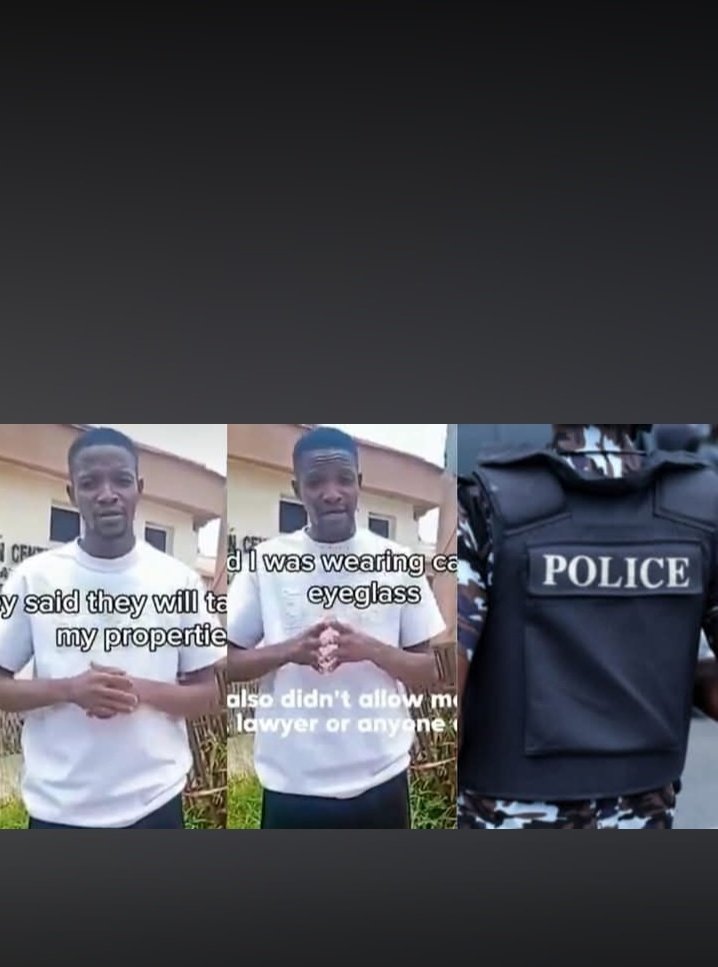
“Last month, I decided to travel to Ekiti. I got att@ck£d by the police. They arr£sted me for no reason at all. They said we should go to the station. I was wearing my camera glasses, my car camera was recording too, and I was also recording with my phone.
We got to the station. They took my eyeglasses from me. They told me, ‘Do you think Nigeria is America?’ They said they would show me the true colour of Nigeria. They said they would take all my properties. One of them said he would seize my car. He said he would take my phone, and that there’s nothing I would do about it.
They seized my phone and everything they saw in my car. I was carrying some little cash, not even up to ₦300,000, but they thought it was a big money, so they decided to k!dn@p me and l0ck me up.
I even thought they wanted to k!!l me when they took me out of the station. They didn’t take my statement, no statement at all. They just rushed me out of the police station.
I thought they wanted to k!!l me, but fortunately for me, they took me to a court environment. The police wanted to use the court to detain me. When they read my charges, first of all, they said I ass@ult£d a police officer. Meanwhile, I was wearing camera glasses that recorded everything that happened between us.
Secondly, they said I was in possession of a st0l£n vehicle. Just last year November, I renewed this vehicle in my name. All my papers are complete and intact. Everything is legit. Yet, these people alleged that I am a th!£f, a car th!£f.
The judge remanded me, and I have been in pr!s0n since then. I’m just coming out now. Luckily for me, we went to court today from pr!s0n, hoping to argue for bail. I was very surprised when the judge struck out the case because it was a very useless case.
The police used fr!vol0us charges to hang me somewhere, hoping to take over my properties just because of a car and few hundreds of thousands. They decided to k!dn@p me.
This is what Nigerian police are doing to our youths. This is what they have been doing for so long. I know I am not their first v!ct!m, but I will make sure I am their last v!ct!m..."
- Man recounts how he was allegedly arrested and detained by police in Ekiti over false charges before the case was dissolve in court...
May the bad side of Nigeria not happen to us 😢
English


BODUN'E retweetledi

WATCH: Missing Social Media Critic ‘Justice Crack’s Vehicle Found Parked At Military Facility In Abuja
English
BODUN'E retweetledi

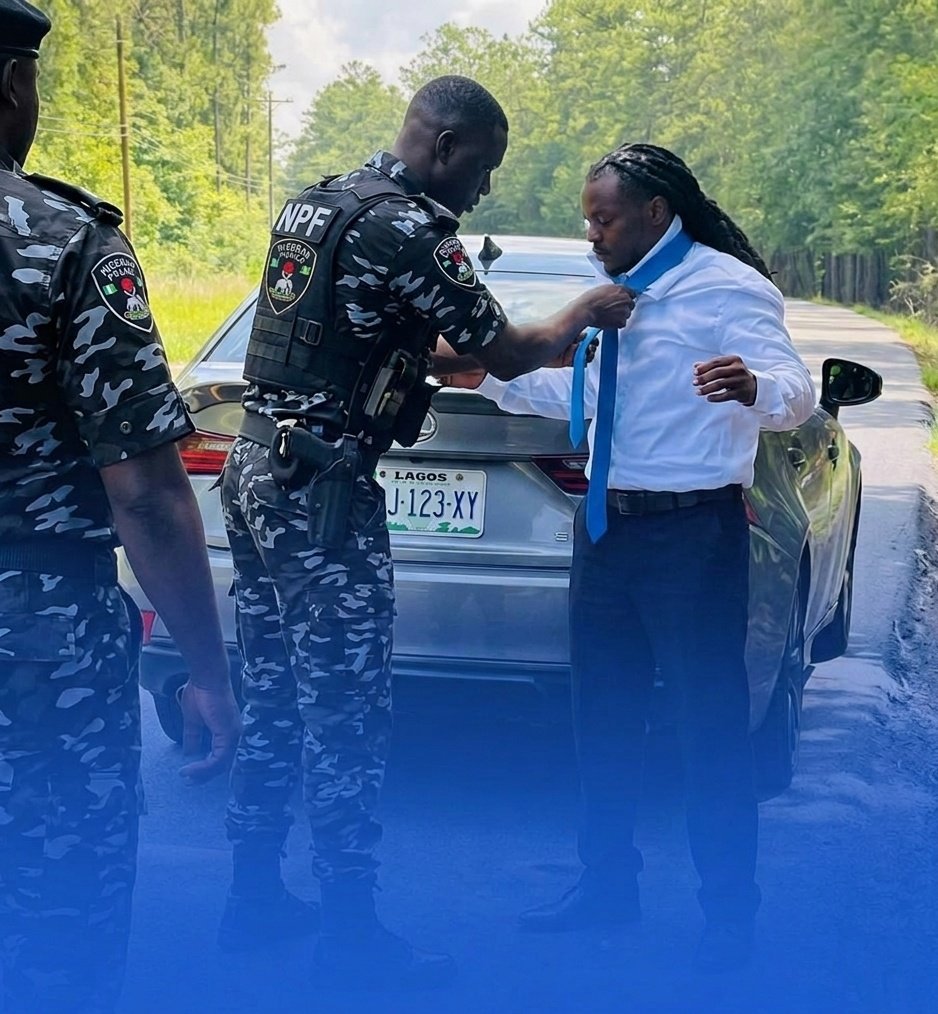
A police officer stopped a young man's car and, upon checking it, realized that his driving license had expired.
The police officer asked him why he was driving with an expired license.
He answered:
«They just fired me from my job, and the money I have is only enough for me to eat, pay rent, and my bills. I am from another state and I have come here to study at university. Plus, I have a job interview».
The police officer had the option of applying the law and prohibiting the young man from driving his car, but he decided to listen to his heart.
He parked his police vehicle, helped him tie his tie, got into the young man's car and accompanied him to the interview location.
They entered together. The #police officer apologized and explained the reason for the young man's delay. They hired him!
The young man got the job and obtained a temporary driving license until he raised enough money to renew his license.
That's humanity!
English
BODUN'E retweetledi
BODUN'E retweetledi

From ADC to NDC, Peter Obi is our political party, wherever he goes my people and I go.
English