Chris Harrsch

710 posts

Chris Harrsch banner
Chris Harrsch

Chris Harrsch

@chrisharrsch

Digital Assets @Nasdaq | Prev Custody @Gemini | Applied Physics MS & Computer Engineering BS @NJIT Savant of esoteric knowledge.

New Jersey Katılım Eylül 2009
2K Takip Edilen368 Takipçiler
Sabitlenmiş Tweet
Chris Harrsch
Chris Harrsch@chrisharrsch·
Right Click Save the Queen.
English
0
0
5
0
MONK
MONK@defi_monk·
All of a sudden y’all are expecting traditional exchanges who are literally the textbook examples of heavy, slow, incumbent organizations bogged down by regulation to start innovating like prime steve jobs or something
English
4
9
109
16.7K
Chris Harrsch
Chris Harrsch@chrisharrsch·
@gluk64 @andyyy Yeah I'd be happy to have a chat about this and learn more about Prividium.
English
0
0
1
32
ALEX | ZK
ALEX | ZK@gluk64·
@chrisharrsch @andyyy You're right, and I'm more than happy to dive into technical details on how this architecture in Canton makes global composability problematic. But here is a much more important agrument on why properietary networks can't replace an open standard: x.com/gluk64/status/…
ALEX | ZK@gluk64

The Cari announcement sparked a debate about institutional blockchain infrastructure. Much of it focuses on technical architecture. But first, consider the business case of proprietary vs. open standard. Governance of proprietary networks like Canton or Tempo is going to be controlled by a small group with disproportionate voting weight. It's "permissionless", but to join you have to submit a Google Form with opaque admission criteria. It's unclear who decides. Over time, the most influential participants will set the terms of access and pricing. If you're a bank evaluating this today, you recognize the pattern from SWIFT and Visa: early incumbents locking in structural advantages while late joiners absorb the cost. This is what we hear from banks. Everyone wants to build their own SWIFT-killer. Nobody wants join someone else's SWIFT-killer. Ethereum is the only settlement layer where that dynamic can't take hold, because no single entity can capture it. It's the only place where every participant can permanently trust that no future coalition will rewrite the rules against them. That's what makes Ethereum the only game-theoretical equilibrium as a global settlement layer for institutional finance that works long term.

English
1
0
3
130
Andy
Andy@andyyy·
Alex makes an interesting argument here, that the ETH bulls will eat up. If every private company wants to build their own settlement layer (L1 or L2), why would any of them want to build atop a separate firm & support a direct competitor? Its makes no sense. So, they likely won't. What they *may* do is, instead, choose to build on Ethereum, Solana, or a different "neutral" chain with no direct involvement in the validator set or in the leadership from a competitive bank. However, Canton actually is proving this mental model wrong right now. They have a set of large banks and multinational financial institutions collaborating as 'Super Validators' on their chain. We will see how this plays out as the likes of NYSE, S&P500, NASDAQ and others move towards deploying institutional-grade architecture onchain.
The Rollup@therollupco

"Large players will never agree to build on another large player’s infrastructure, which is why Ethereum is the only option." Robbie asks ZK inventor Alex (@gluk64) how much credence he gives companies building their own L1s. Do JP Morgan, NYSE, and Circle all want to operate on their own networks, or will Ethereum become the neutral infrastructure that everyone can agree on?

English
15
7
64
10.7K
Chris Harrsch
Chris Harrsch@chrisharrsch·
There's a lot of points to talk about here, but there's one question I'd want to ask as a starting point. If an issuer tokenizes an asset on ethereum, but retains the ability through the smart contract to burn and mint tokens, is that not tokenization and no longer a smart contract? I generally agree with what you are describing for cryptocurrencies like bitcoin, but for "tokenized" assets like an equity, I don't see how the distinction you are making about blockchains or ledger systems applies.
English
0
0
0
16
Chris Harrsch
Chris Harrsch@chrisharrsch·
Yes, I would agree with what you’ve written. That “the protocols have to deal with counterparty risk” is key here. The next layer of this conversation naturally begins when you say “But Chris, institutions do sometimes have counterparties to their transactions!” and yes, they do. But again it is a typically a contractually-agreed-upon central counterparty, and that can be expressed in Daml/Canton as well. Importantly, it is never a counterparty whose identity is not established ex-ante. That said, for some activity/institutions, trusting the protocol may be fine! But even that trust is often limited (clawbacks, transfer compliance checks, etc.)
English
1
0
3
90
Stephanie So
Stephanie So@ComplicatedIsOK·
Thanks for this back and forth. I'm trying to keep track at home. Would you please correct me if I'm wrong? Public blockchains are trying to solve transactions between two unknown, untrusted parties. That means the protocols have to deal with counterparty risk. If John and Jill are the counterparties, then Jimmy (the public blockchain network) is relied upon to validate the transaction. In Canton, it seems the "counterparties" already know and trust each other, so risk is handled off-chain via contracts and institutional relationships. In that case, the protocol isn't doing validating (as we know it in public blockchains), it's sort of stamping the transaction to get into a shared ledger state. I have the same first reaction as @andyyy, even though I'm reading all of @chrisharrsch's words and they make sense in isolation. This is the only way I can reconcile both.
English
1
0
1
107
Chris Harrsch
Chris Harrsch@chrisharrsch·
@mert @andyyy Is this meant to mean "Canton is not public because all transactions are not public" or "Canton is not public because the set of Supervalidators is not permissionless?" What do you think are the set of qualities that are requirements for a blockchain to be considered "public."
English
0
0
3
78
mert
mert@mert·
@chrisharrsch @andyyy Yes it is different than traditional public blockchains in that it is not actually public
English
1
0
1
117
Chris Harrsch
Chris Harrsch@chrisharrsch·
Just to be clear, Jimmy is an ethereum validator in that scenario, not a Canton Supervalidator. In Canton, John and Jill are validators. Jimmy is just a stage-and-commit facility. (We can absolutely have a conversation about whether or not that is acceptable for someone) Here's another angle that I think is helpful - institutions already have counterparty relationships that are governed and protected by (among other things) contract law. They do not need a (validating) intermediary for a peer-to-peer interaction. You and I do not have such protections and it would be burdensome/infeasible to set that up. For example, if I want to Venmo you for drinks, we both trust Venmo as an acceptable intermediary. Better yet, as we are both sophisticated gentlemen, I may pay you in a stablecoin instead. The blockchain itself becomes our intermediary, and we are both quite happy with that for all of the reasons we both know well. We "trust" the blockchain to execute the transaction (valid state transition) and be there when I need to pay you (liveness). We aren't particularly concerned with strict privacy in this scenario (although we can also have that conversation). Institutions do not need those features. They are free to interact with one another at will under the terms of their relationship and nobody else needs to know of or approve of those interactions. Daml as a smart contracting language was purpose-built to approximate contract law in some respects, and Canton continues those assumptions into the protocol level. As an aside, I love ethereum. I cut my teeth in this industry on ethereum and learning about the EVM. I wouldn't be where I am today without that knowledge and I think it continues to be an incredible technology. The things it is good at are worthy of pursuing and its protocol design is absolutely useful for many things. I do not think institutional adoption of blockchain technology cannot happen on these style chains, it absolutely can. Nothing here is meant to be a condemnation of those chains, but it's worth really understanding what sets these protocols apart and what trust assumptions are appropriate under different circumstances.
English
2
0
6
182
Andy
Andy@andyyy·
With all do respect, I appreciate this but I must say “counterparties are the validators of their mutually agreed upon state changes” essentially reaffirms my point. I’m not a big eth maxi but that exact point is why you’ll get screamed at for credible neutrality with Ethereum L1 as a comparison. If John and Jill allow Jimmy to verify their transaction, then we’re just doing middlemen all over again. Wasn’t that the whole point of this?
English
1
0
3
330
nairolf
nairolf@0xNairolf·
@mdudas the super protocol aggregating payments protocols lol?
English
1
0
7
403
Mike Dudas
Mike Dudas@mdudas·
i’m excited to see which payments protocol the machines choose
English
42
5
189
14.4K
Watcher.Guru
Watcher.Guru@WatcherGuru·
JUST IN: 🇺🇸 SEC approves Nasdaq rule to allow tokenized stocks & securities trading.

English
580
2.4K
15K
1.2M
DEGEN NEWS
DEGEN NEWS@DegenerateNews·
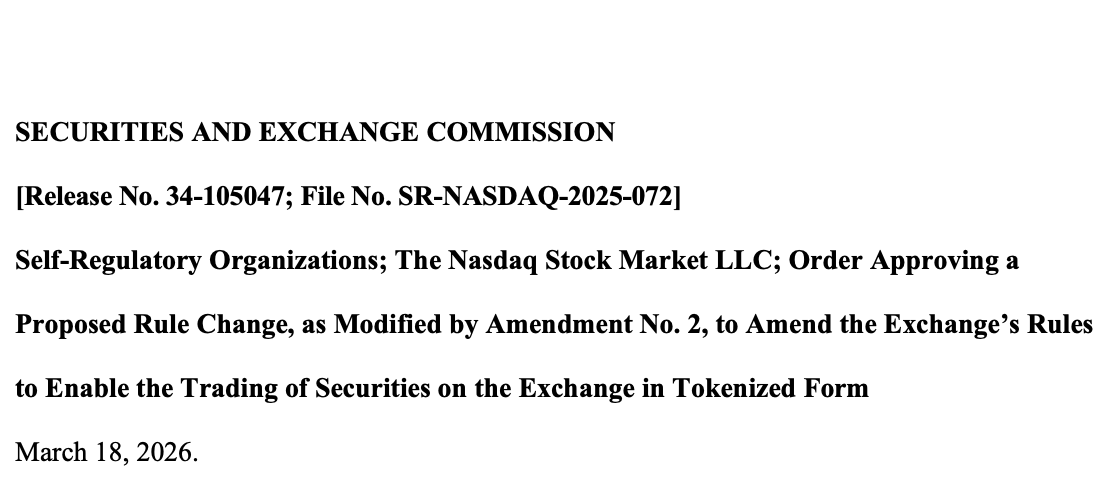
NEW: SEC APPROVES NASDAQ'S RULE CHANGE TO ALLOW TRADING OF TOKENIZED SECURITIES (VIA DTC PILOT) ON ITS EXCHANGE, EFFECTIVE DURING THE PILOT PROGRAM SOURCE: sec.gov/files/rules/sr…
DEGEN NEWS tweet media
English
21
34
254
24.2K
₊˚ପ⊹ rachel *·˚
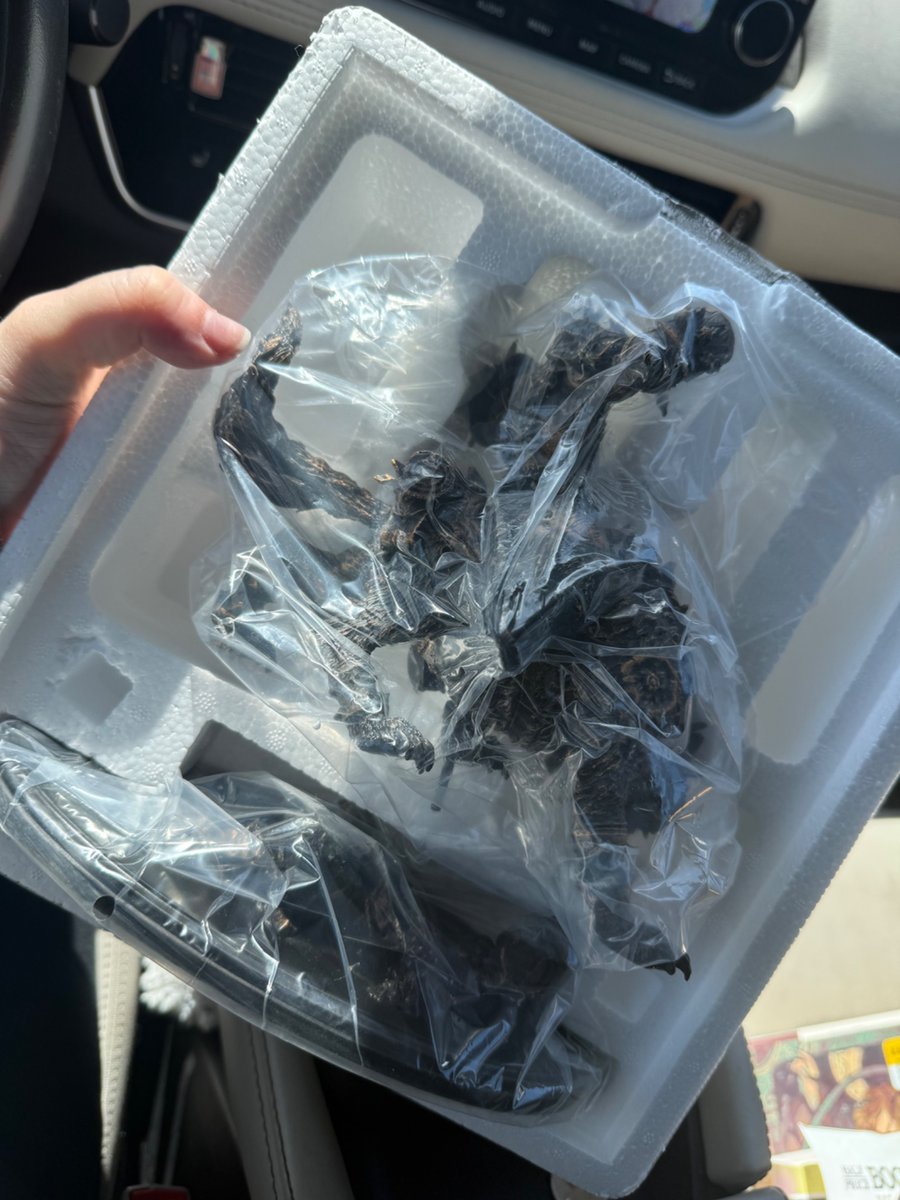
you’re absolutely kidding me — I did NOT just find my holy grail, the 10th anniversary World of Warcraft orc statue that only players who were subscribed for the entire ten years received, at a used book store for next to NOTHING ??? There’s literally no way. Omg.
₊˚ପ⊹ rachel *·˚ tweet media₊˚ପ⊹ rachel *·˚ tweet media
English
70
89
5.1K
210.6K
Chris Harrsch
Chris Harrsch@chrisharrsch·
@andyyy Capital efficiency from netting + credit intermediation. Instant settlement is great for collateral, not so much for post-trade.
English
0
0
1
28
Andy
Andy@andyyy·
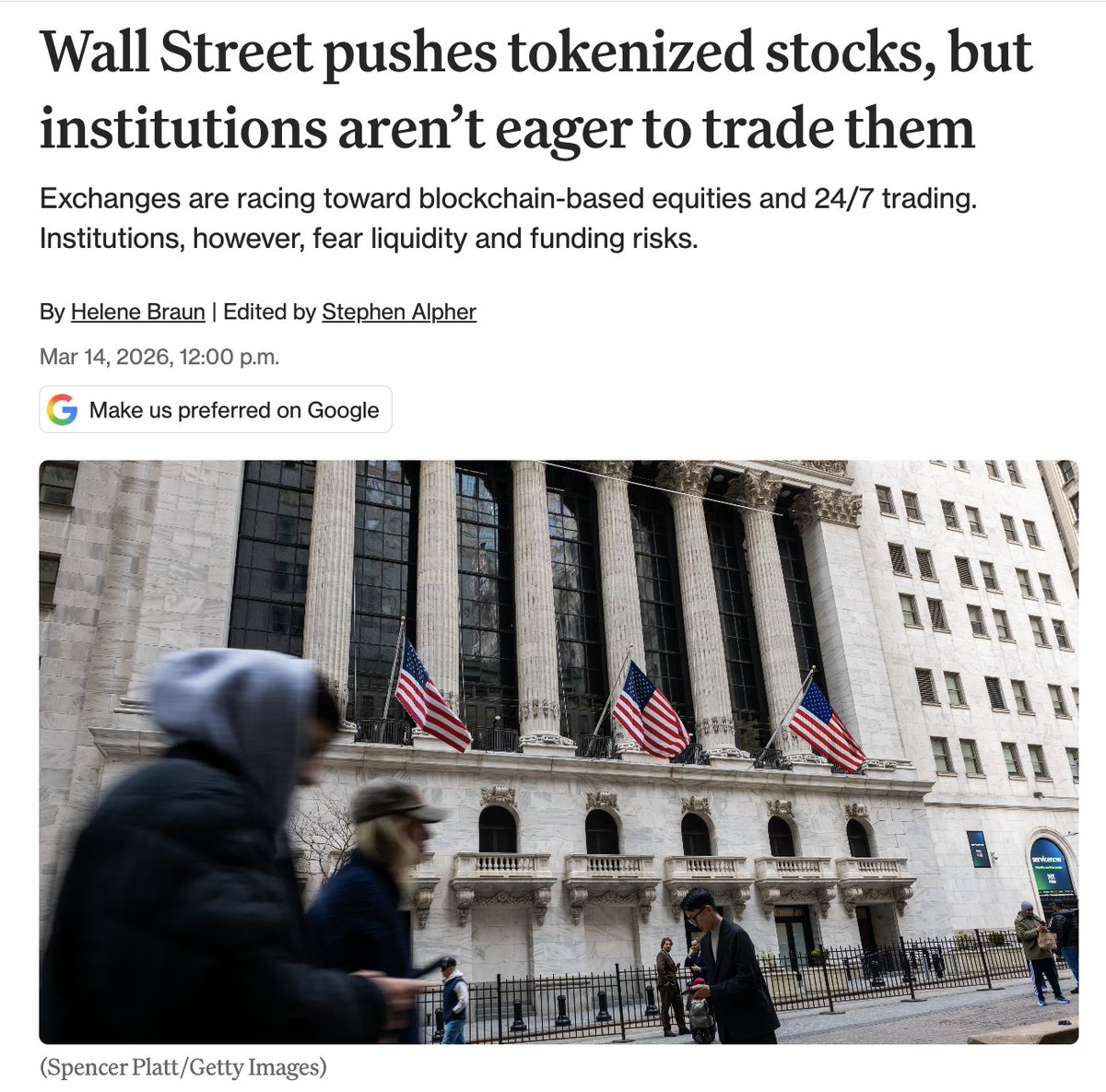
This doesn't really make sense to me. Major exchanges like the NYSE are pushing into 24/7 trading, but institutions are pushing back. The sources cited claim resistance to instant settlement due to "prefunding requirements and increased operational costs" associated with enabling 24/7 trading. Retail will likely be the major adopters first, with institutions to follow. Why would you prefer T+1/2 settlement times???
Andy tweet media
English
34
1
62
12.2K
Chris Harrsch retweetledi
Nasdaq
Nasdaq@Nasdaq·
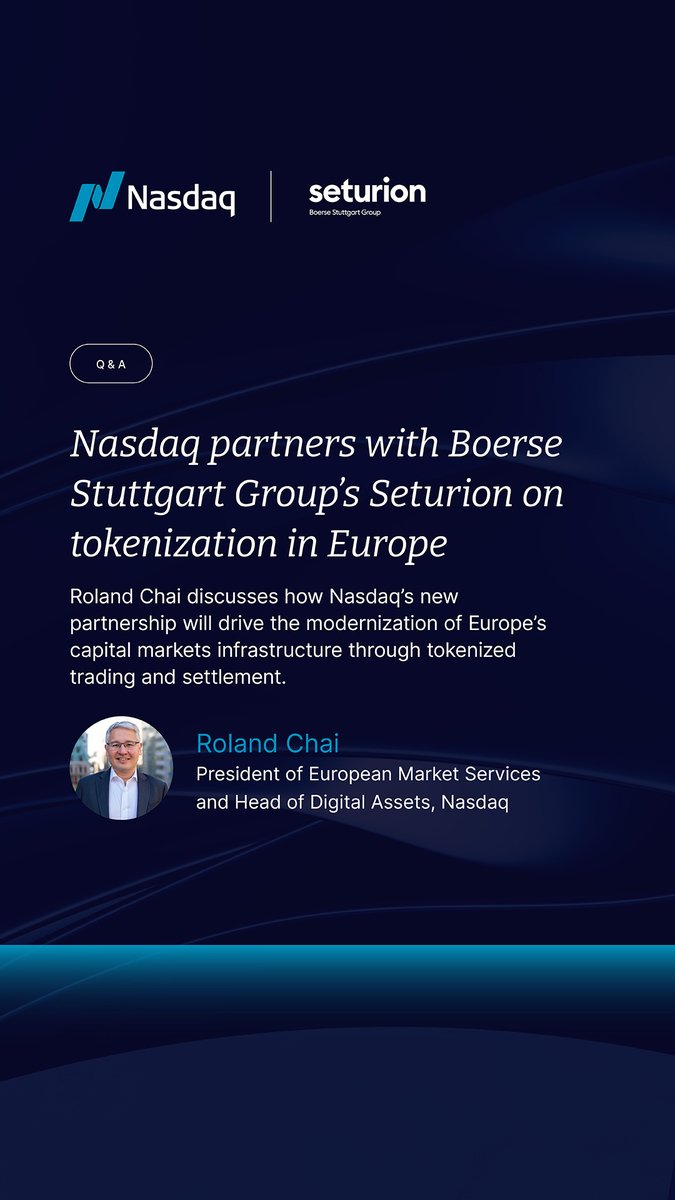
Nasdaq is partnering with Seturion, Boerse Stuttgart Group's pan-European settlement platform for tokenized assets, to transform Europe's fragmented capital markets infrastructure. "We see this partnership as creating a central digitized platform for post-trade to really drive a new paradigm in terms of efficiencies for Europe," shares Roland Chai, President of European Market Services and Head of Digital Assets at Nasdaq. Read more: spr.ly/6018B6KPng
Nasdaq tweet media
English
10
6
31
11.1K
Chris Harrsch retweetledi
Gwart
Gwart@GwartyGwart·
Why don’t they just tokenize the oil in the Middle East and transport it across permissionless financial rails, thereby avoiding the Strait of Hormuz altogether
English
480
1.4K
17.8K
830.4K
Chris Harrsch retweetledi
The Wall Street Journal
Nasdaq said on Monday that it will work with crypto exchange Kraken and issuing companies in developing its plan to offer tokenized stocks on its exchange on.wsj.com/4rVRTFp
English
56
123
528
196.8K
Andy
Andy@andyyy·
Tokenization really is the mega institutional bull case right now and it’s only getting bigger. Three days in NYC is enough to reaffirm that there are two separate realities rn, the retail token bear market & institutional mania…wild, really.
Etherealize@Etherealize_io

Goldman Sachs CEO: Tokenized equities is something we’re thinking a lot about David Solomon asks Coinbase CEO Brian Armstrong how he sees tokenized equities unfolding. Brian responds: “A few years ago, people were talking about stablecoins, and they were saying, ‘Why do we need a digital dollar? We kind of can already make digital payments… What’s the point of that?’ It turned out to be a massive market. There’s high demand for the dollar in all these countries around the world, and a lot of people can’t get access to dollar-denominated accounts — they live in a high-inflation country like Turkey or Argentina or Nigeria. So that was one piece. And the other was it just reduced friction in terms of all kinds of payments people wanted to make in crypto for trading and B2B payments. There’s something like $30 trillion of stablecoin payment volume in the last year.” Brian believes tokenized equities will follow a similar path: “We don’t know exactly how it’s going to play out, but if you simply store a share of a company with a traditional custodian and issue a token equivalent of it on-chain, what does that enable? Similar to stablecoins, there’s an international component to this. There’s lots of people in the world who would love to buy Tesla or Nvidia. If you’re wealthy in Argentina, you can probably get a brokerage account open somewhere to trade that kind of stuff, but the vast majority of people cannot. There’s also this 24/7 trading aspect — people want to do that, and I think crypto is going to get there faster. There’s fractional shares, where you can trade a tiny piece of a share. There’s things like perpetual futures markets which have done really well in crypto — why shouldn’t that exist for securities as well? I think you’re going to see some things like this where crypto reduces friction and allows people to try new things. There might even be novel governance things which get created: let’s say you want to create a stock where short-term holders of your stock can’t vote — you can program that into a smart contract on chain and make that new type of token with those capabilities.” And it’s not just equities. Treasuries, private credit, real estate, and many other real world assets (RWAs) are being tokenized, with Ethereum is the preferred settlement rail for compliant institutional capital markets. More than 60% of all tokenized assets — over $200 billion — reside on Ethereum.

English
11
7
96
13.9K
dax
dax@thdxr·
we were supposed to have a family get together on saturday but everyone got sick so now i have 7 lbs of defrosted australian wagyu prime rib what do i do
dax tweet media
English
145
2
588
63K