
Sabitlenmiş Tweet

Chris Ling | NLH
905 posts

@chrisling_dev
Investing @nolimithodl // building a pretty good hyperliquid frontend @try_supercexy

Coinbase has announced its plan to activate AQAv2 on USDC as the treasury deployer, with Circle serving as the technical deployer responsible for CCTP and native cross-chain infrastructure. Both Coinbase and Circle have committed to stake HYPE to activate AQAv2. As part of this transition, Native Markets has agreed to terms granting Coinbase the right to purchase the USDH brand assets. With Coinbase, in its role as treasury deployer, sharing the vast majority of reserve yield revenue with the protocol, USDC will become the most aligned stablecoin on Hyperliquid. As a result, canonical outcome (HIP-4) markets will use USDC as the quote asset in a future network upgrade. User and builder feedback has been consistent that fragmentation leads to degraded experience; now, the community no longer needs to choose between liquidity and protocol alignment. The pioneering work of Native Markets in launching USDH as the first production-scale stablecoin sharing yield directly with a protocol in a purely onchain implementation made AQAv2 possible. The learnings and mechanics pioneered by USDH will live on in AQAv2. The Hyper Foundation will give grants to eligible HIP-3 deployers, HIP-1 deployers, and builders who integrated USDH, supporting teams through migration over the next months. These grants reflect an ongoing commitment to teams who choose to build on Hyperliquid and align with the protocol. USDH markets are fully functional but will sunset over time. USDH remains fully backed, with feeless conversions to USDC and fiat available to users during this transition.

Starting tomorrow at 12pm PT, Claude subscriptions will no longer cover usage on third-party tools like OpenClaw. You can still use these tools with your Claude login via extra usage bundles (now available at a discount), or with a Claude API key.

Introducing the first $MYR (Malaysian Ringgit) offramp on @HyperliquidX Send $MYR to any Malaysian bank account 🇲🇾 Liquid banking.



Earlier today, a user attempted to buy AAVE using $50M USDT through the Aave interface. Given the unusually large size of the single order, the Aave interface, like most trading interfaces, warned the user about extraordinary slippage and required confirmation via a checkbox. The user confirmed the warning on their mobile device and proceeded with the swap, accepting the high slippage, which ultimately resulted in receiving only 324 AAVE in return. The transaction could not be moved forward without the user explicitly accepting the risk through the confirmation checkbox. The CoW Swap routers functioned as intended, and the integration followed standard industry practices. However, while the user was able to proceed with the swap, the final outcome was clearly far from optimal. Events like this do occur in DeFi, but the scale of this transaction was significantly larger than what is typically seen in the space. We sympathize with the user and will try to make a contact with the user and we will return $600K in fees collected from the transaction. The key takeaway is that while DeFi should remain open and permissionless, allowing users to perform transactions freely, there are additional guardrails the industry can build to better protect users. Our team will be investigating ways to improve these safeguards going forward.

Earlier today, a user attempted to buy AAVE using $50M USDT through the Aave interface. Given the unusually large size of the single order, the Aave interface, like most trading interfaces, warned the user about extraordinary slippage and required confirmation via a checkbox. The user confirmed the warning on their mobile device and proceeded with the swap, accepting the high slippage, which ultimately resulted in receiving only 324 AAVE in return. The transaction could not be moved forward without the user explicitly accepting the risk through the confirmation checkbox. The CoW Swap routers functioned as intended, and the integration followed standard industry practices. However, while the user was able to proceed with the swap, the final outcome was clearly far from optimal. Events like this do occur in DeFi, but the scale of this transaction was significantly larger than what is typically seen in the space. We sympathize with the user and will try to make a contact with the user and we will return $600K in fees collected from the transaction. The key takeaway is that while DeFi should remain open and permissionless, allowing users to perform transactions freely, there are additional guardrails the industry can build to better protect users. Our team will be investigating ways to improve these safeguards going forward.

NEW: KRAKEN ANNOUNCES THE KRAKEN CLI - "AN OPEN-SOURCE, SINGLE-BINARY EXECUTION ENGINE BUILT BY KRAKEN THAT GIVES AI AGENTS AND DEVELOPERS DIRECT, NATIVE ACCESS TO CRYPTO MARKETS" SOURCE: blog.kraken.com/news/industry-…

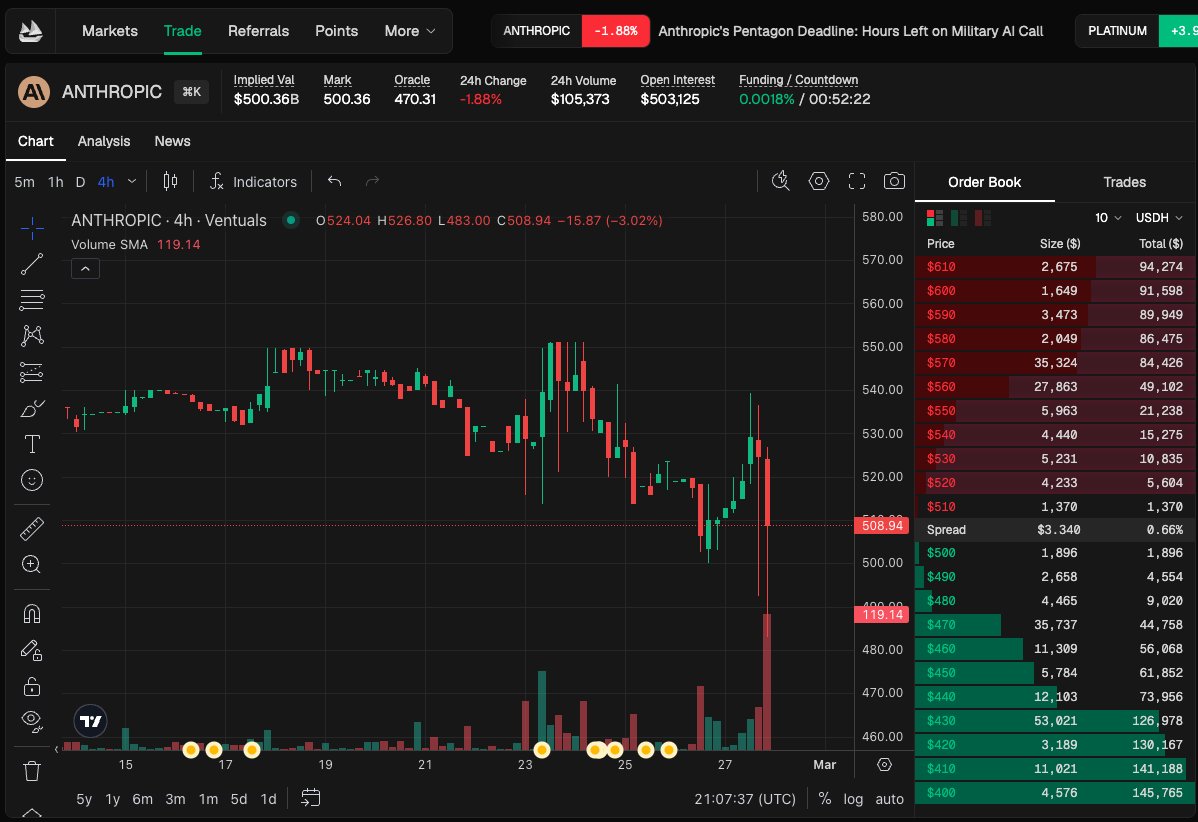
*TRUMP TELLS ALL AGENCIES TO STOP USE OF ANTHROPIC’S TECHNOLOGY
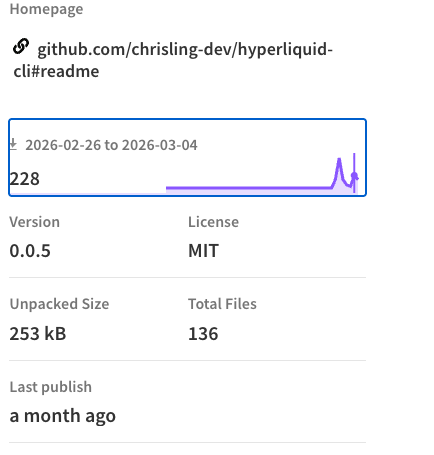
Seeing more financial protocols ship CLIs is a good sign. Instead of every agent wiring directly into the API and rebuilding signing, retries, nonce handling, and state reconciliation, you get a shared execution surface that strategies can call deterministically. That's why at @nolimithodl we've recently shipped a @HyperliquidX CLI, the complete command-line interface with full HIP-3 support and low latency trading setup that has already seen thousands of downloads. Try it out! Hyperliquid.

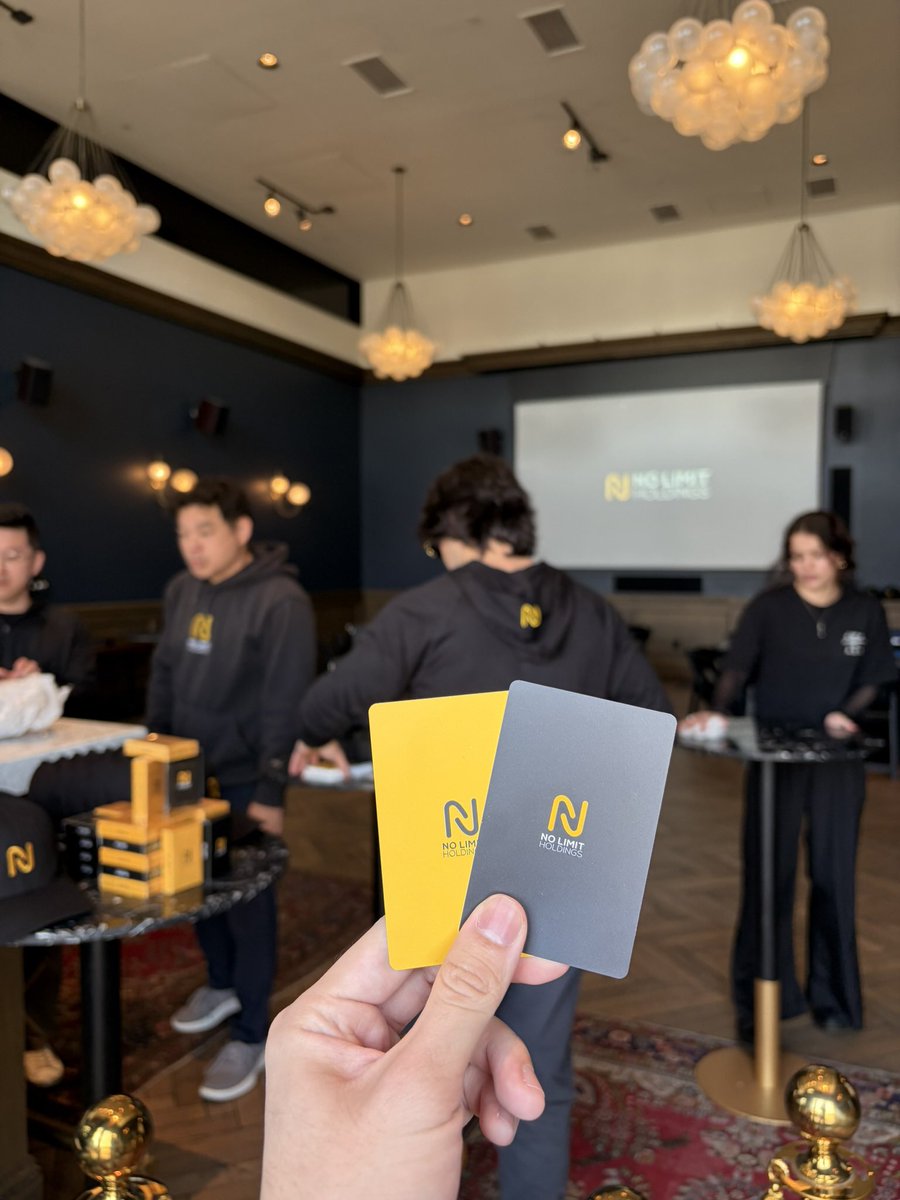
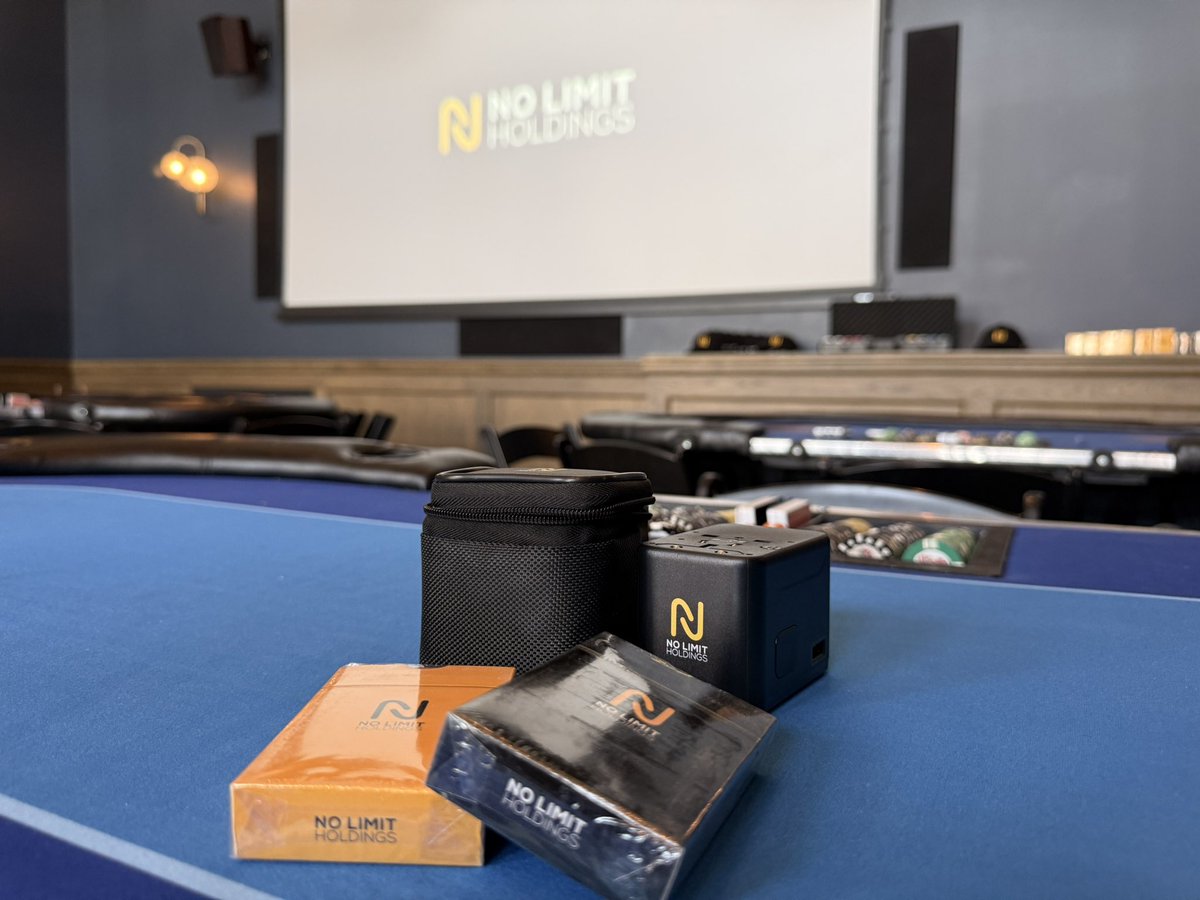
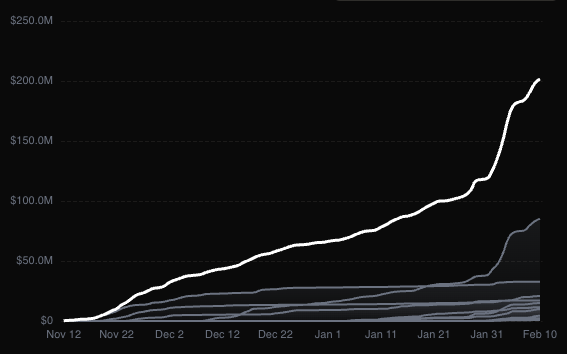
$100M trading volume since launch. 24/7 frontier technology markets. Hyperliquid.
