

Chris Olner
700 posts

Chris Olner
@chrisolner83
Father, hard working, investing in stocks long term and crypto. Learning and growing every week
Katılım Mayıs 2015
1.3K Takip Edilen221 Takipçiler

I feel like I've called out the most triple digit stock returns YTD...
Out of anyone in history? Hence why I have 150k+ followers now!
In just a short timeframe:
$AXTI -> 5x+
$AAOI -> 5x
$SIVE -> 2x+
$LITE -> 2x+
$IQE -> 2x+
$AEHR -> 2x+
$CRCL -> 2x+
$EWY IV -> 2x
Unimicron -> 2x+
Nitto Boseki -> 2x+
$OSS -> 2x+
$GDRZF -> 2x+
$AEHR -> 2x
With many more like $TSEM, $RPI having close to triple digit returns.
Not including many others last year like $HOOD or $RKLB for triple digit returns, just this YTD.
There's stuff like $FORM and others like Macronix... and $NBIS that actually doubled from the bottom at $70. But I won't take credit since I didn't do a specific post about it during the timeframes.
There's a difference between just mentioning among many other tickers.
Then having conviction like myself, writing a specific thesis post about it, getting catalyst timing right, and going long yourself.
But proud if this helped retail going the right direction.
Especially that they don’t need to pay $2,000+ just to see tickers people go long on or join some “special club” for company discussion.

English
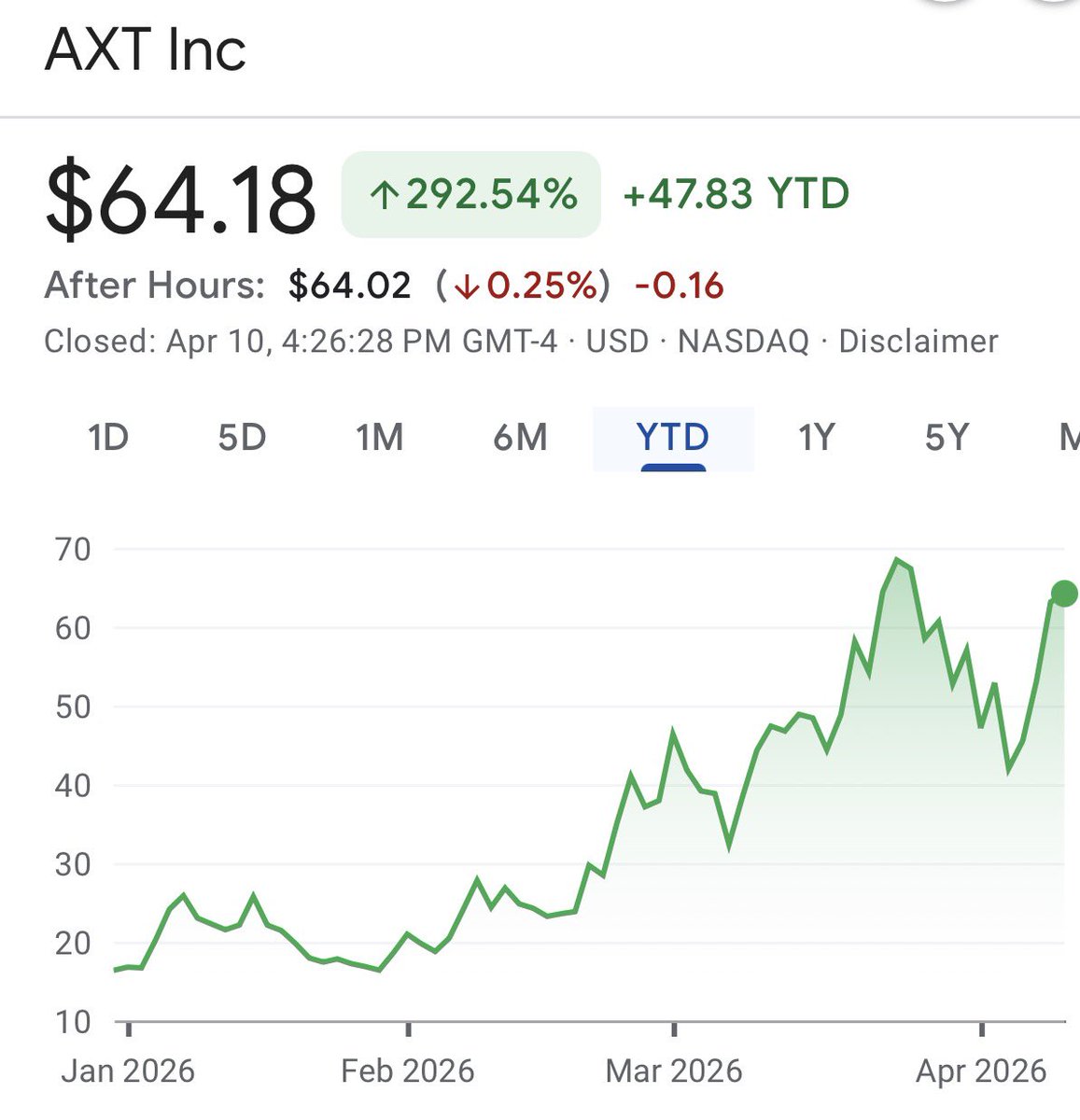
@Jornka329996 @aleabitoreddit Should be up good now 👍🏻 €8.50 now
More to come once more find out
English
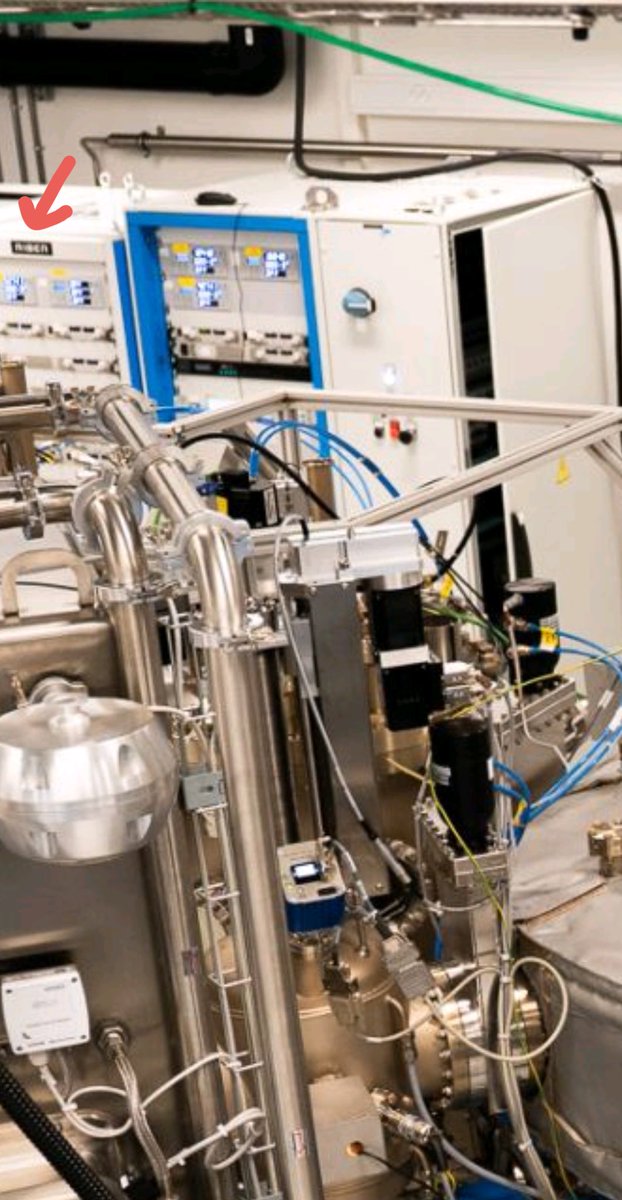
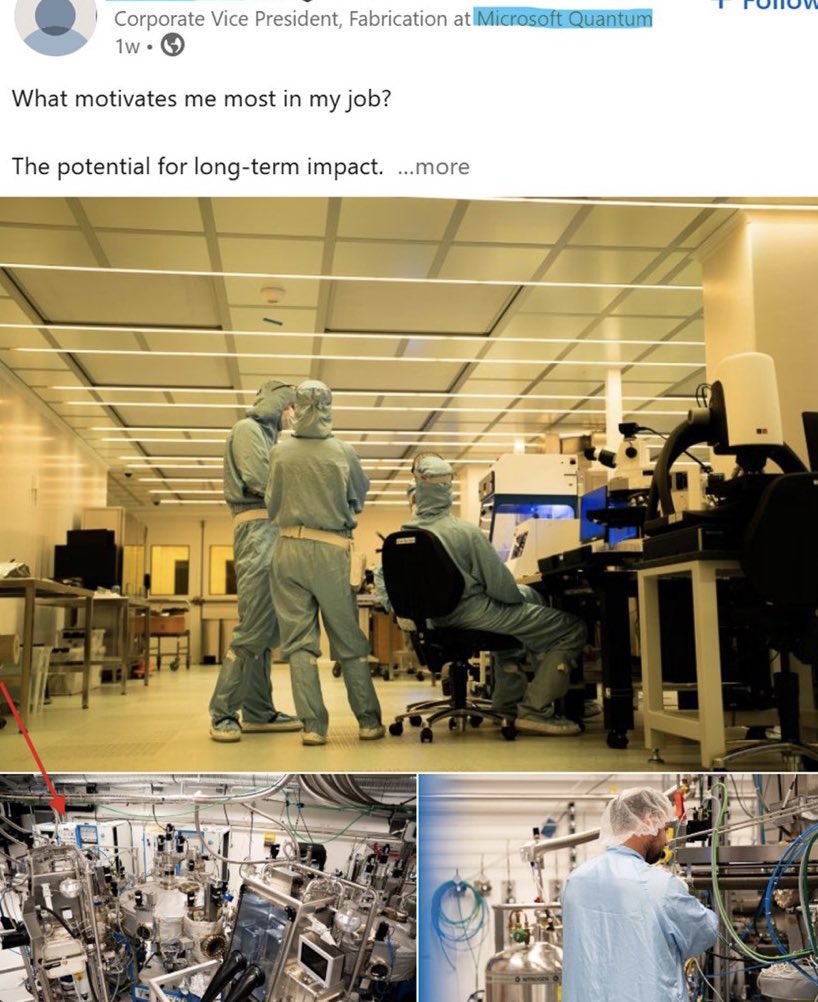
$MSFT looks like a secret buyer of Riber
< $ALRIB > for Microsoft Quantum.
The broader market and algorithms likely don’t know this connection yet.
MBEs are important for quantum computing, quantum dot lasers, VCSELs, and silicon photonics.
But the long-term implications are sizable if Microsoft Quantum:
-> Are starting to buy from this European equipment manufacturer
Quantum is still very early and risks to early stage industries are material.
But since this company looks like an $AIXA for Quantum and trades at a profitable ~27x est. forward P/E, as a duopoly for MBE with $VECO, it looks interesting.
From open LinkedIn intelligence, having a US hyperscaler use Riber MBE equipment to fab frontier quantum chips.
At the very least helps validate the company’s importance as a technology.
And makes it appear well positioned to capture quantum computing and quantum dot capex cycles in the near future.

English
@Jornka329996 @aleabitoreddit Hold it LT 👍🏻 the halts won’t last long
Put some stop losses in if you are worried
English
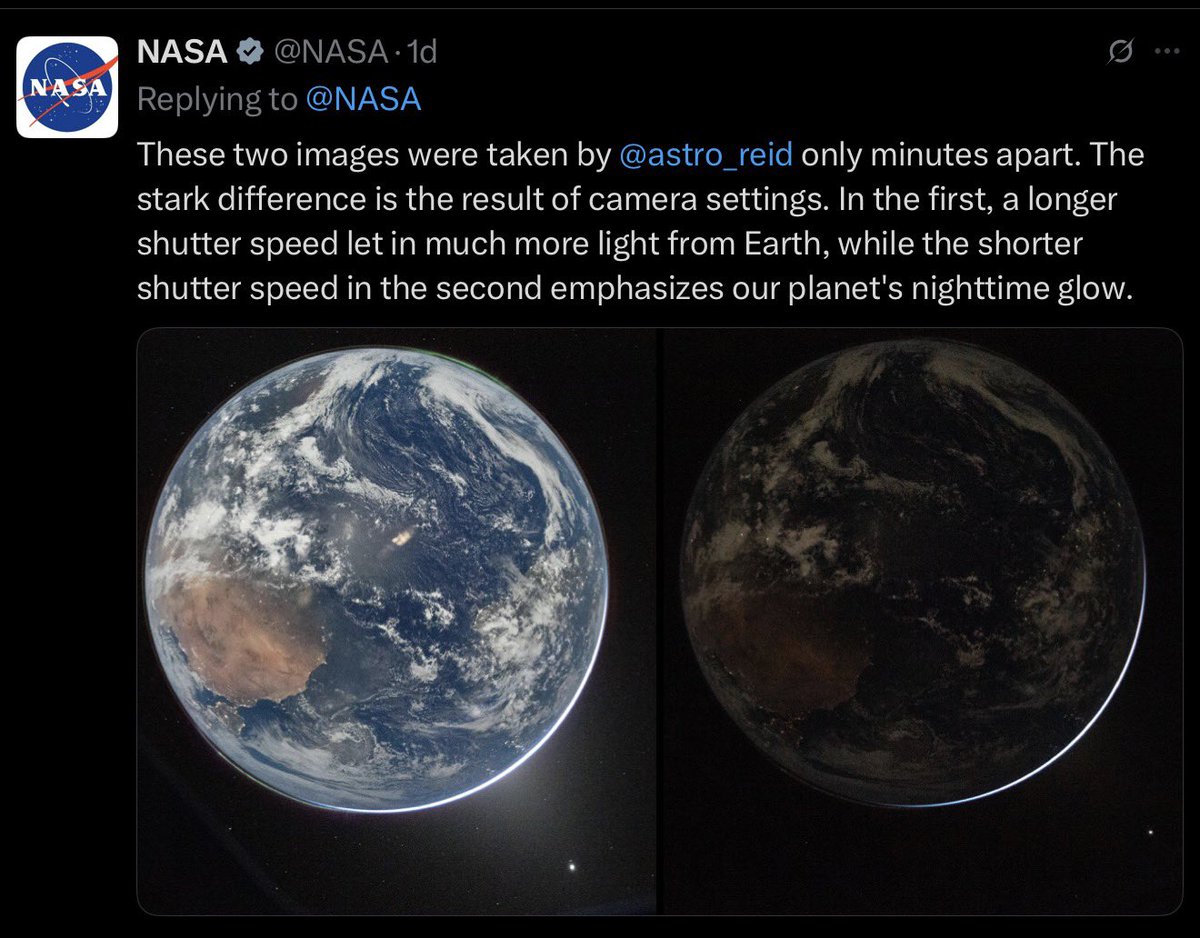
@OneDrive_ @CryptoWhale Minutes apart.. but the earth stays perfectly still and the clouds don’t move for there pictures 🤔
English




@hopt09 @TheLongInvest Yearly is best option works out big discount 👍🏻
English


I turn 40 this Wednesday and to celebrate I am doing a Flash Sale of -40% off my group
Offer ends Midnight March 25th (Irish Time)
PROMO CODE: FREE40
patreon.com/thelonginvesto…

English

$ASTS has a path to becoming a trillion dollar company and the math isn’t complicated.
Let me show you exactly how it gets there.
Start with Starlink as the benchmark.
Starlink took 5 years, over 10,000 satellites, and tens of billions in capital expenditure to reach 10 million subscribers and roughly $10 billion in annual revenue.
SpaceX is now targeting a $1.75 trillion IPO valuation with Starlink’s implied value sitting around $1.17 trillion on that subscriber base.
10 million subscribers. $10 billion revenue. $1.17 trillion implied value.
$ASTS is targeting 5 billion mobile subscribers globally. Not 10 million. 5 billion. And the business model is structurally superior to Starlink in every way that matters for scale.
Starlink competes with carriers. They built their own hardware, their own dish, their own subscriber acquisition funnel. Every customer has to buy a $600 terminal, cancel their existing provider, and switch to a new service.
Customer acquisition is expensive and friction is high. That is why after 5 years and 10,000 satellites they have 10 million subscribers.
$ASTS does not compete with carriers.
They partner with them. AT&T, Verizon, Vodafone, Rakuten, Orange, TELUS, and 50+ operators worldwide have already signed agreements.
Those carriers collectively cover 3 billion existing subscribers whose phones are already hardware compatible.
No new device. No new plan. No new anything. The carrier offers satellite coverage as a simple add-on and the existing customer base opts in. Zero customer acquisition cost on $ASTS’s side.
Starlink charges $120 per month per residential customer. $ASTS operates on a wholesale model where carriers pay per subscriber. A $5 per month add-on to an existing carrier plan is not a stretch.
Carriers charge $15 to $30 per month for international roaming today. A dead zone coverage add-on in rural America, at sea, or in the air is a premium feature people will pay for without thinking twice.
Now run the math.
1 billion subscribers at $5 per month is $60 billion in annual revenue. That is 20% penetration of the 5 billion subscriber target. That is 33% penetration of the 3 billion already on partner carrier networks.
Starlink is valued at $1.17 trillion on $10 billion in revenue. That is roughly a 117x revenue multiple. $ASTS generating $60 billion at a fraction of that multiple tells you everything you need to know.
At 15x revenue on $60 billion that is a $900 billion market cap. At 20x that is $1.2 trillion. At Starlink’s implied multiple it is multiples beyond that.
But let’s stay conservative. Even at 10x revenue on $60 billion that is a $600 billion market cap from a $35 billion market cap today.
That is 17x from here on a scenario that requires 20% penetration of an addressable market where the distribution is already built and the hardware is already in billions of pockets.
Now look at this realistic time line.
BlueBird 6 is already in orbit. The largest commercial communications array ever deployed in LEO, exceeding 120 Mbps peak data speeds.
Commercial service activating this year across the US, UK, Japan, and Canada. $3.9 billion in cash on the balance sheet fully funding the constellation buildout. Zero dilution risk on the launch campaign.
The 2025 revenue was $70.9 million. 2026 guidance is $150 to $200 million as commercial billing starts and government contracts ramp. The revenue line is just starting to move. The subscriber base is not priced in at all.
Starlink needed 10,000 satellites and 5 years to get to 10 million subscribers fighting for every single one. $ASTS needs 45 to 60 satellites and already has 3 billion potential subscribers sitting in their partners’ existing customer bases waiting for the switch to flip.
The constellation is almost complete. The carriers are signed. The phones are compatible. The revenue is starting.
$35 billion market cap. $1 trillion is the destination. The satellites are going up now.

English
@realBigBrainAI @grok please can you find this interview on YouTube and put a link?
English

Dr. Roman Yampolskiy just predicted 99% unemployment by 2032.
The leading AI safety researcher and cybersecurity expert laid out a timeline that's hard to ignore:
AGI by 2027, and then five years later, the economy as we know it.
Here's his logic:
"If you have this concept of a drop-in employee, you have free labor, physical and cognitive, trillions of dollars of it. It makes no sense to hire humans for most jobs."
The math is brutal when a $20 subscription does the same work as an employee.
Yampolsky breaks it into two waves:
Wave 1 — Cognitive labor (now → 2027)
"Anything on a computer will be automated."
Writing, coding, analysis, design, customer service. Gone.
Wave 2 — Physical labor (2027 → 2032)
"Humanoid robots are maybe 5 years behind."
Once AGI arrives, the robots follow. Then there's nowhere left to hide.
"We're looking at a world where we have levels of unemployment we've never seen before. Not talking about 10% unemployment, which is scary, but 99%."
The only jobs that survive?
"Jobs where for whatever reason you prefer another human would do it for you."
Think about what that list actually looks like — it's devastatingly short.
Most people are sleepwalking into this while the AI conversation stays stuck on productivity gains, not on what happens when hiring humans becomes economically irrational.
Yampolsky is predicting total replacement of the human workforce as we know it.
If 99% unemployment arrives by 2032, most people have less than 7 years to figure out what they're building their life around.
English


Here’s the Hollywood peptide stack celebrities use to get shredded & camera-ready in just 6 weeks.
Watch till the end (+ comment “ME” & I’ll send you my exclusive peptide fat-loss bible for free):
*Must follow to receive the DM*
(For educational purposes only. Peptides are for research purposes only.)
English
@2147mill Great stuff! How many shares do you have in this to get that?
English

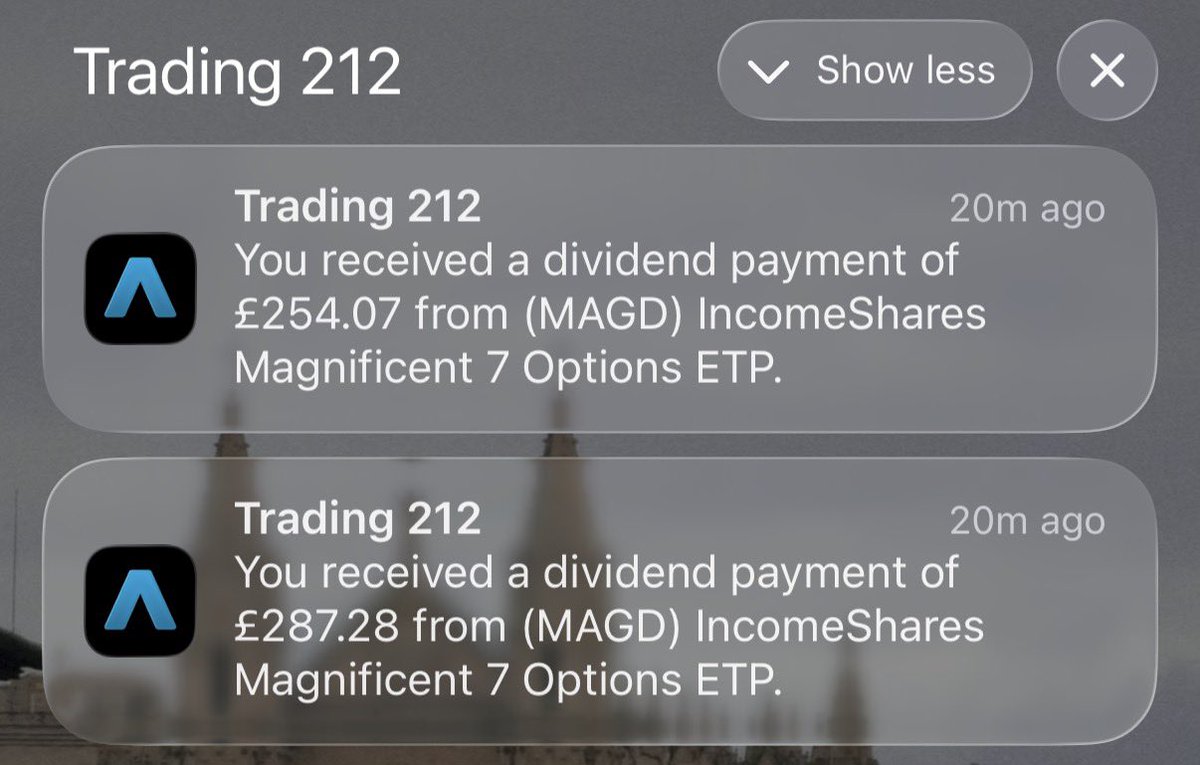
@maxcashstacking @IncomeShares Great stuff! How many shares do you have in each to get this?
English

Happy dividend day to those who celebrate
£938.67 from @IncomeShares
$MAGD – £652.78
$TSLD – £224.19
$NVDD – £58.04
$COII – £3.66
That’s nearly £1k in cash flow without selling a single share
Build assets
Let them pay you

English
@DevotedDividend Amazing! What have you got invested in these to get this monthly total? Is it in trading 212 or another platform?
English
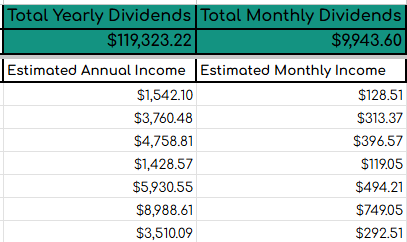
I'm 33 & been dividend investing 10 years 👨💼📈
My portfolio pays me ~ $9,943/month in dividends
Ask me anything 👨👇
English
@dn24bzd @Ian888X @IncomeShares @hanetf Great info! Just wondered with these how much are in each to get your monthly dividend?
English

I received £2700 in January in distributions from @IncomeShares and @hanetf.
In a Stocks and Shares ISA, it's tax free. That's the same as a £43,000 salary
I'm reinvesting £1,000 which means more shares. So I've given myself a pay rise next month
No commute, no boss, no deadlines, no meetings.
And no Sunday night dread.
English

@chrisolner83 EQQQ is a small yield as it focuses on growth 0.29%, but over 25-30 years, growth will be huge.
English
I made a bet with myself in March 2025.
I wanted to see if the experts were true about income funds.
They told me.... If you buy an income fund like $JEPQ, you cap your upside. You’ll miss the growth.
So I tracked my $JEPQ holding against a standard S&P 500 tracker $VUAG since March 25 when I made my first JEPQ purchase.
The Result....
S&P 500 Growth: +17.52%
JEPQ Income: +17.71%
The difference?
0.19%.
How is this possible?
To understand the result, you have to understand the engines under the hood.
1. The S&P 500 $VUAG = Market Cap Weighted.
This is a vanilla tracker. It buys the 500 biggest companies in the US, weighted by market cap size (bigger company = bigger slice).
The Strategy is pure growth. If the market is up, your up. If it goes down, you go down.
2. The Tech Income $JEPQ = Nasdaq 100 + ELNs.
JEPQ is smarter. It holds at least 67% of its portfolio in the Nasdaq 100 and actual stocks like Apple, Nvidia, Microsoft, Google.
The other 33% is used for Equity Linked Notes (ELNs).
The ELNs strategy effectively sell call options on the index.
JEPQ agrees to sell a little bit of the future upside in exchange for guaranteed cash now.
And the secret is.... Reinvesting 🔄
This is why the returns are identical.
JEPQ pays me that guaranteed cash every single month.
I don't need the income yet,so I press one button.... Reinvest.
The dividends buy more shares.
Those shares pay more dividends.
I have captured the market's growth, but I’ve done it with a safety valve.
$VUAG can be your future in pure growth.
$JEPQ can be your reality and income now.
You don't have to choose.
Different tools for different jobs.
You just have to understand what you own.

English
@maxcashstacking Amazing! What total have you put in to get this every month?
English
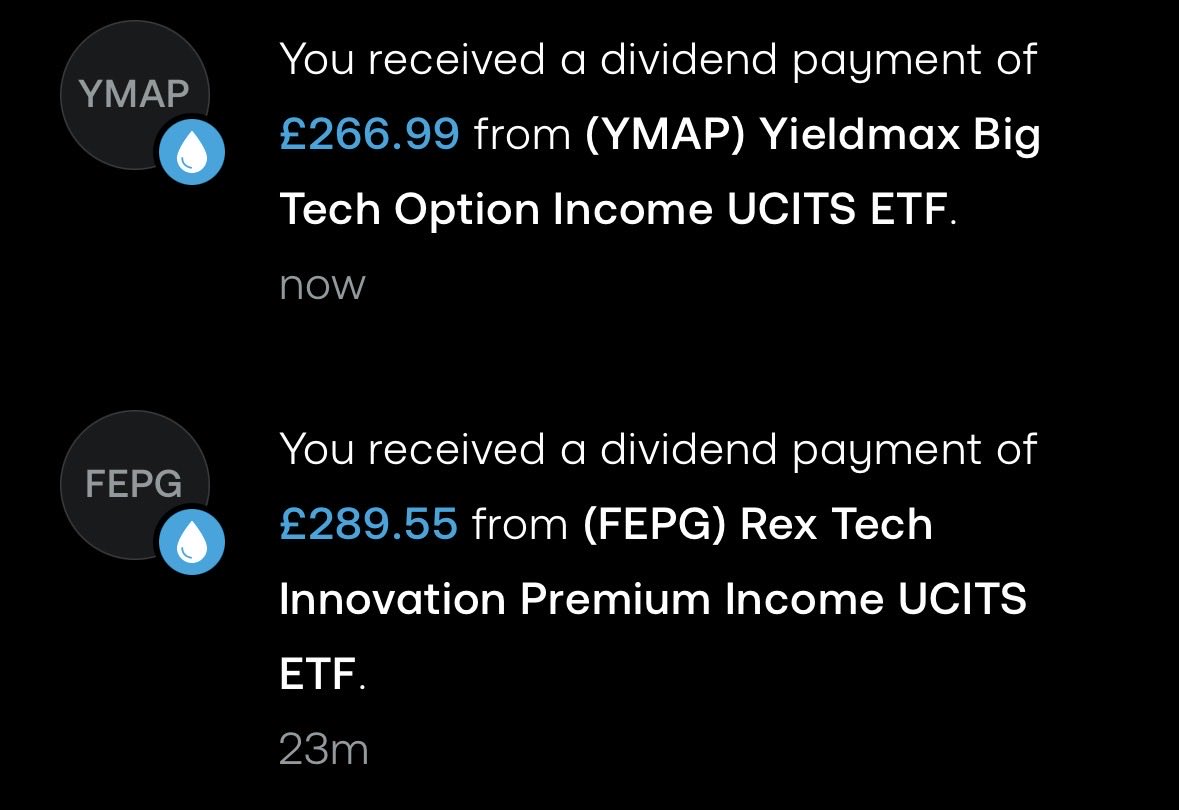
Dividends hitting nicely
$YMAP: £492.60
$FEPG: £584.18
£1,076.78 paid out slow, boring, beautiful income

Wise Old Man - Dividend Investor £100k 🇬🇧@maxcashstacking
Expected divs this afternoon $YMAP $FEPG
English
@dn24bzd You don’t pay dividend tax if it’s in an ISA account do you? (Trading 212 UK for example)
English
£1m in a JP Morgan fund like JEPQ could deliver £100k plus annual income and growth in top.
Dividend tax is lower than income tax so would net £80k a year.
You'd have to earn over £120k in a job to have the same take home.
Or you could live retired in the Philippines and pay no Dividend Tax and save that £20k a year tax. And live like a king.
The same split across @IncomeShares funds like @cashflow_king94 income pie could generate £180k a year before tax.
I think most people could retire on that.
English
@maxcashstacking Just wondered what does FEPG pay as dividend? Is it monthly?
English
I automated £500/month into $JEPQ and $FEPG starting 2 years ago.
Never missed it from my paycheck.
Never had to "decide" to invest.
Never tried to time dips.
Result? £100k portfolio paying £2,200 monthly.
Automation removes emotion. That's the real advantage.
Wise Old Man - Dividend Investor £100k 🇬🇧@maxcashstacking
Automating investing is the real cheat code Get paid → £100 auto-sent to Trading 212 → auto-buy an ETF No manual decisions No overthinking No timing the market Just consistent buying every month That’s how compounding quietly does the heavy lifting
English
@freedombill3 Ahh I see, good plan 👍🏻 what does this pay in dividend? I’ll have to look into it
What are you aiming to get to in your portfolio?
English
@chrisolner83 Cheers Chris, that has certainly crossed my mind, the reason I haven't to date is that I have 86% of the portfolio in Nasdaq 100 EQQQ, so I'll stick with the larger part of the portfolio in growth while I don't need the income, then switch it all in 20+ years.
English
@2147mill Is it correct? I worked out.. It’s 0.28p a share 1million would be 50,793 shares, so £14,222 per quarter per month would be £4,740 so £56,880 a year..
English
£1m in something like JEPQ at a 10% yield = £100,000 a year in income.
That’s over £8,000 a month.
Not from a job.
From your portfolio.
You don’t need to sell assets.
You don’t need to time markets.
You just let cashflow hit your account.
That’s the difference between working for money… and money working for you.
English