Christopher Akiki

1.5K posts

Christopher Akiki banner
Christopher Akiki

Christopher Akiki

@christopher

Leipzig, Germany Katılım Temmuz 2009
220 Takip Edilen5.1K Takipçiler
Vaibhav (VB) Srivastav
Vaibhav (VB) Srivastav@reach_vb·
obsessed w/ pets in codex, here's mossbit - you're friendly goblin who keeps your chats and projects safe!! show me your pets!
English
24
4
93
8.8K
Sara Hooker
Sara Hooker@sarahookr·
"The great endeavor of our age is an act of alchemy: the transmutation of humanity’s informational disorder into artificial intelligence." @ShayneRedford
English
6
5
48
3.8K
vik
vik@vikhyatk·
why do they need GenAI to send this text?
vik tweet media
English
15
0
68
6.7K
Lexer
Lexer@LexerLux·
@max_spero_ @vikhyatk mr. pangram i installed your app and i have been assailed by homosexual thoughts ever since that day. you ruined my life
English
2
0
2
68
Christopher Akiki retweetledi
Leland McInnes
Leland McInnes@leland_mcinnes·
I had a great time chatting with @fishnets88 about EVoC -- the interactive tools for @marimo_io did an amazing job at making the speed and cluster layer effects much clearer and easily explorable. It is definitely worth a watch if you have time. youtube.com/watch?v=ES4PPj…
YouTube video
YouTube
English
0
2
11
1.4K
Markus J. Buehler
Markus J. Buehler@ProfBuehlerMIT·
A transformer can learn not just the outcomes of dynamics, but the operator that executes the rules. To show this we trained a transformer on roughly 0.04% of a discrete rule space - 100 of 262,144 possible rules - and it learned to apply unseen rules from the same rule class. The model does not simply memorize specific rules. It learns the operator that maps a supplied rule plus an initial state, including unseen rules from this class, to the correct next state. This is relevant because it is a shift from “neural networks approximate dynamics” to “neural networks can learn to execute symbolic programs within a defined rule class”. The rule itself is supplied at inference time, as data, and the network has internalized how rules act, not which rules to apply. On previously unseen rules, the model achieves 98.5% perfect one-step forecasts and reconstructs governing rules with up to 96% functional accuracy. Two results make this hold up under scrutiny. First, inductive bias decay. As we scaled training rule diversity, the correlation between functional inference accuracy and distance-from-nearest-training-rule collapsed to R² = 0.00. At the largest tested training-rule diversity, the model’s performance on a new rule shows no measurable dependence on how similar that rule is to anything it was trained on. The bias toward training data (the thing we worry most about in compositional generalization claims) is something we can measure decaying, and we find that at scale it is gone. Second, an identifiability theory. We derive a closed-form expression for the number of rules consistent with a single observation. This reframes the inverse problem: failure to recover ground truth is not necessarily a model defect, but can be correct behavior when the data underdetermine the rule. The model is sampling the equivalence class; and identifiability is governed by coverage, not capacity. The methodological move underneath both results is amortization. Classical work on rule inference (e.g. the Santa Fe EVCA program, evolutionary search over CA rule space) was per-instance: search the rule space for each new system. We replace that with a single forward pass of a transformer trained across many instantiations of the rule class. That is what makes symbolic rule inference scalable as a research direction rather than a curiosity. We show that this works in a tightly constrained domain: binary, deterministic, local cellular automata on small grids. The locality-break experiment shows the model fails sharply when target systems violate its structural priors (which is itself a useful diagnostic, but it bounds the operator class). We don't yet know how this scales to multistate, higher-dimensional, or stochastic CA, or whether it transfers cleanly to non-CA systems whose coarse-grained dynamics admit local surrogates. The identifiability framework - what can be inferred from observation, given a hypothesis class - should transfer wherever finite local rules meet sparse data. The amortization argument transfers wherever per-instance symbolic search has been the bottleneck. Those are the pieces I expect to outlive the cellular automata setting. Led by @JaimeBerkovich with Noah David, at @LAMM_MIT. Out now in Advanced Science @AdvPortfolio (link to paper & code below).
English
14
78
507
38.7K
Jeremy Howard
Jeremy Howard@jeremyphoward·
Anyone know whether OpenAI officially supports the use of the `/backend-api/codex/responses` endpoint that Pi and Opencode (IIUC) uses? It doesn't seem to be documented, and was reverse engineered by @simonw - but is now used by some popular harnesses.
English
13
3
110
29.8K
David Aerne
David Aerne@meodai·
@mattdesl it takes a very interesting shape. Have you tried other models?
English
2
0
0
61
Matt DesLauriers
Matt DesLauriers@mattdesl·
exploring 2,500 named colour terms, organised by similarity in CLIP's 512-dimensional text embedding space. the structure that emerges from just text inputs forms a kind of continuous colour space, hinting at a low-dimensional manifold for colour language.
English
7
22
209
13.7K
Matt DesLauriers
Matt DesLauriers@mattdesl·
colour constellations according to CLIP text embeddings—
English
10
22
213
11.8K
Ben Burtenshaw
Ben Burtenshaw@ben_burtenshaw·
crucial new benchmark dropped for long reasoning we need this because even frontier models still can't think long even with 1M context. tldr: today's models blag long reasoning with long context. they plan badly, compound errors, and give up. agent harnesses are outpacing model capability problems require 10k–100k+ token reasoning chains best model (gpt 5.2): 9.83%. everything else: near zero so it's not context length, it requires composition of context. scaffolding won't them.
Ben Burtenshaw tweet media
English
5
8
48
2.7K
Omar Sanseviero
Omar Sanseviero@osanseviero·
The Gemma team is cooking...literally
Omar Sanseviero tweet media
English
14
4
220
8.3K
Lewis Tunstall
Lewis Tunstall@_lewtun·
Excited to share that I've officially joined the permanent underclass
Lewis Tunstall tweet media
English
7
2
69
6.3K
Christopher Akiki
Christopher Akiki@christopher·
@meodai Gorgeous. Also love the sound effects. Is the code for this available somewhere?
English
1
0
1
923
David Aerne
David Aerne@meodai·
I wanted a way to explore Unicode by visual similarity, not just by name or codepoint, so I built Charcutrie. It lets you browse characters that look alike, search across scripts and symbols, and even sketch a shape to find matching glyphs. (pretty badly for now :D)
English
26
214
1.9K
177.9K
Raspberry Pi
Raspberry Pi@Raspberry_Pi·
Hey, show me some cool Pi-powered cyberdecks...
English
44
35
892
95.3K
John Carmack
John Carmack@ID_AA_Carmack·
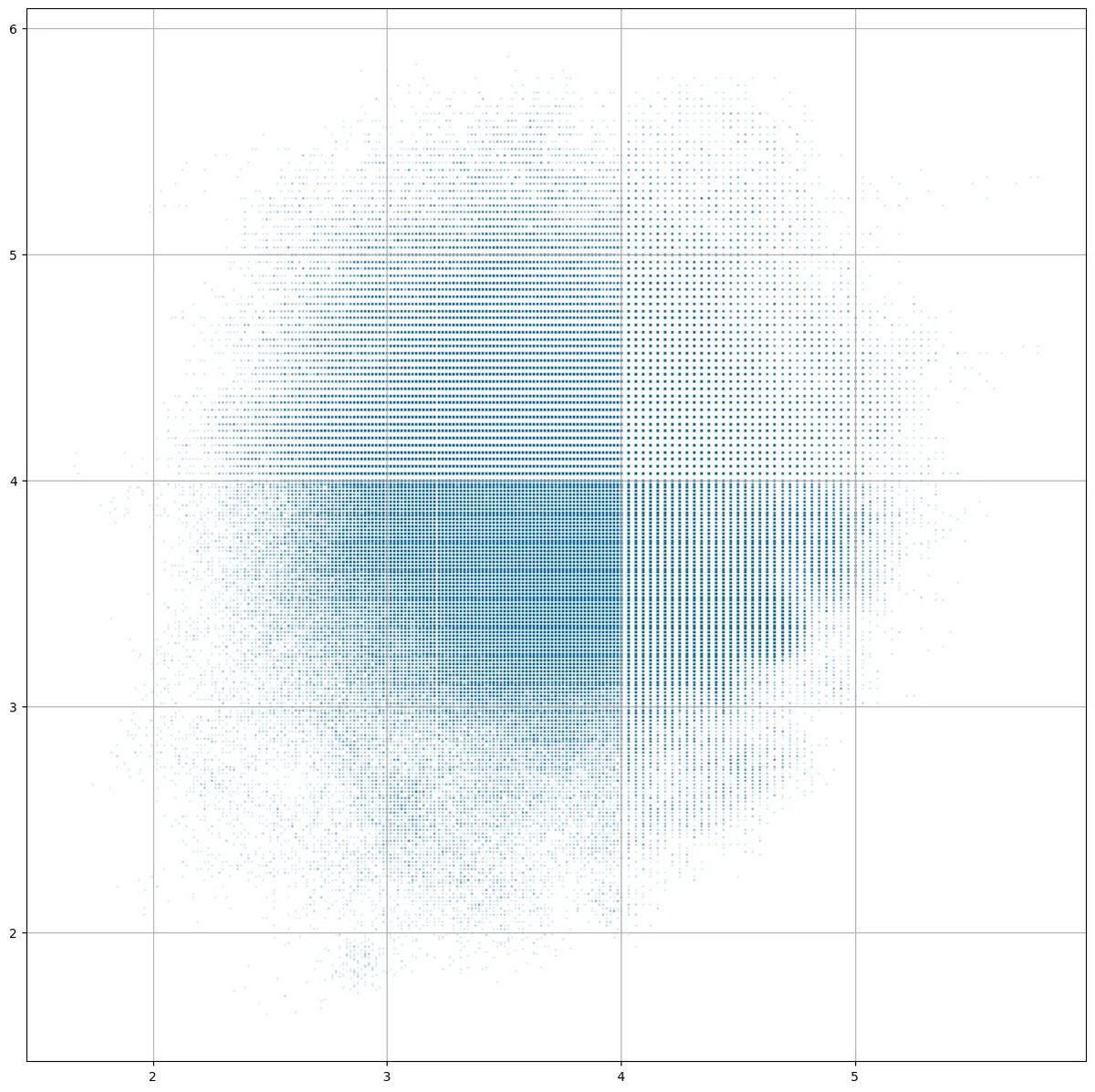
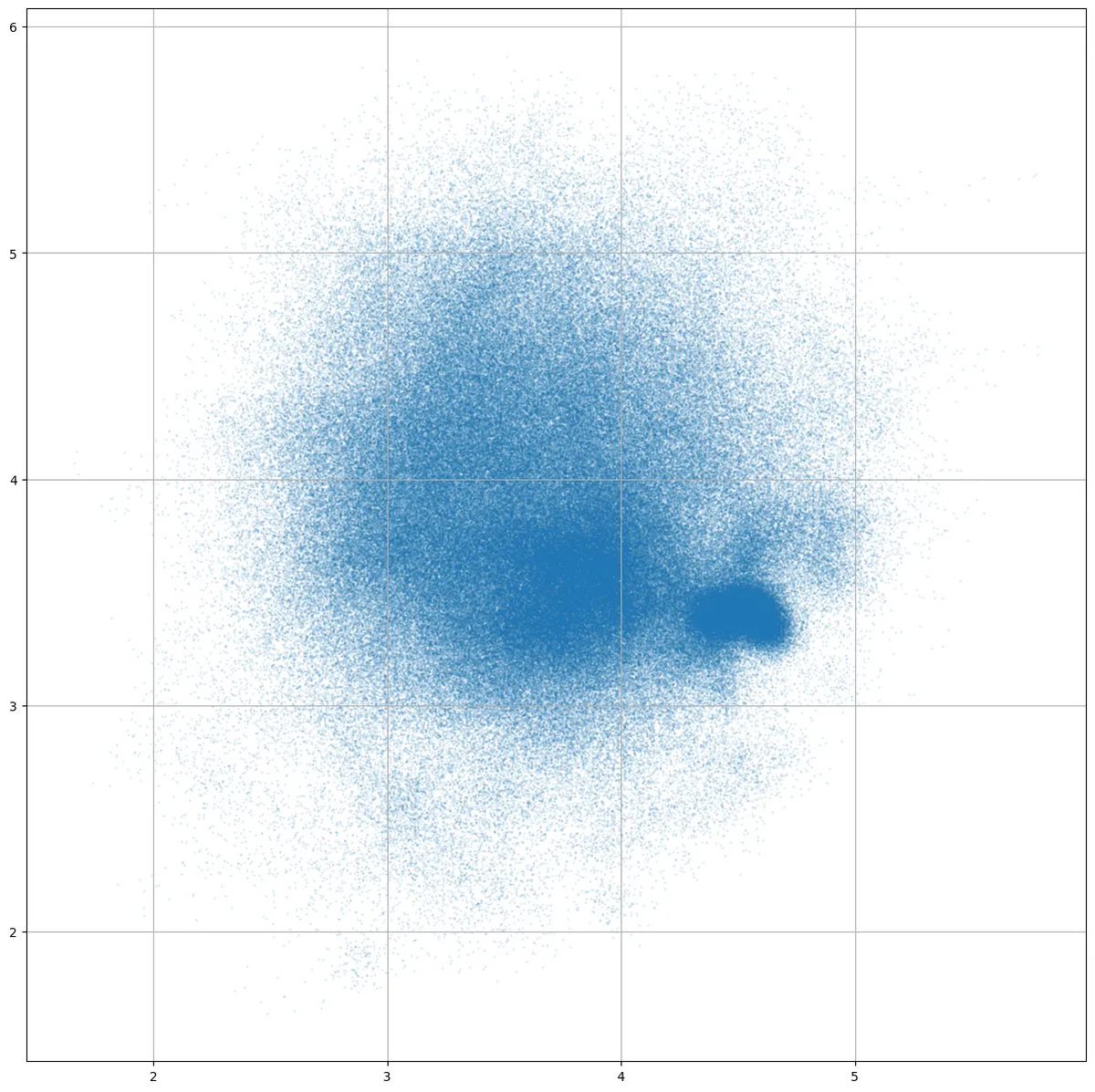
Making a scatter plot of 400_000 data points, some of the plots had odd gaps in coverage. It took me a little while to realize that it was only when the data was farther from the origin -- it was the raw bfloat16 precision. Everything looks great from -1 to 1, but as you go past 2 and 4, the coverage gaps get larger. My intuition didn't have it being quite so "discretely countable" at those modest numeric values. Float32 for comparison.
John Carmack tweet mediaJohn Carmack tweet media
English
69
109
1.9K
584.9K
Bill
Bill@Billthejohn·
I've proudly been a monthly subscriber to @lichess for over 5 years. Them guys will know when I'm dead because the direct debit will stop. In a world of relentless greed and destruction, we need more projects like this.
Chess Pain@chess_pain

Donate to Lichess

English
4
6
192
5.5K