Claudia Gherman

1.3K posts

Claudia Gherman banner
Claudia Gherman

Claudia Gherman

@claudiagherman

🇪🇺🇷🇴 • Digital Transformation Lead @ASDEurope • Believer in @JoyDivision • Views are entirely my own.

Brussels, Belgium Katılım Ocak 2012
768 Takip Edilen604 Takipçiler
Claudia Gherman retweetledi
Timothy Snyder
Timothy Snyder@TimothyDSnyder·
1/2. Notice that after losing the war Trump threatens his allies rather than Russia — even though Russia quite literally helped Iran defeat the US and he knows it.
English
250
5.5K
21.1K
360.7K
Claudia Gherman retweetledi
Volodymyr Zelenskyy / Володимир Зеленський
We cannot simply speak about withdrawing from Donbas as a matter of compromise. Our withdrawal from Donbas would open up opportunities for the Russian Federation to occupy our most fortified territories without losses. Some people say it would take a year to a year and a half to build new fortifications. But everyone forgets: first and foremost, that is a year and a half. And even if it were less, fortifications in an open field are a completely different matter from those in urban areas. They can never provide equally strong protection. A withdrawal would give the Russian Federation room for large-scale maneuver. They could advance either toward Kharkiv or toward Dnipro, destroying our cities. And two major cities would be at risk – cities that, incidentally, generate a significant share of our GDP. So many people have died there… The morale of our army would certainly decline. There would undoubtedly be a rift in society. The army – which would surely not support such steps – on one side, and society on the other. And division within society is precisely what Putin is aiming for. Moreover, there are currently 200,000 people living in the territories of Donbas that we are defending. Withdrawal does not mean preserving anything. You leave, and without any guarantees, you risk losing everything. And that is a major risk. From an interview with Rai Radio 1 (2/3).
English
450
3.3K
20.1K
996.9K
Claudia Gherman retweetledi
Donald Tusk
Donald Tusk@donaldtusk·
The threat of NATO’s break-up, easing sanctions on Russia, a massive energy crisis in Europe, halting aid for Ukraine and blocking the loan for Kyiv by Orbán - it all looks like Putin’s dream plan.
English
3.7K
10.7K
47.5K
2.7M
Claudia Gherman retweetledi
Szabolcs Panyi
Szabolcs Panyi@panyiszabolcs·
‼️Statement on the Orbán Government Accusing Me, an Investigative Journalist, of Espionage‼️ Today, the Hungarian government has filed a complaint against me for espionage. Accusing investigative journalists of espionage is virtually unprecedented in the 21st century for an EU member state. This is typical of Putin’s Russia, Belarus, and similar regimes. I have spent over a decade documenting how Russian spies and interests have penetrated Hungarian politics, so I am probably the least surprised by this. Despite growing signs that the Hungarian government acts as a Kremlin ally and copies the Russian model, I still trust that parts of the Hungarian state—and the judiciary—follow the Hungarian constitution, not that of the Russian Federation. I have never engaged in espionage. I see my work as journalistic counterintelligence—from exposing the hacking of the Hungarian Foreign Ministry by Russian actors to revealing the activities of Hungarian pro-Kremlin propagandists. Defending myself publicly would be easier if I were not bound by source protection. But that remains my top priority. I cannot reveal who provides me information or what I receive, including from within Hungarian state structures. If I were not a journalist, I could list many facts proving it is impossible for the Hungarian state to genuinely believe I am spying. Certain meetings, contacts, and information gathering could never have happened otherwise. This baseless accusation now forces me to share details of a specific investigation, including a conversation with a confidential source that appears to have been wiretapped. Normally, this would appear in a finished article or my upcoming book—not here. (It will appear there as well.) Since 2023, I have investigated whether the relationship between Péter Szijjártó and Russian officials exceeds legal limits. The published audio, where I’m heard talking to a source, mentions that communication between Szijjártó and Sergey Lavrov is recorded by EU intelligence services. Less attention has gone to my point that this relationship raises strong suspicion of political intelligence activity and influence operations in Russia’s interest. These are serious claims and hard to prove. As a journalist, I cannot force anyone to speak or hand over documents. That is why gathering this information has taken so long—and why I spoke to that sensitive source (while the conversation was secretly recorded). Serious claims require serious evidence, and I believe I have gathered some. I have not engaged in espionage. I have not cooperated with any foreign intelligence service in surveilling Szijjártó. Instead, I tried to verify earlier fragments of information about Szijjártó–Lavrov communication. I sought to identify the channels and phone numbers used, and whether a secret channel—possibly used by Russian intelligence—exists. In other words, whether Szijjártó uses a hidden device or number unknown even within the Hungarian Foreign Ministry. This was only one part of my research. The other, more serious topic is this: Since at least 2016–2017, EU and NATO intelligence services have had indications that large amounts of cash and precious stones may have been transported from Russia on Hungarian government aircraft or private jets used by government figures. Officials from at least six countries made such claims to me. These signals did not come from monitoring Hungarian targets, but, for example, from intercepting Russian officials discussing or preparing such shipments. Alongside Szijjártó–Lavrov communication, I examined how baggage screening and handling works on such flights, which officials travel with what luggage, whether more packages arrive from Moscow than depart, and how such shipments could be handled discreetly. I know how serious this is, and I would not have written even this much—but since I do not know what else may be taken from the edited recording, or what fabricated accusations (like, for example, that I was seeking such details to commit terrorism) may follow, I believe I must share this now. Why do I investigate all this? According to many sources familiar with the Hungarian state and counterintelligence, there is no independent body in the Orbán system able to investigate or act if a senior official is suspected of espionage. Government members direct intelligence services and set expectations. The services lack both tools and authority to investigate a government member. I knew this would be difficult when I chose to pursue it. But few people in Hungary can or dare to do this, so I felt it was my duty. We have now reached the point where the Orbán government—of which Szijjártó is still a member—aware of my reporting plans and the risk they pose, has preemptively accused me of espionage. I am a Hungarian patriot. I serve the public. As an investigative journalist, my job is to hold power accountable. Neither political theater nor legal threats will deter me.
Szabolcs Panyi tweet media
English
308
2.8K
7.7K
559.7K
Claudia Gherman retweetledi
Donald Tusk
Donald Tusk@donaldtusk·
The news that Orbán’s people inform Moscow about EU Council meetings in every detail shouldn’t come as a surprise to anyone. We’ve had our suspicions about that for a long time. That’s one reason why I take the floor only when strictly necessary and say just as much as necessary.
English
2.2K
9.3K
43.6K
2.1M
Claudia Gherman retweetledi
French Response
French Response@FrenchResponse·
« Fo shur »
Ambassador Andrew Puzder@USAmbEU

As President Trump @POTUS said at Davos: “The United States cares greatly about the people of Europe... and we believe deeply in the bonds we share." Yet too many in Brussels are missing the point. Some Members of the European Parliament now claim the U.S. is "undermining the stability and predictability of 🇺🇸🇪🇺 trade relations." But let's be clear: the real instability comes from the EU's own failure to act on the historic trade agreement that Presidents Trump and von der Leyen negotiated last summer. It was meant to restore predictability and growth, not be held hostage to political posturing. Europe cannot regulate its way to prosperity. That strategy has hollowed out industrial capacity, driven up energy prices, and ceded ground in the AI economy. Prosperity requires abundant, affordable energy and fair trade -- not endless red tape and delay. The United States stands ready to supply the energy Europe needs and to finalize a trade deal that works for both sides of the Atlantic. ‼️If Europe truly wants stability, prosperity, and strategic strength, then this deal should be approved without further obstruction. Strong economies, secure borders, and cultural confidence-- not bureaucratic paralysis -- are the foundation of a strong and united West. Let's get this done.
English
293
2.8K
36.3K
1.9M
Claudia Gherman retweetledi
Fareed Zakaria
Fareed Zakaria@FareedZakaria·
President Trump’s Greenland gambit has taught America’s allies a lesson. They will trust less, hedge more and quietly plan for a world in which America no longer leads by lifting others up. They will remember. My latest column: washingtonpost.com/opinions/2026/…
English
235
782
3K
94.3K
Claudia Gherman retweetledi
Olivier Schmitt
Olivier Schmitt@Olivier1Schmitt·
Intéressante illustration de ce que nous enseignent les théories des relations internationales sur les stratégies des États. L’approche dite du “réalisme structurel” identifie trois types de stratégie pour un petit État face à des hegemons: - “balancing” (équilibrage), càd s’associer avec d’autres États pour contrer la puissance de l’hegemon - “bandwagoning” (suivre le mouvement), càd s’associer à l’hegemon et bénéficier de sa protection. - “hedging” (se couvrir) en multipliant les partenariats/accords avec d’autres puissances pour distribuer les risques. Les théories insistant sur la nature des régimes politiques (approches libérales) ou des normes partagées (constructivisme) peuvent nous aider à savoir laquelle de ces stratégies est la plus probable en fonction du contexte. Et une théorie comme le “réalisme néo-classique” essaie de réconcilier le niveau de décision national avec les incitations structurelles dans une approche unifiée. Dans le cas présent, le Canada était dans une situation de “bandwagoning” avec l’hegemon americain, facilité par la proximité des régimes politiques et des cultures. Et ce “bandwagoning” était d’autant plus facilement accepté que les États-Unis n’abusaient pas de leur position d’hegemon. L’administration Trump II est une rupture politique radicale aux États-Unis, avec un véritable effondrement démocratique: les normes sont de moins en moins partagées et Washington n’hésite pas à être coercitif. Le bandwagoning qui était tout à fait pertinent avec les autres administrations a désormais un coût politique et économique pour les dirigeants canadiens. Or, le “balancing” n’est pas une option crédible: il n’y a pas de “puissance de rechange” sur le continent nord-américain à laquelle le Canada pourrait s’arrimer pour équilibrer les États-Unis, et Ottawa n’aura jamais seule les ressources pour être une puissance équivalente aux États-Unis. Il reste donc le “hedging”: multiplier les partenariats. Et la Chine est un partenaire qui s’empresse évidemment de tenter de démanteler l’une des principale source de la puissance américaine: son réseau d’alliance. L’intérêt canadien de se sortir du risque posé par l’exclusivité de la relation aux États-Unis rencontre l’intérêt chinois d’affaiblir Washington. Et c’est grâce à Donald Trump.
Mark Carney@MarkJCarney

We’re recalibrating Canada’s relationship with China — strategically, pragmatically, and decisively — to the benefit of the people of both our nations.

Français
0
208
628
95.3K
Claudia Gherman retweetledi
France Diplomacy 🇫🇷🇪🇺
France Diplomacy 🇫🇷🇪🇺@francediplo_EN·
🔎 Europe is facing a sustained intensification of foreign information manipulation (FIMI). The challenge today isn’t just detection, it’s making sense of the whole picture. 🧵
France Diplomacy 🇫🇷🇪🇺 tweet media
English
50
308
1.1K
39.4K
Claudia Gherman retweetledi
Volodymyr Zelenskyy / Володимир Зеленський
Thank you to Romania and Croatia for joining the PURL initiative and announcing their first contributions to it. This is an important initiative that makes it possible to purchase American weapons and bolster our defense, including missiles for Patriots and other capabilities we need. Since the launch of the PURL initiative in August, 24 countries have already joined it: the Netherlands, Denmark, Norway, Sweden, Germany, Canada, Estonia, Latvia, Lithuania, Iceland, Finland, Belgium, Spain, Luxembourg, Portugal, Slovenia, Poland, Australia, Greece, New Zealand, North Macedonia, Montenegro, Romania, and Croatia. The total amount of contributions has reached $4.3 billion, including nearly $1.5 billion in December alone. This has made it possible to form eight assistance packages already, and work is currently underway to fund two more. We thank everyone who helped Ukraine this year and those who will continue to support us in 2026. We are bringing closer peace and guaranteed security for Ukraine and all of Europe.
English
367
1.2K
8.8K
198.1K
Claudia Gherman retweetledi
Gilles Gressani
Gilles Gressani@GillesGressani·
«Pourquoi Trump a-t-il succédé à Obama, Meloni à Draghi, et pourquoi Marine Le Pen ou Jordan Bardella pourraient-ils prendre la place d’Emmanuel Macron en 2027 ?» Une excellente pièce de doctrine signée @MariamMartinezB pour penser avec Hannah Arendt. legrandcontinent.eu/fr/2025/12/28/…
Français
15
127
346
52.7K
Claudia Gherman retweetledi
Daractenus
Daractenus@Daractenus·
Donald Trump: "Russia wants to see Ukraine succeed [...] President Putin has been very generous in his feelings towards Ukraine succeeding."
English
729
7.1K
20.2K
747.4K
Claudia Gherman retweetledi
France Diplomatie 🇫🇷🇪🇺
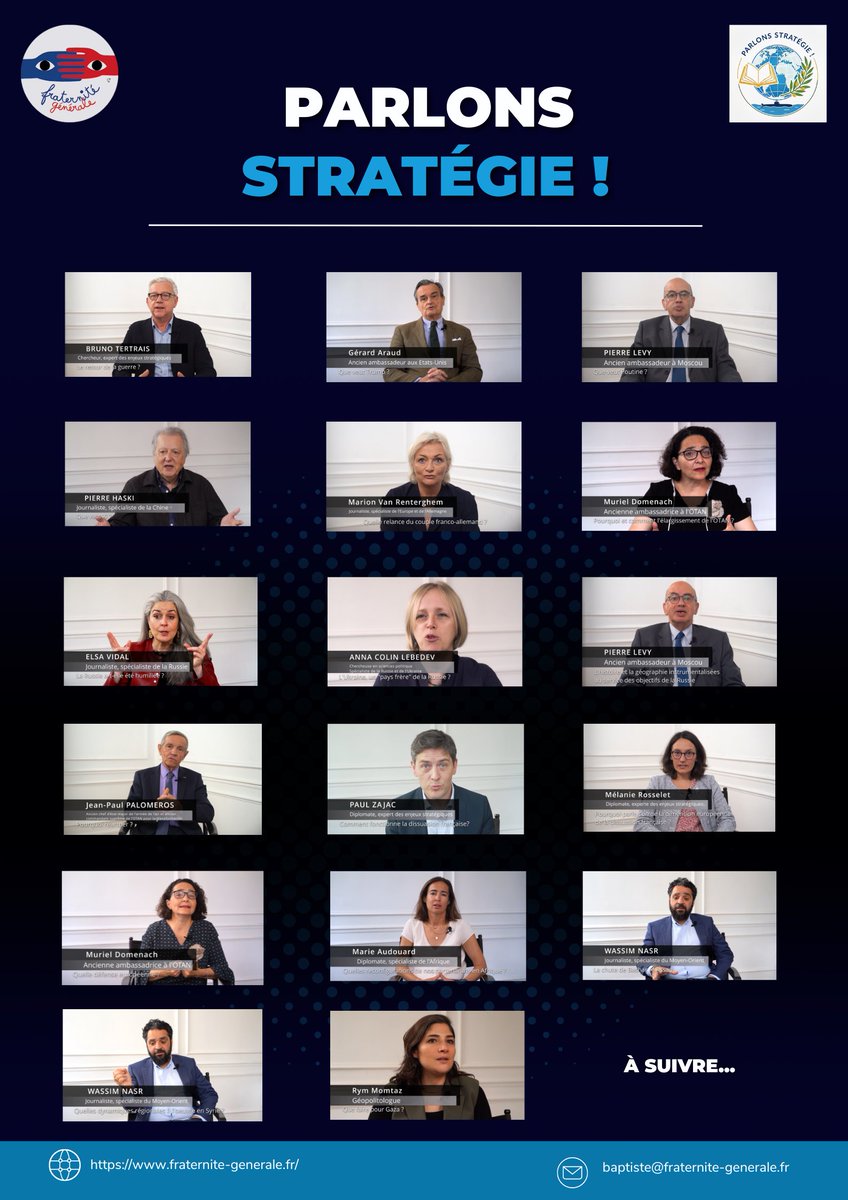
« Parlons stratégie » : une série de vidéos pour éclairer les enjeux géopolitiques Animée par la diplomate @MurielDomenach, elle donne des clés pour comprendre les guerres, les stratégies des grandes puissances et les rapports de force internationaux. Un format pédagogique à destination des lycéens, étudiants et curieux de diplomatie. ▶️ fdip.fr/gyrf7enc
France Diplomatie 🇫🇷🇪🇺 tweet media
Français
68
82
193
64.4K
Claudia Gherman retweetledi
Alex Taylor
Alex Taylor@AlexTaylorNews·
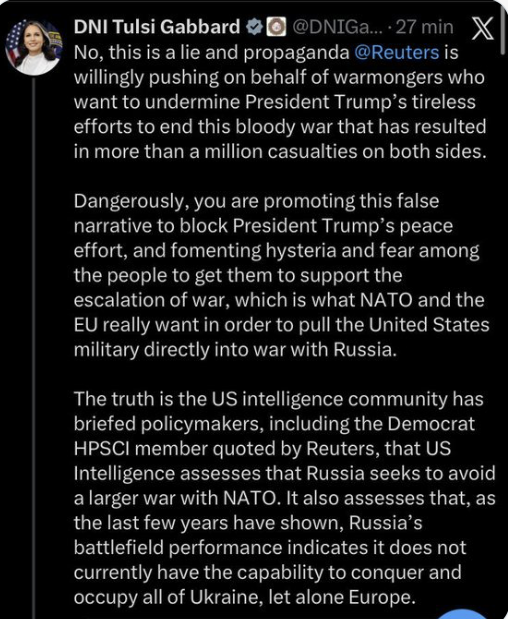
The US Director of National Intelligence writes👇 NATO & the EU are warmongers Reuters are their propagandists Russia on the other hand is seeking to avoid conflict No wonder Russian TV calls Tulsi Gabbard "our girlfriend". When they tell you who they are like this 👇 believe them
Alex Taylor tweet media
English
30
150
326
18.8K
Claudia Gherman retweetledi
Kate from Kharkiv
Kate from Kharkiv@BohuslavskaKate·
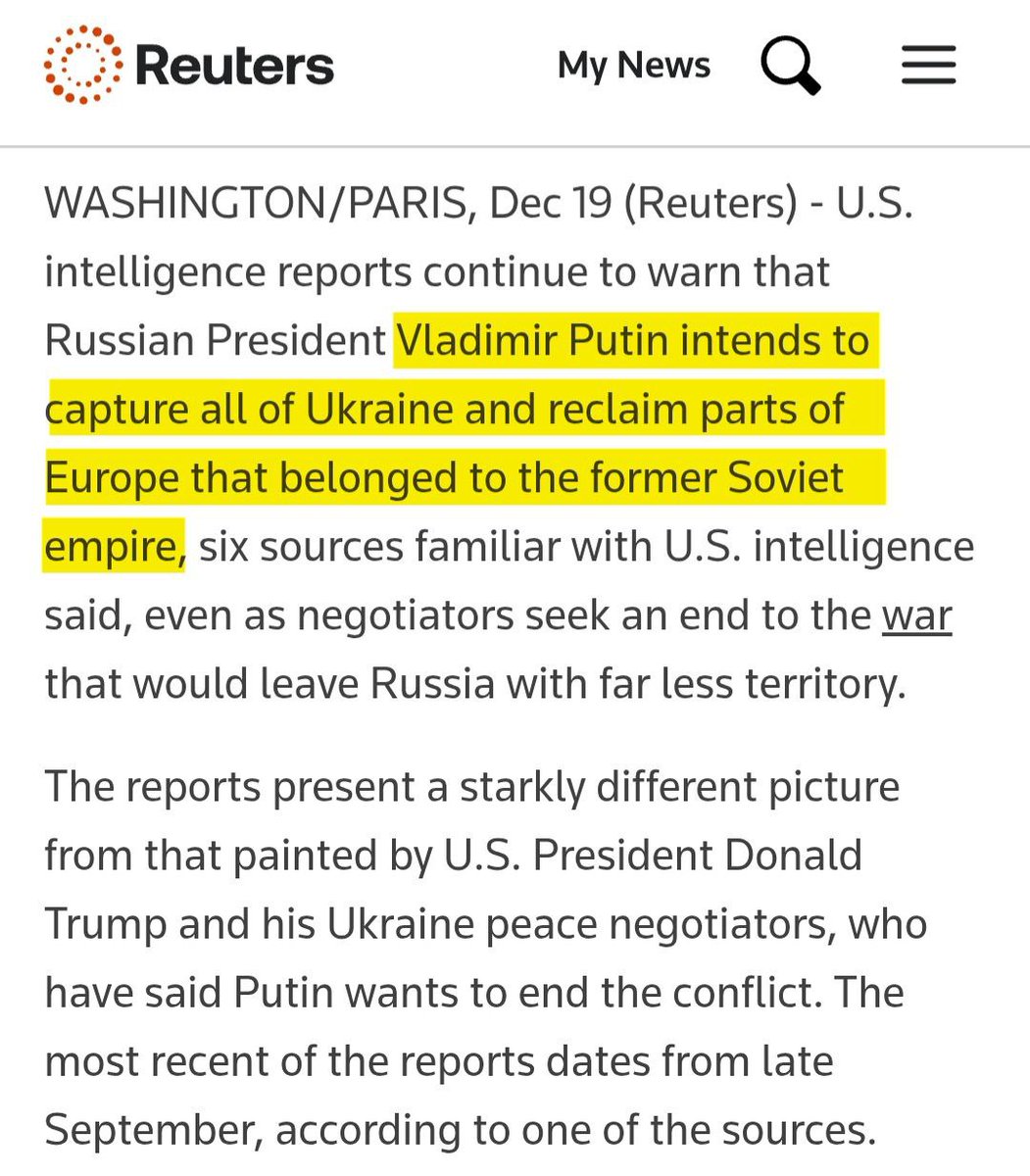
U.S intelligence report. So correct, so obvious, and still beyond the comprehension of the U.S. own government.
Kate from Kharkiv tweet media
English
425
3K
7.9K
358.5K
Claudia Gherman retweetledi
The Associated Press
The Associated Press has tracked 145 cases of sabotage and disruption that Western officials blame on Russia since its 2022 invasion of Ukraine. They say Moscow wants to drain Europe’s investigative resources. apnews.com/projects/russi…
English
120
1.1K
1.9K
160.8K
Claudia Gherman retweetledi
Nico Lange
Nico Lange@nicolange_·
This week, the German intelligence community spoke remarkably openly about the threat posed by Russia. Here are the 10 most important findings from the German foreign intelligence service, domestic intelligence service, and military counterintelligence service: 1. Russia's goals are to undermine NATO and destabilize European democracies. Russia will not shy away from military confrontation with NATO. 2. Russia is attempting to manipulate elections in Germany. Russia is relying on propaganda and disinformation, provocation, intimidation, sabotage, contract killings, espionage, and airspace violations. 3. The intelligence services must be allowed to become more operational and take greater risks. This urgently requires changes to the legal framework. 4. Russia is acting aggressively, offensively, and increasingly escalating in Germany. Russia is the main instigator of the preparation and implementation of sabotage operations in Germany. 5. Russia is exploiting “scenes of discontent,” e.g., the “Reichsbürger” movement, to spread its narrative and exert influence. The goal is to divide European societies. 6. German intelligence services must become defense services that not only observe threats but also counter them. 7. Russia is now highly active in infiltrating the German armed forces and undermining the stability of NATO. 8. Russia threatens our security. Germany must prepare for a long-term confrontation and finally strengthen its defense capabilities. 9. Russia's ongoing cognitive warfare against Germany requires action in the here and now instead of waiting for a formal state of open conflict. 10. Germany must move from reactive observation of Russia to an initiative-taking, defensive, and nationwide defense strategy.
English
424
2K
5.3K
1.1M
Claudia Gherman retweetledi
Tymofiy Mylovanov
Tymofiy Mylovanov@Mylovanov·
Q: Where is Russia going? President of Finland, Stubb: It's not looking good. With the current regime and President Putin, I don't see a big change. Nations that don't have a capacity to deal with their past have a very difficult time looking into the future. 1/
English
88
1K
5.3K
290.4K
Claudia Gherman retweetledi
Institute for the Study of War
Institute for the Study of War@TheStudyofWar·
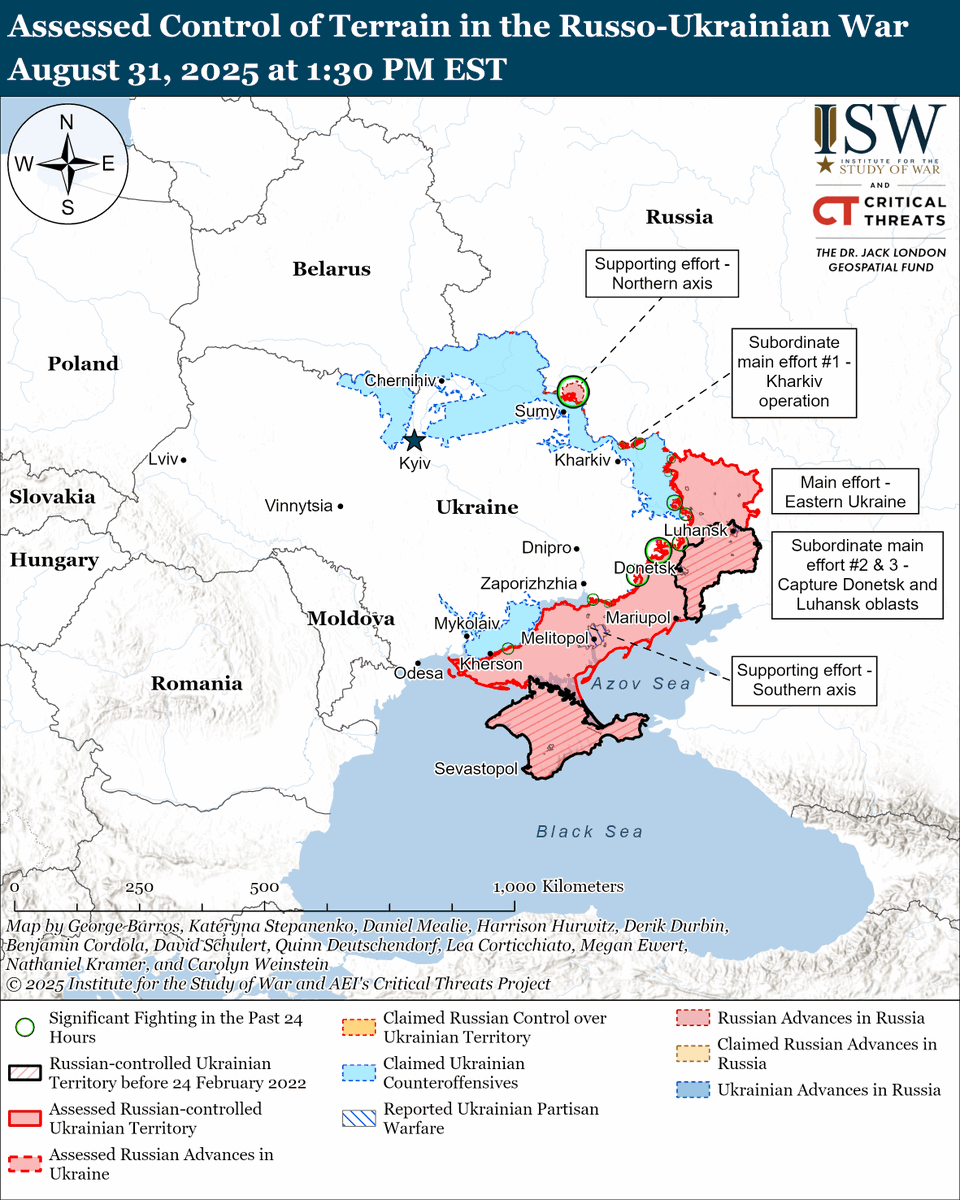
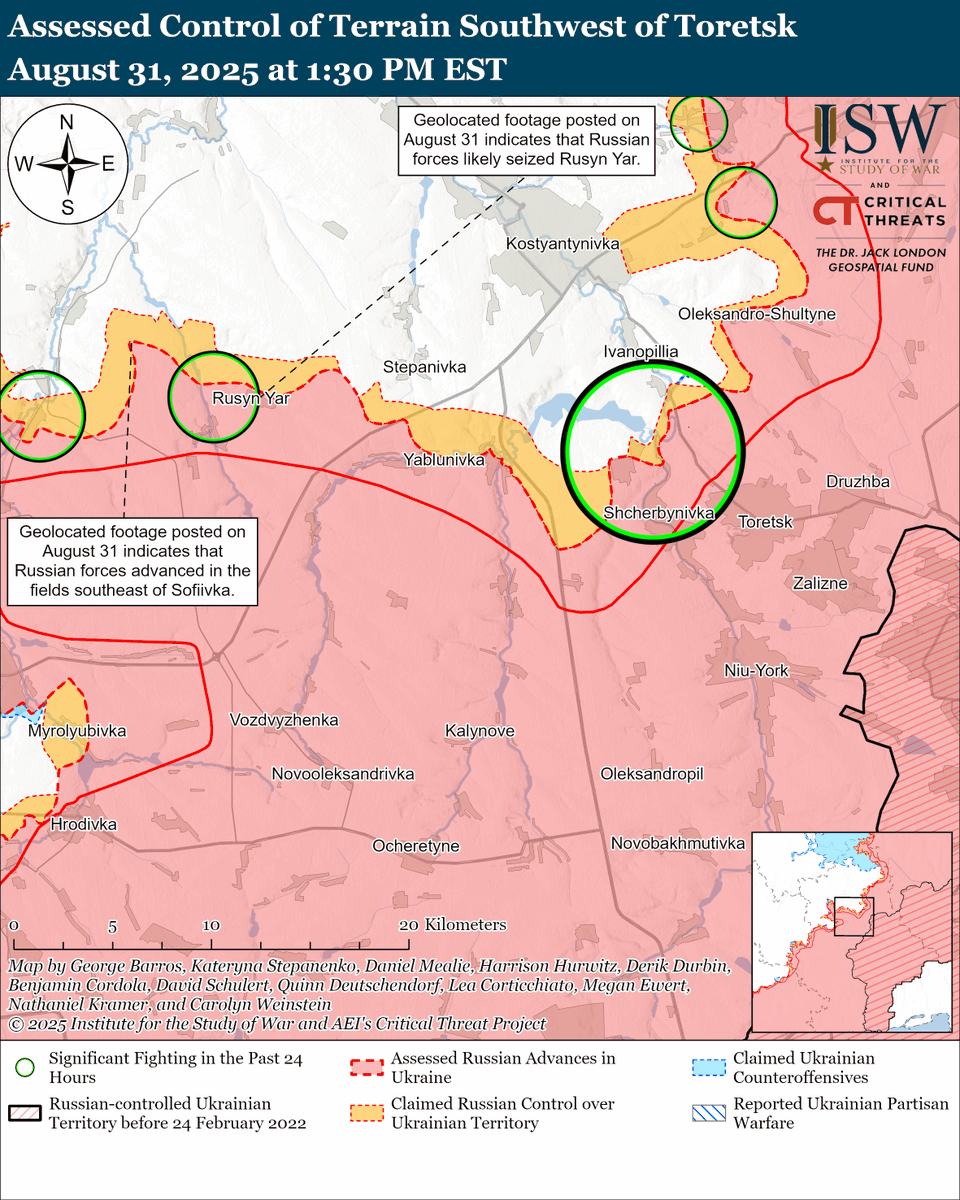
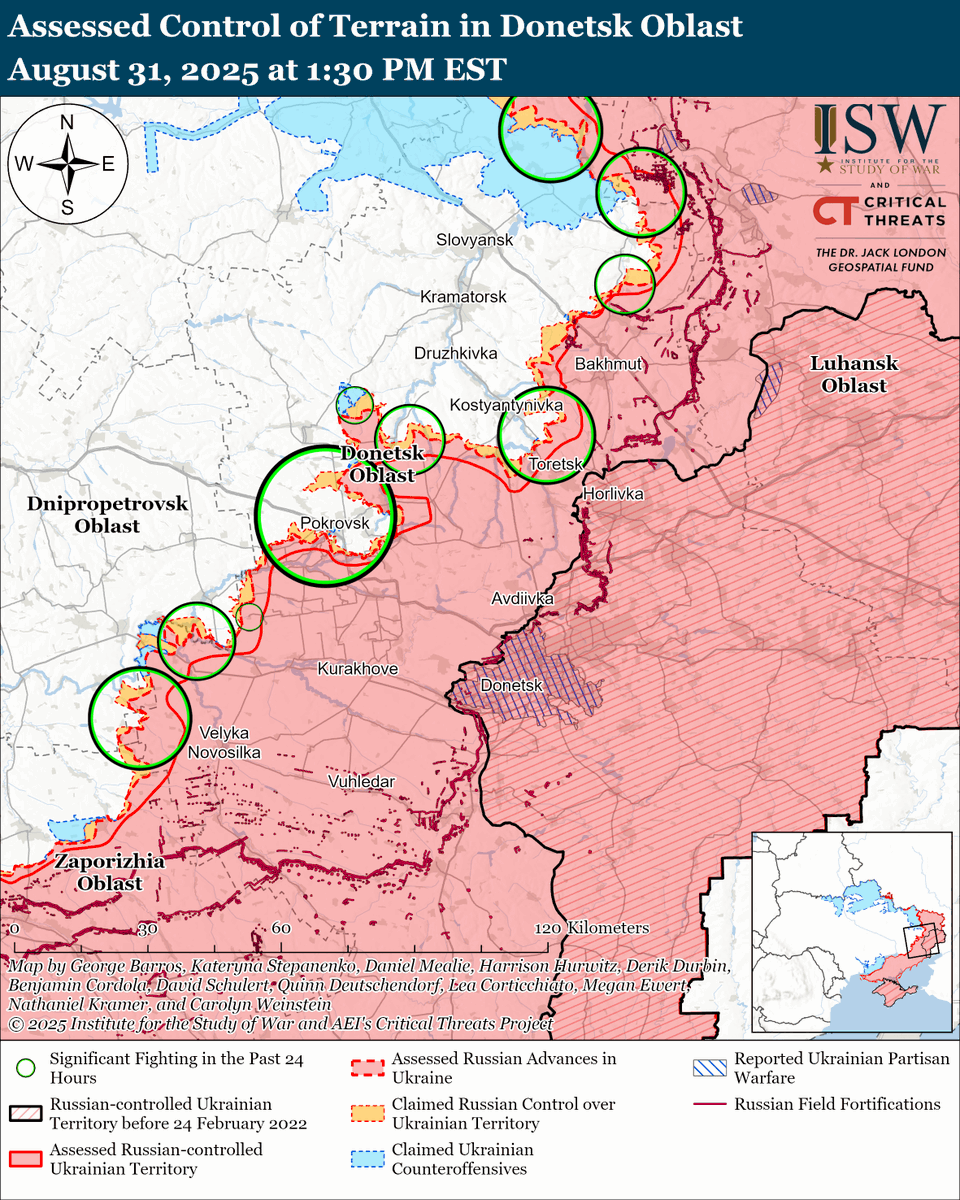
NEW: The Kremlin is pursuing a multi-pronged informational effort aimed at deterring Western support for Ukraine and undermining European participation in the peace process. More ⬇️(1/2) The Kremlin has recently been intensifying three rhetorical lines aimed at influencing Western decision-making in the Kremlin's favor: accusing European states of prolonging the war in Ukraine, levying nuclear threats against Western states, and claiming that Russian victory in Ukraine is inevitable. Russian milbloggers criticized the Russian MoD for exaggerating its battlefield successes. The Kremlin is intensifying these information efforts because its territorial gains remain disproportionately limited and slow relative to the high losses incurred. Ukrainian forces advanced near Novopavlivka. Russian forces advanced near Toretsk.
Institute for the Study of War tweet mediaInstitute for the Study of War tweet mediaInstitute for the Study of War tweet mediaInstitute for the Study of War tweet media
English
39
305
919
312.3K