Clint Ballinger

36.8K posts

Clint Ballinger banner
Clint Ballinger

Clint Ballinger

@clintballinger

The emerged economy | The built economy Book: https://t.co/JGGNnF2R41

Katılım Aralık 2009
2.4K Takip Edilen5.5K Takipçiler
Sabitlenmiş Tweet
Clint Ballinger
Clint Ballinger@clintballinger·
There is a pervasive, annoyingly simplistic, & neverending online debate: Libertarian/free market vs socialism/communism, as if these are stark choices 1/
English
32
49
162
0
ArchaeoHistories
ArchaeoHistories@histories_arch·
In 1979, Madison; Wisconsin, a woman sits in a basement office, writing code line by line on a computer most hospitals don't even know they need yet. Her name is Judy Faulkner. She's started with $6,000 to $7,000 of her own money, plus contributions from friends and family totaling around $70,000. No venture capital. No Silicon Valley connections. Just a conviction that the American healthcare system is killing people because doctors can't access the information they desperately need. She had watched it happen. Medical records stayed trapped in filing cabinets and incompatible systems when patients moved between cities and providers. Doctors made critical decisions in the dark, lacking the patient histories they needed. People died from preventable mistakes. That systemic failure became her mission. Faulkner began building software that would let patient information follow the patient, no matter where they went. It was a radical idea in an era when most hospitals still relied on paper charts and metal drawers. Decades later, she controls Epic Systems, the most powerful health technology company in America. Her software manages medical records for over 300 million patients worldwide. Roughly half of all U.S. hospital beds run on systems she created. Her wealth sits between $7 and $8 billion. And almost no one knows her name. She never took Epic public. Never accepted venture capital. Never sold out. She believed Wall Street would force her to chase quarterly profits instead of patient outcomes. So she kept control, kept her wealth locked in private shares, and kept building. Now in her eighties, she's methodically dismantling that fortune. In 2015, she signed the Giving Pledge. Then went further, committing to give away 99 percent of her wealth. She and her husband created the Roots & Wings Foundation, named after advice she once gave her children when they asked what they needed most from her. "You need roots and wings," she told them. Values to anchor you. Freedom to grow. Everything else is noise. Today, that foundation distributes tens of millions annually, aiming for $100 million a year. Food security. Healthcare access. Education. Housing. She's not waiting until she's gone to make an impact. She's converting ownership into action right now, while she's still here to see it work. In an age of billionaire spectacle, Judy Faulkner built an empire in silence, accumulated unimaginable wealth without chasing it, and is now giving it all away with the same quiet determination she used to write that first line of code in a Wisconsin basement. Faulkner still runs Epic Systems from its headquarters in Verona, Wisconsin, where the campus has become legendary for its design. Buildings are themed after famous works of literature and fantasy, with conference rooms modeled after Hogwarts, Alice in Wonderland, and Star Trek. Employees traverse tunnels decorated like subway stations and walk through spaces that feel more like theme parks than corporate offices. It's Faulkner's way of making grueling work feel a little more human. Unlike most tech billionaires, she lives modestly and avoids the spotlight. She doesn't own yachts, doesn't collect estates, and rarely seeks media attention. Her focus remains on Epic's mission: building software that saves lives by making sure critical information is always available when it matters most. Faulkner majored in mathematics and computer science at a time when women made up less than 10 percent of the field. Before founding Epic, she taught herself programming languages and worked on developing systems for hospitals while teaching at the University of Wisconsin. Another fascinating detail: Epic remains one of the largest privately held software companies in the world, with thousands of employees and zero outside investors. Faulkner retains control by design, ensuring the company answers to patients, not shareholders. #archaeohistories
ArchaeoHistories tweet media
English
114
366
1.9K
175.7K
Clint Ballinger
Clint Ballinger@clintballinger·
@TheEconRebel Have you looked into the 1950s/60s US - Global dollar but US still exported. Explaining this history would be a good article
English
1
0
2
85
🇦🇺Luke Mikic- The 9-5 Escape Artist🇵🇪
I don’t need to be taken seriously, your ideas fail from first principles. Every time we’ve given the state complete control, it ends horribly. MMT is a slippery slope. You really think it’s a good idea to give the state even more control at a time when 15,000 British people are being thrown in jail for social media posts? 😂🤷‍♂️
🇦🇺Luke Mikic- The 9-5 Escape Artist🇵🇪 tweet media
English
10
0
0
380
Clint Ballinger
Clint Ballinger@clintballinger·
@DavidPintoD @ZackPolanski Sov bonds related to spending are a relic of the early modern period. And govs completely control rates - the idea the secondary market for long terms rates matters= not understanding the system. Gov doesn’t need to issue them in the first place
English
0
1
13
265
David Pinto-Duschinsky MP
You may have seen @ZackPolanski speaking about economics this week. But the theory behind his thinking is a pretty wild one - and could end up costing you dearly 👇
English
175
44
179
103.7K
Clint Ballinger retweetledi
Clint Ballinger
Clint Ballinger@clintballinger·
@jamescmlin @TheStalwart I'm saying the Fed has very little power to do anything useful at all. It can lower the price level by inducing a recession, that's it. The levers that matter are fiscal. Fiscal is real economics; it is a fantasy world to focus on interest rates, an abdication by "economists"
English
1
1
7
0
Lord Keynes
Lord Keynes@Lord_Keynes3·
Buffer stocks in energy and crucial commodities were actually widespread in the West c. 1945-1970s, and were one of the secrets of the Golden Age of Capitalism. Then Neoliberalism destroyed sane economic policy.
Isabella M Weber@IsabellaMWeber

I have studied China for years and have been banging the drum for buffer stocks in essentials like food and energy with Western policy makers. The response was always some version of market fundamentalism: it’s not efficient, it distorts prices etc. Well, here we are.

English
1
0
11
335
Clint Ballinger
Clint Ballinger@clintballinger·
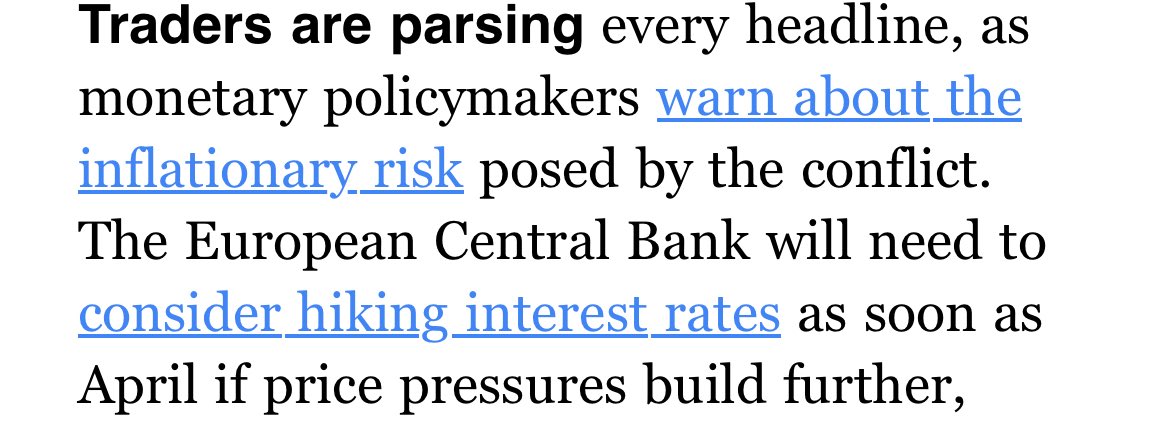
Bloomberg. It’s crazy how this is such accepted “wisdom.” Interest rates are NOT a good tool
Clint Ballinger tweet media
English
1
2
8
332
Professor John Hearn
Professor John Hearn@jbhearn·
Please NOTE that this promise even then meant nothing, not debt , not an IOU, although there was a time when it meant something.
Professor John Hearn tweet media
English
4
2
16
1.4K
Clint Ballinger
Clint Ballinger@clintballinger·
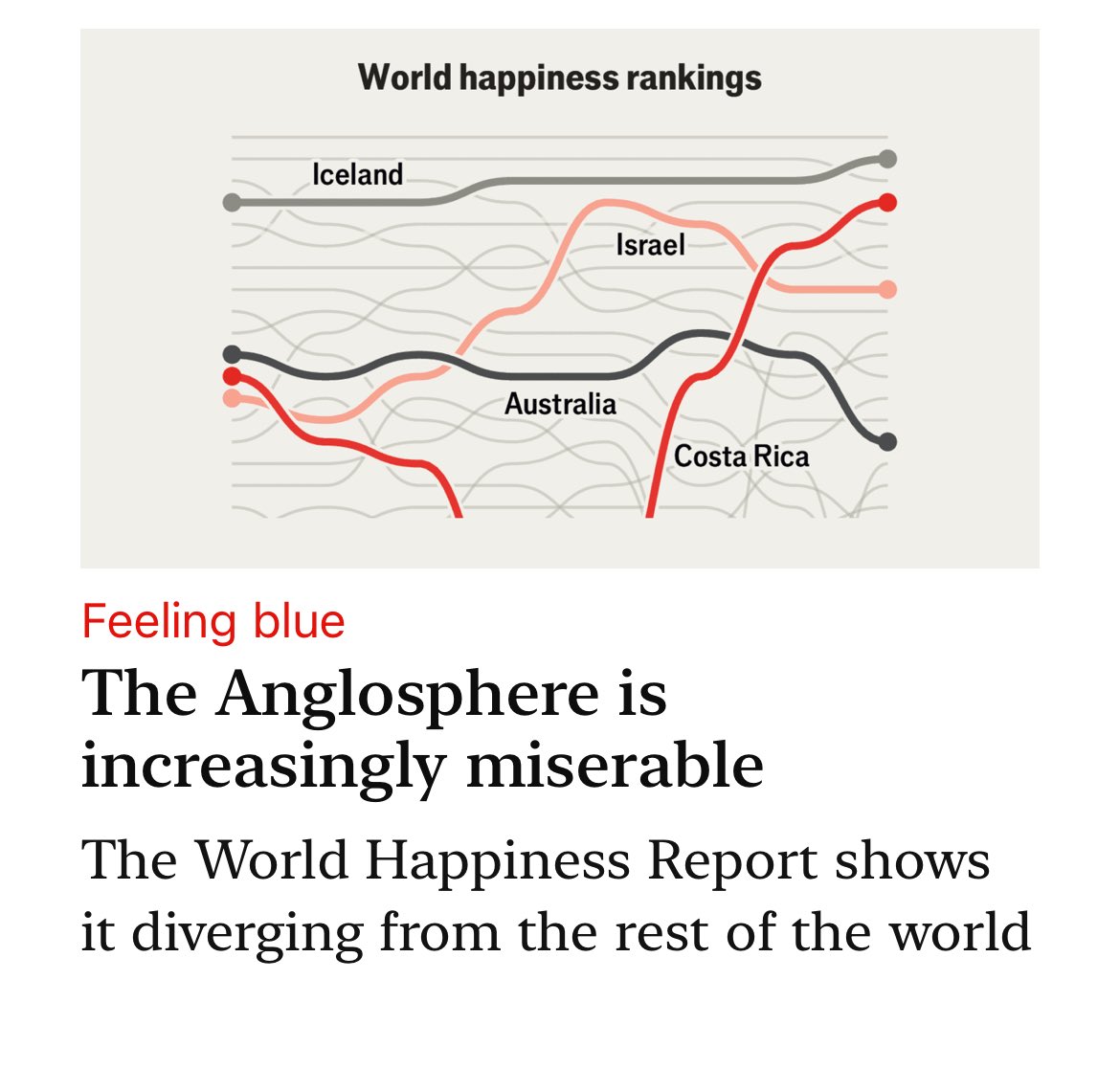
From The Economist. Because of The Economist’s policies
Clint Ballinger tweet media
English
0
1
9
337
Clint Ballinger retweetledi
Clint Ballinger
Clint Ballinger@clintballinger·
I don’t get it. Pencil. Paper. Done
English
2
1
6
1.1K
Clint Ballinger retweetledi
Warren B. Mosler
Warren B. Mosler@wbmosler·
@RoKhanna Medicare for all is HIGHLY DEFLATIONARY! HIGHLY DEFLATIONARY! HIGHLY DEFLATIONARY! YOU DON'T RAISE TAXES WHEN THIS HAPPENS!!!
English
11
40
172
10.9K
Ro Khanna
Ro Khanna@RoKhanna·
So how will we pay for single payer healthcare? One of the things I admire about Bernie Sanders is he is honest that people need to pay taxes to fund foundational social services in healthcare, education, & childcare. The taxes should be progressive. But the math needs to work.
Katie Porter@katieporterca

0% state income tax for California families making under $100,000. That’s thousands of dollars back in your pocket where it belongs. As Governor, I’ll work the issue at both ends—lowering taxes for those who are struggling and raising them on the biggest corporations that can afford to pay.

English
528
698
7.8K
640.2K
Joseph Brown
Joseph Brown@heresyfinancial·
To clarify: Widening wealth inequality is a result of the Cantillon Effect - those closest to the money printer extract wealth from those farthest away. This effect is caused by a central bank infinitely debasing the currency. It is democracy that voted for, enabled, and perpetuates this policy.
English
9
7
127
2.9K
Professor John Hearn
Professor John Hearn@jbhearn·
It is just too easy to convince people that rises in costs cause inflation and absolve the government and Central Bank of responsibility. Probably shown you this before. myprofessorjohnhearn.org/2025/01/17/the…
Ron kline@Ronkline13

@jbhearn Even on the news and in Politics people have in the last week referred to inflation in relation to the potential oil crisis. This is even true of the Chancellor,an Economist!!


English
4
2
13
673
Joe Weisenthal
Joe Weisenthal@TheStalwart·
I still don’t get extreme multidimensional space. How could there be more than three dimensions. Ok time. Fine that’s four. But more than that? Come on.
English
259
15
1K
158.8K