Christian McCarrick

9.5K posts

Christian McCarrick banner
Christian McCarrick

Christian McCarrick

@cmccarrick

Engineering Leader @Facebook, former VPE @Auth0, speaker, husband, father, drummer, book junkie Podcast Host: https://t.co/qjf4EYTrSG


San Francisco, CA Katılım Temmuz 2008
7.1K Takip Edilen5.2K Takipçiler
Christian McCarrick
Christian McCarrick@cmccarrick·
Was once again defrauded by @StubHub for @SabrinaAnnLynn concert tomorrow in SF. So sorry to my 14yo birthday girl who can’t go now. Do better - Never again
English
0
0
3
165
Christian McCarrick
Christian McCarrick@cmccarrick·
@Fidelity 12 hours of phone calls and multiple people with a different answers every time and I still cannot get a signed letter that I need about my account. Why bother even having an account with you if I can't even get basic service.
English
1
0
1
94
Christian McCarrick retweetledi
Billy Oppenheimer
Billy Oppenheimer@bpoppenheimer·
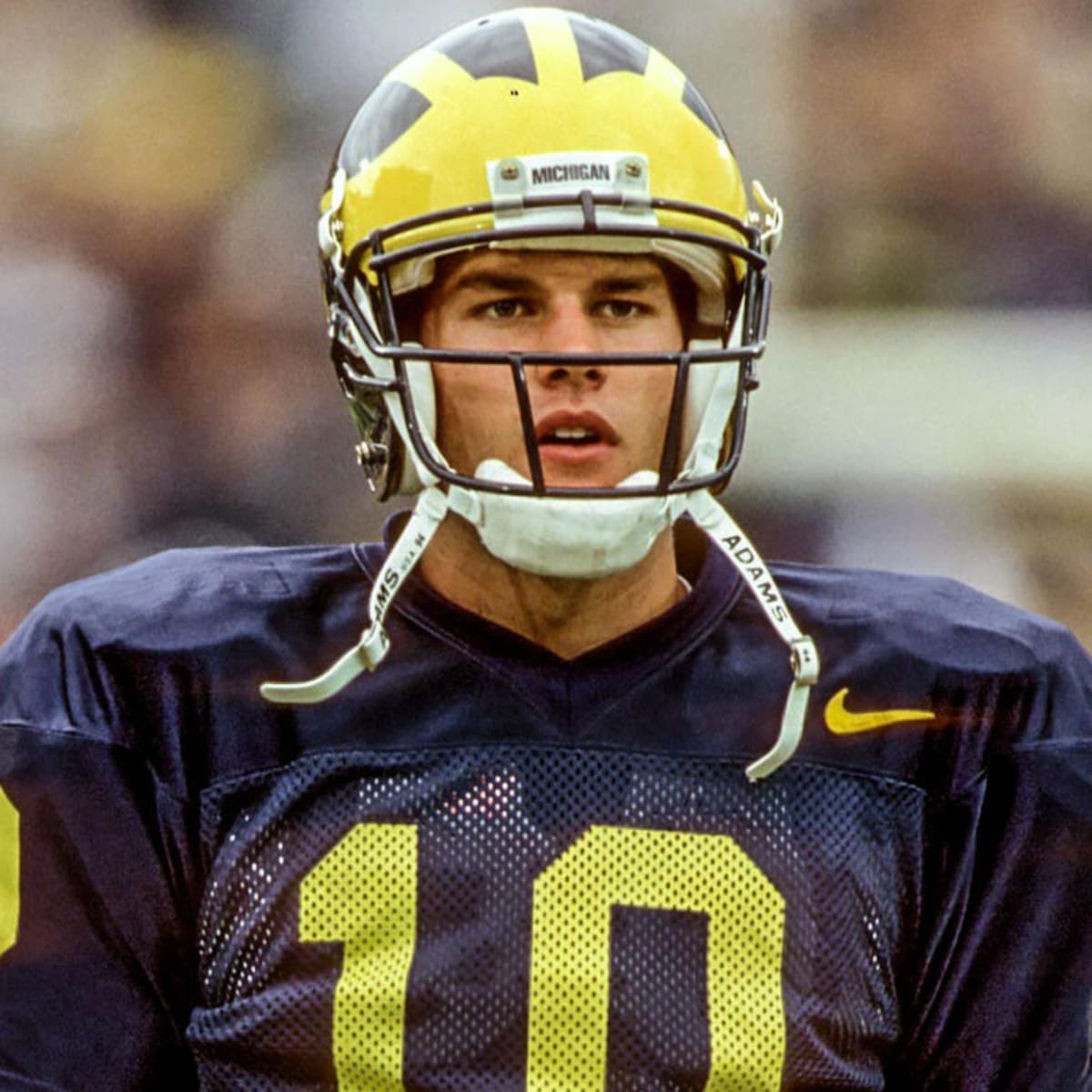
After his second year at Michigan, Tom Brady wanted to transfer. He wasn't playing in games, and he was so low on the depth chart that he only got 2 reps in practice. Brady met with his coach to express his frustration, “The other quarterbacks get all the reps.” Coach replied, “Brady, I want you to stop worrying about what all the other players on our team are doing. All you do is worry about what the starter is doing, what the second guy is doing, what everyone else is doing. You don't worry about what you're doing.” Coach reminded him, “You came here to be the best. If you're going to be the best, you have to beat out the best.” And then he recommended that Brady start meeting with Greg Harden, a sports psychologist who worked in Michigan's athletic department. Brady went to Harden's office and whined, “I'm never going to get my chance. They're only giving me 2 reps.” Harden simply replied, “Just go out there and focus on doing the best you can with those 2 reps. Make them as perfect as you possibly can.” “So that's what I did,” Brady said. “They'd put me in for those 2 reps, man, I'd sprint out there like it was Super Bowl 39. 'Let's go boys! Here we go! What play we got?'” “And I started to do really well with those 2 reps. Because I brought enthusiasm, I brought energy.” Soon, it went from getting 2 reps to getting 4 reps. Then from 4 to 10, “and before you knew it,” Brady said, with this new mindset that Greg instilled in me—to focus on what you can control, to focus on what you're getting, not what anyone else is getting, to treat every rep like it's the Super Bowl—eventually, I became the starter.” Takeaway 1: Greg Harden telling Brady to just focus on being great during his 2 reps reminded me of a piece of advice from the entrepreneur Mark Cuban. “People come to me all the time and tell me they're stuck,” Cuban explained. “They're stuck in a job they don't like. They're stuck working for a boss they don't like. They're stuck on a team they don't like.” “I just tell them, 'Be great.'” “The reality of life is that you can't just always quit your job. You can't just always go to your boss and say, 'Give me the promotion, or I'm out of here.'” You can't just always go to your coach and say, 'Give me more reps, or I'm transferring.' “So when you're stuck, you've gotta find it within yourself to say, 'Ok, this is where I am. And if I'm going to be here, I'm going to be great.' Because if you're great at your job, typically other people and companies find out, so it creates opportunities.” Takeaway 2: I've written before about “lead measures”—the actions and behaviors that predictably drive success. The core characteristic of a lead measure, the authors of The 4 Disciplines of Execution (4DX) write, is that “a lead measure is influenceable; it can be directly influenced by you.” To achieve your goals, they recommend (echoing what the Michigan Coach told Brady), apply a disproportionate energy to the things that are in your control. Starting at Michigan and for the rest of his career, that’s what Brady did, that’s what drove his success. In his first media call after he was selected by the New England Patriots with the 199th pick in the 2000 draft, Brady was asked: “Are you aware that [along with starting quarterback, Drew Bledsoe] there’s another quarterback here that they drafted last year?” Brady said he was aware of that. “And I know he’s a heck of a player,” Brady said. “But I’ve always really concerned myself just with the things I can control. I don’t put a lot of thinking into the other guys because I know I’m not at my best when I’m not just thinking about playing as well as I possibly can.” - - - “I never once in my life ever said I wanted to be the best of all time. Ever. I wanted to be the best I could be, period. I learned that in college. It didn’t matter what the other guys were doing. It mattered what I was doing.” — Tom Brady Follow @bpoppenheimer for more content like this!
Billy Oppenheimer tweet media
English
260
5K
28.4K
8M
Christian McCarrick retweetledi
Auth0
Auth0@auth0·
Vittorio Bertocci was a force to be reckoned with, leaving an indelible mark on the identity industry and capturing hearts along the way. Unforgettable. Remarkable. Impactful. 💙 auth0.com/blog/in-celebr…
English
10
99
390
38.3K
Christian McCarrick retweetledi
Sahil Bloom
Sahil Bloom@SahilBloom·
In 2009, Stanford business professor Tina Seelig split her class into groups and issued a challenge: Each group had $5 and 2 hours to make the highest return on the initial money. At the end, they'd give a short presentation on their strategy. The results were fascinating... Most of the groups followed a basic approach: • Use the $5 to buy a few items. • Barter or resell those items. • Repeat • Sell final items for (hopefully) more than $5. These groups made a modest return on their initial $5. A few groups ignored the $5. They thought up ways to make the most money in the 2 hours of allotted time: • Made and sold reservations at hot restaurants. • Refilled bike tires on campus for $1 each. These groups made a better return on their initial $5. The winning group took an entirely different approach. They had three core realizations: 1. The $5 was nothing more than a distraction. 2. The 2 hours of time was not enough to make an attractive, outsized return with a mini-business (like selling restaurant reservations or filling bike tires). 3. The most valuable "asset" was actually the presentation time in front of a class of Stanford students. Realizing the value of this hidden asset, they offered the presentation time to companies looking to recruit Stanford students. They struck a deal to sell the time slot for $650, netting a monstrous return on the $5 of initial capital. The losing groups thought in linear, logical terms and achieved a linear, logical outcome. The winning group thought differently. So, what can we learn from this story? There are two types of problems: 1. Low-Stakes: Lower potential, linear rewards. Decisions are easily reversible. 2. High-Stakes: Higher potential, asymmetric rewards. Decisions are not easily reversible. With low-stakes problems, given the reward potential is low and the decisions are easily reversible, we can use shortcuts and heuristics to choose our path. We can take a logical, linear approach. With high-stakes problems, the high, asymmetric reward potential means we need to think differently. We want to take a creative, non-linear approach. Three steps to start thinking differently: Step 1: Avoid the Distraction There will always be an "obvious" solution that is simple, clear, and entirely wrong. In the challenge, the $5 was nothing more than a distraction. It was a trap. To find the best path, you have to avoid the distraction. Step 2: Ask Foundational Questions Ask and answer questions that expose and vet underlying assumptions and logic. • What's the real problem you are trying to solve? • What's your hypothesis? Why? • What are your core assumptions? Why? • What evidence do you have? • What are your core options? • What alternatives exist? This takes time, but it's an essential exercise when facing a problem with the potential for non-linear rewards. Step 3: Select the High Leverage Approach Slow down and evaluate the options on the table. Select the path most likely to generate the asymmetric, attractive risk-adjusted returns. If the story teaches us one thing, it's this: Creative, non-linear, asymmetric thinking generates creative, non-linear, asymmetric outcomes. If you enjoyed this or learned something, follow me @SahilBloom for more in future.
Sahil Bloom tweet media
English
275
2.2K
11.4K
2.8M
Christian McCarrick retweetledi
Catalin
Catalin@catalinmpit·
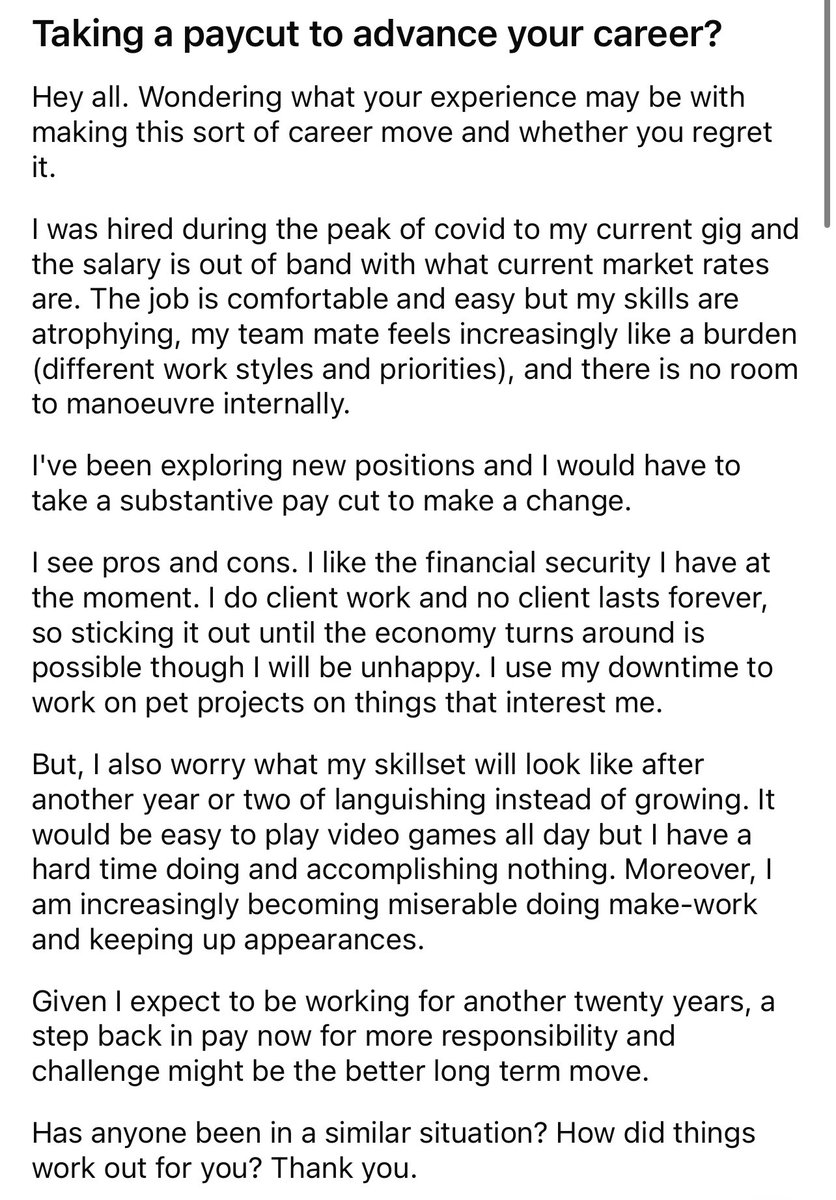
Take a paycut to advance your career? Yes. If you’re in a job that pays you well, BUT your skills aren’t improving (or worse, regressing), you’ll lose more in the long run. You’ll have to work super hard to get your skills up to date, and it’ll be more difficult to find a job. Been there, done that. Focus on jobs that allow you to advance your skills, rather than solely on the salary. Once you’re a good engineer, your salary will only increase with every job.
Catalin tweet media
English
19
16
147
44.7K
Christian McCarrick retweetledi
Adam Grant
Adam Grant@AdamMGrant·
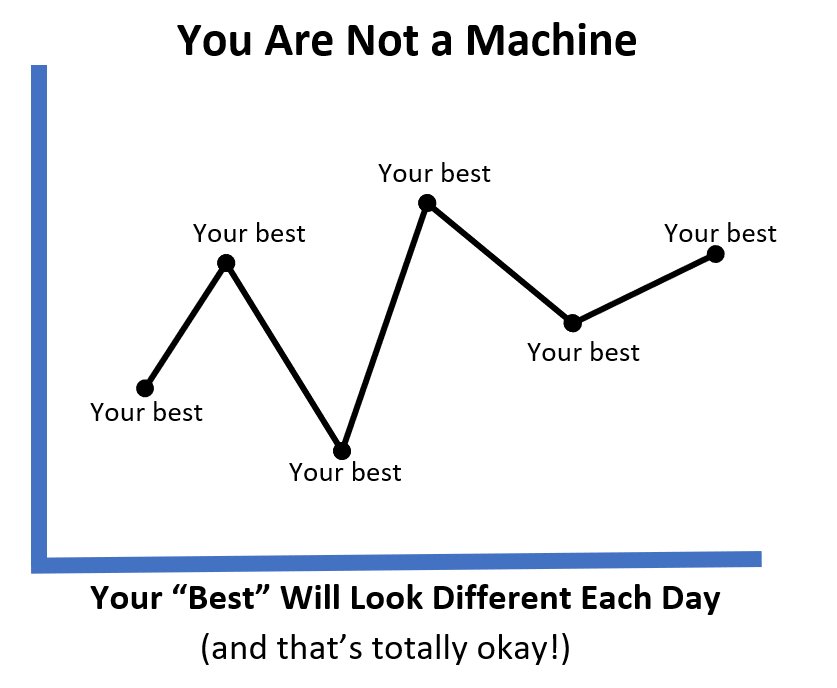
Public service announcement for managers and coaches: you can't judge effort by results. Inconsistent performance doesn't mean people aren't trying their best. It often means they're doing their best in the face of turbulence. In humans, variability is a feature, not a bug.
Adam Grant tweet media
English
92
2K
6.8K
797.5K
Christian McCarrick retweetledi
Billy Oppenheimer
Billy Oppenheimer@bpoppenheimer·
Shortly after Steve Jobs returned as the CEO of Apple in 1997, he met with Jony Ive, Apple’s Senior VP of industrial design. Apple had 40 products on the market. “Jony, how many things have you said no to?” Jobs asked. Ive was confused. “You have to understand,” Jobs said, “There are measures of focus, and one of them is how often you say no.” “What focus means,” Jobs taught Ive, “is saying no to something that you—with every bone in your body—think is a phenomenal idea, and you wake up thinking about it, but you say no to it because you're focusing on something else.” Jobs walked up to a whiteboard and drew a 2 x 2 grid. On top, he wrote “Consumer” and “Professional.” Down the side, “Portable” and “Desktop.” Four products—meet Apple’s new radically focused product line, Jobs said. After that meeting, over the next two decades, Jobs and Ive—focused on making a few high-quality products while saying no to everything else—transformed a dying, near-bankrupt company into one of the most valuable companies in the world, worth over $2.9 trillion. Takeaway 1: The philosopher Marcus Aurelius pointed out that the focus of doing less “brings a double satisfaction.” You get the satisfaction of having fewer things to do. And…you get the satisfaction of doing those fewer things at a higher level. You get “to do less, better.” During Steve Jobs’ first visit to Jony Ive’s design studio, he looked around, and then he said, “Fuck, you’ve not been very effective, have you?” It was clear to Jobs that Ive was full of ideas and potential he wasn’t able to execute or fulfill under Apple’s previous leadership. In the Jobs era of “doing less, better,” Ive was very effective. Some products he designed include: iMac, iPod, iPhone, iPad, Apple Watch, and AirPods. Takeaway 2: Even though he slashed the product line down to four products, Jobs loved to have and hear ideas. “Steve used to say to me,” Ive said, “and he used to say this a lot, ‘Hey, Jony, here’s a dopey idea.’ And sometimes they were: really dopey. Sometimes they were truly dreadful. But sometimes they took the air from the room, and they left us both completely silent.” It made me think of what Jerry Seinfeld identifies as the ultimate skill of the artist: “taste and discernment.” “It’s one thing to create,” Seinfeld says. It’s one thing to have ideas. “The other is you have to choose. ‘What are we going to do, and what are we not going to do?’” What are we going to add to the product line, and what are we not going to add? “This is a gigantic aspect of [artistic] survival,” Seinfeld continues. “It’s kind of unseen—what’s picked and what is discarded—but mastering that is how you stay alive.” - - - “Everything just got simpler. That’s been one of my mantras—focus and simplicity.” — Steve Jobs Follow @bpoppenheimer for more content like this!
Billy Oppenheimer tweet media
English
379
3.9K
25.7K
12.8M
Dave Anderson
Dave Anderson@scarletinked·
What do managers do with all their time? I remember having a skip-level meeting once with a junior engineer, while I was Senior Manager (before my promotion). The engineer, innocently, asks what I do. "Since engineers do all the work, what do managers do?" Fair question. 🧵
English
7
17
191
62.8K
Christian McCarrick retweetledi
Dave Anderson
Dave Anderson@scarletinked·
When teams estimate work for a product, there's a HUGE GIGANTIC ERROR that they almost always make. What's that error? They only count the cost of building a feature. "This feature will take 4 engineer weeks to build." That's just the beginning of the cost. 🧵
English
7
29
164
45.3K
Christian McCarrick retweetledi
James Everingham
James Everingham@jevering·
I've always kept a senior engineer as a direct report, no matter the team size. They bridge the gap between engineering and leadership, translating and explaining to colleagues and surfacing team concerns that might otherwise go unheard.
English
5
5
110
42.6K
Christian McCarrick retweetledi
Ant Murphy
Ant Murphy@ant_murphy·
Don't scale agile. Descale the work and organisation instead. One of the best books on building an agile organisation is not what you'd expect. But 'Team of Teams' is a bible for building a resilient and adaptive organisation. Here's serveral enablers from the book 👇 /1
Ant Murphy tweet media
English
13
48
499
67.6K
Christian McCarrick retweetledi
Pavel A. Samsonov
Pavel A. Samsonov@PavelASamsonov·
Stakeholders giving feedback at a design review
GIF
English
0
3
19
1.5K
Christian McCarrick retweetledi
emily freeman
emily freeman@editingemily·
I don’t know how to tell y’all this but you will never be able to create an open, trusting, and psychologically safe team unless you’re willing to show vulnerability as a leader.
English
12
50
327
36K
Christian McCarrick
Christian McCarrick@cmccarrick·
"I'm excited to be part of the #LeadDevTogether course this February! My module 'Preparing for change' will focus on how to lead through change with tips & tools to keep your team happy & productive. bit.ly/3Gs9pux "
Christian McCarrick tweet media
English
0
0
1
200