Dr Chris Ludlow

483 posts

Dr Chris Ludlow banner
Dr Chris Ludlow

Dr Chris Ludlow

@cnludlow

Clinical Psychologist interested in applying scientific psychology to solve real-world problems. I try to avoid polarised opinions on Twitter.

Melbourne, Victoria Katılım Mayıs 2011
458 Takip Edilen117 Takipçiler
Dr Chris Ludlow retweetledi
Steven Pinker
Steven Pinker@sapinker·
A common experience: Many brilliant scientists cannot grasp elementary philosophical distinctions. Last night I could not get a colleague to understand the difference between the "hard" (sentience, subjectivity, experience) and "easy" (reportability, information access) senses of "consciousness." Nor the difference between a definition of consciousness and various explanations of consciousness. Hypothesis: scientists tend to equate rigorous thinking with mechanistic explanation, and don't recognize that abstract concepts requires sharp analysis as well.
English
0
219
2.1K
417.7K
Dr Chris Ludlow retweetledi
Demis Hassabis
Demis Hassabis@demishassabis·
Thrilled to launch Project Genie, an experimental prototype of the world's most advanced world model. Create entire playable worlds to explore in real-time just from a simple text prompt - kind of mindblowing really! Available to Ultra subs in the US for now - have fun exploring!
English
380
952
7.9K
964.6K
Dr Chris Ludlow retweetledi
François Chollet
François Chollet@fchollet·
We are now closer to the year 2100 than to 1950. Also closer to 2050 than to 2000. Time to start acting like it.
English
48
184
1.3K
73K
Dr Chris Ludlow retweetledi
Andrew Ng
Andrew Ng@AndrewYNg·
Some people today are discouraging others from learning programming on the grounds AI will automate it. This advice will be seen as some of the worst career advice ever given. I disagree with the Turing Award and Nobel prize winner who wrote, “It is far more likely that the programming occupation will become extinct [...] than that it will become all-powerful. More and more, computers will program themselves.”​ Statements discouraging people from learning to code are harmful! In the 1960s, when programming moved from punchcards (where a programmer had to laboriously make holes in physical cards to write code character by character) to keyboards with terminals, programming became easier. And that made it a better time than before to begin programming. Yet it was in this era that Nobel laureate Herb Simon wrote the words quoted in the first paragraph. Today’s arguments not to learn to code continue to echo his comment. As coding becomes easier, more people should code, not fewer! Over the past few decades, as programming has moved from assembly language to higher-level languages like C, from desktop to cloud, from raw text editors to IDEs to AI assisted coding where sometimes one barely even looks at the generated code (which some coders recently started to call vibe coding), it is getting easier with each step. I wrote previously that I see tech-savvy people coordinating AI tools to move toward being 10x professionals — individuals who have 10 times the impact of the average person in their field. I am increasingly convinced that the best way for many people to accomplish this is not to be just consumers of AI applications, but to learn enough coding to use AI-assisted coding tools effectively. One question I’m asked most often is what someone should do who is worried about job displacement by AI. My answer is: Learn about AI and take control of it, because one of the most important skills in the future will be the ability to tell a computer exactly what you want, so it can do that for you. Coding (or getting AI to code for you) is a great way to do that. When I was working on the course Generative AI for Everyone and needed to generate AI artwork for the background images, I worked with a collaborator who had studied art history and knew the language of art. He prompted Midjourney with terminology based on the historical style, palette, artist inspiration and so on — using the language of art — to get the result he wanted. I didn’t know this language, and my paltry attempts at prompting could not deliver as effective a result. Similarly, scientists, analysts, marketers, recruiters, and people of a wide range of professions who understand the language of software through their knowledge of coding can tell an LLM or an AI-enabled IDE what they want much more precisely, and get much better results. As these tools are continuing to make coding easier, this is the best time yet to learn to code, to learn the language of software, and learn to make computers do exactly what you want them to do. [Original text: deeplearning.ai/the-batch/issu… ]
English
514
2.8K
11.9K
2.1M
Dr Chris Ludlow
Dr Chris Ludlow@cnludlow·
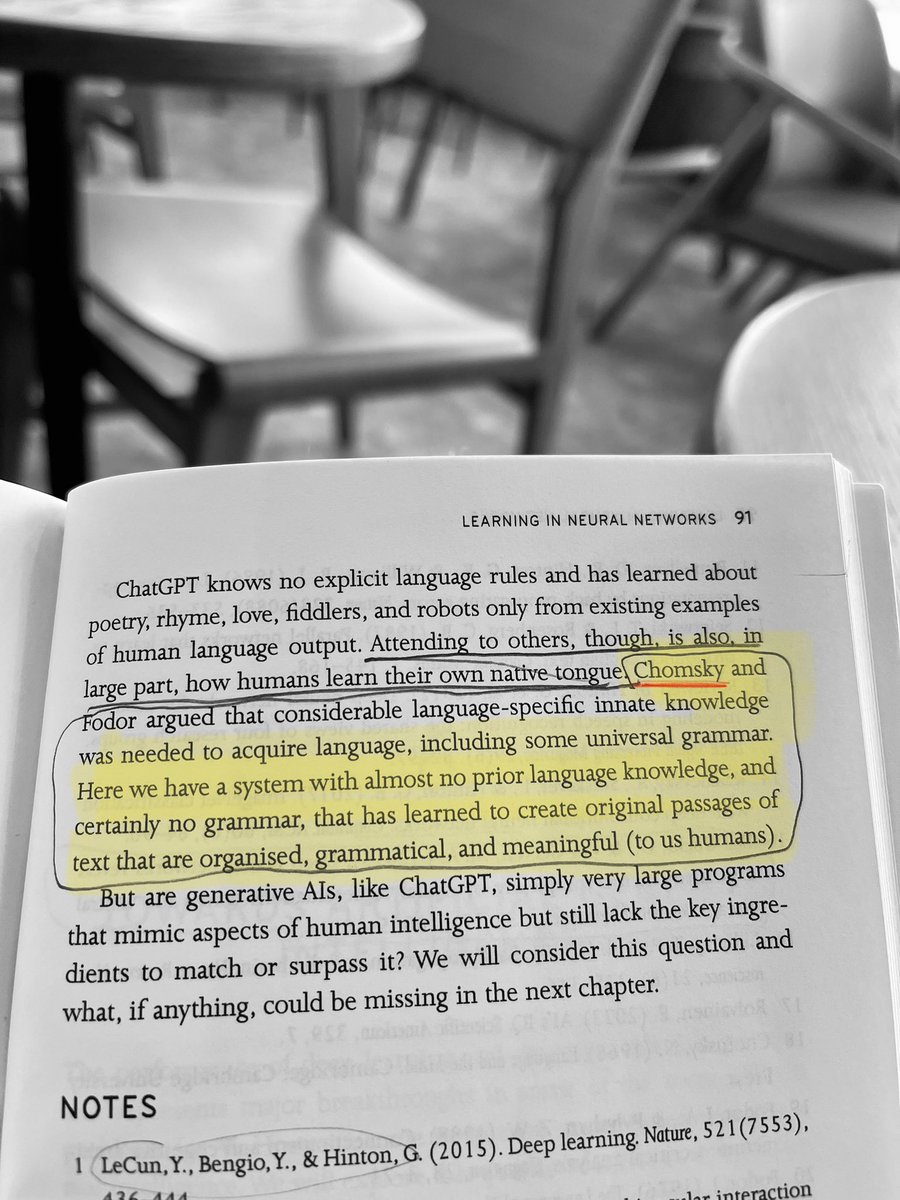
Interesting thing about artificial neural networks is that they are challenging Chomsky’s theory of language acquisition
Dr Chris Ludlow tweet media
English
0
0
0
31
Dr Chris Ludlow
Dr Chris Ludlow@cnludlow·
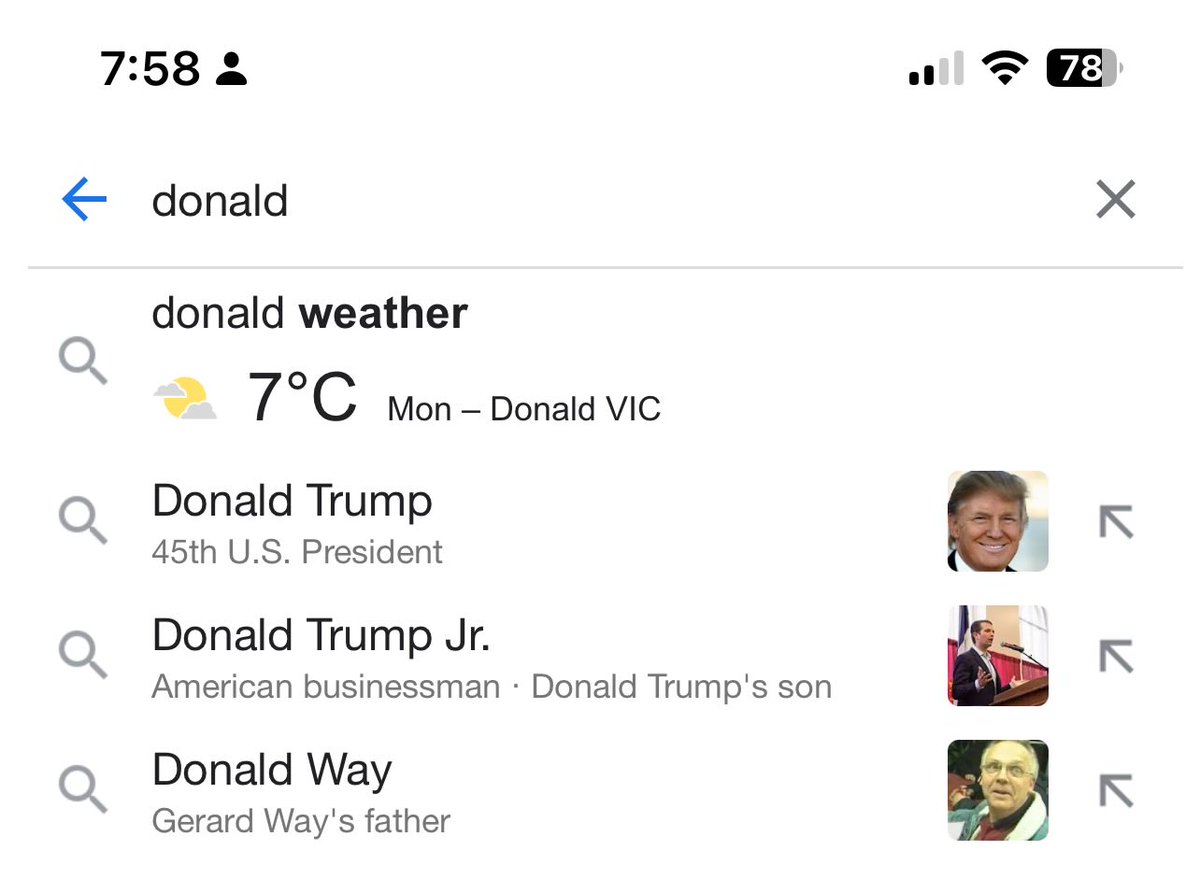
@elonmusk Either fake news or you’re a bad Googler - he isn’t president:
Dr Chris Ludlow tweet media
English
0
0
1
16
Elon Musk
Elon Musk@elonmusk·
Wow, Google has a search ban on President Donald Trump! Election interference?
Elon Musk tweet media
English
75.2K
156.2K
966.6K
130.1M
Dr Chris Ludlow
Dr Chris Ludlow@cnludlow·
@Mark_Butler_MP social work, nursing, and Ed to receive $319 per week for placements. Clin Psych students have longer placements - why are they missing out? Makes no sense.
English
0
0
0
17
Dr Chris Ludlow retweetledi
Michal Kosinski
Michal Kosinski@michalkosinski·
Experimental results presented in our Nature comp. sci. paper stuggest that ChatGPT (and other LLMs) can engage in both System 1 and System 2 thinking. ChatGPT's intuitions are more accurate than those of humans. nature.com/articles/s4358…
English
6
25
103
18.1K
Dr Chris Ludlow retweetledi
Prof Neil Thomas
Prof Neil Thomas@neilthomaspsy·
Important network meta-analysis on exercise for #depression. All forms of exercise seem effective and effects > SSRIs. Differences for exercise type small. Patient preference and sustainability for type of exercise likely most important in practice.
Eric Topol@EricTopol

An effective treatment for depression from a systematic review of >200 unique RCTs: Exercise Benefit proportional to intensity of exercise prescribed bmj.com/content/384/bm… @bmj_latest @mnoetel @UQPsych

English
0
2
5
667