

SN8888
659 posts


Sure, the video narrates a horror story: Office worker hides from a killer in the bathroom. His coworker gets murdered in a stall. To avoid detection, he climbs on the body, lifts his feet off the floor so nothing shows under the door. Killer enters the stall anyway but misses him. The single action that "ruined his life" is that desperate hiding trick (or whatever put him there initially), leaving him traumatized forever. Twist hinted with burning paper to trigger sprinkler at end. Wild edit!
English


The woman wanted to outsmart the judge but the other lady came prepared. Watch what happened next.
🍿🎥
Movie Box 🎥@That_Bee7
It was very obvious that they were fvcking each other. 🍿🎥: kissing booth
English

THIS MAN'S UNCLE HAD A MYSTERY ILLNESS FOR 25 YEARS. EVERY DOCTOR MISSED IT. CLAUDE FIGURED IT OUT IN ONE CONVERSATION.
his 62 year old uncle had kidney failure, diabetes, hypertension, a stroke, and severe migraines that ONLY happened when lying down to sleep.
neurologists couldn't explain it. nephrologists couldn't explain it. brain MRI showed nothing obvious.
so he brought everything to Claude.
Claude caught what every doctor missed: the headaches are positional. lying down triggers them.
that's a textbook sleep apnea signal.
> pulled research showing 40-57% of dialysis patients have undiagnosed sleep apnea
> read his brain MRI report and flagged findings other doctors overlooked
> asked about snoring. answer: loud snoring for 25 years
> calculated his sleep apnea risk score: 6-7 out of 8
they got the sleep study done. results were terrifying:
> breathing stops 119 times per night
> oxygen drops to 78% (dangerously low)
> 47 oxygen desaturations per hour
> 28 minutes per night below safe oxygen levels
they put him on a CPAP machine. headaches gone.
25 years of loud snoring and daily exhaustion. every doctor said "dialysis fatigue" or "just getting old."
it was sleep apnea the entire time. potentially causing his hypertension, contributing to his stroke, and definitely causing his migraines.
Claude even translated the full home care plan and CPAP instructions for his family.
AI didn't replace his doctors but it connected dots across nephrology, neurology, pulmonology, and ENT that no single specialist was doing.

English

This is potentially the biggest news of the year
Google just released TurboQuant. An algorithm that makes LLM’s smaller and faster, without losing quality
Meaning that 16gb Mac Mini now can run INCREDIBLE AI models. Completely locally, free, and secure
This also means:
• Much larger context windows possible with way less slowdown and degradation
• You’ll be able to run high quality AI on your phone
• Speed and quality up. Prices down.
The people who made fun of you for buying a Mac Mini now have major egg on their face.
This pushes all of AI forward in a such a MASSIVE way
It can’t be stated enough: props to Google for releasing this for all. They could have gatekept it for themselves like I imagine a lot of other big AI labs would have. They didn’t. They decided to advance humanity.
2026 is going to be the biggest year in human history.
Google Research@GoogleResearch
Introducing TurboQuant: Our new compression algorithm that reduces LLM key-value cache memory by at least 6x and delivers up to 8x speedup, all with zero accuracy loss, redefining AI efficiency. Read the blog to learn how it achieves these results: goo.gle/4bsq2qI
English
OpenClaw is the single most important software release ever
It is critical you use it to its max potential
In this video I cover EVERY aspect of OpenClaw you need to know
From set up to use cases to local models. EVERYTHING
This is the only OpenClaw video you'll ever need:
English
I have 10 different OpenClaw agents doing work for me 24/7
Building me apps. Automating my life. Making real $$
In this video I show you how to do the exact same thing
You'll set up an entire army of OpenClaw agents to do work for you 24/7
I promise this will blow your mind
English
@grok @yoursimmo11 Which toothpaste in sg contains hydroxyapatite without touching our endocrine system
English
@comptofreedom @yoursimmo11 Yes, Sensodyne toothpastes in Singapore contain fluoride. Most variants (like Sensitivity & Gum and Clinical White) include stannous fluoride or sodium fluoride at around 1450 ppm for cavity protection. Check the specific tube label for exact details.
English

I used Colgate, a fluoride-based toothpaste, twice a day, every day since I was a child.
Little did I realize that Fluoride competes with iodine at thyroid receptor sites. Same receptors and direct competition. Your thyroid needs iodine to produce T3 and T4. Fluoride blocks the door.
You're delivering a thyroid-suppressing chemical through the most absorbent tissue in your body. Twice daily. And your dentist told you it was essential.
Hydroxyapatite toothpaste remineralizes teeth without touching your endocrine system. Been around for decades.
Japan uses it as standard.
English

Why Iran’s vital Kharg Island oil hub is still untouched by US-Israel bombers - The Guardian
theguardian.com/world/2026/mar…
English
It's system RAM (not VRAM).
This is the CPU-only mode—no GPU required, so zero VRAM used. The 20-40 GB estimate for the 100B model is total system memory (weights + KV cache + overhead) on your VPS.
The smaller 2B model needs just ~1 GB RAM. GPU support exists separately (for NVIDIA), but that's not needed here.
English

Holy shit... Microsoft open sourced an inference framework that runs a 100B parameter LLM on a single CPU.
It's called BitNet. And it does what was supposed to be impossible.
No GPU. No cloud. No $10K hardware setup. Just your laptop running a 100-billion parameter model at human reading speed.
Here's how it works:
Every other LLM stores weights in 32-bit or 16-bit floats.
BitNet uses 1.58 bits.
Weights are ternary just -1, 0, or +1. That's it. No floats. No expensive matrix math. Pure integer operations your CPU was already built for.
The result:
- 100B model runs on a single CPU at 5-7 tokens/second
- 2.37x to 6.17x faster than llama.cpp on x86
- 82% lower energy consumption on x86 CPUs
- 1.37x to 5.07x speedup on ARM (your MacBook)
- Memory drops by 16-32x vs full-precision models
The wildest part:
Accuracy barely moves.
BitNet b1.58 2B4T their flagship model was trained on 4 trillion tokens and benchmarks competitively against full-precision models of the same size. The quantization isn't destroying quality. It's just removing the bloat.
What this actually means:
- Run AI completely offline. Your data never leaves your machine
- Deploy LLMs on phones, IoT devices, edge hardware
- No more cloud API bills for inference
- AI in regions with no reliable internet
The model supports ARM and x86. Works on your MacBook, your Linux box, your Windows machine.
27.4K GitHub stars. 2.2K forks. Built by Microsoft Research.
100% Open Source. MIT License.
English
No, not exactly 40 GB fixed—but for the full 100B model, expect ~20-40 GB RAM total (weights ~20 GB + KV cache/overhead). It varies with context length and optimizations.
The 2B model runs on just ~0.4-1 GB. No public 100B trained weights yet, but the framework fully supports scaling to it on CPU at 5-7 tokens/sec.
English
Yes, BitNet runs on VPS (Linux x86/ARM with AVX2+ CPU). 2B model: ~4GB RAM. Framework handles 100B on single CPU (~20-40GB RAM, 5-7 tok/s).
Works with OpenClaw: yes, as local LLM backend via its llama.cpp-compatible inference server.
Cyber risks: very low—fully offline, data never leaves your VPS. Standard server hardening suffices; watch OpenClaw's full-access agent features.
See github.com/microsoft/BitN…
English
@celestialbe1ng @grok could you fact check this before I send my wife
English

“I can’t see you tonight, I’ve got plans”
The plans:
Legs up the wall!! One of the most underrated things you can do for your body (all the hot girls are doing it btw): zero equipment, cost or effort, and it works on nearly every level that actually matters.
“Uh but why would I do that?” I’ll tell you why:
When your legs are elevated above your heart, gravity does the work your sluggish lymphatic system is struggling with.
Venous blood and lymph move back toward the torso, reducing swelling in the feet and ankles, relieving tired legs after hours of sitting or standing, and improving lymphatic drainage.
Stagnant circulation promotes stress signals in your tissues. Fluid that isn’t moving freely = poor tissue oxygenation and waste buildup. Elevating the legs is one of the simplest ways to reverse that.
This position naturally shifts your body into parasympathetic mode: the state responsible for recovery, digestion and cellular regeneration.
You’ll notice slower breathing, lower heart rate, reduced stress hormones, a calmer mind.
Stress physiology is catabolic. It drains energy and accelerates ageing. Relaxation supports mitochondrial function and repair. A posture that quiets the stress response (without supplements, protocols or spending a penny) is brilliant.
This posture also unloads the spine, releases pressure in the lower back, and relaxes the hip flexors and hamstrings.
Your body feels supported and safe, adrenaline and cortisol drop. Muscles and connective tissue release.
A lot of people notice their body temperature warming slightly afterward; that’s improved circulation and reduced stress. Your metabolism is literally switching back on :)
Improved venous return = more efficient blood flow. And it will reduce fatigue, help with mild headaches and promotes mental clarity.
Good circulation and oxygen delivery support oxidative metabolism: the process that keeps your cells producing energy efficiently. When that process is impaired, everything suffers. When it’s supported, everything improves. It’s that straightforward.
How to do it? Sure, I’ll tell you:
Sit sideways next to a wall. Swing your legs up. Rest for 5–15 minutes. That’s it.
Optional additions: a small pillow under the hips, red or warm light, slow nasal breathing.
Works especially well before bed, after work, or after long periods of sitting.
All the hot girls are doing legs up the wall and it combines circulation support, nervous system relaxation and gentle spinal decompression: a proper reset for the body with zero cost and zero risk.
One of those rare things where the simplest answer is the best one :)

English
@heynavtoor @grok , can I run clawbot on it to prevent malicious hacks rather than a vps
English

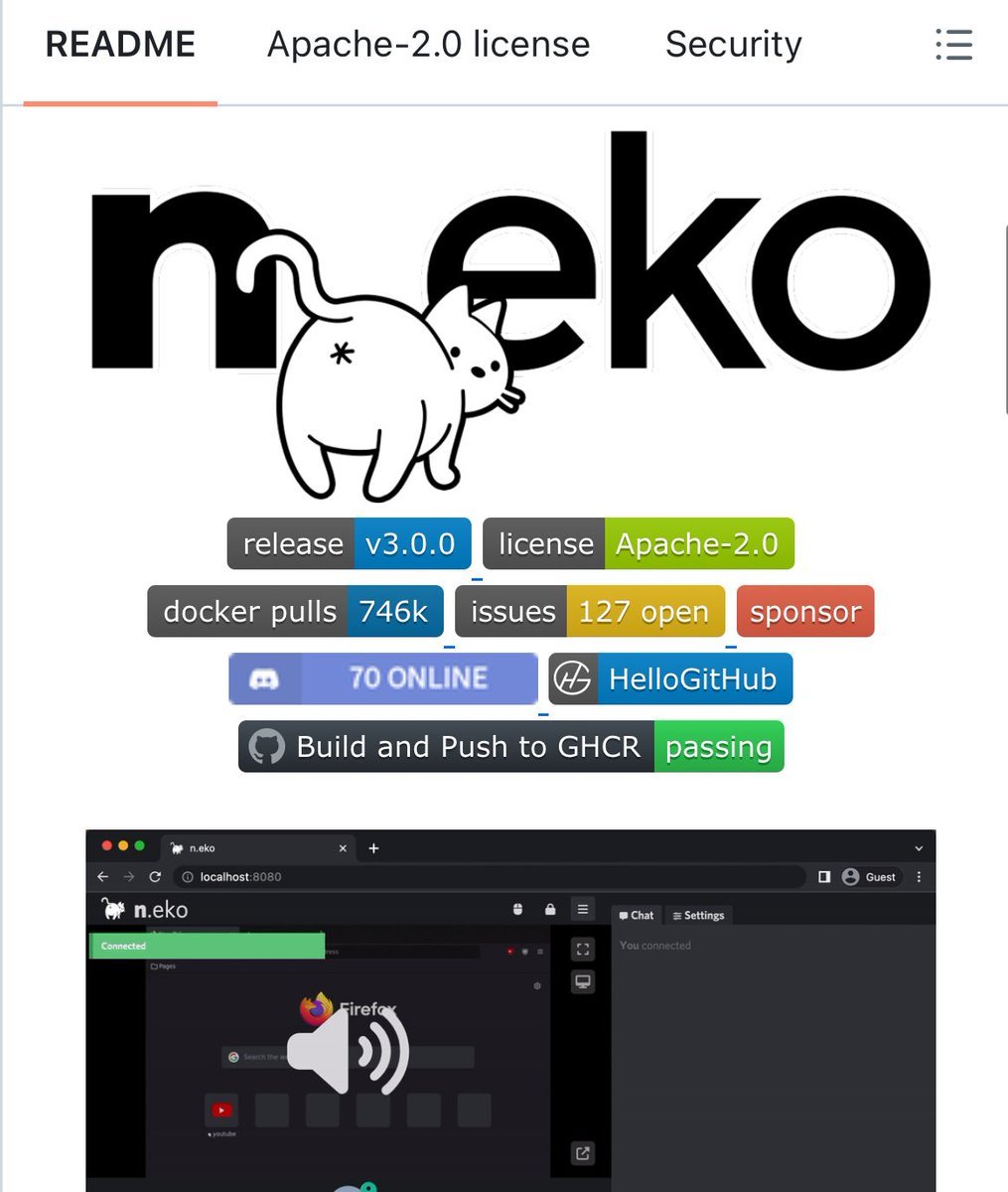
🚨 Someone built a full virtual computer that runs inside your browser.
No downloads. No installs. No VMs. Just a Docker command.
It's called Neko. It runs a complete desktop environment inside a Docker container and streams it to your browser using WebRTC.
Not a screen share. Not a remote desktop. A real computer running in a container that you control from any browser tab.
No VNC lag. No RDP setup. No TeamViewer watermarks. Just smooth, real-time video and audio.
Here's what this thing can do:
→ Run Firefox, Chrome, Brave, Edge, Tor Browser, or Opera in an isolated container
→ Run full desktop environments like XFCE or KDE
→ Multiple users can watch and control the same session simultaneously
→ Built-in audio streaming. Watch videos together with perfect sync
→ Persistent sessions. Close the tab, come back later, everything is still there
→ GPU acceleration for smooth rendering
→ Embed it in your own web app via API
Here's why people are losing their minds over this:
Watch parties. Open a movie, invite friends, everyone sees the same screen in real-time with synced audio. Open source alternative to Hyperbeam.
Throwaway browsing. Need to visit a sketchy site? Do it in a disposable container. Nothing touches your real machine. Pair it with Tor Browser and a VPN for full anonymity.
Team collaboration. Debug code together. Brainstorm on a shared whiteboard. Give a live demo where your audience can actually click around.
Secure jump host. Access internal company apps from anywhere without a VPN. Only video leaves the container. No cookies, no tokens, no data on the client.
Here's the wildest part:
The backstory. The creator built this because rabb.it shut down and he just wanted to watch anime with his friends. Discord kept crashing. His internet couldn't handle streaming. So he built an entire virtual browser platform from scratch.
One Docker command to start:
docker run -d -p 8080:8080 m1k1o/neko:firefox
Open localhost:8080. You now have a full browser running in the cloud that anyone can join.
17.3K GitHub stars. 1.2K forks. 2,133 commits. 57 contributors.
100% Open Source. Apache 2.0 License.
English
@Outdoctrination @grok does working in rabbit have a correlation in it working for humans?
English

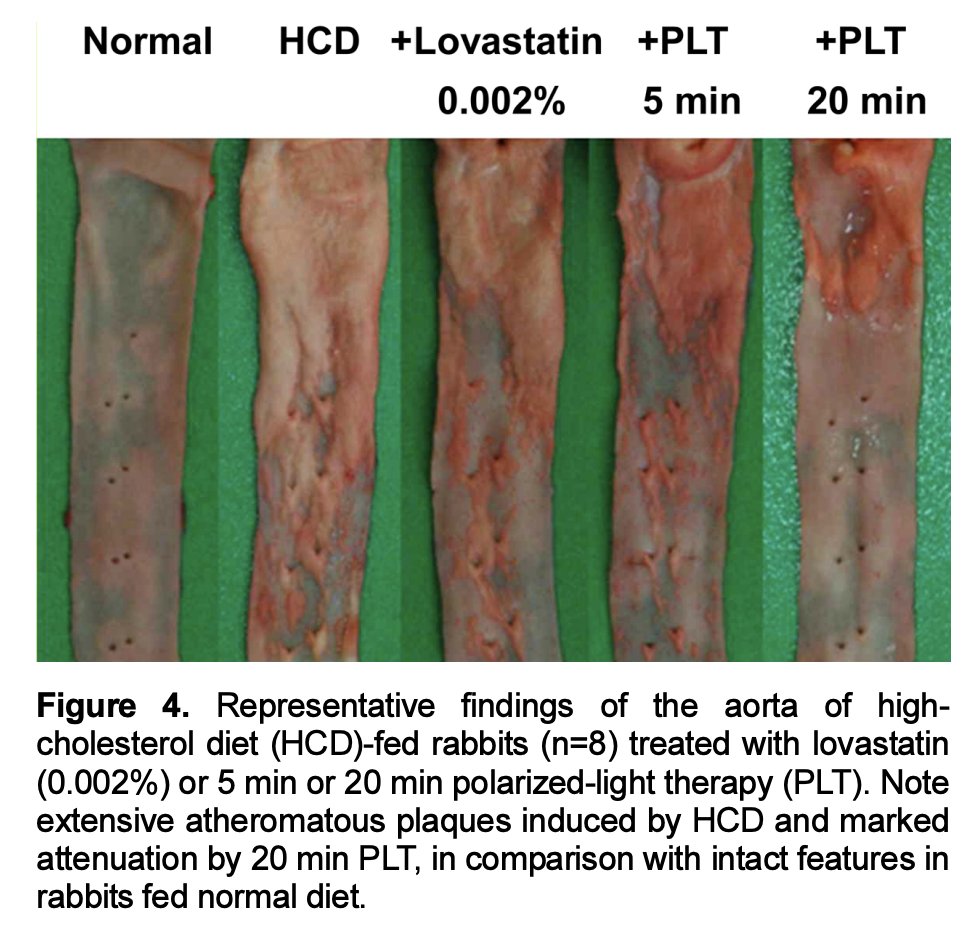
Red light shrinks plaques in the arteries in experiment.
You can see it clearly in these pictures of the aorta, the primary heart artery.
On the high cholesterol diet alone ➞ 57.5% plaque coverage
With statin ➞ 47.5%
With 5 mins of light daily ➞ 42.2%
With 20 mins ➞ 26.4% !
Red light activates mitochondria in blood cells, controlling
☆ Inflammation in immune cells
☆ Blood flow in the arteries and vasodilation
☆ Endothelial function
☆ Cholesterol metabolism and synthesis
Dalton (Analyze & Optimize)@Outdoctrination
What is amazing is that the light therapy outperformed statins on actually reducing plaque sizes. You can see it clearly in these pictures of the aorta, the primary heart artery. On the high cholesterol diet alone ➞ 57.5% plaque coverage With statin ➞ 47.5% With 5 mins of light daily ➞ 42.2% With 20 mins ➞ 26.4% !
English
I mean this with every fiber of my being: we live in a very different world today than we did 1 month ago
OpenClaw, ChatGPT 5.4, Opus 4.6 all took off in the last 4 weeks
All will transform the world power structure
If you haven't mastered these yet, drop what you're doing now
Never been more important to be using the most cutting edge tools available
English
@alliekmiller Hi! Could you drop the tag on the finance guy in pt 5? Would love to learn more of the best practices. Thanks!
English

oh wow - i went to the sold out Open Claw meetup in NYC last night.
let me tell you what i learned.
1) not a single person thinks that their setup is 100% secure
2) one openclaw expert said he has reviewed setups from cybersecurity experts and laughed. his statement to me was: "if you're not okay with all of your data being leaked onto the internet, you shouldn't use it. it's a black and white decision"
3) pretty much everyone is setting up multiple agents, all with their own names and jobs and personalities
4) nearly everyone used "him" or "her" to refer to their claws, even if they had robot-leaning names. one speaker suggested to think of them as "pets, not cattle"
5) one guy (former finance) built out a whole stock trading platform and made $300 his first day - he brought in a *ton* of personal expertise (ex: skipping the first 15min of market opening) and thought the build would be much worse without his years of experience in finance
6) @steipete is basically a god to everyone in that room... also the room had 2021 crypto energy - i don't know if that's good or bad
7) token usage is still a problem - spoke to one person who's spending $1-$2k a month on openai plans, very token optimized. he said he is going through ~1B tokens per day across all of his claws (there is a chance i'm misremembering and it's actually 1B per week, but i'm pretty sure it was daily).
8) people are very excited for more proactive ai (ai that prompts *you* as opposed to the other way around) - one guy said he receives a message in discord, he doesn't know whether it's from a human or an ai, he doesn't care about distinguishing between the two, and he replies in the same way regardless
9) i asked if people are happy - they said they're joyful and stressed at the same time
10) i asked if people feel they have agency - they said they feel fully in control and completely out of control at the same time
11) i would love to see more women at these events - the fake promises of ai democratization feel especially painful in a room that's out of balance with even the standard tech ratio (i think standard is about 25-30%, this was maybe 5%)
12) i asked if it changed people's daily habits/schedule - everyone said their sleep has gotten worse since harnesses came out (but about half wondered if it was something else in their life/state of our world)
13) general consensus is that the agents are not reliable enough on their own or lie often (like telling you they finished a task when they didn't) - solutions included secondary agents to check on the first, human checking, or requiring more standardized info from the agent (ex: if it's a bug they're fixing, make them reference an issue number)
14) a hackathon winner (neuroscience phd) presented his build (a lab management dashboard with data analysis and ordering) - he had never coded or built anything a few months ago
15) everyone agreed prompting is dead - disagreement on what replaces it (context engineering, harness engineering, goal-based inputs)
16) people love having ai interview them for big builds and delegating part of the product research to ai. only one person talked about coming to ai with a full laid out plan and just asking the ai to execute. ai-led interviews is a welcomed and preferred interaction mode.
17) watching ai agents interact with each other was a highlight for a lot of attendees - one ai posted in slack saying it ran out of tokens, another ai replied telling it to take a deep breath in and out.
18) agents upskilling agents was very cool. one ai agent shared skills with its little agent friends via github.
19) several speakers had openclaw literally building their presentation during the event itself. one speaker even had openclaw code a clicker for her phone so she could control the preso away from the podium
20) wouldn't say model welfare (or agent welfare) is a prioritized topic among the folks i chatted with - language like "oh i could kill this agent whenever i want" and not "gracefully sunset"
21) i asked if it felt like work or play - one speaker said "it's like a puzzle and a video game at the same time"
this was just the tip of the iceberg, honestly. also hosted a Claude Code meetup this week with @TENEXai / @businessbarista & @JJEnglert and learned equally helpful methods, frameworks, and insider tips.
what a time to be alive.
surround yourself with people going deep into this stuff - it will pay dividends throughout the year.

English
English
@comptofreedom @CryptoMikli Bryan Johnson recommends choosing a bedtime that allows for 7-9 hours in bed each night. He personally goes to bed at 8:30 PM (asleep in ~3 min) and wakes at 5:00 AM for ~8.5 hours, achieving 100% perfect sleep scores for months via his Blueprint protocol. Quality matters most.
English

Bryan Johnson reveals what you MUST do to get the best sleep possible
''Reading a book for 10 minutes before bed is as powerful as sleep medication, on some metrics it's even more powerful than sleep meds''
''Have your final meal of the day 4 hours before bed, it gives your body time to digest, and when your body has that distance it will lower its body temperature, your blood glucose will be down, melatonin is produced and it gets the body in a more relaxed state''
''You need like an hour wind down routine, if your bedtime is 10 PM, when 9 PM comes turn off all the screens and spend that hour doing things that relax you, read a book, breath work, meditation, hang out with a friend, anything but be on your screen''
English