Connor @ CodeStrap

79 posts

Connor @ CodeStrap

Connor @ CodeStrap

@connor_deeks

Katılım Ağustos 2013
49 Takip Edilen115 Takipçiler
Connor @ CodeStrap
Connor @ CodeStrap@connor_deeks·
I see it in Corporate America too. Let’s solve this! Let’s build solutions that cultivate human capital. Anthropic and OpenAI’s message is so atrocious, but let’s not complain, let’s solve it and build a counterbalance. If you’re a strong software or data engineer and you feel you’ve lost purpose, freaking HIT US UP at Codestrap.
English
0
0
0
119
Deedy
Deedy@deedydas·
The vibes in SF feel pretty frenetic right now. The divide in outcomes is the worst I've ever seen. Over the last 5yrs, a group of ~10k people - employees at Anthropic, OpenAI, xAI, Nvidia, Meta TBD, founders - have hit retirement wealth of well above $20M (back of the envelope AI estimation). Everyone outside that group feels like they can work their well-paying (but <$500k) job for their whole life and never get there. Worse yet, layoffs are in full swing. Many software engineers feel like their life's skill is no longer useful. The day to day role of most jobs has changed overnight with AI. As a result, 1. The corporate ladder looks like the wrong building to climb. Everyone's trying to align with a new set of career "paths": should I be a founder? Is it too late to join Anthropic / OpenAI? should I get into AI? what company stock will 10x next? People are demanding higher salaries and switching jobs more and more. 2. There’s a deep malaise about work (and its future). Why even work at all for “peanuts”? Will my job even exist in a few years? Many feel helpless. You hear the “permanent underclass” conversation a lot, esp from young people. It's hard to focus on doing good work when you think "man, if I joined Anthropic 2yrs ago, I could retire" 3. The mid to late middle managers feel paralyzed. Many have families and don't feel like they have the energy or network to just "start a company". They don't particularly have any AI skills. They see the writing on the wall: middle management is being hollowed out in many companies. 4. The rich aren’t particularly happy either. No one is shedding tears for them (and rightfully so). But those who have "made it" experience a profound lack of purpose too. Some have gone from <$150k to >$50M in a few years with no ramp. It flips your life plans upside down. For some, comparison is the thief of joy. For some, they escape to NYC to "live life". For others still, they start companies "just cuz", often to win status points. They never imagined that by age 30, they'd be set. I once asked a post-economic founder friend why they didn't just sell the co and they said "and do what? right now, everyone wants to talk to me. if i sell, I will only have money." I understand that many reading this scoff at the champagne problems of the valley. Society is warped in this tech bubble. What is often well-off anywhere else in the world is bang average here. Unlike many other places, tenure, intelligence and hard work can be loosely correlated with outcomes in the Bay. Living through a societally transformative gold rush in that environment can be paralyzing. "Am I in the right place? Should I move? Is there time still left? Am I gonna make it?" It psychologically torments many who have moved here in search of "success". Ironically, a frequent side effect of this torment is to spin up the very products making everyone rich in hopes that you too can vibecode your path to economic enlightenment.
English
1.1K
1.1K
14.6K
10.2M
Connor @ CodeStrap retweetledi
Codestrap
Codestrap@Codestrap_ai·
The risks of deploying probabilistic AI in systems that depend on reliability Check out Code x Connor Episode 30 with guest Brian Fornelli, Senior Director of Data Solutions and Engineering at Conagra Brands. Brian’s work focuses on building production-grade decision systems that drive real business outcomes at scale. Conagra Brands is a leading North American packaged foods company with a strong portfolio of iconic and emerging brands focused on driving growth through innovation, data, and operational excellence. Brian, welcome to Code and Connor. In this episode, we discuss: → Why cross-functional teams outperform traditional enterprise org structures for AI → The risks of deploying probabilistic AI into real-world operations → Why most enterprise problems don’t need advanced AI → The importance of observability, governance, and traceability in AI systems → How enterprises balance platforms like Palantir, Databricks, and Snowflake → Why AI-generated software may matter more than AI-powered operations → The coming pricing, supply, and GPU challenges facing enterprise AI → Why organizations need better ways to measure AI ROI and productivity → The risks of unbounded “vibe coded” enterprise applications → Why deterministic systems and traditional ML still matter alongside LLMs Be sure to follow us to get the latest information, and schedule a meeting with us through our website!
English
0
1
2
63
Connor @ CodeStrap retweetledi
Dorian Smiley
Dorian Smiley@dsmiley411·
I am so proud of what our team has created! Total breakthrough on every level: cost, continued talent development, and understanding the impact of AI on the organization. Hats off to the entire CodeStrap team! Learn more at codestrap.com. Book a time to speak with us about X-Dev!
English
1
3
22
1.2K
Connor @ CodeStrap retweetledi
Dorian Smiley
Dorian Smiley@dsmiley411·
The absolute favorite part of my job is seeing demos from the team. Today's demos were just stellar. I got to see our new commercial platform engineered by Igor Kopach which is ready to scale to millions of users. I got to see our code generators cutting token costs by 50% in Claude and Codex. Hats off to Przemysław Nowak for engineering what I believe is a patentable code generation process and API architecture. And I got to see our alternative to the Claude CLI and Codex CLI engineered by Andrzej Fricze which includes a stellar UI and developer experience. This is a major milestone for @Codestrap_ai !
English
0
1
11
530
Connor @ CodeStrap retweetledi
Laura Bratton
Laura Bratton@LauraBratton5·
“Companies are being pushed to use AI at unsustainable rates…The risks will become unsustainable and translate to financial losses.” — @Codestrap_ai CEO @connor_deeks
English
0
2
7
792
Connor @ CodeStrap
Connor @ CodeStrap@connor_deeks·
Every part of this post assumes usage and output is a positive signal. It’s not. More code is a liability, having AI review AI is fucking stupid, and of course engineers incentivized to have something do their job for them are gonna pull the “go to the beach” lever. You’re perpetuating a false narrative
English
0
0
14
904
Aakash Gupta
Aakash Gupta@aakashgupta·
Uber gave 5,000 engineers access to Claude Code in December. By February, usage had nearly doubled. By April, the CTO told the company they'd burned through the entire annual AI budget. The adoption curve tells you everything about what happened. In December 2024, 32% of Uber's engineers were using Claude Code. By February 2026, that number was 63%. That's not a gradual rollout. That's a product so useful that engineers pulled it into their workflow faster than finance could model the spend. Uber has about 34,000 employees. Engineering is roughly 15% of that headcount, somewhere around 5,100 people. At enterprise API pricing, Claude Code runs $100 to $200 per developer per month on Sonnet alone. But that's the subscription math. The real number is token consumption, and Uber's engineers aren't building hello-world apps. They're building rider-driver matching algorithms, dynamic pricing engines, and real-time logistics across 70+ countries. Every one of those tasks eats context windows for breakfast. The scale of what these engineers are actually doing with AI is wild. 92% of Uber's developers use AI agents monthly. 65 to 72% of code written inside IDEs is now AI-generated. 11% of all pull requests are opened by agents, not humans. The company's AI code review system, uReview, analyzes over 90% of the 65,000 diffs Uber ships per week. AI-related costs at Uber are up 6x since 2024. CTO Praveen Neppalli Naga's quote was "I'm back to the drawing board." That's the CTO of a $144 billion company admitting that the tools work so well his team can't afford to keep using them at this rate. Here's the part nobody is pricing in. Anthropic's Claude Code hit $2.5 billion in annualized revenue by February 2026. That's up from $1 billion in November 2025. The fastest enterprise software ramp in history, and a huge portion of that growth is coming from exactly this pattern: companies deploy Claude Code, engineers love it, usage explodes, budgets evaporate. Uber won't be the last company to have this conversation. The average Claude Code developer burns about $6 per day. Multiply that across thousands of engineers running complex agentic workflows, spawning sub-agents that each maintain their own context windows, and the math compounds fast. One engineering team running Claude Code in automated CI/CD loops can drain a monthly budget in days. The CFO problem is now the bottleneck for AI adoption at the enterprise level. The technology works. The productivity gains are real. Uber's own data says 75% of AI code review comments are marked helpful by engineers. The constraint is that traditional annual budgeting was designed for tools with predictable per-seat costs, and AI coding agents have usage curves that look like cloud compute bills from 2015: exponential until someone notices. Every enterprise CTO is about to have the same meeting Praveen just had. The tools are too good to pull back. The costs are too unpredictable to ignore. And the companies that figure out token cost optimization first will have a structural advantage over every competitor still running annual budget cycles against exponential adoption curves.
Aakash Gupta tweet mediaAakash Gupta tweet media
English
173
241
1.9K
394K
Connor @ CodeStrap
Connor @ CodeStrap@connor_deeks·
Couple bad outcomes (like losing money) with bad sentiment (from AI labs saying everyone loses their jobs while they get rich, growing risk vectors, and next to no capability outcomes that have moved the needle and what you have is a bubble that’s gonna pop. Then the grown ups take over
English
1
1
3
1.4K
Chamath Palihapitiya
Chamath Palihapitiya@chamath·
ummm so tokenmaxxing didn't increase operating margins?!?!? of course it didn't. its just that the cto of uber had the courage to say the quiet part out loud.
Anissa Gardizy@anissagardizy8

Uber's CTO told @LauraBratton5 that AI coding tools—particularly Anthropic’s Claude Code—has already maxed out its 2026 AI budget 📈 “I'm back to the drawing board, because the budget I thought I would need is blown away already,” Neppalli Naga said. theinformation.com/newsletters/ap…

English
107
80
1.9K
638.6K
Connor @ CodeStrap
Connor @ CodeStrap@connor_deeks·
Maybe if Dario and Sam didn’t continue to paint a dystopian future, things would be different. Oh AND they are entirely unlikable people, they have nothing inspiring to offer, no charisma, no endearing qualities. They’re arrogant in the worst ways, and when you couple that with horrendous visions of the future, reap what they sow.
English
0
0
1
154
Connor @ CodeStrap retweetledi
Codestrap
Codestrap@Codestrap_ai·
The future impact of AI: employee independence CodeStrap's "Code and Connor" Episode 26 releases this week with our friend Jeff Hollan, Former Head of Cortex AI Agents and Snowflake Intelligence. Jeff led the product strategy for Snowflake Intelligence, Cortex Agents, Cortex Analyst, and Cortex Search. These core components of Snowflake Cortex AI empower developers, engineers, and data scientists to build powerful AI apps and agents alongside the world’s data and unlock insights with natural language. Prior to Snowflake, Jeff was Head of Product for Microsoft Azure’s PaaS and Serverless portfolio, where he was responsible for some of the most used and highest growth services in Azure, such as Azure Functions, Container Apps, App Services, and Static Web Apps. Our 26th episode focuses on: → Snowflake’s goal to democratize AI for the enterprise → Should everyone be building AI solutions? → Snowflake Intelligence is GA - what is it, how is it different from traditional BI or copilots → Who is the operational user in the future for Snowflake → What it’s like to lead development of Snowflake Intelligence and Jeff’s learnings → Snowflake’s incorporation of AI into their own products → Snowflake recently announced $200 million partnership expansion with Anthropic. → The Arctic research team at Snowflake and their involvement with SLMs → Multimodal AI, interoperable agents and the future of enterprise AI → Snowflake vs. Databricks Be sure to follow us for the latest updates, and feel free to reach out to the team at Codestrap.
English
0
1
1
64
Connor @ CodeStrap retweetledi
Dorian Smiley
Dorian Smiley@dsmiley411·
We are saving at least 50% on Claude costs by using our generators. In this demo, the cost savings are closer to 90%. Gemini Flash Lite 3 actually wrote all the code you see in the demo, while Claude orchestrated the process using the tool-runner agent harness we built. You cannot use the harness with all-you-can-eat subscriptions, but that will not matter because Claude only sees a very small number of input tokens, and there are zero output tokens for the generated code. Our generators are free to use and rely on a proprietary generation process. We combine deterministic elements using TS-Morph with Gemini Flash Lite and a template-based in-context learning pattern. This allows us to achieve a 97% cost reduction for specific code paths. We are launching a private beta next week, and it will open to the public after that.
English
1
1
10
1.1K
Connor @ CodeStrap retweetledi
Dorian Smiley
Dorian Smiley@dsmiley411·
You have to be a VC to believe crap like this. There is zero data backing the claim that millions of jobs are being lost, and there is countervailing evidence against it. More importantly, here are three foundational limits of LLMs that directly refute AGI claims: 1. LLMs have weights, not memories. That makes it hard to teach them new facts. 2. LLMs can't reliably retrieve facts. The inference layer is non-deterministic, so the same input can produce very different outputs. "Reasoning" models often make this worse. 3. LLMs can't check their own work. Today's models have no reliable way to know whether an answer is actually correct. Any employee that can't learn new facts, can't reliably retrieve facts, and can't check their own work is, by definition, unemployable. Firms like Sequoia have been trying to smuggle a monumental claim—AGI is here, or soon will be—through an investor posture that treats reliability, economics, and defensibility as solved enough to invest. This is a prime example, made worse by lying about the data.
@jason@Jason

Here’s the truth: we’ve already reached AGI — we just haven’t implemented it broadly. Millions of jobs are being lost as we speak. Entire careers will be retired. The rich and powerful investors and founders who implement AGI will get bizarrely rich beyond what makes sense. It will break people's brains on both sides. It’s gonna suck for a lot of our friends and family, who aren’t obsessed with their careers, because things are moving so fast they won’t have even left the starting gate by the time the awards are handed out. We’re gonna have to solve for a lot of second- and third-order effects, some of which will suck (job loss) and some of which will be awesome. AI will create free/cheap energy, free education, cheaper and better food, homes that build themselves and medicine that makes you as healthy as a 30-year-old when you’re 100. … change is hard, but humans are the most adaptable species nature has ever created. We can figure it out.

English
33
45
413
22.9K
Connor @ CodeStrap retweetledi
Dorian Smiley
Dorian Smiley@dsmiley411·
Codestrap Memorandum from the Office of the CTO: The State of AI Coding
English
0
1
7
1.3K
Connor @ CodeStrap retweetledi
Codestrap
Codestrap@Codestrap_ai·
Where do we go from here with audio AI? What’s on @ElevenLabs roadmap Codestrap's "Code and Connor" Episode 25 releases this week with our friend Jack Smith. Jack leads global channel partnerships and strategic alliances at ElevenLabs. Previously, he was the Employee Experience and Consumer Bank Operations tech strategy lead at JPMorgan Chase, overseeing emerging technology initiatives and leading engagement with the tech ecosystem. Our 25th episode focuses on: → ElevenLabs’ recent partnerships (e.g., Square, Mastercard) → Evolution of voice-first AI agents → Will voice become the primary interface for AI agents? → ElevenLabs’ Agents platform and the competitive landscape → ElevenLabs focus on DevEx in their platforms and recent enhancements → Research teams inside ElevenLabs four walls → From pilot to production and the scaling challenges → Natural language interface wrapping the global API economy → What does the ‘voice of technology’ become in five years? Be sure to follow us to get the latest information, and reach out to anyone directly at Codestrap!
English
0
1
1
71
Connor @ CodeStrap retweetledi
Dorian Smiley
Dorian Smiley@dsmiley411·
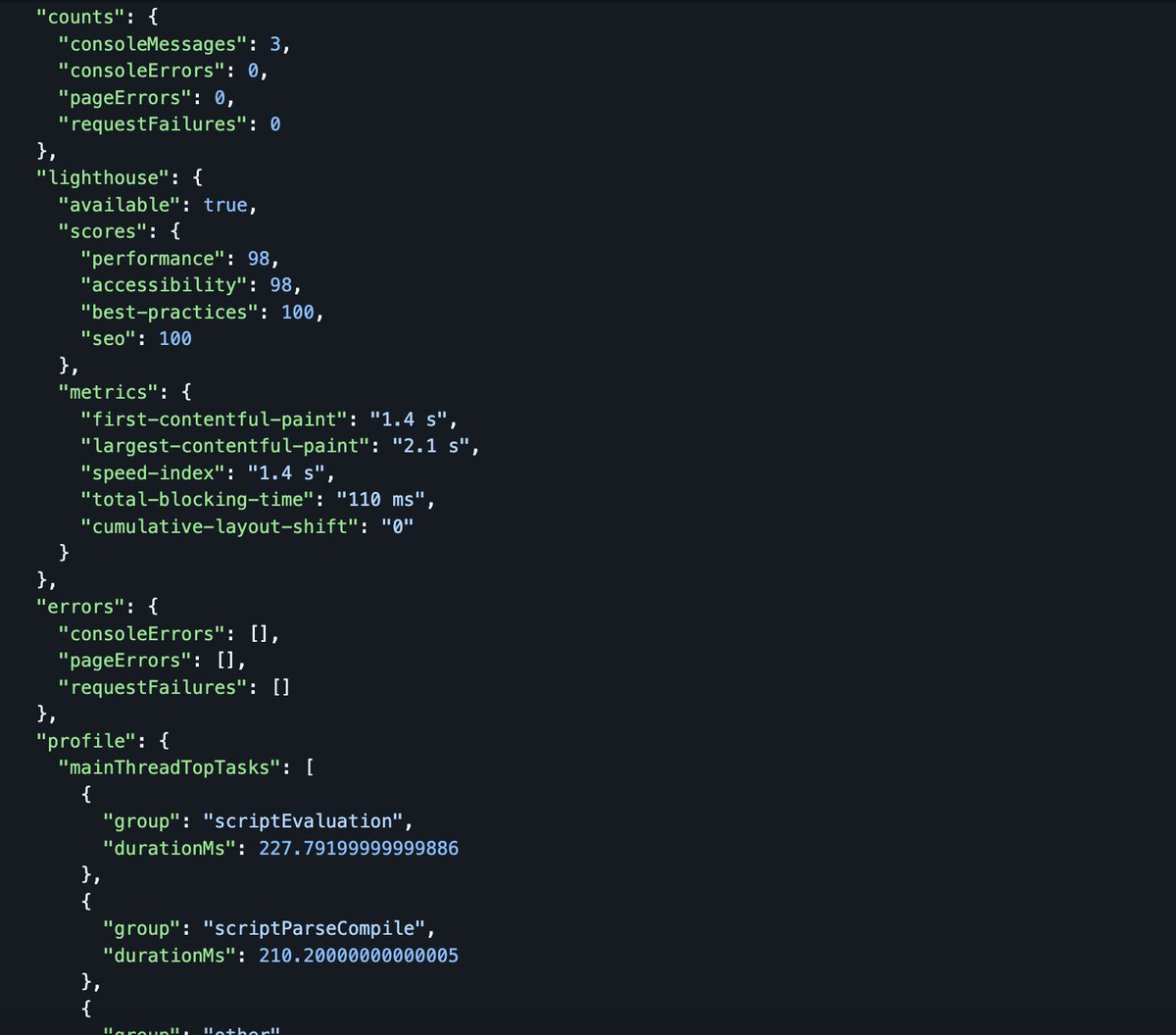
Today I implemented some utils to help give our agents better feedback using Chrome Devtools Protocol (CDP). Tracking these metrics over time is very useful. Performance metrics leave very little space for AI slop to hide, especially when layered in with test specs, intelligent boilerplate generators, and humans in the loop.
Dorian Smiley tweet media
English
2
1
4
732
Craig Hewitt
Craig Hewitt@TheCraigHewitt·
Stop what you’re doing and spend 80 seconds understanding this Not because you’re training LLMs. Because Karpathy just showed the cleanest example of the agent loop that’s about to eat everything: 1.Human writes a strategy doc 2.Agent executes experiments autonomously 3.Clear metric decides what stays and what gets tossed 4.Repeat 100x overnight The person who figures out how to apply this pattern to business problems…not just ML research, is going to build something massive. The code is almost irrelevant. The architecture and mindset is everything
Andrej Karpathy@karpathy

I packaged up the "autoresearch" project into a new self-contained minimal repo if people would like to play over the weekend. It's basically nanochat LLM training core stripped down to a single-GPU, one file version of ~630 lines of code, then: - the human iterates on the prompt (.md) - the AI agent iterates on the training code (.py) The goal is to engineer your agents to make the fastest research progress indefinitely and without any of your own involvement. In the image, every dot is a complete LLM training run that lasts exactly 5 minutes. The agent works in an autonomous loop on a git feature branch and accumulates git commits to the training script as it finds better settings (of lower validation loss by the end) of the neural network architecture, the optimizer, all the hyperparameters, etc. You can imagine comparing the research progress of different prompts, different agents, etc. github.com/karpathy/autor… Part code, part sci-fi, and a pinch of psychosis :)

English
84
159
3K
549K
Connor @ CodeStrap retweetledi
Codestrap
Codestrap@Codestrap_ai·
The secret to better AI? Investing in stronger data foundations. Coming next week: CodeStrap’s "Code x Connor" Episode 24 with Michal Rachtan, co-founder and CTO of Unit8—a Swiss-based data and AI services powerhouse. At Unit8, Michal leads a team of 160+ experts delivering production-grade data platforms and agentic solutions for global giants in life sciences, manufacturing, and finance. Before founding Unit8, Michal was a Tech Lead and Forward Deployed Engineer at Palantir, where he specialized in scaling complex data ecosystems for massive organizations. In this episode, we discuss: → Attitudes around sovereign infrastructure and AI at Davos → What world leaders are actually prioritizing in 2026 → Jamie Dimon’s hot take on AI deployment and job loss → Policy and implementation in Europe vs. the US →The impact of regulation on startups and innovation → Navigating partnerships with industry giants like Palantir and OpenAI → Misconceptions around Palantir’s data collection and pricing → Building data foundations for AI coding that actually works Be sure to follow us to get the latest information, and schedule a meeting with us through codestrap.com!
English
0
1
1
42
Connor @ CodeStrap retweetledi
Codestrap
Codestrap@Codestrap_ai·
If Palantir is watching this, we have two words for you: transparent pricing. Next week on Code x Connor, we’re joined by Unit8 co-founder & CTO Michal Rachtan to recap Davos and discuss global perspectives around AI. As CTO at Unit8, Michal leads a team of 160+ experts delivering production-grade AI solutions for leaders in life sciences, manufacturing, and finance. Before launching Unit8, Michal was a Tech Lead and Forward Deployed Engineer at Palantir, where he mastered the art of scaling complex data infrastructure for massive organizations. In this episode, we discuss: → Attitudes around sovereign infrastructure and AI at Davos → What world leaders are actually prioritizing in 2026 → Jamie Dimon’s hot take on AI deployment and job loss → Policy and implementation in Europe vs. the US →The impact of regulation on startups and innovation → Navigating partnerships with industry giants like Palantir and OpenAI → Misconceptions around Palantir’s data collection and pricing → Building data foundations for AI coding that actually works Be sure to follow us to get the latest information, and schedule a meeting with us through codestrap.com!
English
0
1
2
56
Connor @ CodeStrap retweetledi
Dorian Smiley
Dorian Smiley@dsmiley411·
Today’s progress report: how to produce deterministic AI coding agents (ish). While I wasn’t able to reach a fail state where I got different output today, I’m sure that case will eventually show up. But the fact that I can run it multiple times (I actually did about 10 runs—only 4 are shown in the video) and get the exact same output is impressive, IMO. The fact that the model is gemini-2.5-flash-lite is even more impressive. Our use of dynamic programming principles and neurosymbolic programming is really paying off.
English
2
2
17
1.1K
Connor @ CodeStrap retweetledi
Dorian Smiley
Dorian Smiley@dsmiley411·
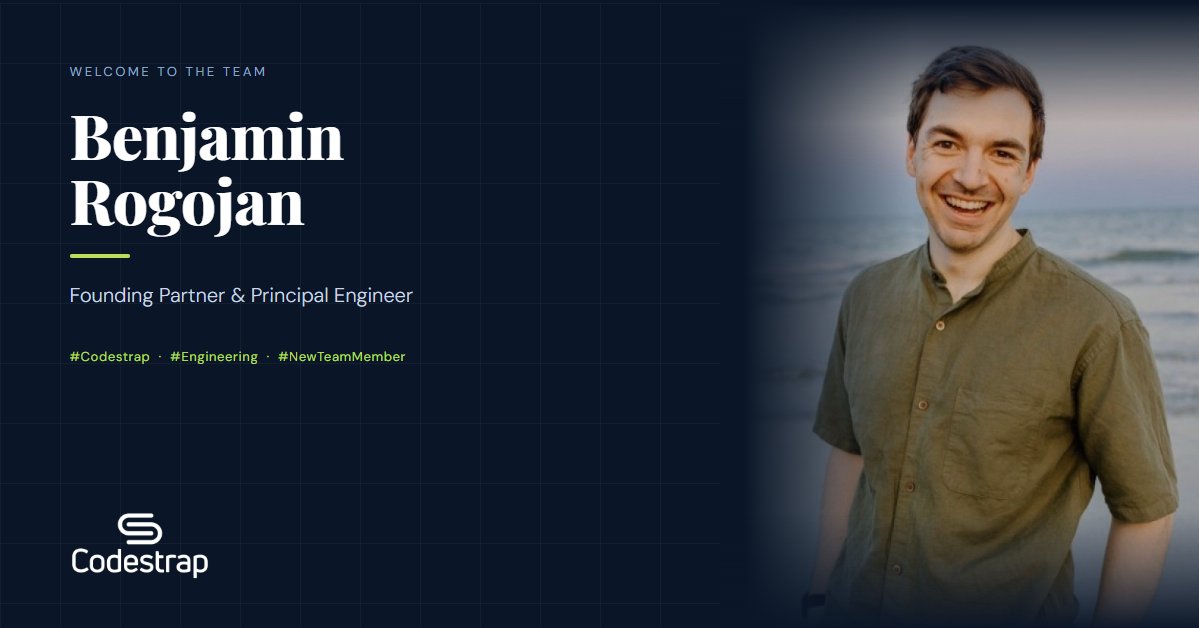
We are going to build our data engineering practice and platform around Ben. He is an absolutely stellar engineer and awesome person. I am over the moon to have him join our company! New Hire Alert! Please join us in welcoming Benjamin Rogojan to the team. Widely known as The @SeattleDataGuy , whose data-centric videos on YouTube have garnered more than 7 million views, Ben joins us as a Founding Partner and Principal Engineer. Ben is a world class data engineer, consultant, and content creator specializing in data infrastructure, pipelines, and modernization. He brings deep expertise in modern cloud solutions—including Snowflake, Databricks, and BigQuery—to Codestrap, where he will build data platforms our customers can trust and support their continued growth in the AI era. Welcome Aboard!
Dorian Smiley tweet media
English
2
5
27
1.3K