

Conor O'Dowd 🌻 🇺🇦
5.6K posts
Conor O'Dowd 🌻 🇺🇦
@conorodowd
Humanist. Pronouns: Sé/é.
Katılım Mart 2009
388 Takip Edilen240 Takipçiler

Hello 🧵
Just in the last 24 hours we’ve seen…
- Labor moving to entrench major party power through electoral reform
- Labor extending the life of 3 coal mines
- SA Labor granting a conscience vote on late term abortion to appease a Lib member
Things are very grim #auspol
English
Conor O'Dowd 🌻 🇺🇦 retweetledi
English
Conor O'Dowd 🌻 🇺🇦 retweetledi

"Leave it up to the states" was also the pro-slavery argument in the 1850s.
English
@fatbitchez4life A 14-year old doing the right thing to protect her PC. What’s wrong with that? You never open a file unless you know where it comes from.
English


@KosSamaras @ChrisStephens84 People with cash in the bank are laughing. But they’re the ones least needing the boost to their incomes.
English

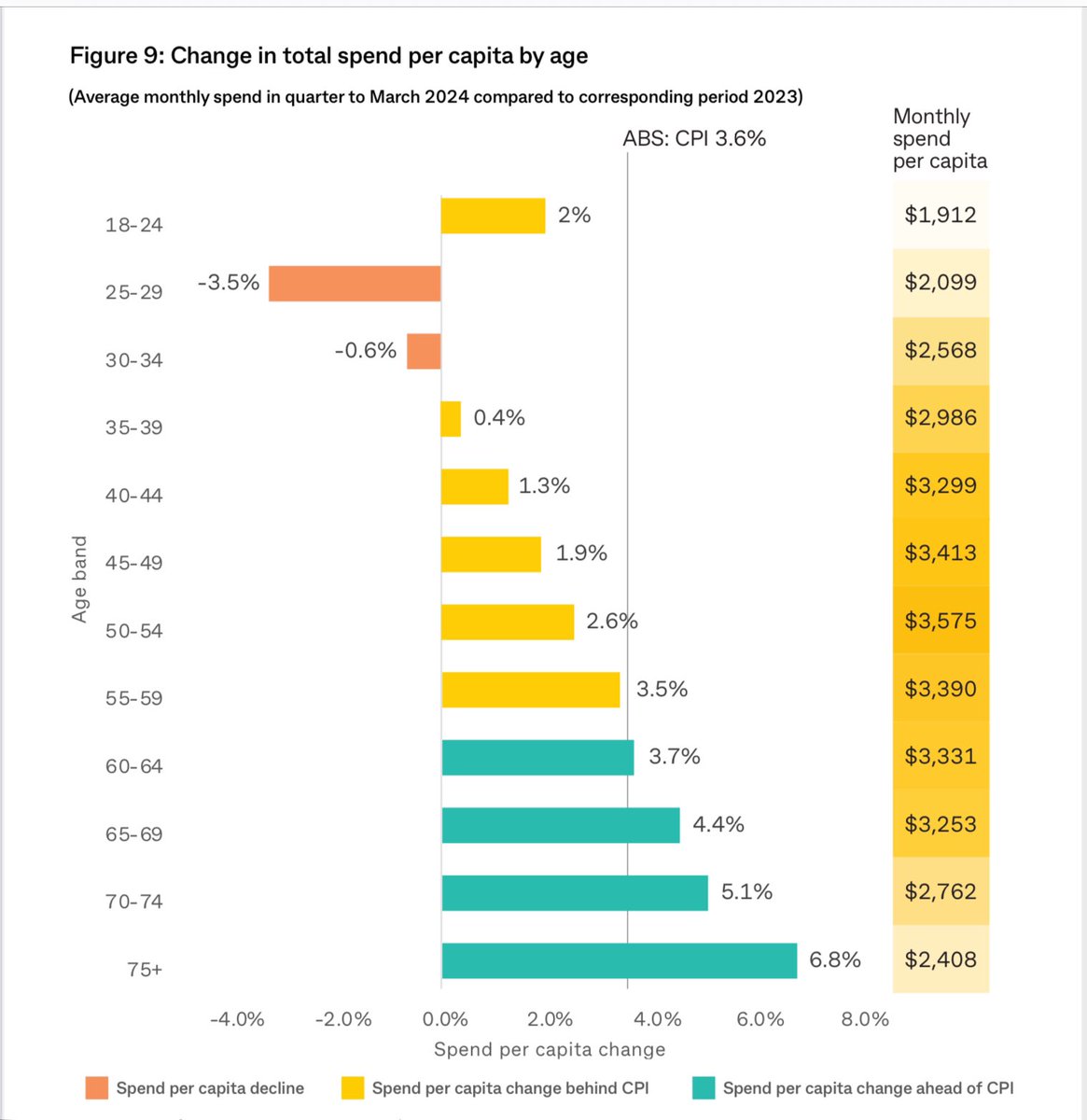
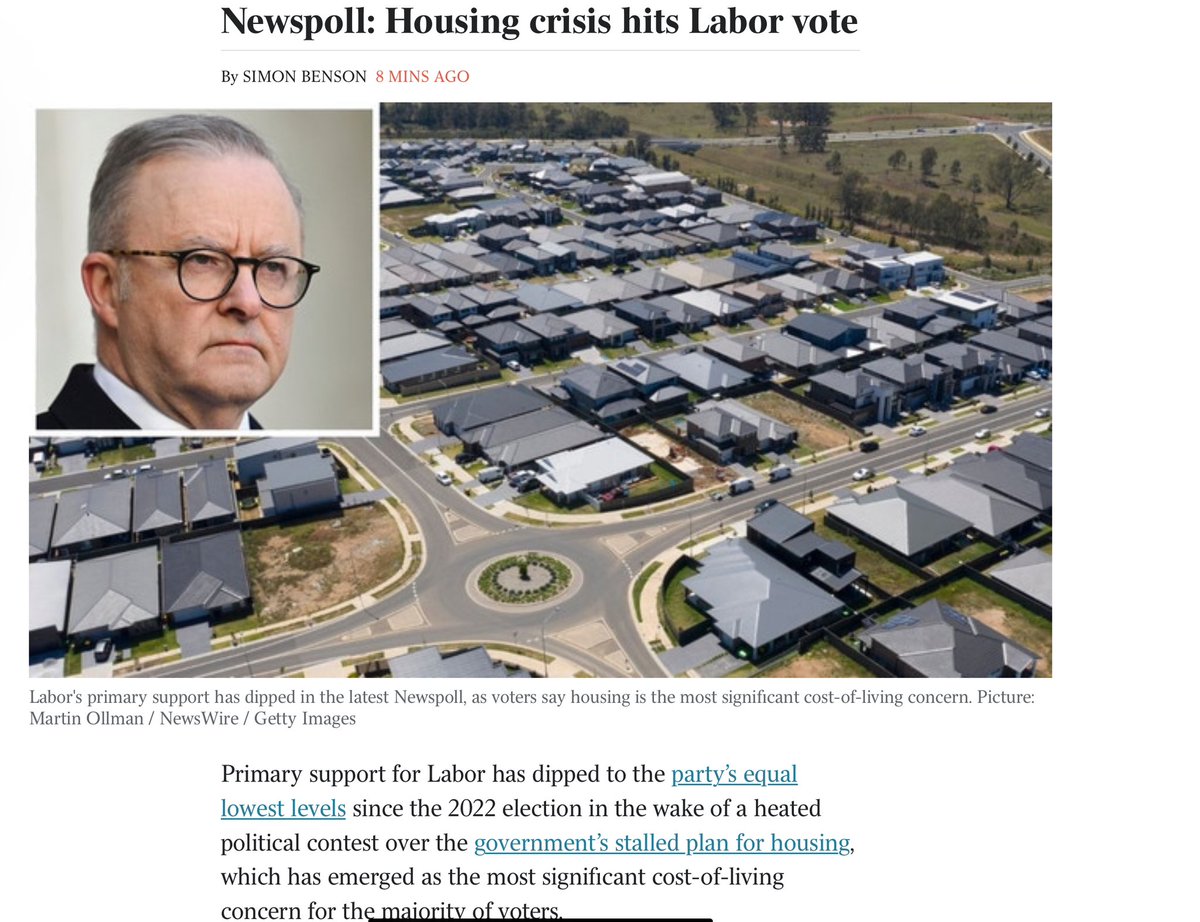
Newspoll records Labor's lowest vote yet.
Imagine having your career and income shattered by lockdowns, followed by the worst inflation crisis in decades, wiping out anything you managed to save during the pandemic, while the political party your family has supported for generations was largely absent throughout 2023 when you needed them the most.
Here we are.
English
Conor O'Dowd 🌻 🇺🇦 retweetledi

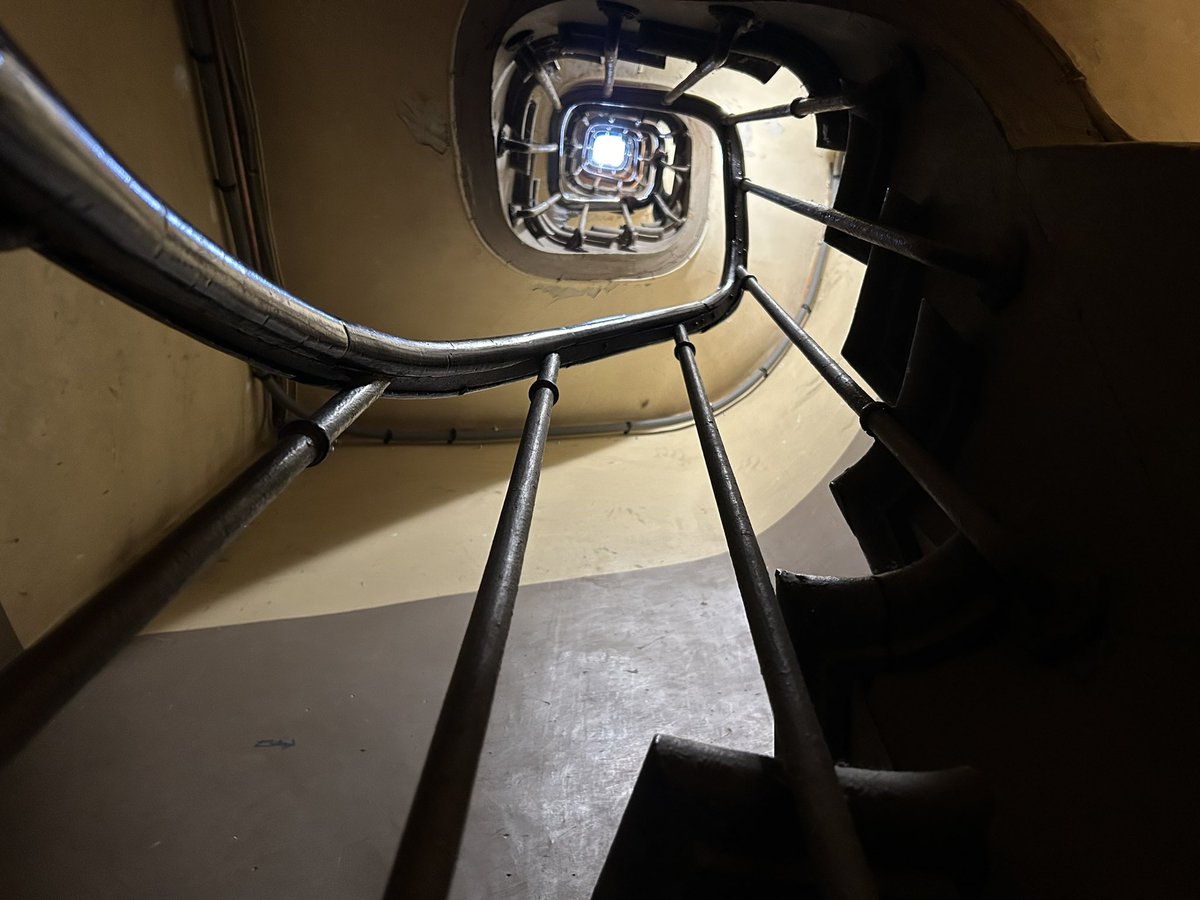
@kalmantibs Whoever invented the phrase “l’esprit d’escaliers” can never have seen a Parisian escaliers
English

Visiting my older daughter for the first time in Paris 🇫🇷. She’s a sophomore at the Sorbonne, studying economics. She invited us up to her tiny, single rooftop apartment near the Montmartre district. She warned us there’s no lift, we’ll have to take the stairs.
The stairs. 😳😂
English
@2ndMississippi I remember my brother collected these bubble gum cards and used to read them to me at night as bedtime stories. I would have been about 6 years old. Started a lifetime interest in the Civil War.
English


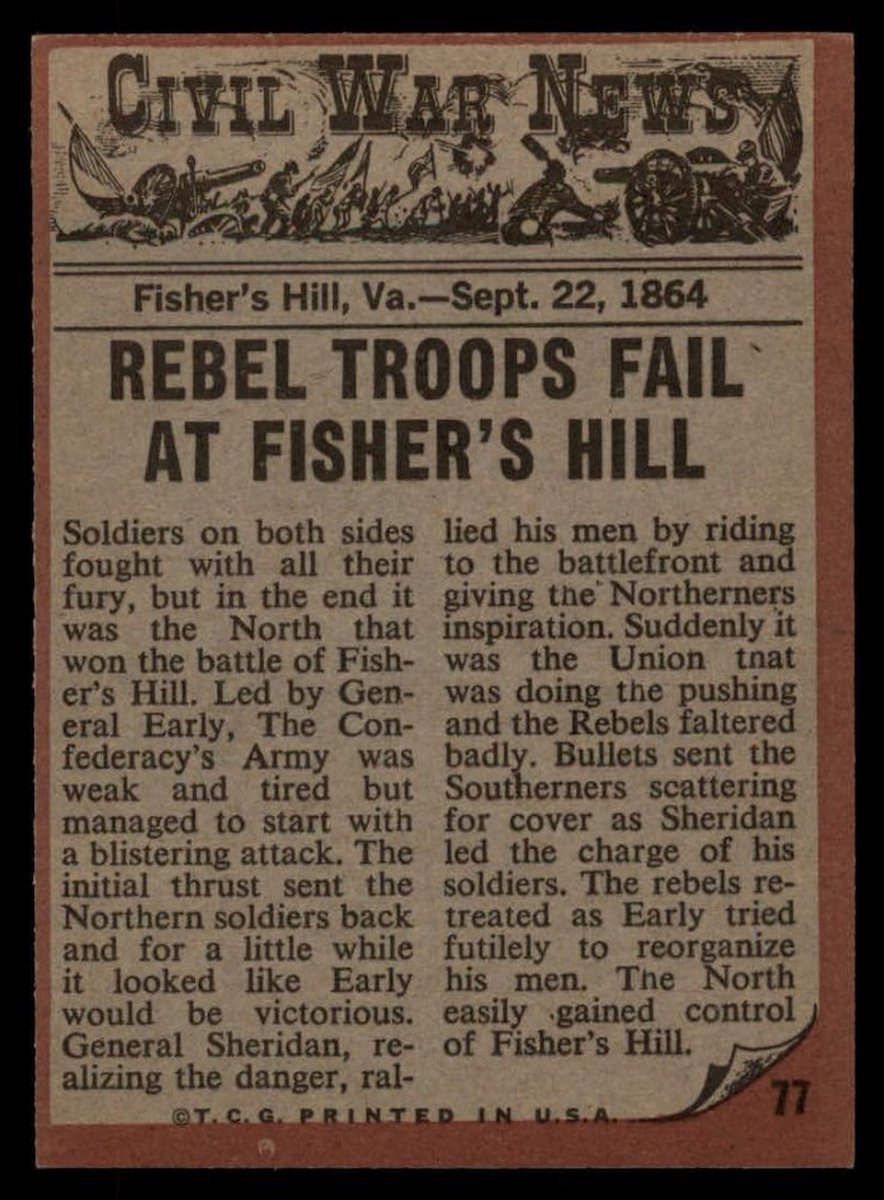
OTD 160 years ago. The Battle of Fisher's Hill, VA, September 21-22, 1864.
Sheridan's Inferno: Fisher's Hill and the Torching of the Shenandoah Valley
Introduction
As the summer of 1864 waned, the American Civil War entered a critical phase in the Shenandoah Valley of Virginia. This fertile region, often called the "Breadbasket of the Confederacy," had been a thorn in the Union's side for years. Its strategic importance lay not only in its agricultural abundance but also in its geography - the Valley offered a natural invasion route towards Washington D.C., which Confederate forces had exploited to great effect.
Setting the Stage
By August 1864, the situation had reached a boiling point. The Confederates, under the command of Lt. Gen. Jubal Early, had conducted a daring raid that reached the outskirts of Washington and resulted in the burning of Chambersburg, Pennsylvania. This audacious move prompted Lt. Gen. Ulysses S. Grant to take decisive action. He consolidated several military districts under a single command and appointed Maj. Gen. Philip Sheridan to lead this new army.
Sheridan's orders were clear and uncompromising: defeat Early's forces and conduct a campaign of total warfare in the Valley. This directive would set the stage for one of the most consequential and controversial campaigns of the entire war.
The "Mimic War"
The initial phase of the campaign, which soldiers dubbed the "mimic war," was characterized by a series of probing attacks and counterattacks. Sheridan, under orders to avoid a major defeat, moved cautiously. Early, misinterpreting this caution as timidity, grew bolder.
Throughout August and early September, the two armies engaged in a complex dance of maneuver. Sheridan advanced and retreated, while Early attempted to maintain the initiative through aggressive tactics and even another incursion into Maryland. The fighting at places like Guard Hill, Abrams Creek, and Berryville resulted in inconclusive outcomes but set the stage for the decisive battles to come.
The Battle of Third Winchester (Opequon) *
The turning point came on September 19, 1864, with the Battle of Third Winchester, also known as the Battle of Opequon. Sheridan, learning that Confederate reinforcements under Richard Anderson had departed, seized the opportunity to strike. The ensuing battle was one of the largest and bloodiest of the entire Valley campaign.
The fighting raged all day, with both sides suffering heavy casualties. The Confederate veterans initially held their ground, inflicting severe losses on the Union forces. However, Sheridan's numerical superiority and a well-executed flanking maneuver by Maj. Gen. George Crook's corps eventually broke the Confederate lines.
While Early managed to retreat in relatively good order, the battle was a clear Union victory. It cost the Confederates nearly a quarter of their strength and, more importantly, shattered the aura of invincibility that Early's army had cultivated during the summer.
* Colonel George S. Patton, Sr., commanding the 22nd Virginia Infantry Regiment, was mortally wounded here. He was the grandfather of General George S. Patton.
The Battle of Fisher's Hill
With Early's army bloodied but not destroyed, Sheridan pursued the Confederates south. On September 21, 1864, he found Early's forces entrenched at Fisher's Hill, a naturally strong position just south of Strasburg in Shenandoah County, Virginia. The battle that ensued over the next two days would prove decisive in opening the Valley to Union control.
Early's 9,500 Confederates were outnumbered by Sheridan's force of 29,444 Union troops. Despite this disadvantage, Early hoped the strong defensive position, with his left flank on the North Fork of the Shenandoah River and his right anchored on Little North Mountain, would offset the Union's numerical superiority.
On September 21, the Union army advanced, driving back Confederate skirmishers and capturing important high ground. This set the stage for the decisive action on the following day. Recognizing the strength of the Confederate position, Sheridan again turned to Crook for a solution. In a brilliant piece of maneuver warfare, Crook's two divisions conducted a stealthy march along the wooded slopes of Little North Mountain, completely undetected by Confederate lookouts on Massanutten Mountain.
On the afternoon of September 22, around 4 pm, Crook's men burst from the woods and rolled up the Confederate left flank. The Confederate cavalry offered little resistance, and the startled infantry were unable to face the attacking force. The attack was so sudden and violent that Early's entire line collapsed in panic, with the defense collapsing from west to east as Sheridan's other corps joined in the assault.
What began as an orderly retreat quickly devolved into a rout. Early was forced to retreat to Rockfish Gap near Waynesboro, effectively ceding control of the Shenandoah Valley to Union forces. The casualties reflected the one-sided nature of the battle: the Union suffered 528 casualties, while Confederate losses were estimated at 1,235, for a total of 1,763 casualties.
The Burning
The twin victories at Winchester and Fisher's Hill opened the entirety of the Shenandoah Valley to Union control. Sheridan now moved to implement the second part of Grant's orders - the systematic destruction of the Valley's capacity to support the Confederate war effort.
For two weeks, Union cavalry and infantry ranged up and down the Valley, destroying or confiscating anything of military value. This campaign of destruction became known simply as "The Burning" or "Red October." Mills, barns, and granaries were put to the torch. Livestock was driven off or slaughtered. Fields of ripening crops were trampled or burned. The destruction extended from Staunton in the south to Strasburg in the north, leaving a trail of devastation across the once-fertile Valley.
Sheridan himself described the campaign in stark terms:
"I have destroyed over 2,000 barns... over 70 mills... have driven in front of the army over 4,000 head of stock, and have killed and issued to the troops not less than 3,000 sheep... Tomorrow I will continue the destruction."
The impact on the civilian population was severe. The lush Shenandoah Valley, once a land of plenty, was reduced to a wasteland. Confederate soldier John Worsham later wrote,
"The Yankees have destroyed all the mills, barns, and a great many houses... We and the citizens are living on roasting ears and beef, without salt."
Aftermath and Legacy
The Burning achieved its strategic objectives. The Shenandoah Valley ceased to be a viable source of supply for Confederate armies. Moreover, the destruction of transportation infrastructure made it difficult for Confederate forces to use the Valley as an invasion route in the future.
Early attempted to contest Union control of the Valley in October, leading to the Battle of Cedar Creek. Despite initial success, this Confederate counterattack ultimately failed, cementing Union control of the Valley for the remainder of the war.
Analysis and Conclusion
The 1864 Shenandoah Valley Campaign, particularly the Battle of Fisher's Hill and the subsequent Burning, marked a turning point in the Civil War. It demonstrated the increasing willingness of Union leadership to employ harsh measures to bring the war to a close.
The lessons of the campaign, particularly the use of cavalry and the concept of attacking an enemy's economic base, would influence military thinking for decades to come. However, the controversial nature of the Burning also raised ethical questions about the conduct of war that continue to be debated to this day.
In the end, the 1864 Shenandoah Valley Campaign stands as a testament to the complex and often brutal nature of the American Civil War, a conflict that reshaped not just the nation, but the very nature of warfare itself.
Graphics: Lieutenant General Jubal Early, commanding the Confederate "Army of the Valley" - nominal commander of the Second Corps, Army of Northern Virginia; 2) Major General Phillip Sheridan, commanding the Union "Army of the Shenandoah"; 3) Battle Map of the Battle of Fisher's Hill; 4) Contemporary sketch of "The Burning"


English
@AllySultana They are not joining forces. The Government needs to negotiate better to get better legislation through. The bad faith on both sides makes this impossible. But then it’s not the Greens job to govern.
English
@josephricci24 @KevinLevin @HomeBrewHistory @WeHaveWaysPod @WW2TV The biggest inaccuracy is surely how it exonerates 82nd Airborne for forgetting their primary objective.
English
Conor O'Dowd 🌻 🇺🇦 retweetledi

English
@ThinkingAtheist WTF is “secular religion”?
Hint to Elmo: Try humanism. No empty spaces.
English

Conor O'Dowd 🌻 🇺🇦 retweetledi

I’m still struggling to adjust to Hezbollah supporters start to suddenly value the lives of medical personnel when for the last 14 years they’ve been accusing doctors in Aleppo, Homs and Idlib who were bombed regularly by Hezbollah and co. of being “terrorists” that deserve to be murdered.
English
The pagers of all doctors and nurses in Hospitals in Lebanon were targeted, except one hospital, The American University hospital who asked staff to replace their pagers ten days ago.
When pagers started exploding, their pages were unaffected.
Amazing co-incidence that.

English
@MarkGoldfeder @AOC Now discuss the IRA letter-bombing campaign in the 1970s.
English
Dear @aoc and other useful idiots who only discover IHL if they think it hurts Israel:
No, Israel's attack did not violate international law, including your newfound darling 'AP II Article 7' rules against booby traps (which I bet you never heard of until today).
Here is why:
English

Wills property is attempting to threaten someone who left a negative review about an illegal rental agreement for a property they were advertising

English

@abughazalehkat Kat, how is this worse than indiscriminately firing missles into Israel?
English

For the sake of the argument, let's say everyone with a detonated pager deserved it. Is 3,000+ injured civilians and 2 dozen dead (including children) really acceptable collateral damage?
Shouldn't we expect better from one of the best-funded intelligence agencies in the world?
English
@abughazalehkat In any of the videos I have seen, only the wearer of the pager was hurt or killed. These are your civilians.
English
@parradiddle @Peter_Fitz I like this one. Very pictographic!
English

@Peter_Fitz I always imagine it meant by thrown out by your collar and seat of your pants
English

If I threatened you, in your house, in 1874, to put you out "neck and crop," what would that mean?
English
@_SocialDemocrat Labor is the government mate, this is their job.
The two months is a reference to the legislative timetable, that’s it.
English

Adam Bandt is quoted as saying Labor’s position is “my way or the highway.” This same Bandt wrote “Labor is on notice.” Mad Max wrote “Labor has two months.” These too me sound like threats. I doubt it is Labor that is “my way or the highway” it is the Greens. #auspol
English