@ANOTHERGODXILA @grok @EricEdmeades @thebbvegan It is possible to regenerate desert with ruminant animals, especially as you only need to grow grass.
English
Craig Hedges
2.4K posts





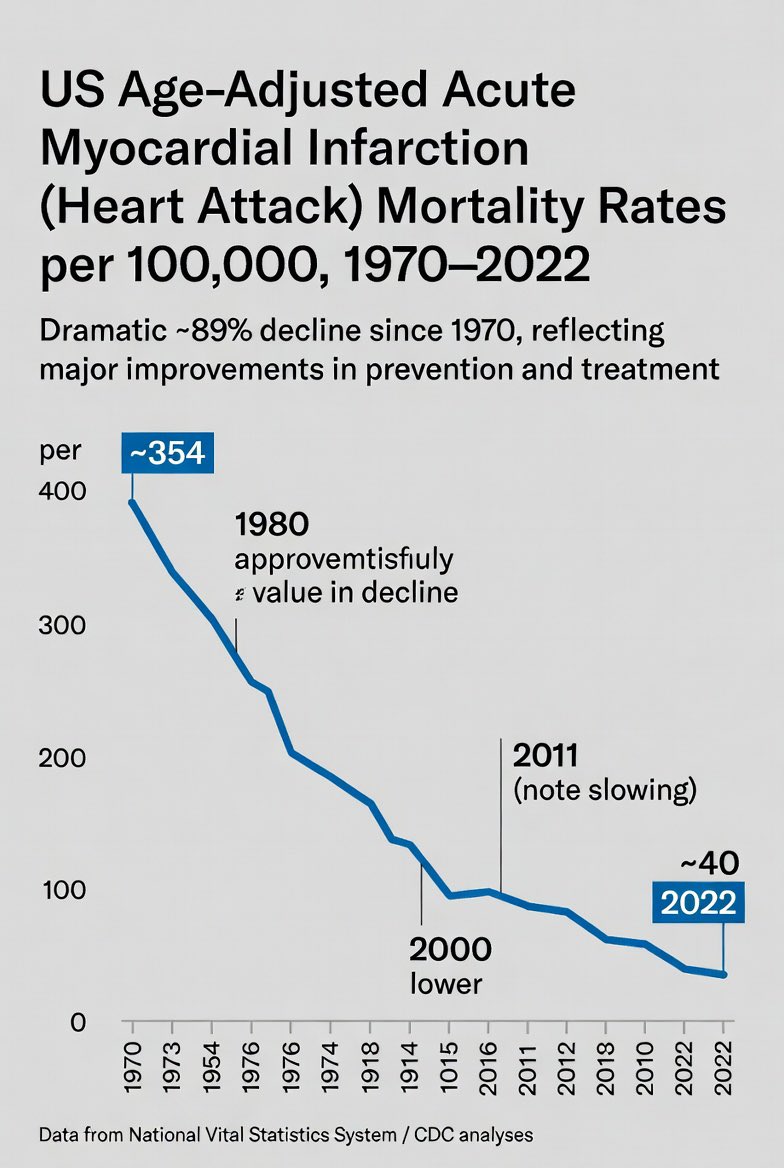


Dr. Rachel Marynowski shared a perspective on cholesterol history that makes you pause. In the 1970s, doctors weren’t aggressively screening for high cholesterol because levels up to around 300 mg/dL were often still considered within a normal range. Cholesterol is something the body produces and needs for many essential functions, including cell membranes and hormone production. Then in 1984, the National Institutes of Health launched the National Cholesterol Education Program. This coincided with pharmaceutical companies developing the first statin drugs (the first one, lovastatin, was approved in 1987). Over time, guidelines from groups like the American Heart Association and American College of Cardiology lowered the thresholds for what was considered “high” cholesterol. The result? Millions more people became candidates for cholesterol-lowering medication. Dr. Marynowski, an integrative physician, points out that this shift happened alongside heavy pharmaceutical involvement in research, education, and guideline development — raising questions about how much science versus commercial interests shaped the narrative that cholesterol is primarily a villain. Science nugget: Cholesterol is vital for human physiology. The body synthesizes most of what it needs (about 75–80% in the liver), and it plays critical roles in producing steroid hormones (like cortisol, estrogen, and testosterone), vitamin D, and bile acids for digestion. Extremely low cholesterol levels have been associated in some studies with higher risks of certain health issues, though optimal ranges remain debated. It’s a reminder that medical guidelines and “standard care” can evolve — sometimes influenced by more than just pure science. What are your thoughts on how cholesterol guidelines have changed over the decades, or how much weight you give to the role of pharmaceutical funding in shaping them?

This is a whopping effect — the intensive-lowering group had ~15% lower LDL cholesterol levels than the conventional group, for a 33% reduced risk of a cardiovascular event They did this through more high-intensity statin use, more ezetimibe use, and slightly more PCSK9 inhibitor use Safety was equivalent, except that the intensive-lowering group had FEWER events of creatinine elevation (i.e. better kidney function) The lower the LDL cholesterol, the better


‘Gerrard the uncoordinated clown who had the first touch of a donkey’


Releasing a video slandering Salah featuring his biggest hater Jamie Carragher on the day after Salah announces his departure, Liverpool are THE MOST RACIST CLUB IN THE WORLD If Henry played for Liverpool he would be rated lower than Gerrard YouTube: youtu.be/i5u71WWU2e4?si…



Seed oils: Are they even correlated with bad health? I assembled ALL of the available NHANES data and linked as much as possible of it to the National Death Index and found that... It's not. Seed oils aren't even correlated with problems.