Yuki

22 posts

Yuki

Yuki

@cryptomuggle_y

Analyst @SuDoResearch

Taiwan Katılım Haziran 2023
310 Takip Edilen31 Takipçiler
Yuki retweetledi
SuDo Research
SuDo Research@SuDoResearch·
A glimpse of tokenized stock #tokenization - #RWA has become a popular sector in the crypto world, and tokenized stocks are one of the most eye-catching applications. This thread will bring you into the core concepts, current solutions, and the challenges of tokenized stocks at the current stage. ◼️ What is tokenized stock and why do we need it? Tokenized stocks are the on-chain representations of real-world stocks. Stock tokens are all (supposedly) 1:1 backed by real stocks. For example, when 1 #MSTR stock token is minted, 1 share of #MSTR stock is in custody. It ensures that the stock tokens are not arbitrarily minted without collateral, and also closely track the price of underlying assets. In the real world, stocks trading typically faces barriers such as limit market time, geographic limitations, high trading fees, and lengthy withdrawal/deposit process. With stock tokens, users can trade beyond market hours, combine stocks with various DeFi strategies, and lower the threshold of the entry for stock market investment. As the world's largest capital market, US stocks naturally become the first market to be tokenized. Curious about current main players? See the intro of FOUR tokenized stock projects below. ◼️ Four projects in tokenized stock sector 1/ @RobinhoodApp As a popular stock trading platform, Robinhood also wants to expand its business on blockchain. Robinhood now tokenizes US stocks based on @arbitrum and opens the commission-free market to EU users with only 0.1% FX fees. Although the token holders don't actually own the underlying stocks, Robinhood still share the dividend with them by rebasing the token amount. Notably, in current stage, Robinhood is more like embedding blockchain technology into their centralized platform, users can only trade and hold these tokens within Robinhood, not allowed to transfer to other platform or self-custody wallet. It's not the end of Robinhood's road to tokenization world. It plans to first extend the trading hours from 24/5 to 24/7 (by utilizing the exchange Bitstamp they acquired on June 2, 2025) in Phase 2, then enables self-custody wallets and onchain interoperability in Phase 3. However, there are some controversies around Robinhood, including the unauthorized tokenizations of private equities OpenAI and SpaceX, and a "rugged" event where Robinhood created OpenAI and SpaceX token pools on Uniswap, then burned the pools and renamed the tokens as demo1 and demo2 without prior notice. Overall, Robinhood's model remains heavily centralized. It's closer to tradfi wrapper than a true on-chain asset. @eToro also announced its plan of tokenization US stocks on Jul 29, targeting the EU clients. Upon launch, the trading hours will be 24/5 with 100 popular US listing stocks, and soon to be 24/7. Would eToro become the strongest competitor of Robinhood? Let's wait and see. 2/ @xStocksFi xStocks is backed by @BackedFi and @krakenfx , primarily launched on Solana. It is the first solution to extend regular U.S. stock trading hours to 24/7 with DeFi composability. Backed Finance is the main service provider of xStocks tokenization, process as follow: the tokens are pre-create and stored in the tokenizer Backed Finance AG's wallet (on behalf of the issuer Backed Assets JE Limited). The qualified investors (or Authorized Participants) who have done the proper KYC procedures can send token issuance order to the issuer. Once the payment is received, the issuer will deduct the fees & taxes, kick off the stock buying process in accordance with the amount, and instruct tokenizer to activate the stock tokens. In this way, retail users don't need to mint the tokens directly but can still enjoy US stock exposure with no KYC needed. Currently, xStocks tokens have mint/redeem fees up to 0.5%, and probably a management fee of 0.25% in the future. Although users sacrifice the shareholder rights of the underlying stocks, the good news is, xStocks will still share the dividend by rebasing the quantity of stock tokens. There are 2 channels that users can access to xStocks tokens: CEX and onchain DeFi. Different marketplace, different order matching mechanism. Those tokens on CEXs rely on orderbook and market maker on CEXs. The others onchain are traded on AMMs. Some of the tokens can now be found on Kamino, the largest lending protocol on Solana, but not yet open to borrow. Having said that, xStocks is still closest solution for crypto-native users. 3/ @MyStonks_Org MyStonks tokenized 166 US stocks to tokens on Base, but users can connect wallets from Solana, BSC, Ethereum, and Base to access the token. It uses a similar way as CEXs to achieve this. After passing a simple KYC, users deposit their USDT/USDC to addresses that the platform assigned to them, then users can use the deposit to trade the stock tokens, with 0.3% trading fees. MyStonks is also the only solution that pays out the dividend in terms of USDT, rather than rebase the tokens. The pre-market and after-hours trading have also been opened on MyStonks. The stocks on MyStonks is now over-collateral with the reverse rate of 118.56%, according to the Prove of Reserve page on the website. With the newly-added Merkle Tree function (proved by zk-SNARKs solutions), users can even verify their personal asset records and platform assets on their own. These information and functions make MyStonks' a better platform when it comes to transparency and verifiability. Fun fact: it was a meme coin that was promoted by hacked Nasdaq X account. After CTO, it aimed to be the true "Nasdaq" onchain. 4/ @OndoFinance Ondo's tokenized stock solution Ondo Global Markets is still under development. It aims to provide accesses to 24/7 services of DeFi and RWA, primarily on Ondo Chain with interoperability with other chains. According to its document, Ondo GM uses a similar way as xStocks to do tokenization. The primary purchasers have to pass necessary KYC in order to mint/redeem tokens, the underlying stocks will be held by US licensed broker-dealer. To address concerns around centralization, Ondo promises to review and provide reserve reports every working day by independent 3rd-party Verification Agent. If the tokens encounter events such as backing fails, or the issuer cannot finish redemption requests, the Collateral Agent has priority to liquidate the collaterals and distribute the proceeds to tokenholders. Given that Ondo has strong relationship with some tradfi giants and also onchain partners, it may quickly become the main market player in tokenized stock sector. ◼️ The challenges of tokenized stock While these solutions unlock the potential of buying and using stocks as on-chain collaterals, this sector still has a long way to go. Everyone should note, the "tokenized stocks" people trade are more like stock derivatives than real stocks. Stock token holders will not have any shareholder rights of the underlying stocks nor the right to redeem the real stocks. The transparency of current solutions is also a main issue. Users can barely track whether the underlying shares truly back their tokens, or they are actually nothing. Liquidity is another problem to be solved. The projects mentioned above have limited liquidity, which may lead to high slippage and transaction delay. As @JupiterExchange co-founder @sssionggg said, stock tokens need to have new AMM to accommodate higher liquidity requirements. There are no clear regulatory framework for tokenized stock, but SEC commissioner Hester Peirce emphasized that traders still need to consider the federal securities laws when making transactions of stock tokens. SEC chairman Paul Atskins also said they're considering to proceed an "innovative exception" for tokenizations. Overall, the current generation of tokenized stocks still faces structural limitations - legal ambiguity, limited liquidity, centralized custody, and lack of real shareholder rights - that must be addressed before mass adoption can occur. - That's a wrap for this thread - open to any discussions! Follow @SuDoResearch to learn more market news.
English
8
5
12
1.2K
Yuki retweetledi
SuDo Research
SuDo Research@SuDoResearch·
KAITO: An in-depth overview There are tons of AI search tools and even more info platforms, but Kaito is the first to turn attention into an asset, directly financialize the entire CT info. Its success has already inspired many projects trying to copy that. If you haven’t tried @KaitoAI yet, this thread will provide you with a concise overview. Kaito quietly launched during the 2022 bear market. While most attention was on ChatGPT, Kaito chose to focus on AI-driven integration of crypto-related information. It began as a research-oriented AI search platform and data dashboard (Kaito Pro), but later went viral thanks to a system called Yap to Earn. This shift from ”finding information to earning from information“ was a turning point. The core of Kaito is the concept of #InfoFi, which is the financialization of information. Using a proprietary algorithm, Kaito scores content on X based on factors like relevance, influence, and engagement quality. Creators earn Yaps: the greater their impact, the more Yaps they receive. These Yaps function as both a reputation metric and a ticket to airdrops, while also powering public leaderboards. In the end, every post you publish becomes a measurable unit of influence and attention. This is not only valuable for creators. Projects benefit from it as well. For the first time, they can quantitatively identify the right KOLs to collaborate with and determine whose content truly drives exposure for their project. Traditional marketing focuses on broad exposure. Kaito enables each unit of attention to be priced, valued, and distributed with precision. Marketing budgets can now be allocated more effectively, directly rewarding KOLs who generate meaningful exposure. A single post becomes a measurable and monetizable economic action. To date, Kaito has delivered 13 airdrops which include renowned projects in this cycle. The total value of airdrops distributed to the community has exceeded USD 74mn. According to public data, Kaito generates over 32 million USD in annual revenue. Its main income sources are: -Subscription services from over 700 teams (Kaito Pro / API) -Listing fees from projects aiming to appear on the rankings -Data services for extracting and analyzing community metrics Since 2025/3/6, Kaito has allocated a portion of its revenue to buy back USD 5.4mn KAITO tokens. Additionally, token holders can stake their tokens to earn airdrops from other partnered projects. Beyond Pro and Yaps, Kaito has launched several interesting experiments. One example is the Yapper Leaderboard, a public ranking system that transparently displays the informational contributions of each creator. Another is the Launchpad system, which allows token holders to vote for projects they support to be featured on the leaderboard. (Note: This feature was temporarily suspended in April.) Of course, this kind of innovative system also comes with risks. The algorithm is a black box (and even if made public, it could be easily manipulated). There are concerns about CT KOLs forming cliques to dominate rankings, marginalization of ordinary users’ voices, and the platform’s heavy dependence on X as a data source. Still, in a world where attention is already capitalized by default, Kaito is at least trying to create a fairer set of rules for the game. We believe Kaito is worth paying attention to because it seems to achieve Product-Market Fit at the current stage. -Creators can earn -Projects are willing to pay -Users can discover genuinely valuable information At the same time, the community is highly active, and the ecosystem continues to grow. Each participant — whether creator, builder, or user — can find a meaningful role to participate. Kaito’s true value may not only lie solely in its current business model, but also in its attempt to address two structural problems in the crypto space: information overload and wasted attention. Finally, if you’d like to explore further: Official website: kaito.ai/https://www.ka… Dashboard: dune.com/kaitoai/kaito Leaderboard: yaps.kaito.ai $KAITO #KAITO #YAP #YAPS #YAPPER #YAPPERS #YAPPING
English
5
6
20
3.3K
0xdeZhen🫧
0xdeZhen🫧@0xdeZhen·
This thread I want to share with my friends my year 2024🌟 in Web3 and kicking off my new adventure with @lista_dao as a BD intern as of today.💛 This year has been a transformative year for me. I moved to Singapore, learned Blockchain Technology as a Master student, and shifted my role from a market researcher & fund ops to a BD. Last 2.5 years were an amazing trip with @SuDoResearch. ✨ I led fund operations, honed my market research skills, and learned from both the market and my research team colleagues every single day. However, I believe everyone has a unique talent they are meant to pursue. For me, I learned that I’m a people person, and I feel energized when I connect with external world. That’s why I decide to shift my role as a BD. Today is my 1st day with ListaDAO, and I feel so excited to meet @lorena_zZZ1, the BD lead, and all of the team members. ListaDAO offers BNB liquid staking (slisBNB), CDP (lisUSD), and an innovative CDP certificate (clisBNB) that allows users to earn Binance Launch Pool yields simultaneously. I aim to expand ListaDAO ecosystem and find out most use cases for all of these products. Build for @lista_dao , @BNBCHAIN, and the whole industry.💛
0xdeZhen🫧 tweet media
English
7
0
16
675
Yuki retweetledi
MapleStory Universe
MapleStory Universe@MaplestoryU·
🔊MapleStory Universe: Gear Up NOW!🔊 With the 2nd Pioneer Test coming to an end on the 29th, we are thrilled to announce that it will be followed by the "Gear Up NOW!" phase starting NEXT WEEK. For more info on our new events and rewards, go to: msu.io 🏁Period: 11.29 09:00~12.23 00:00 (UTC+0) 🏁There will be SPECIAL BENEFITS for those currently participating in the 2nd Pioneer Test 🏁But there will also be NEW events and in-game rewards! 🏁All in-game data from the 2nd Pioneer Test will transfer into the Gear Up NOW! Phase 🎁 Most importantly, rewards will be carried over to the official launch!
MapleStory Universe tweet media
English
1.7K
24.1K
15.1K
1.2M
Yuki retweetledi
SuDoog Research
SuDoog Research@SuDoResearchDog·
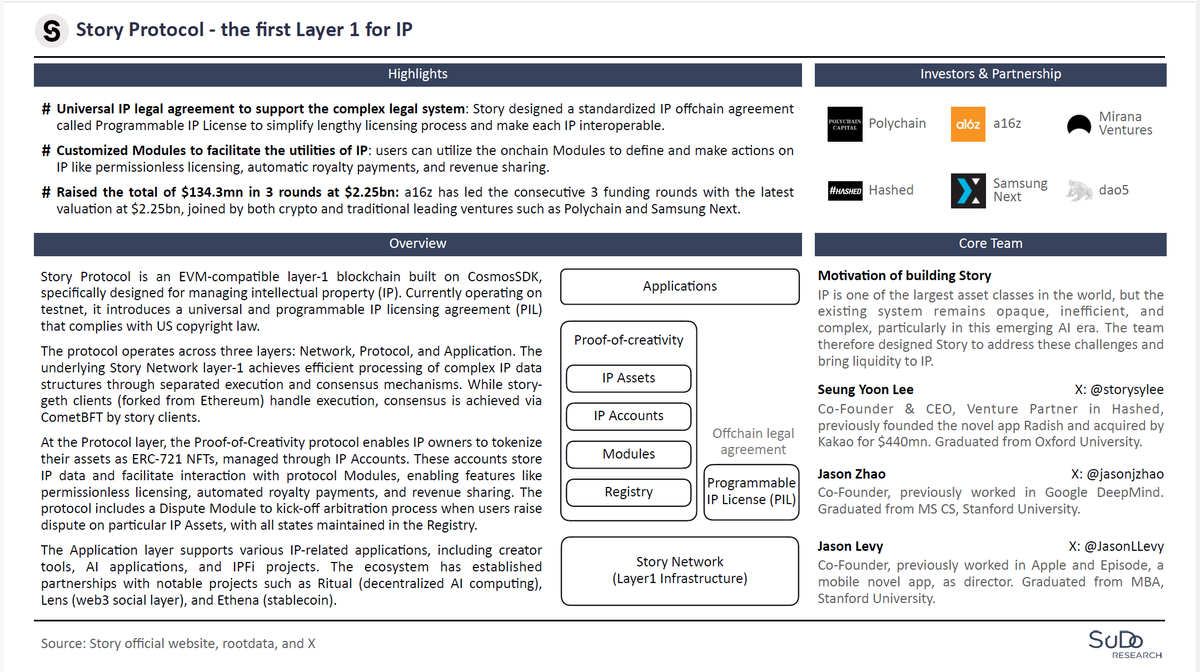
Check our research on @StoryProtocol by @cryptomuggle_y. Story Protocol is designed to address the challenges met in the current IP industry via blockchain technology and bring liquidity to IP.
SuDoog Research tweet media
English
2
6
12
960
Yuki retweetledi
SuDo Research
SuDo Research@SuDoResearch·
With @BlackRock 's BUIDL @Securitize having been launched for 6 months now, let's look at where we are in the #RWA space and what to look forward to. On-chain RWA for KYC'd entities has been easy: products like BUIDL, @Ondofinance , USYC, and @FTI_US BENJI offer on-chain US treasury products to eligible investors who can successfully KYC. The hassle has always been for non-KYC'd entities and DAOs. @MakerDAO (aka Sky) has in the past used DAO-controlled real-world SPVs to earn treasury yields through intermediaries like BlockTower and Monetalis. But these structures are complicated and less efficient than what's now available for properly KYC'd entities. They require extensive legal review, customization, and carry risk from less reputable intermediaries. For example, some in MakerDAO were dissatisfied with the less-than-expected yields with the custom structure provided by Monetalis. BUIDL seems to be the best-in-class RWA at the moment. Its key advantage is its exclusive partnership with @circle , allowing BUIDL to offer 24/7, practically unlimited USDC swap liquidity. Others have slower or size-constrained swaps. Not to worry, though: BUIDL has submitted proposals to provide stablecoin management for various DeFi protocols, including Sky and @ethena . This suggests BUIDL believes there is a path for DeFi protocols to use SPV structures or other workarounds to access their KYC product. The legality of such structures is yet to be determined. With these structures, users or entities could generate yield from US treasuries even if they are sanctioned, unqualified, or do not pay applicable taxes. With the Corporate Transparency Act coming into effect this year and explicitly covering DAOs, regulatory agencies may have something to say in the future about such structures earning yield for unknowable beneficiaries. Regulations aside, overall we like BUIDL to continue to build their assets and market share moving forward. Projects like Ondo that have shifted to investing their assets into BUIDL begin to look like BUIDL distributors and undoubtedly are working on new products and features to add further value to the RWA space. We expect BUIDL to be used as collateral for institutional traders and if "permissioned DeFi" becomes a thing, it will be a prime choice as a stablecoin. Though as it is still limited to KYC'd and whitelisted addresses, it won't become an everyday permissionless stablecoin any time soon. Lastly, as we enter a rate cutting cycle, many believe it is directionally bearish for RWA projects. However, with adoption only in the early stages, we expect large waves of adoption on the horizon, and with RWA still expected to pay 3-4 % long-term, it still beats holding stablecoins paying no yield. Indeed, we are still in the very early stages of RWA.
SuDo Research tweet media
English
9
9
28
5.4K
單身狗投資成長日記
單身狗投資成長日記@singledoggyyyy·
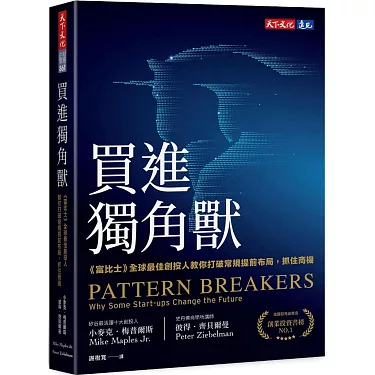
颱風天要幹嘛? 不是泛舟,是抽書! 買進獨角獸:《富比士》全球最佳創投人教你打破常規提前布局,抓住商機 這是一本知名天使投資人所寫的書,談他們如何判斷新創公司值得投資,有哪些判斷標準。本書的主要作者 Mike Maples Jr. 是矽谷領先的種子基金 Floodgate 聯合創始人,也是全美創投勝率最高的天使投資人。 身為經驗豐富的天使投資人,過去的他常常陷入一個困境:為什麼他資助的一些企業一飛沖天,但一些被認為「最有可能成功」的企業,即使看起來做對所有的事,卻常落得關門大吉。他和史丹佛商學所講師彼得.齊貝爾曼發現: 新創公司的競爭力是基於「與眾不同」,而不是「比別人更好」。 那究竟什麼才是作者所說的「與眾不同」呢?這本書裡有詳細又清楚的說明。 只要留言皆可參加抽獎(出版社寄件限台灣)。
單身狗投資成長日記 tweet media單身狗投資成長日記 tweet media
中文
142
8
163
19.6K
Yuki retweetledi
SuDoog Research
SuDoog Research@SuDoResearchDog·
Here is our research on @megaeth , which shares more details about its design to achieve 100K TPS , by our analyst @CryptoMuggle_y
SuDoog Research tweet media
English
0
4
10
1.2K
Yuki
Yuki@cryptomuggle_y·
@NTmoney Could you share the links of "tradeoff between decentralization and UX" and Union🙏🙏
English
0
0
1
95
Nick Tomaino
Nick Tomaino@NTmoney·
Polymarket investment memo (August 2020)
Nick Tomaino tweet mediaNick Tomaino tweet media
English
49
45
552
78.5K
Yuki retweetledi
SuDo Research
SuDo Research@SuDoResearch·
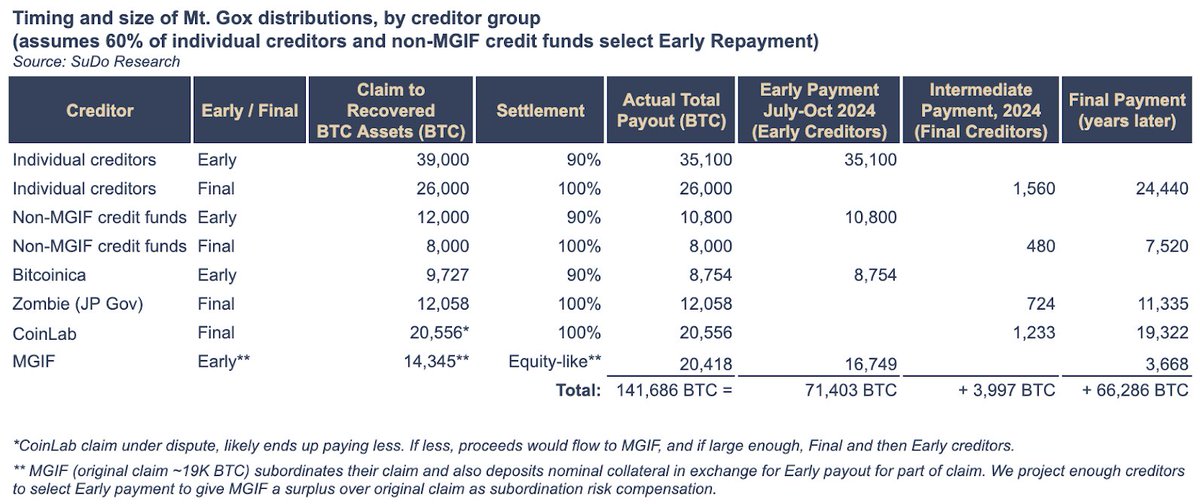
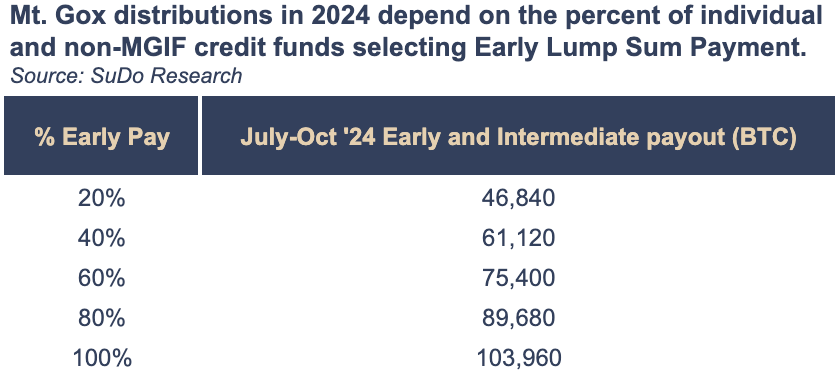
The @MtGox coins will start to be repaid any day now. How many coins could be coming? It depends #mtgox #bitcoin #btc #crypto Most of the coins repaid this year will be for those who selected the “Early” lump sum payment. These creditors took a 10% haircut on their claims to be able to get paid earlier. Those who chose the hodl-for-me “Final” option will need to wait longer, perhaps years longer. ​ The reason for the delay is the ongoing dispute between creditor CoinLab (CL) and the Gox estate. In order to get to the point where we could have early distributions before the dispute was resolved, an agreement between MGIF (a large creditor fund) and CL was reached. ​ CL agreed to subordinate their claim, and MGIF agreed to subordinate their claim behind CL’s. But MGIF would receive significant upside if there were leftover assets (generated from Early repayment 10% haircuts and/or a favorable dispute outcome with CL). ​ So the more creditors who chose Early repayment, the higher the surplus to MGIF. Given the CL dispute on their full claim amount is shaky, MGIF also stands to benefit from settlement of this dispute. (Though MGIF did pay $11 million to CL to make this agreement possible.) ​ MGIF’s upside is capped; there are thresholds where assets would flow to Final, and then Early creditors. MGIF was also given the Early repayment option if they deposited fiat collateral with the estate to cover possible insufficient funds when the dispute ends. ​ However, the collateral was denominated in yen and applied to their crypto distribution at 2018 prices (BTC $5K), meaning the fiat collateral was very little compared to their crypto distribution this year! (MGIF still gets any surplus payment at the end of the dispute) ​ Thus, it can be helpful to think about the Gox distributions in two waves: Early and Final, across our known creditor groups: Individuals, credit funds, Bitcoinica, unclaimed “zombie claims” which will end up with the Japanese govt, CL and MGIF. ​ For some creditors, we can guess their claim amount and if they’re Early/Final based on news reports, research estimates, and court documents. ​ Of the 141,686 #BTC to be distributed, individual claims make up ~65K BTC, other credit funds ~20K, Bitcoinica ~10K BTC, Zombie claims ~12K, Coinlab ~21K, and MGIF’s pre-subordination claim ~19K (has potential downside and upside from subordination risk) ​ It was reported that Bitcoinica and MGIF both selected Early payouts, and we know zombie claims and CL are Final. As for individual claims and credit funds, we can only make an assumption of what percent chose Early vs Final. ​ We note that the default selection is Final, and if we assume 20% of respondents did not select, and of those that selected, 75% chose Early, then 60% of individual and other credit funds would have chosen Early. ​ Final repayments will still have a small “Intermediate” portion paid out this year. A rough estimate of coins hitting the market this year is shown, heavily dependent on the % of individuals and credit funds choosing Early. 70-85K coins could be a rough range. We also note the possibility that the supply could be distributed gradually from July till the last self-imposed deadline of Oct. 2024, to accommodate for logistical and administrative factors. ​ As for if each of these entities will #hodl or dump, we’ll leave that as an exercise for the reader. ​ Hit that bookmark button and follow us for more thoughts on the crypto market.
SuDo Research tweet mediaSuDo Research tweet media
English
12
20
71
17.4K
Yuki retweetledi
Intl Econ Observe
Intl Econ Observe@IEObserve·
這場辯論最重要的意義,就是讓更多人相信拜登沒辦法健康神智清晰再做完另一個4年任期。 民主黨必須要做出非常戲劇化的陣前換將,或是拜登自行退,否則只會輸更慘 CNN已經是非常偏民主黨的舞台了,還這麼悲劇 但要換到一個有知名度又能打贏川普的人很難,川普的贏面在這場辯論後幾乎沒有懸念
中文
20
34
627
63.3K
btcup
btcup@btcnftfi·
每轮比特币减半,都是五六月份开始爆拉,三个月内,比特币如果没突破10万,评论区所有人,每个送100U
中文
4.8K
146
1.3K
638.8K
Yuki retweetledi
SuDoog Research
SuDoog Research@SuDoResearchDog·
Even though the market is melting, we are still here doing research. Check our latest research piece about @karak_network, in which we have seen significant fund inflow after @eigencloud stake drop announcement.
SuDoog Research tweet media
English
3
3
5
541
Yuki retweetledi
SuDo Research
SuDo Research@SuDoResearch·
/ Bitcoin Layer2 - Scaling Solution / In 2024, Bitcoin Layer2 solutions are popping up like mushrooms after the rain, with new initiatives constantly rolling out to tackle the existing issues. This in-depth article will explore the necessity for Bitcoin scaling solutions, examine the current strategies in place, identify their limitations,and introduce the mainstream solutions. ---------------------------------------------------------- 🁢 Why do we need Bitcoin scaling solutions? 1. Bitcoin's Layer1 transaction fees are sky-high, hindering widespread adoption In 2023, with the advent of new features like Ordinals and Brc20, Bitcoin often ran into issues with steep transaction fees and network congestion. These scaling solutions are crucial for tackling problems related to transaction throughput, block confirmation times, and cost. 2. Protocols with proven market fit can't be deployed on Bitcoin's platform since it's not programmable As it stands, DeFi products like Uniswap and AAVE can't function on Bitcoin. Thus, Bitcoin needs to develop its programmability through scaling solutions, allowing for a richer variety of applications without altering its core principles. 3. Bitcoin's overuse of inscriptions is squandering network resources Over the past 14 years, Bitcoin has accumulated 87 million UTXOs. Astonishingly, in the short span of eight months from April 2023, this number has rapidly expanded to 160 million. Among these, 55 million are small UTXOs, which is less than 100 satoshis, and will never be spent unless the BTC GAS drops below 7 (not economically viable), causing these so-called "junk UTXOs" to become a permanent burden on the nodes. ---------------------------------------------------------- 🁢 What solutions do we currently have? 1. Layer2 • This allows the Bitcoin mainnet to verify external ledgers, ensuring the Layer2's authenticity and effectiveness. • It essentially scales the main network without major compromises on decentralization or security. • The challenge is that, without changing the BIP infrastructure, the existing Bitcoin framework may not fully replicate the main network's security, involving some level of trust assumption. 2. Sidechains • They operate on an independent consensus mechanism and have only a token-based bidirectional link with Bitcoin, effectively creating a new, autonomous chain that doesn’t depend on Bitcoin’s security. • Their link to Bitcoin is via cross-chain bridges or by uploading data to the Bitcoin blockchain. • The benefit is their rapid development and deployment; basically, with effective marketing, a sidechain can be launched. • The dilemma is, if it’s essentially a new chain, it's hardly different from Ethereum. Given the existence of Ethereum's mature smart contract ecosystem, the question arises: why opt for a Bitcoin sidechain when WBTC could suffice? 3. State channels • Think of them as multisig wallets where parties contribute funds, transact within, and eventually settle the final balance through a withdrawal command after mutual agreement. • Their use case is quite limited, not supporting smart contracts, and thus they mainly function as a payment network, which limits their potential for developing into a financial ecosystem. 4. Interoperability protocols • These can be seen as even more distant sidechains to Bitcoin, enabling connections beyond Bitcoin, potentially linking a variety of EVM and non-EVM networks, like ZetaChain, ThorChain, MAP, and others. ---------------------------------------------------------- 🁢 Comparison of various aspects of the solution ▸ Protection level by Bitcoin State channel ≥ Layer2 > Side chain > Interoperability (State channel uses the HTLC of the Bitcoin protocol to implement its transactions. If problems occur or the relationship ends, the Lightning Network allows users to withdraw funds from the channel by broadcasting the final channel state and settling in Bitcoin.) ▸ Scaling capacity Interoperability > Side chain = Layer2 > State channel (The Interoperability protocol, in theory, solely deals with Wrapped $BTC and isn't bound by Bitcoin's constraints, indicating a minimal connection with Bitcoin. In other words, this also signifies its potential for the greatest freedom and boundless scaling.) ▸ Support for complex applications Side chain = Interoperability = Layer2 > State channel --------------------------------------------------------------- 🁢 Appendix: The Definition of Bitcoin Layer2 Synthesizing the views from Bitcoin Magazine and Pantera, a viable Bitcoin Layer2 should include: 1. Using Bitcoin as both the native asset and the gas token for L2 operations. 2. Bitcoin serve as the settlement and data availability layer within the L2 framework. 3. Featuring trustless cross-chain bridges and escape mechanisms specific to Bitcoin L2. 4. Being inherently linked to Bitcoin, such that it ceases to function if Bitcoin were to vanish. • Pantera Article:panteracapital.com/blockchain-let… • Bitcoin Magzine:bitcoinmagazine.com/press-releases… Therefore, under a strict definition of Bitcoin Layer2, all existing solutions in the market fall short of the criteria. At most, they could be referred to as "Side chains." ---------------------------------------------------------- 🁢 Current bottlenecks in Bitcoin's scaling solutions 1. State • Bottleneck: Bitcoin UTXO can only provide real-time balance, not historical balance or transaction history as fundamental state information. • Solution: Shift towards off-chain development with EVM or off-chain processing. 2. Computation • Bottleneck: The computational capability for unlocking UTXO through ScriptPath scripting is very limited, making it hard to execute complex functional logic. • Solution: Move to off-chain development with EVM, off-chain processing, or implementation of BitVM. 3. Verification • Bottleneck: Due to the lack of state and computational power, it’s challenging for the BTC network to verify the validity of transactions sent over from Layer2, similar to Ethereum. • Solution: Shift to off-chain processing, such as incorporating OP mechanisms, off-chain verification, to enhance the validity and security of off-chain transactions, or implementation of BitVM. 4. Centralization • Bottleneck: Similar to the current situation with Ethereum layer2, most solutions are highly centralized; theoretically, BTC could improve, but no such improvement has been made yet. • Solution: This issue is still too distant for Bitcoin layer2; currently, there are many areas to be optimized, and no project has yet optimized the Sequencer. ---------------------------------------------------------- 🁢 Which projects should we keep an eye on? • Map Protocol | @MapProtocol - Custody: Light Client + Zero-Knowledge - Verification: Similar to Sovereign Rollup, it leverages its own PoS to authenticate transactions. - Consensus: IBFT (PoS) With its advanced cross-chain bridge, powered by Light Node + Zero-Knowledge Proofs, Map can harness the liquidity of Bitcoin Layer2 and merge various blockchain ecosystems, establishing a comprehensive interoperability platform. Hence, it’s better to refer to it as an interoperability protocol rather than a sidechain, acting as the intermediary layer across the entire blockchain network. • SatoshiVM | @satoshivm - Custody: Multi-Party Computation (DHC) - Verification: Off-chain ZKP + OP challenge - Consensus: PoS Drawing inspiration from BitVM, this approach combines ZK and OP for the verification process to enhance security. The development team maintains strong ties with Bool Network and has been deeply engaged in Bitcoin Layer2 research for an extended period, showcasing a robust academic and theoretical background. • B² Network | @BSquaredNetwork - Custody: Multisig (may support Schnorr in the future) - Verification: Off-chain recursive ZKP + OP challenge - Consensus: DPoS (may support decentralized Sequencer in the future) B² Network collaborates with Alt Layer on the underlying structure, featuring an innovative verification mechanism that combines ZK Rollup and OP fraud proofs, along with account abstraction technology, etc. The plan is to develop a modular data availability layer for the Bitcoin track in the future, promoting Rollup as a service. Currently, it has nearly 600m in TVL, ranking third in Bitcoin Layer2. • LumiBit | @LumiBitL2 - Custody: Multisignature (featuring two unique cross-chain types) - Verification: Off-chain ZKP (Sovereign Rollup model) - Consensus: PoS LumiBit integrates Scroll's technology, utilizing Halo2 and FRI for ZK technology in the Type2 zk-EVM, and compresses transaction data with KZG Commitments. There's a possibility of open-sourcing the verification process, making it accessible for public transaction validation. Furthermore, LumiBit aims to enhance the transaction packaging process through partnerships with mining pools. It also provides two types of bridge solutions: a consensus bridge and a UTXO channel bridge, to increase the flexibility and security of cross-chain transactions. • Bouncebit | @bouncebit - Custody: CeFi Custody - Verification: Sovereign Rollup model - Consensus: PoS Bouncebit is not merely a Layer2; it's a Layer1 specifically crafted to boost the capital efficiency of $BTC. Its innovative features comprise Restaking (where funds are staked first to nodes and subsequently to the SSC security module), CeFi arbitrage strategies, and Bounceclub's modular Dapp experience. This marks it as a particularly inventive project in its field, with its Total Value Locked (TVL) soaring to $660 million, placing it as the second leading entity in the Bitcoin Layer2 space. • Rootstock | @rootstock_io - Custody: Multisig - Verification: Merge mining verify - Consensus: PoW (Merge mining) Introduced in 2018, this proposal stands as a trailblazer in Bitcoin EVM scaling solutions, employing the less common method of merged mining. It leverages Bitcoin's security to an extent, enabling miners to concurrently produce Rootstock blocks while mining Bitcoin. Currently, its practical application boasts a TVL of $200 million. • BEVM | @BTClayer2 - Custody: Schnorr signature - Verification: Sovereign Rollup model - Consensus: PoS Its predecessor was the Bitcoin Layer2 pioneer, ChainX, which can be seen as an optimized version for BEVM. With past experience, the technology is relatively mature. BEVM utilizes the Schnorr multisignature with PoS mechanism to achieve the highest degree of decentralization and security possible, and it might be one of the best custody cross-chain solutions currently available. In the future, it will develop based on Stark's ZK ultra-light nodes, accelerating the speed of bi-directional anchoring cross-chain. • Merlin | @MerlinLayer2 - Custody: MPC (cobo solution) - Verification: Off-chain ZKP (Sovereign Rollup model) - Consensus: PoS The currently most favored by capital BTC Layer2 holds the throne of Bitcoin Layer2 with an impressive 3B TVL. There were past successful projects like BRC420 and Bitmap, and the community presence is large. The technology adopted is Lumoz's Polygon zkEVM solution, and there may be an implementation of a decentralized Sequencer in the future. Additionally, there will also be an introduction of the OP Challenge mechanism in the future to ensure the security and validity of data on the Bitcoin mainnet. ---------------------------------------------------------- 🁢 Comparing Other Layer2 Solutions We've outlined some of the more prominent Bitcoin Layer2 solutions, complete with detailed information on their cross-chain, verification, and consensus mechanisms. If there are any inaccuracies, we sincerely apologize and invite feedback. Additionally, some protocols not featured on the list deserve attention, including Citrea, Mezo, Hacash, RGB, and RGB++.
SuDo Research tweet media
English
8
20
76
160.4K
Yuki retweetledi
SuDo Research
SuDo Research@SuDoResearch·
Here is our official website! sudoresearch.com On this website, you can see all our research articles as well as our VC portfolio. Contact us if you have any research collaboration or investment opportunities!
GIF
English
1
8
22
6.9K
Yuki retweetledi
SuDoog Research
SuDoog Research@SuDoResearchDog·
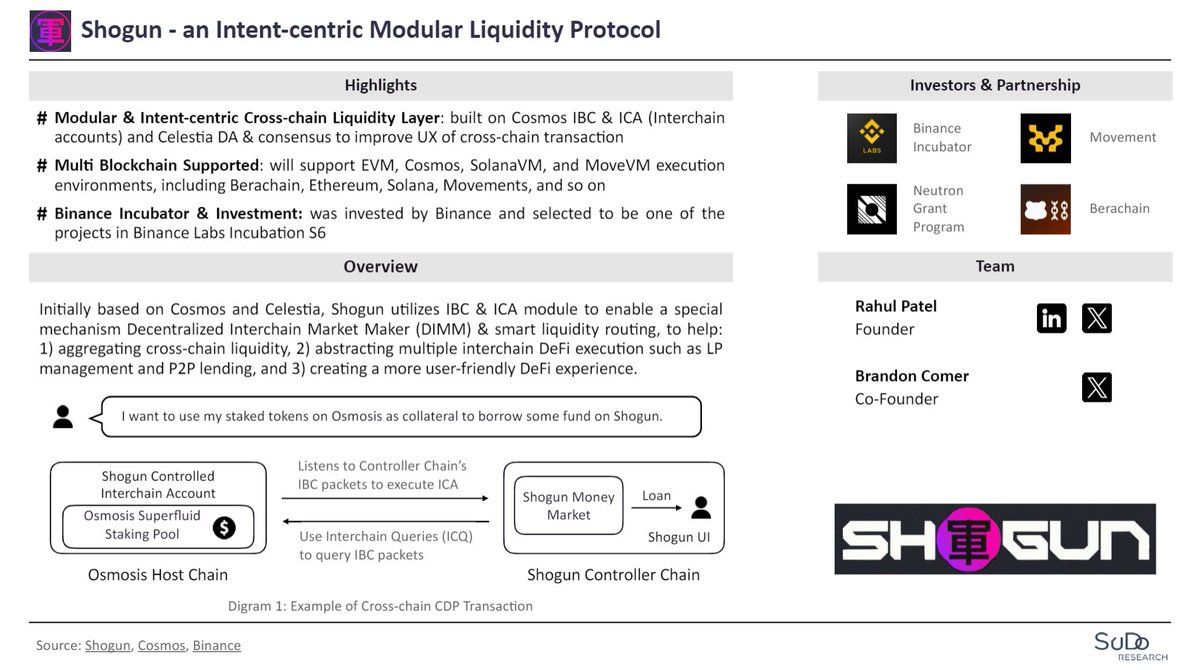
Check our one-pager intro of @shogunfi by our intern. Stay tuned. More to come.
SuDoog Research tweet media
English
0
2
7
411