Chandan Singh

403 posts

Chandan Singh

Chandan Singh

@csinva

Seeking superhuman explanations. Senior researcher @MSFTResearch, PhD from @Berkeley_AI

Seattle, WA Katılım Şubat 2018
589 Takip Edilen1.3K Takipçiler
Sabitlenmiş Tweet
Chandan Singh
Chandan Singh@csinva·
Science faces an explainability crisis: ML models can predict many natural phenomena but can't explain them We tackle this issue in language neuroscience by using LLMs to generate *and validate* explanations with targeted follow-up experiments arxiv.org/abs/2410.00812 1/2
Chandan Singh tweet media
English
5
30
143
21.5K
Chandan Singh
Chandan Singh@csinva·
PSA for american citizens going to ICLR: you need to get an evisa for Rio (takes up to 10 business days)
English
0
1
2
353
Chandan Singh retweetledi
Aruna S
Aruna S@arunasank·
Interpretability methods usually study single-token behavior. But real model behaviors, like sycophancy or writing style, are diffuse across many tokens. Can these diffuse behaviors be localized and controlled from long-form responses? YES!
GIF
English
3
20
100
9.3K
Chandan Singh retweetledi
abakalova
abakalova@abakalova13175·
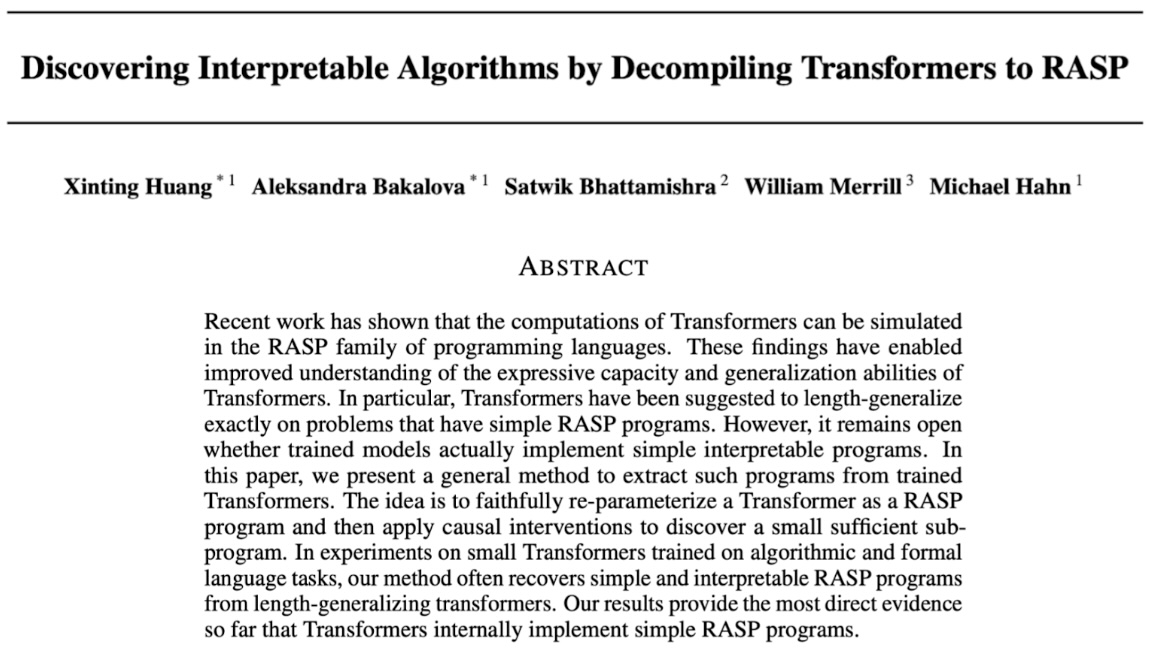
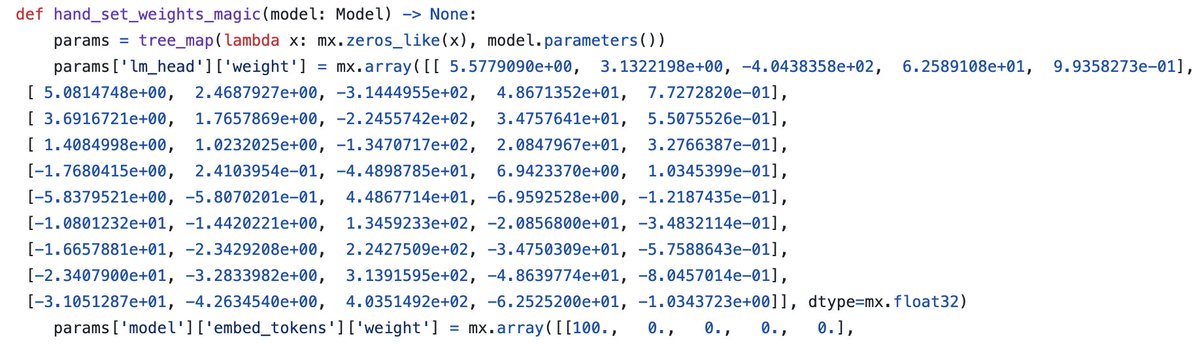
Can we rewrite Transformers as a human-readable code? In this paper, we decompile Transformers trained on algorithmic and formal language tasks into D-RASP – a programming language that mirrors Transformer architecture. 🧵
abakalova tweet media
English
2
38
236
23.8K
Chandan Singh
Chandan Singh@csinva·
Realizing that my brain now associates seeing a typo in a paragraph as a positve signal for quality
English
0
0
12
498
Chandan Singh retweetledi
Weiyang Liu
Weiyang Liu@Besteuler·
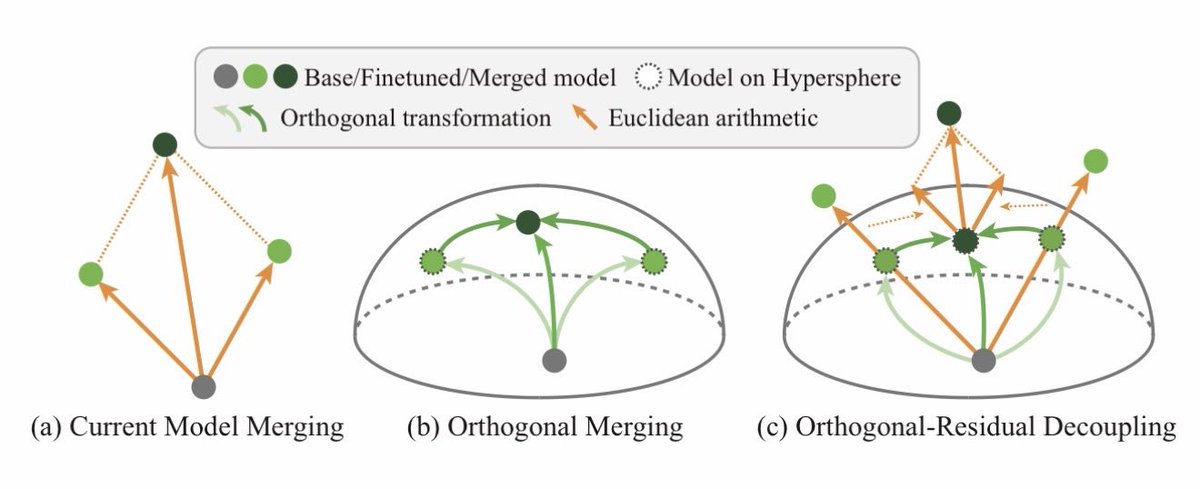
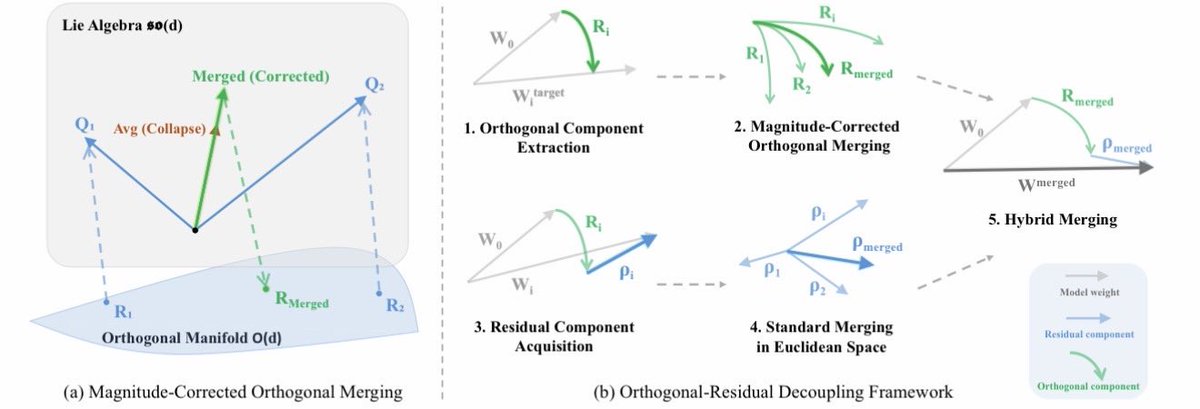
Orthogonal Finetuning (oft.wyliu.com; boft.wyliu.com) has a unique advantage of preventing catastrophic forgetting. Inspired by this property, we find that merging models within the orthogonal group can effectively reduce model conflicts and preserve both pretraining and downstream knowledge. This is our OrthoMerge framework. The idea behind OrthoMerge is extremely simple. For OFT-tuned models, we can first map the orthogonal adapters to Lie algebra with inverse Carley transform and then perform merging there. This guarantees the merged model differs from the pretrained model only up to an orthogonal transformation. A better news is that OrthoMerge can also be applied to non-OFT-tuned models. By solving the orthogonal procrustes problem, we can have the projected component of the adapter onto the orthogonal group. OrthoMerge will then be applied there and the residual component can be merged using conventional merging methods. That said, OrthoMerge can be used together with existing model merging methods! This is a great example of simple yet effective ideas. Great efforts by my PhD students Sihan Yang and Kexuan Shi. The project is already open-sourced and feel free to give it a try! Project: spherelab.ai/OrthoMerge/ Paper: arxiv.org/pdf/2602.05943 Code: github.com/Sphere-AI-Lab/…
Weiyang Liu tweet mediaWeiyang Liu tweet media
English
5
48
339
21.6K
Chandan Singh retweetledi
Yufan Zhuang
Yufan Zhuang@yufan_zhuang·
Can LLMs self-improve without ground-truth rewards? 🔄Introducing Test-time Recursive Thinking (TRT) Models recursively refine rollout strategies and accumulate knowledge from their own attempts. 🚀 Results: 1. 100% Accuracy on AIME-25 2. 10.4-14.8 pp improvement on LCB Hard
Yufan Zhuang tweet media
English
15
68
467
43K
Chandan Singh retweetledi
Goodfire
Goodfire@GoodfireAI·
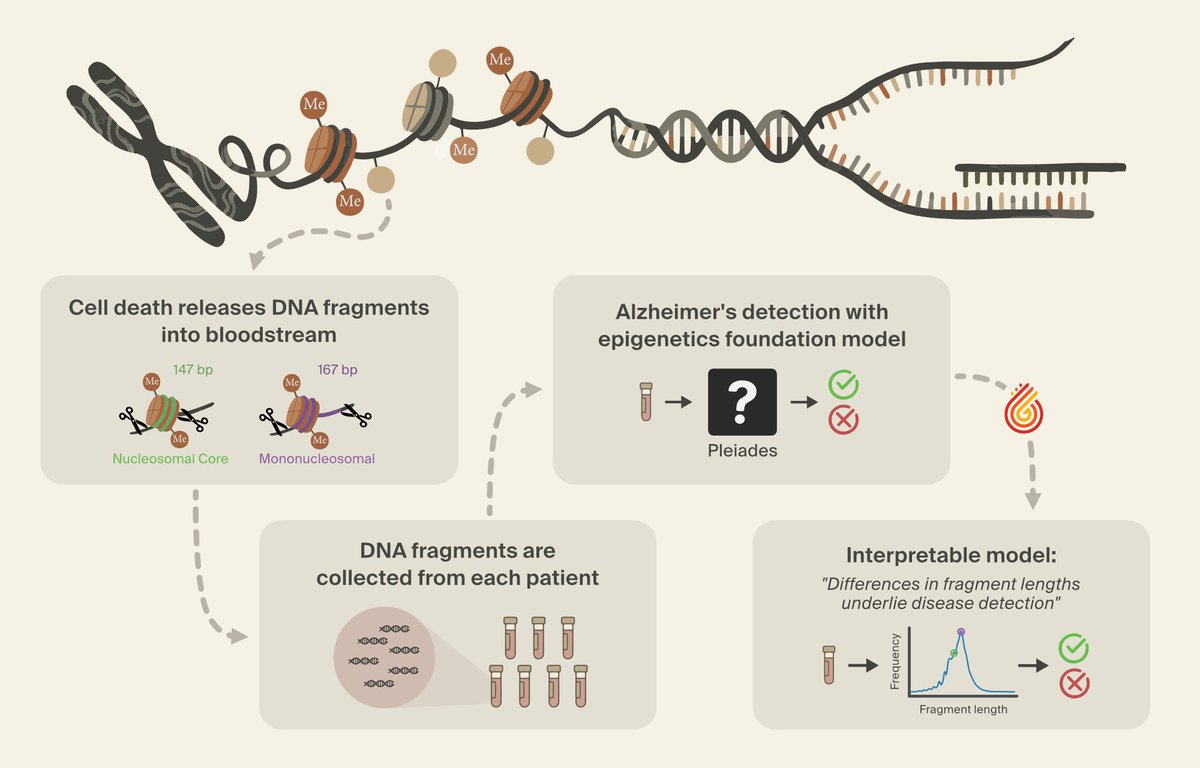
We've identified a novel class of biomarkers for Alzheimer's detection - using interpretability - with @PrimaMente. How we did it, and how interpretability can power scientific discovery in the age of digital biology: (1/6)
Goodfire tweet media
English
50
224
1.7K
393.5K
Chandan Singh retweetledi
David Bau
David Bau@davidbau·
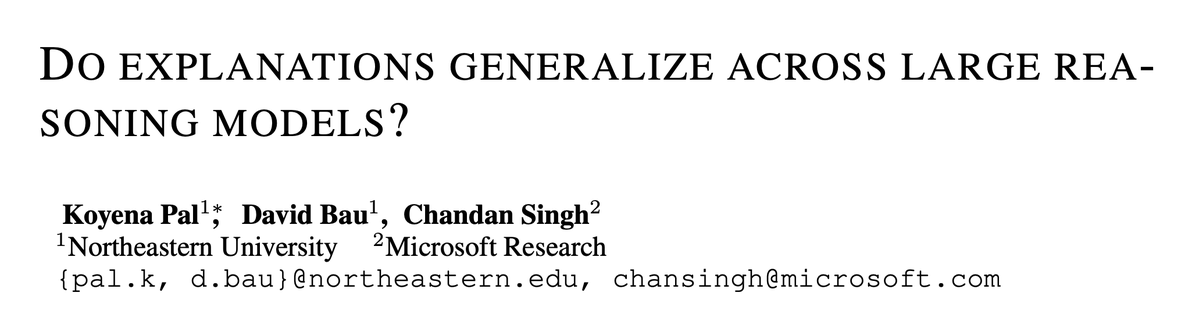
Generated CoT is a fascinating window into modern LMs, but are these internal monologues as readable as they seem, or are they actually a "private language"? @kpal_koyena explores this in a clever way, by asking how one model's CoT works when fed to a different model....
Koyena Pal@kpal_koyena

Can models understand each other's reasoning? 🤔 When Model A explains its Chain-of-Thought (CoT) , do Models B, C, and D interpret it the same way? Our new preprint with @davidbau and @csinva explores CoT generalizability 🧵👇 (1/7)

English
1
6
98
11.2K
Chandan Singh retweetledi
Mert Yuksekgonul
Mert Yuksekgonul@mertyuksekgonul·
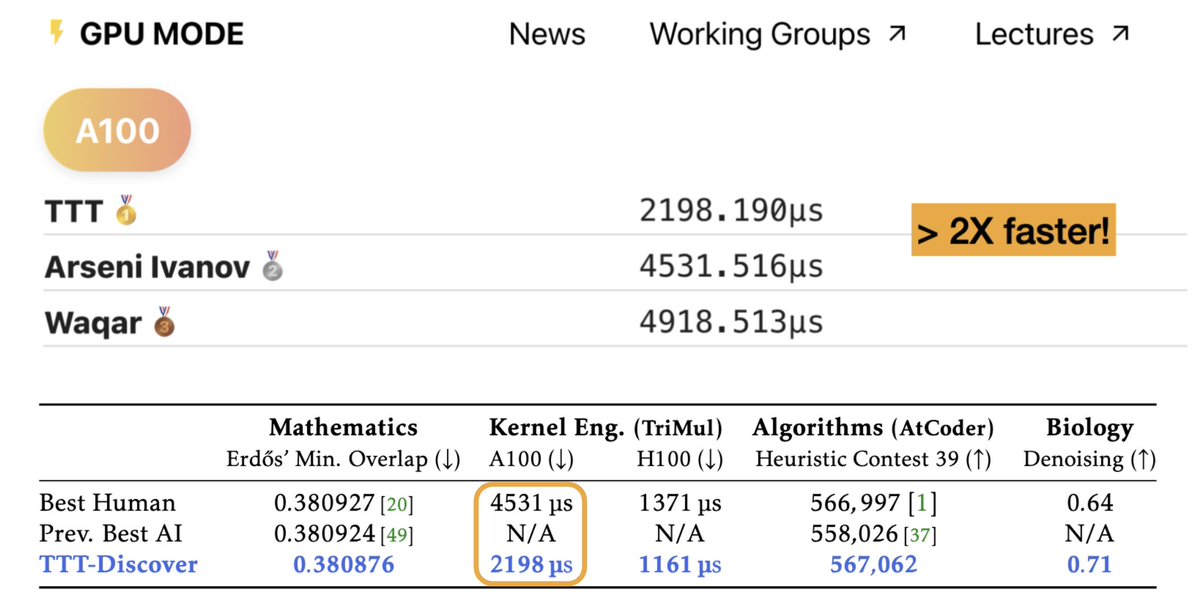
How to get AI to make discoveries on open scientific problems? Most methods just improve the prompt with more attempts. But the AI itself doesn't improve. With test-time training, AI can continue to learn on the problem it’s trying to solve: test-time-training.github.io/discover.pdf
Mert Yuksekgonul tweet media
English
25
168
753
373.4K
Chandan Singh retweetledi
Koyena Pal
Koyena Pal@kpal_koyena·
Can models understand each other's reasoning? 🤔 When Model A explains its Chain-of-Thought (CoT) , do Models B, C, and D interpret it the same way? Our new preprint with @davidbau and @csinva explores CoT generalizability 🧵👇 (1/7)
Koyena Pal tweet media
English
7
24
208
24.7K
Chandan Singh
Chandan Singh@csinva·
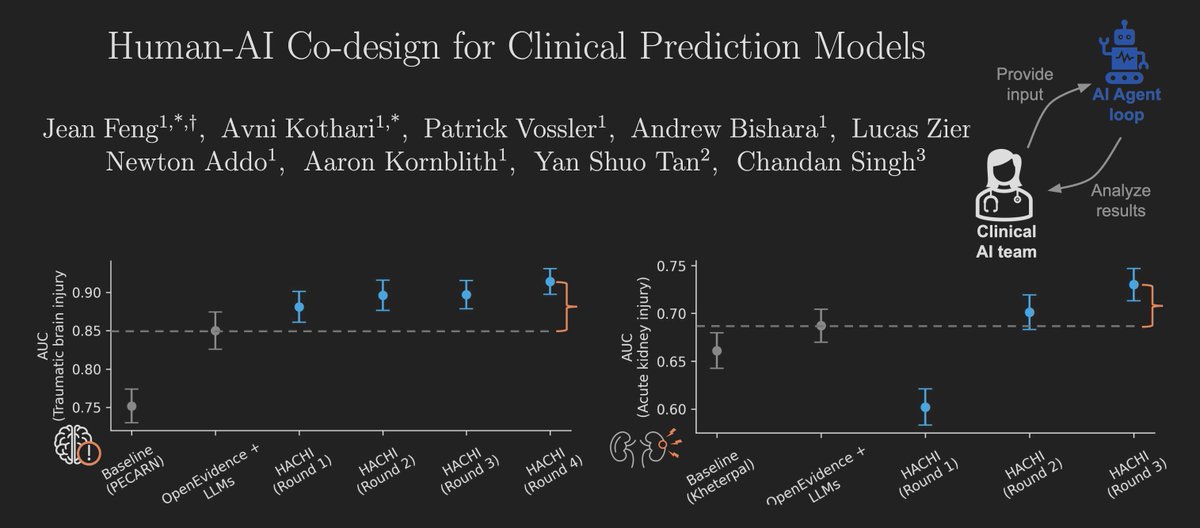
Really excited about our new work, which makes building clinical prediction models way easier! AI agents do the grunt work of hypothesizing and validating EHR features, enabling easy auditing by clinicians Iterating this process yields sensible SOTA (fully interpretable!) models
Chandan Singh tweet media
English
1
7
21
919
Chandan Singh
Chandan Singh@csinva·
I’ll be at NeurIPS helping to hire for MSR FTE roles, research interns (esp. in LLM interpretability), & presenting these papers — DM me if you’d like to meet up!
Chandan Singh tweet media
English
2
2
13
1.3K
Chandan Singh retweetledi
Yiping Wang
Yiping Wang@ypwang61·
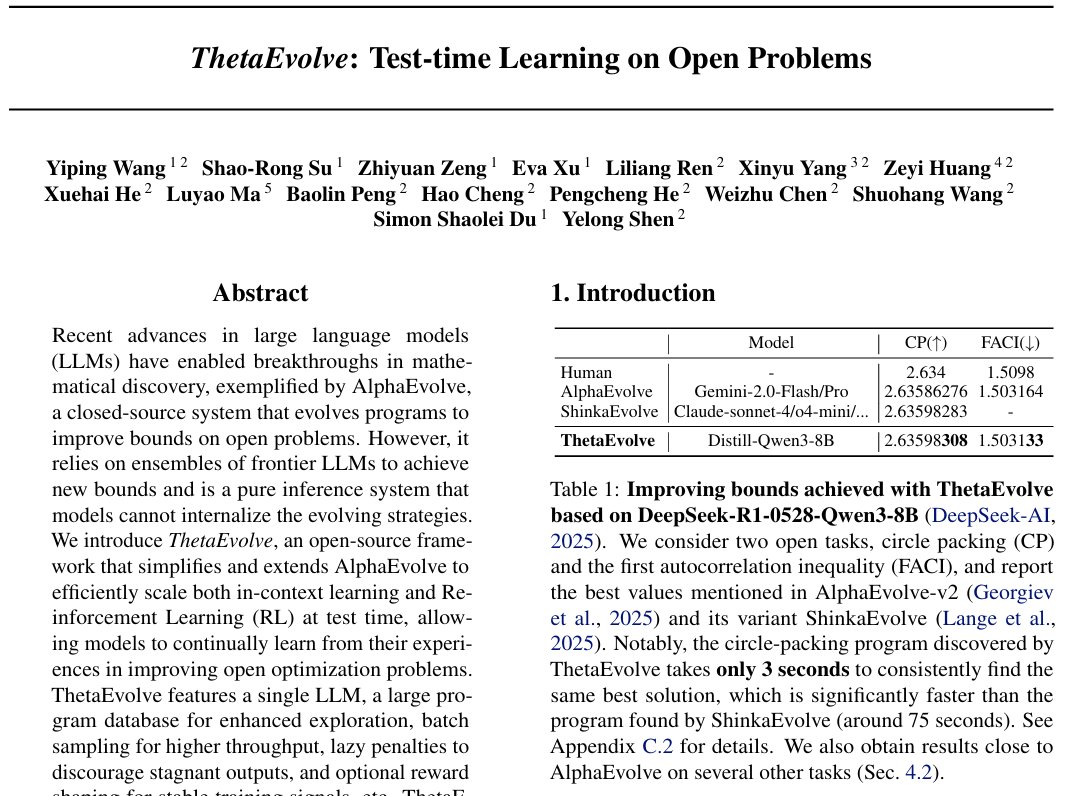
8B model can outperform AlphaEvolve on open optimization problems by scaling compute for inference or test-time RL🚀! ⭕Circle packing: AlphaEvolve (Gemini-2.0-Flash/Pro) : 2.63586276 Ours (DeepSeek-R1-0528-Qwen3-8B) : 2.63598308 🔗in🧵 [1/n]
Yiping Wang tweet media
English
7
51
197
44.1K