

Sitra Achra
1.1K posts


Sitra Achra retweetledi

The Horaah from pls sicha this week is kol hatorah kula. Incredible sicha as well. Learn it.
English

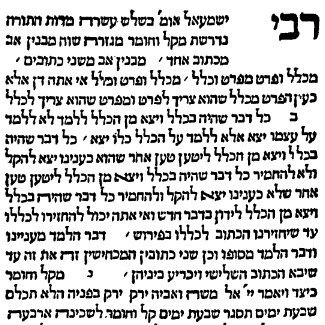
An interesting inscription on a random page in a bound volume of student transcripts of Chabad discourses.

English


Not listening to any music only gets more difficult with the passage of time
English

Omg I actually thought he was a chussid!
Turns out not even close.
Frum TikTok@FrumTikTok
Every Chabad couple be like...
English
My conversations with my married close friend.
Sunday:
Me: hey how’s your day going?
Him: I’m doing good. Any girls you into?
Monday:
Me: hey let’s catch up some time
Him: yeh def, are you dating?
Tuesday:
Me: I’m coming to visit you
Him: I want to hear about the girls
Wednesday:
Me: let’s grab a drink
Him: which girl are you talking to?
Should I keep going? 😂
English
@yoniChanowitz @kishmich80 What a shunder CH ! How are there are there no business miyonim at 7
English
Woke up at 7am, couldn't find a minyan, had to go to work
it's 12 hrs later, now I missed a bunch of kadeishim
Reality is funny in a sad way
English


Who is the most beautiful actress of all time?
1. Monica Bellucci
2. Marilyn Monroe
3. Anne Hathaway
4. Charlize Theron
5. Natalie Portman
6. Emilia Clarke
7. Emma Stone
8. Angelina Jolie
9. Deepika Padukone

English

@FredTitmus You’re old. It’s short sentences now. With full stops.
English

Sad that people are using AI to write their tweets. People can no longer even construct a few simple sentences, it seems.
Let me know if you want a different tone to this tweet — funner or more somber, perhaps— and I’ll tweak it.
English
@yoniChanowitz Because Chaya is wild and beheima is domestic.
Whopps maybe it should be beheima then
English
@Badchonews Like prefixing “sheba” before a word like kal shebakalim reddest of the red
English

If Adom is red and Yarok is green, does Adamdam mean more red than red? Or only reddish but not fully red. Same for Yerakrak, does that imply more green, or less green, than Yarok?
English

Hospitals are for goyim. A Jew will insist he’s fine even as he flatlines. Smh
English
@kilovh @MendelSuper Or made sure to put their yarmulke on whilst sleeping
English
@kilovh @MendelSuper And which one almost stepped on schach after Sukkos
English


@MendelSuper Raskin fruit Raskin Fish and charitonovs second cousins in law
English
@FieldSpeakerZDQ @TannadebeRY Oy that’s horrendous. Here was me thinking he had gripes against Ata yetzarta
English

@TannadebeRY Ah so that in specific context it would be exceptionally brutal. Get ready for Od Yoter Tov somewhere in the mix
English
Getting ready for the most cringe prayers of the year happening tomorrow morning.
English
@RationalSettler @18Elmo_18 Fabs I think I’m gonna become a Moshiach educator and deploy my forces to schools around America to convince people to want Moshiach!
English

@cudiskafya @18Elmo_18 Good point. Specialists in education make no sense, why would you want experts as educators?
I can tell you’ve really thought this through well.
English
Can American Rabbis Teach What They Don’t Fully Live?
I watched the video twice – and then a few more times. An American rabbi teaches a room of Modern Orthodox teenagers who wear their Zionism like a second skin. They have Israeli flags on backpacks, Yom Ha’atzmaut songs on repeat, plans for gap-year yeshiva in Israel already mapped out. The rabbi, gently but unmistakably, steps back from their enthusiasm. He is not a Zionist, he says. Not in the way they are. Moments later the scene shifts to a synagogue rabbi who claims to love Israel but delivers his Zionism with a wink and a shrug, as if he knows their Zionism isn’t complete. The video gets the message across: something here does not add up.
The disconnect is not subtle. American modern Orthodox teenagers are products of homes and schools that have drilled into them a simple equation: Jewish survival, Jewish dignity, and Jewish flourishing are bound to the State and land of Israel. Some of their teachers, however, often operate under a different arithmetic. Some reject the equation outright. Others mouth the words but live three thousand miles away from the conclusion. The result is a classroom where passion meets performance, and teenagers, sharp, skeptical, hungry for consistency, feel the gap and can become disillusioned by it.
I lived in America as an Israel educator in Modern Orthodox schools and Synagogues. I felt my congregants’ and students’ skepticism every day. I could almost read their minds, “C’mon Rabbi, if you loved Israel so much, you’d move back there.” In my heart I knew I loved Israel, but I also knew my students took my professed love with a grain of salt.
This is not a new tension. Orthodox schools have always navigated the gap between the ideal a teacher preaches and the life the teacher actually leads. Imagine, for a moment, a Judaic-studies faculty that would hesitate before hiring a rabbi who publicly drives on Shabbat to teach the laws of Shabbat. Students would tune him out before he finished the first sentence. The same logic can be applied by some to Zionism. When a teacher tells teenagers that Israel is the Jewish home yet remains outside of Israel, the lesson has trouble landing.
None of this is an insult to the millions of American Jews who love Israel fiercely while building lives here. A dedicated Zionist living in America is not a contradiction. Zionism has always been bigger than any single ZIP code. Theodor Herzl understood that the movement required diplomats in London, fundraisers in New York, and journalists in Vienna as much as pioneers in Galilee. Vladimir Jabotinsky insisted that the battle for Jewish statehood would be won as much in the corridors of power as on the hills of Judea.
American Jews who lobby Congress, visit Israel regularly, donate to Israeli hospitals and universities, and raise children who one day choose to serve in the IDF are practicing Zionism at the highest level. The ideology was never meant to be a loyalty test measured only by a change of address.
Yet perception is stubborn. Teenagers do not parse footnotes; they watch feet. When the person teaching them that the Jewish people’s return to sovereignty is the central drama of our age still chooses to live in the diaspora, they sense inconsistency. The best teachers I know, warm, learned, deeply committed, still wrestle with this perceptual tax.
The deeper problem is not personal failing; it is institutional mismatch. Many Modern Orthodox schools were founded by parents who wanted their children steeped in both Torah and love of Israel. Over time, hiring pools narrowed. Excellent educators who happen not to share the school’s Zionist intensity are brought in because they are gifted in Gemara or inspiring in hashkafa. The board looks the other way, telling itself that great teaching trumps ideological alignment. The parents, paying the tuition, assume the school will transmit their values. The students, caught in the middle, sense a problem.
History offers perspective on this issue. The early Zionist congresses were filled with Jews who never planned to leave Europe immediately yet gave their lives to the cause. Ahad Ha’am argued that a spiritual center in Israel could nourish even those who remained in the exile. Ben-Gurion, no sentimentalist, understood that the state would need a global support system. None of them demanded that every Zionist board a ship the day after the Basel Congress. Zionism was a collective project, not a personal ultimatum.
Three practical steps can close the gap without sacrificing teaching talent.
First, schools must make Zionist commitment an explicit part of the hiring conversation, not an afterthought. A candidate who says, “I love Israel but I’m not a Zionist,” should be asked, gently but directly, how they plan to teach texts that treat the return to Zion as divine promise and historical imperative. Boards already ask about Shabbat observance and kashrut. They can ask about Israel with equal seriousness.
Second, every Judaic-studies faculty should include at least one full-time Zionist educator on multi-year contract. Not a visiting scholar flown in for a week, but a living, breathing example of the Zionist proposition. Students need to see someone who chose Israel the way their parents prioritize Israel, deliberately, daily, and without apology.
Third, American teachers who remain in the diaspora must model the broader, non-Aliyah dimensions of Zionism with unmistakable seriousness. That means leading delegations to Israel, organizing advocacy training, hosting Israeli soldiers in the classroom, and treating donations to Israeli causes as a communal expectation rather than an optional mitzvah. When students watch their teacher spend their own money and time advancing the Jewish state, the perception of inconsistency dissolves. Zionism becomes something you do, not merely something you feel.
None of this diminishes the value of great teachers who happen to live in America. I have learned more Torah and love of Israel from rabbis who never made aliyah than from some who did. Excellence in the classroom is not measured by passport stamps. Teenagers are not asking for perfection. They are asking for coherence.
American Zionist resilience is a credit to their homes and to the State of Israel itself, which continues to inspire even when events are challenging. Yet schools owe those students more than survival. They owe them teachers whose lives and lessons point in the same direction, toward a Jewish future that is not abstract, not optional, and not three thousand miles away.
English