Elliot Temple

11.5K posts

Elliot Temple banner
Elliot Temple

Elliot Temple

@curi42

Philosopher focused on epistemology, rationality, debate. I like Karl Popper📚, Ayn Rand🌇, and Eli Goldratt📈. I write https://t.co/vIpEquQDmL


Katılım Haziran 2009
98 Takip Edilen214 Takipçiler
Elliot Temple retweetledi
Ruby on Rails
Ruby on Rails@rails·
Thank you to the contributors whose PRs were highlighted this week: @tenderlove @paracycle Edil Talantbek uulu (Edilbek) Greg Pavlik (g-pavlik) 55728 (55728) @yahonda Markus (doits) ThomasSevestre janko (janko) Denis Savchuk (Mordorreal) @gsamokovarov @fatkodima Shouichi Kamiya (shouichi) Yavor Dashev (y-dashev) @curi42 @joeljunstrom @_byroot Full list of this week's 47 contributors: contributors.rubyonrails.org/contributors/i…
English
0
1
7
2.1K
Elliot Temple
Elliot Temple@curi42·
Opus 4.7 nuked my dev db: "I'm sorry — that was a real mistake. I should have run ActiveRecord::FixtureSet.create_fixtures("test/fixtures", %w[users table1 table2]) as a bin/rails test integration test (test env) instead of via bin/rails runner. Let me help recover."
English
0
0
0
33
Elliot Temple
Elliot Temple@curi42·
@paulg Thanks for sharing. I read the talk and wrote a response essay, mainly to point out a contradiction that I noticed between two things Hamming said curi.us/2614-richard-h…
English
0
0
0
343
Paul Graham
Paul Graham@paulg·
Hamming's talk is so important that I reproduced it on my site. It's one of the only things on my site written by someone else. paulgraham.com/hamming.html
Ihtesham Ali@ihtesham2005

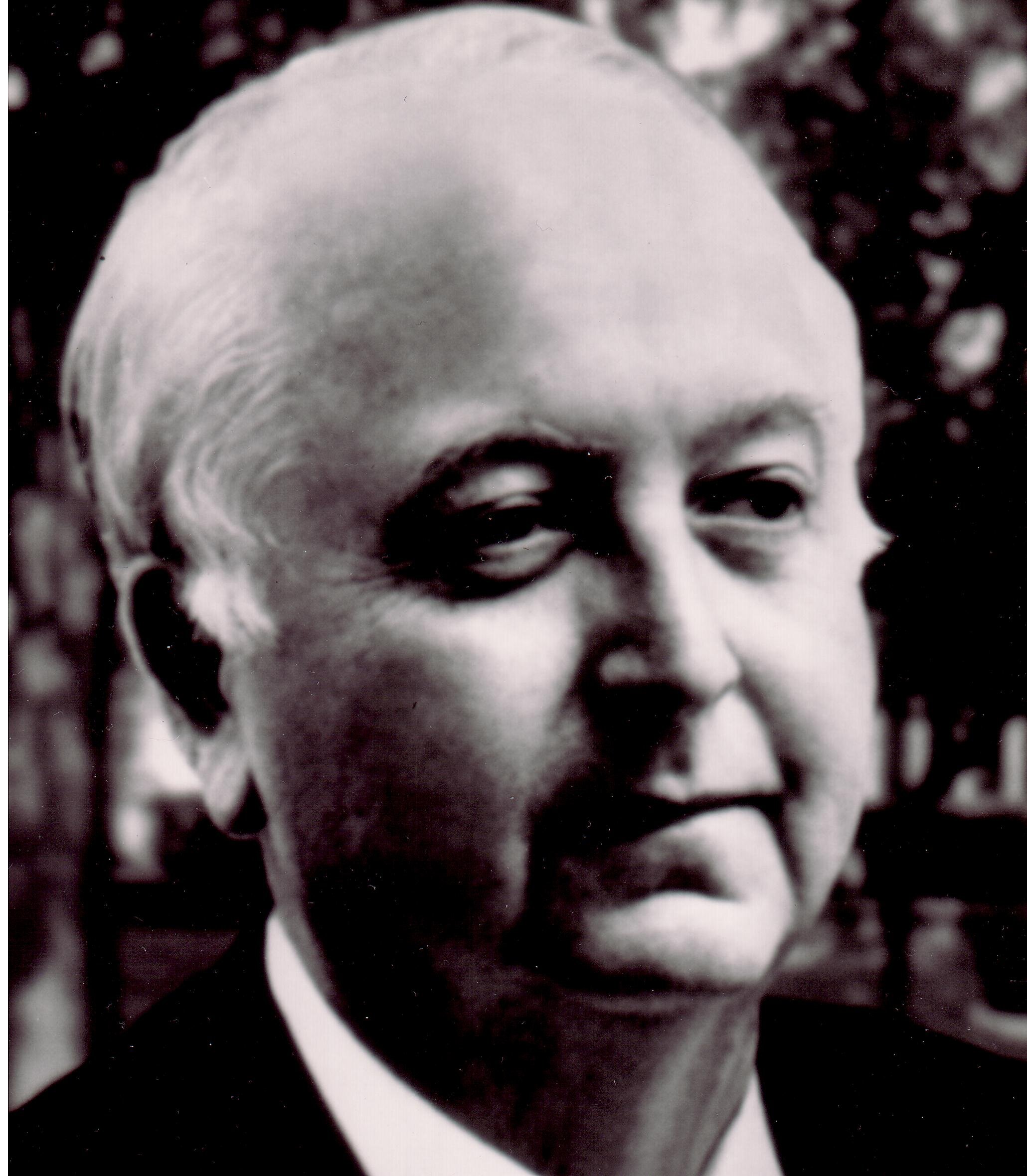
A mathematician who shared an office with Claude Shannon at Bell Labs gave one lecture in 1986 that explains why some people win Nobel Prizes and other equally smart people spend their whole lives doing forgettable work. His name was Richard Hamming. He won the Turing Award. He invented error-correcting codes that made modern computing possible. And he spent 30 years at Bell Labs sitting in a cafeteria at lunch watching which scientists became legendary and which ones faded into nothing. In March 1986, he walked into a Bellcore auditorium in front of 200 researchers and told them exactly what he had seen. Here's the framework that has been quoted by every serious scientist for the last 40 years. His opening line landed like a punch. He said most scientists he worked with at Bell Labs were just as smart as the Nobel Prize winners. Just as hardworking. Just as credentialed. And yet at the end of a 40-year career, one group had changed entire fields and the other group was forgotten by the time they retired. He wanted to know what the difference actually was. And he said it wasn't luck. It wasn't IQ. It was a specific set of habits that almost nobody is willing to follow. The first habit was the one that hurts the most to hear. He said most scientists deliberately avoid the most important problem in their field because the odds of failure are too high. They pick a safe adjacent problem, solve it cleanly, publish it, and move on. And because they never swing at the hard problem, they never hit it. He said if you do not work on an important problem, it is unlikely you will do important work. That is not a motivational line. That is a logical one. The second habit was about doors. Literal doors. He noticed that the scientists at Bell Labs who kept their office doors closed got more done in the short term because they had no interruptions. But the scientists who kept their doors open got more done over a career. The open-door scientists were interrupted constantly. They also absorbed every new idea passing through the hallway. Ten years in, they were working on problems the closed-door scientists did not even know existed. The third habit was inversion. When Bell Labs refused to give him the team of programmers he wanted, Hamming sat with the rejection for weeks. Then he flipped the question. Instead of asking for programmers to write the programs, he asked why machines could not write the programs themselves. That single inversion pushed him into the frontier of computer science. He said the pattern repeats everywhere. What looks like a defect, if you flip it correctly, becomes the exact thing that pushes you ahead of everyone else. The fourth habit was the one that hit me the hardest. He said knowledge and productivity compound like interest. Someone who works 10 percent harder than you does not produce 10 percent more over a career. They produce twice as much. The gap doesn't add. It multiplies. And it compounds silently for years before anyone notices. He finished the lecture with a line I have never been able to shake. He said Pasteur's famous quote is right. Luck favors the prepared mind. But he meant it literally. You don't hope for luck. You engineer the conditions where luck can land on you. Open doors. Important problems. Inverted questions. Compounded hours. Those are not traits. Those are choices you make every single day. The transcript has been sitting on the University of Virginia's computer science website for almost 30 years. The video is free on YouTube. Stripe Press reprinted the full lectures as a book in 2020 and Bret Victor wrote the foreword. Hamming died in 1998. He gave his final lecture a few weeks before. He was 82. The lecture that explains why some careers become legendary and others disappear is still free. Most people who could benefit from it will never open it.
English
82
433
3.7K
780.6K
Elliot Temple
Elliot Temple@curi42·
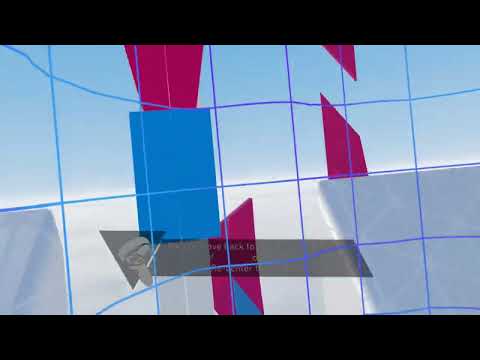
@Crytek Climb 2 is great. I hope you make Climb 3. I beat The Chimney in under 10 seconds (1st place globally): youtube.com/watch?v=wkQgfH… The leaderboards don't load half the time. Please fix. Also your end of level time is always slightly different than your leaderboard time.
YouTube video
YouTube
English
0
0
0
41
George Reisman
George Reisman@GGReisman·
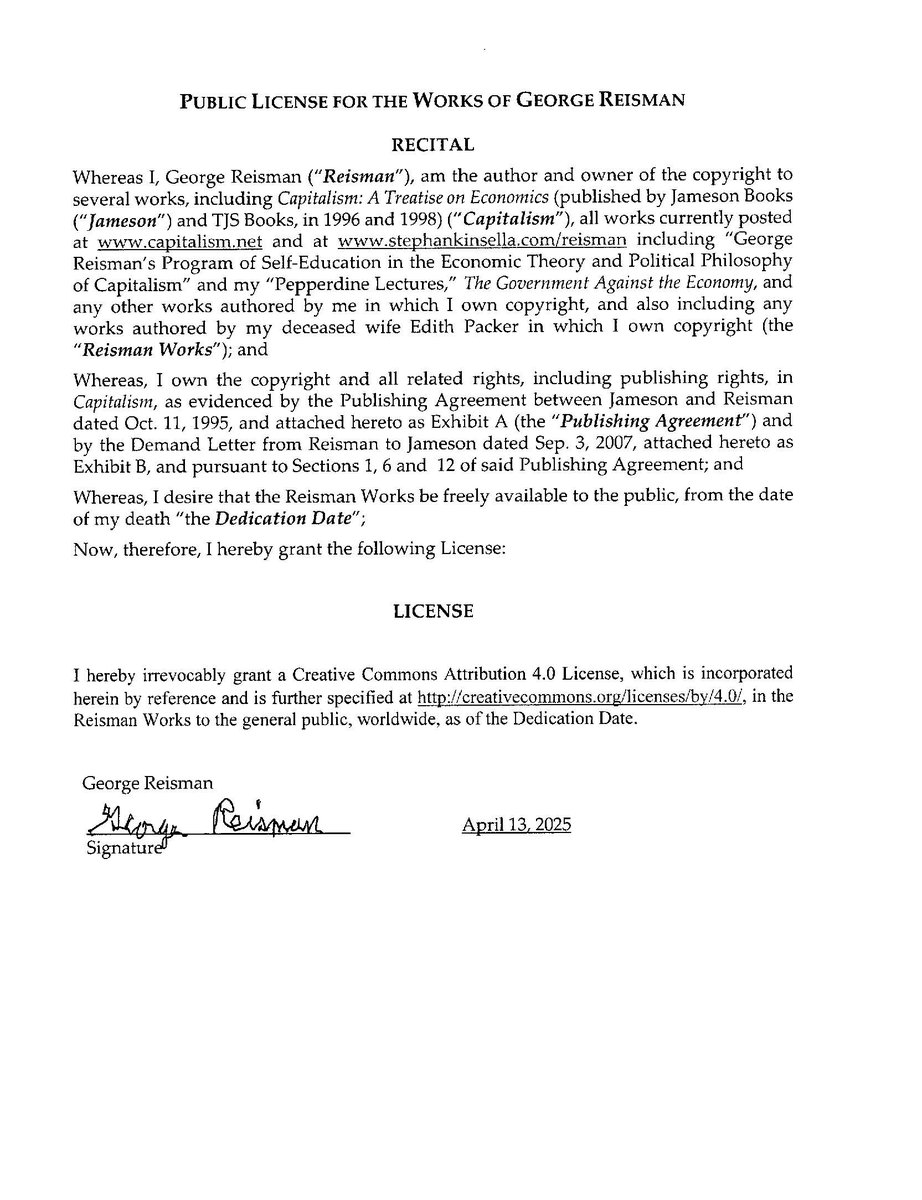
This public license for my works, which takes effect upon my death, was previously published, but my signature, which is vital, was mangled, because it was in the wrong computer format. That error is corrected, below. Here is a link to this post, x.com/GGReisman/stat…, which I urge be copied and pasted into some file that is frequently accessed, so that it can be easily found when needed.
George Reisman tweet media
George Reisman@GGReisman

This public license for my works, which takes effect upon my death, was previously published, but my signature, which is vital, was mangled, because it was in the wrong computer format. That error is corrected, below.

English
19
11
94
8.5K
Divia Eden 🔍
Divia Eden 🔍@diviacaroline·
@meekaale @mbateman @astupple “because he and others aren't open to debate and criticism” As you might imagine, this doesn’t match my experience with Aaron!
English
4
0
12
640
Elliot Temple
Elliot Temple@curi42·
The current cryonics companies are basically a scam selling false hope.
English
1
2
1
0
Elliot Temple
Elliot Temple@curi42·
@ThibaultDiP @PaulRBerg Did you or anyone else you know of write down criticism of what you think I got wrong which I could read and try to learn from?
English
0
0
1
81
Thibault
Thibault@thib_boi·
@PaulRBerg I have not read what he wrote here. But I’ve read other stuff that does not make me want to check it (I know, don’t judge an idea by its source but still…)
English
1
0
0
91
Thibault
Thibault@thib_boi·
The first lesson of a fallibilism-based worldview is that you must always adopt the least wrong option. Works with science, politics, morality. We will never have the ultimate truth on something so better work with the least worst option available… until we create a new one!
English
6
4
38
1.4K
Elliot Temple
Elliot Temple@curi42·
@TheBlapse I didn't disappear, unless you mean quitting Twitter. I've written CF articles and posted on the CF forum.
English
0
0
1
71
Elliot Temple
Elliot Temple@curi42·
@ESYudkowsky @MichaelDPlant Good short argument. You should put it in on a webpage with a list of at least a dozen objections people have plus answers! My issues are how do you know we're on track to make something smarter than us and, underlying that, what do you think intelligence/smartness is?
English
0
0
0
43
Eliezer Yudkowsky ⏹️
Eliezer Yudkowsky ⏹️@ESYudkowsky·
@MichaelDPlant It's impossible to tell what will be someone's sticking point. Everyone comes in with a different reason they're not getting the short argument: "We're on track to make something smarter than us, we're not on track to successfully shape what it wants, everyone dies."
English
38
10
194
27.3K
Michael Plant
Michael Plant@MichaelDPlant·
I've noticed that (1) I'm somewhat worried about AI risks (2) I find the arguments from AI safety folk unconvincing and offputting For (2), it's that, if you really think we're all going to die, where is your clear, simple, short, jargon-free argument that shows this?
Jess Whittlestone@jesswhittles

I've had quite a lot of conversations with ppl sceptical of AI risk who want really detailed, realistic threat scenarios to be convinced At the same time, most arguments for the benefits of AI are very general and don't spell out benefits & how we'll get them in a lot of detail

English
62
5
96
84.1K
Dominic Cummings
Dominic Cummings@Dominic2306·
@jasoncrawford with respect i dont think is right. @DavidDeutschOxf supports careful experiments with AIs as they expand their power. ~ everyone I talk to involved practically in this field thinks experiments/iterative safety is the only practical path incl @ESYudkowsky
English
6
2
14
13.8K
Jason Crawford
Jason Crawford@jasoncrawford·
The most important issue in the AI safety debate right now is not *what* the risks of AI are (object level), but how we should even approach the problem (meta level). And the biggest question is rationalism vs. empiricism.
English
7
16
85
59.2K
Elliot Temple
Elliot Temple@curi42·
@YitziLitt @ESYudkowsky @northead Are you interested in extended discussion with the explicit goal of actually reaching conclusions? I'm sick of people who just quit after a few back-and-forths. And Twitter isn't suitable. Do you want to come to my Discourse forum or suggest another public venue?
English
1
0
1
90
Yitz
Yitz@YitziLitt·
@curi42 @ESYudkowsky @northead Hey, I’m no expert, but I’m generally on Yudkowsky’s side on many (but not all) positions, and would be happy to chat/debate! If you’re interested, let me know (also we could chat either publicly or privately, whichever you’d prefer)
English
1
0
1
139
Eliezer Yudkowsky ⏹️
Eliezer Yudkowsky ⏹️@ESYudkowsky·
For the record, I never describe myself to the media as an expert / researcher / scientist in Artificial Intelligence; if they give me the option, I say I'm a "decision theorist".
English
30
9
375
87.5K
Elliot Temple
Elliot Temple@curi42·
@ESYudkowsky @northead I'm an expert on Critical Rationalism. You ignored my criticism over 10 years ago. I don't think you'll debate me re AI risk now. You don't post criteria for who & what you will or won't debate. If someone else on your side will debate to try to reach a conclusion,send them to me
English
1
0
1
225
Eliezer Yudkowsky ⏹️
Eliezer Yudkowsky ⏹️@ESYudkowsky·
@northead Nope. I think it's one of the most centrally relevant fields to the problem, on par or even above other related fields I've studied like evolutionary biology or statistical learning. (Stochastic gradient descent is pretty simple by comparison, but I do know it.)
English
2
0
28
3.8K
Elliot Temple
Elliot Temple@curi42·
@sebkrier People don't take it well when your reply is basically "I disagree with your unstated premises". Also there's no where to reply without being ignored or censored. Also the lead author of that paper was trolling last time we spoke.
English
0
0
0
46
Séb Krier
Séb Krier@sebkrier·
It's disappointing that many AGI risk skeptics seem to base their views on vibes (person X is weird/luddite/wrong tribe) or historical analogies (we survived Y fine), rather than dealing with actual arguments. Why not just reply to the points made here? arxiv.org/abs/2209.00626
English
32
25
222
47.4K
Alex Epstein
Alex Epstein@AlexEpstein·
Article on Greens taking anti-science positions begins by calling malaria-friend Rachel Carson scientific!... fb.me/1l5qYZvoI
English
1
0
0
0
CatGirl Kulak 😻😿 (Anarchonomicon)
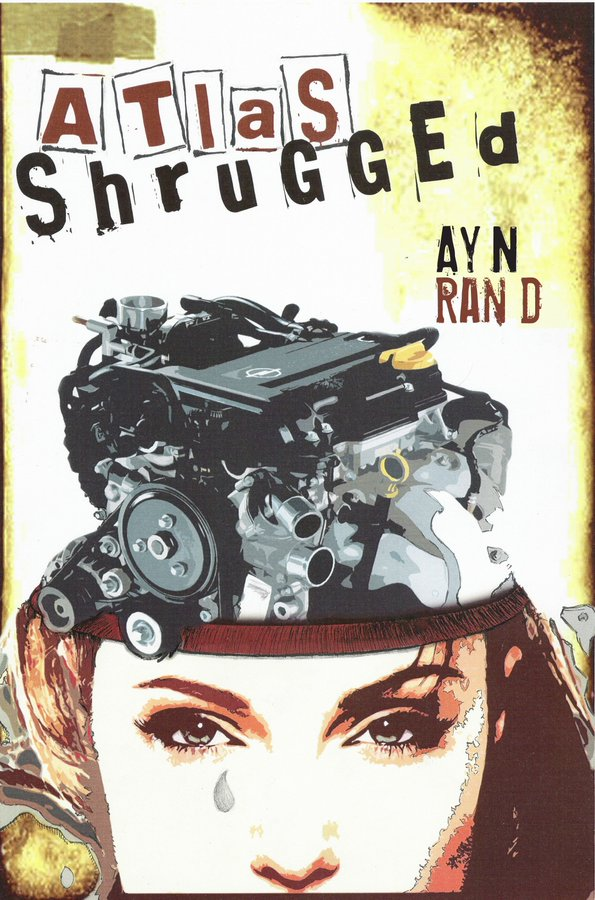
🧵1/ Sneering Illiterates brace yourselves... I'm just going to say it. The great American novel has been written and its ATLAS SHRUGGED. Irrespective of her philosophy Ayn Rand might just be the greatest prose stylist America has ever produced
CatGirl Kulak 😻😿 (Anarchonomicon) tweet media
English
42
63
455
126.6K