
Ebobisse retweetledi
Ebobisse
11.3K posts



Ebobisse retweetledi
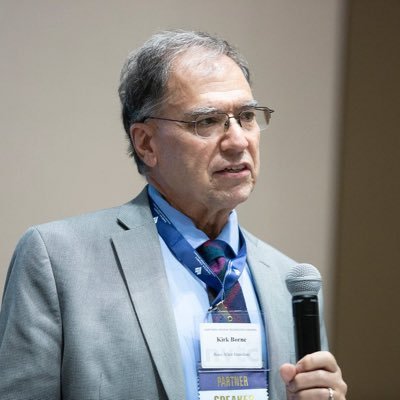
[Download 585-page PDF eBook]
Game Theory: arxiv.org/abs/1512.06808
—————
#GameTheory #Gamification #Mathematics #Statistics #Probability
English
Ebobisse retweetledi

🚨Architects are going to hate this.
Someone just open sourced a full 3D building editor that runs entirely in your browser.
No AutoCAD. No Revit. No $5,000/year licenses.
It's called Pascal Editor.
Built with React Three Fiber and WebGPU -- meaning it renders directly on your GPU at near-native speed.
Here's what's inside this thing:
→ A full building/level/wall/zone hierarchy you can edit in real time
→ An ECS-style architecture where every object updates through GPU-powered systems
→ Zustand state management with full undo/redo built in
→ Next.js frontend so it deploys as a web app, not a desktop install
→ Dirty node tracking -- only re-renders what changed, not the whole scene
Here's the wildest part:
You can stack, explode, or solo individual building levels. Select a zone, drag a wall, reshape a slab -- all in 3D, all in the browser.
Architecture firms pay $50K+ per seat for BIM software that does this workflow.
This is free.
100% Open Source.
English
Ebobisse retweetledi
Français
Ebobisse retweetledi
II. Les contacts que j'ai avec des traders (UAE, Moscou et Houston), confirment l'éclatement total du marché.
On négocie désormais cargaison par cargaison, et le marché des "futures" est de fait à l'arrêt car nul ne veut s'engager au-delà du moment.
Français
Ebobisse retweetledi

The US & the UK are the top two source countries for remittance inflows to Nigeria.
The third is perhaps surprising — it’s Cameroon.
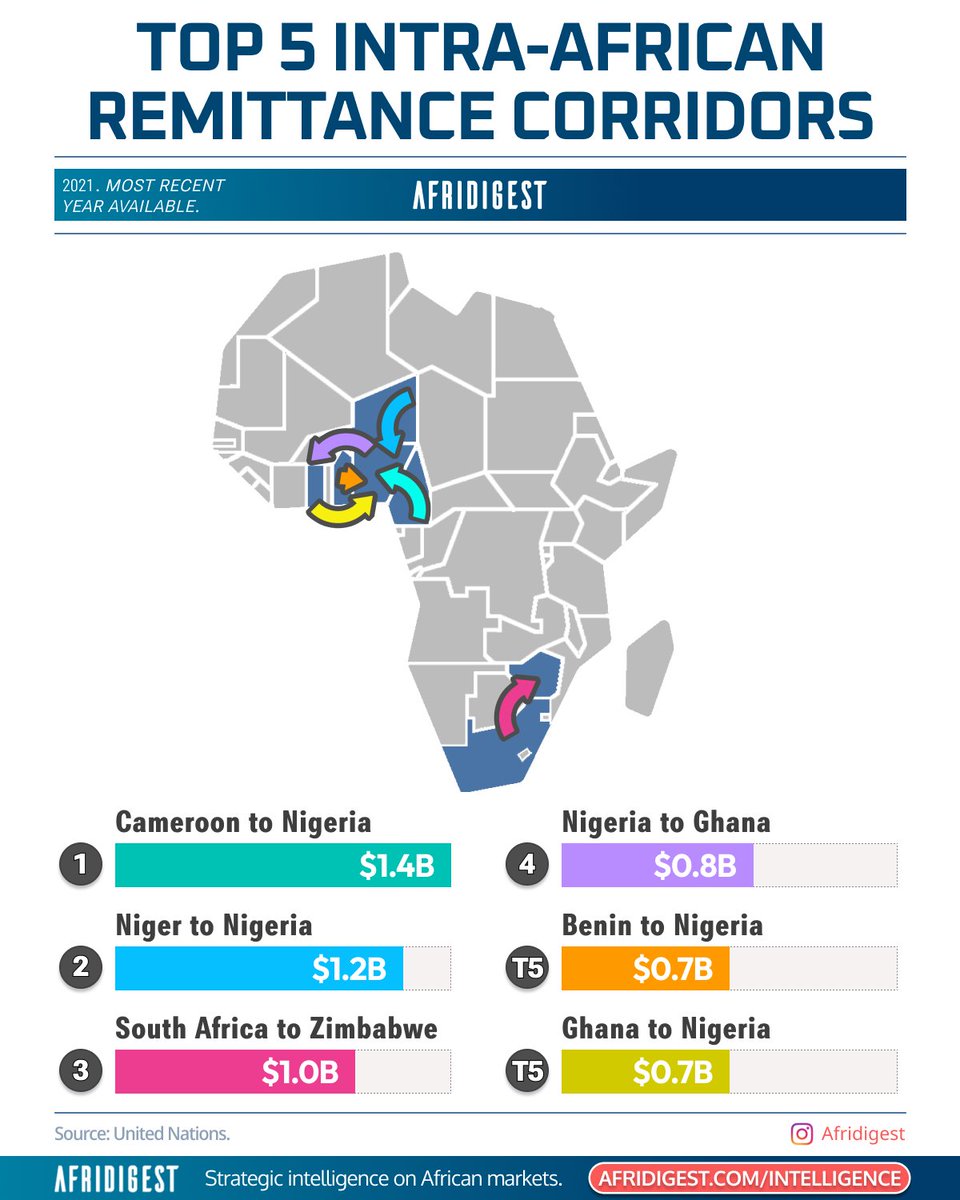
In fact, Cameroon to Nigeria is the largest intra-African remittance corridor across the continent.
Nigeria isn't just a top destination for intercontinental remittances — it's the dominant hub for intra-African flows too.
Here's a look at the top five corridors:
#1 - Cameroon to Nigeria
#2 - Niger to Nigeria
#3 - South Africa to Zimbabwe
#4 - Nigeria to Ghana
#5 (tie) - Ghana to Nigeria
#5 (tie) - Benin to Nigeria
In total, ~$20B in remittances are sent within Africa annually.
And that's a significant prize that fintechs & banks across the continent and beyond are increasingly targeting.
Just this week, for example, Tanzanian fintech @NALAmoney and British-Estonian money transfer platform @Wise both announced securing International Money Transfer Operator licenses from the Central Bank of Nigeria.
---
Via Afridigest Intelligence — Cut through complexity & act with confidence in Africa's growth markets: afridigest.com/intelligence
English
Ebobisse retweetledi

Ebobisse retweetledi

Des policiers du Montréal ont débarqué à une fête de Camerounais pour un contrôle et ont fini hypnotiser par un son de Magasco. J'espère qu'après on leur a servi le reste du Ndole !!
Cc @securitequebec
Français
Ebobisse retweetledi

@5iemeElement @securitequebec Ce que nous vivons ici c’est le minimum que nous demandons à Biya avec sa police de bandit-braqueurs
Français
Ebobisse retweetledi

@luxemiaa Having to simplify every single conversation until you feel like you are talking to a child.
English
Ebobisse retweetledi

@luxemiaa An age gap can be counted in years, but an intelligence gap is measured in conversations that never reach the same depth. Being with someone who can’t meet you intellectually feels lonelier than being alone because your mind has no place to land.
English
Ebobisse retweetledi

@luxemiaa Age gaps can be negotiated.
Money gaps can be managed.
Distance gaps can be traveled.
But an intelligence gap?
That one will have you explaining the same simple thing 47 times and still hearing, “I don’t get it.”
English
Ebobisse retweetledi
The equity risk premium (ERP) is an essential ingredient in hurdle rates in corporate finance, discount rates in valuation and expected returns in financial planning. In 2009, I pulled together everything I know about the ERP, in a paper that I have updated every year since. My 2026 update is now available to download and it is written for practitioners. papers.ssrn.com/sol3/papers.cf…
English
Ebobisse retweetledi
US coalition to re-open Hormuz strait:
🇪🇺Europe:
· 🇪🇺EU Commission: Rejected❌
·🇩🇪Germany: Rejected❌
· 🇫🇷France: Rejected❌
· 🇬🇧United Kingdom: Rejected❌
· 🇮🇹Italy: Rejected.❌
· 🇪🇸Spain: Rejected.❌
· 🇳🇱Netherlands: Rejected.❌
· 🇳🇴Norway: No commitment.❌
Rest of the world:
· 🇯🇵 Japan: No commitment.❌
· 🇦🇺 Australia: No commitment.❌
· 🇨🇦 Canada: No commitment.❌
· 🇨🇳 China: No commitment.❌
· 🇮🇳 India: No commitment.❌
· 🇰🇷 South Korea: No commitment.❌
Looks like a success.
English
Ebobisse retweetledi

Ebobisse retweetledi

Je suis en Chine, à Beijing la capitale, une puissance mondial.
- Mon hôtel: 50$
- Mon Café: 2$
- Mon taxi: 18$ pour 30 min
- Rendez-vous médical à 15h: 40$
- Demain prise de sang aucune attente.
Mais le Canada est un pays libre.
Hahaha.
Français
Ebobisse retweetledi

🧠🇯🇵 L’ingénieur discret à l’origine des petits carrés qui ont transformé notre manière de communiquer.
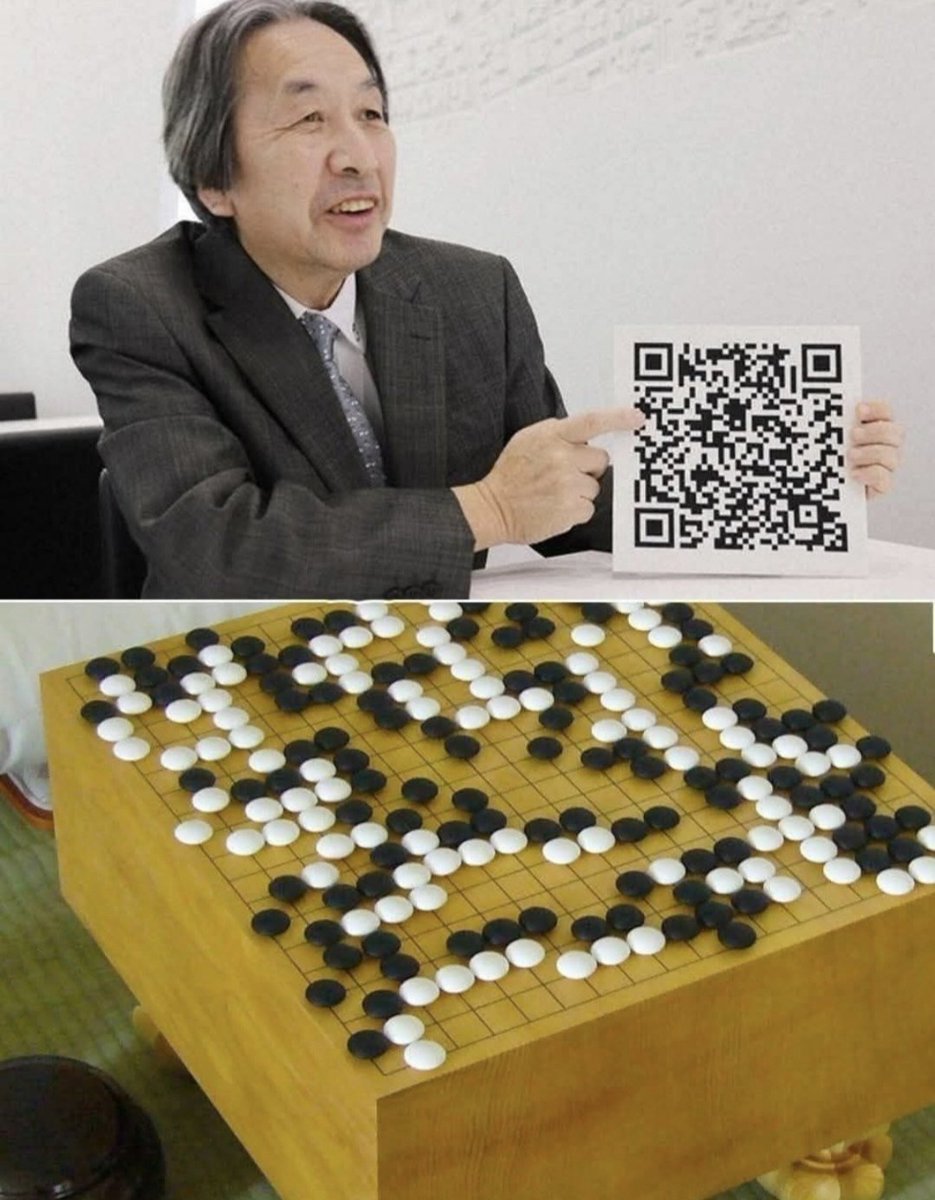
En 1994, dans l’ombre des laboratoires de Denso Wave, un ingénieur japonais nommé Masahiro Hara s’attaque à un problème que personne ne voyait vraiment, mais que toute l’industrie subissait. Les codes-barres, omniprésents, étaient devenus un frein : trop lents à lire, trop limités, incapables de suivre le rythme d’un monde en accélération.
Hara ne cherchait pas à révolutionner la planète. Il cherchait simplement une solution.
L’inspiration surgit là où personne ne l’attendait : sur un plateau de Go, ce jeu de stratégie millénaire où des pierres noires et blanches s’organisent en motifs complexes. Devant lui, une évidence prend forme. Et si l’information pouvait être structurée de la même manière, non plus en ligne, mais en surface ? Non plus linéaire, mais spatiale.
Quelques mois plus tard, un nouveau symbole voit le jour : un carré composé de modules noirs et blancs, capable de contenir une quantité d’informations sans précédent. Le QR code — pour “Quick Response”.
Mais ce n’est pas qu’une évolution. C’est une rupture.
Contrairement aux codes-barres traditionnels, ce nouveau langage visuel peut être lu instantanément, dans toutes les orientations. Il reste fonctionnel même lorsqu’il est partiellement endommagé. Et surtout, il transporte des données complexes dans un espace minuscule.
Trois décennies plus tard, cette invention silencieuse est devenue une interface universelle. Elle relie le monde physique au monde numérique en une fraction de seconde. Menus de restaurants, paiements sans contact, dossiers médicaux, transports, authentification, produits, accès à l’information : ces carrés sont désormais partout.
Sans bruit. Sans signature.
Masahiro Hara n’est pas devenu une célébrité. Il n’a pas cherché la lumière. Pourtant, son idée, née d’un jeu ancien, est aujourd’hui scannée des milliards de fois chaque jour.
Une invention minuscule, devenue l’un des ponts invisibles les plus puissants entre les humains et le monde numérique.
Français
Ebobisse retweetledi

In 1998, Warren Buffett explained how to never lose money. MUST BOOKMARK🔖
The lecture was 1 hour 24 minutes long.
The company built on those ideas is now worth $1 trillion.
This is the closest thing to a cheat code that exists.
I'm sharing my latest viral find with you - watch even 5 minutes and your trading mindset will shift forever.
Share it. You'll thank yourself later.
English
Ebobisse retweetledi

The rejection from Berlin was the signal. China’s export lockdown is the confirmation. We are no longer discussing a "disruption"; we are witnessing the Nationalization of the Global Food Chain.
Here is the analytical reality of the "Second Trap."
1. The Geometry of the Trap
The world is being squeezed by two distinct, rational, yet catastrophic logics:
* The Iranian Blockade (Physical): By shutting the 21-mile Strait of Hormuz, Iran has physically trapped 33% of global seaborne fertilizer and 44% of global sulfur. There is no "Red Sea detour" for the Gulf. If it doesn't pass the Strait, it doesn't exist for the market.
* The Chinese Lockdown (Administrative): Beijing’s March 16th halt of NPK blends and extension of the phosphate ban through August is a "lifeboat protocol." China imports 4 million tonnes of Gulf sulfur annually to process its own phosphate. With that sulfur supply cut off by the first trap, China has moved to hoard its remaining domestic inventory to ensure its 1.4 billion people don't face a caloric deficit.
2. The Sulfur Cascade: The Silent Killer
Most analysts focus on Urea (Nitrogen), but Sulfur is the hidden foundation of the entire system.
* The Moroccan Crisis: OCP (Morocco), the world’s largest phosphate exporter, relies on 3.7 million tonnes of Gulf sulfur to convert rock into fertilizer. Without it, the "Phosphate King" is a king without a crown.
* Simultaneous Disruption: For the first time since the industrialization of agriculture, we are seeing a simultaneous collapse of all three primary nutrients (N-P-K) because the energy and the chemicals required to make them are trapped behind the same 21-mile chokepoint.
3. The Indian Buffer vs. The Clock
India’s 17.7 million tonne stockpile sounds impressive, but it’s a paper tiger when mapped against the calendar:
* The Subsidy Black Hole: New Delhi’s fertilizer subsidy bill has ballooned to 1.86 lakh crore rupees. At $700/tonne for urea, the fiscal math for the 2026 Kharif season is unsustainable.
* The Production Halt: Indian plants are already throttled to 60% capacity because the Qatari LNG required to run them is not arriving.
* The Climate Overlay: With a 60% probability of a below-normal monsoon (per Skymet), India is facing a "scissors crisis": less water and less fertilizer at the exact same moment.
The Verdict
The market's "quick resolution" thesis died because it assumed global solidarity. Instead, we got National Triage.
Germany’s refusal to clear the mines ensures the molecules stay in the Gulf. China’s refusal to export ensures the molecules stay in China. The rest of the world is left with a planting calendar that is moving toward a zero-yield horizon for the world’s poorest farmers.
English
Ebobisse retweetledi
