larry rothschild
789 posts

@CENTCOM 🚨🇮🇷🇺🇸🇸🇦 JUST IN: An IRGC spokesperson claims five U.S. KC-135 refueling aircraft were struck at a U.S. base in Al-Kharj, Saudi Arabia.
#Breaking #Iran #USA #SaudiArabia #AlKharj #KC135 #MiddleEast #Geopolitics
English

U.S. Sailors and Marines aboard USS Tripoli (LHA 7) arrived in the U.S. Central Command area of responsibility, March 27. The America-class amphibious assault ship serves as the flagship for the Tripoli Amphibious Ready Group / 31st Marine Expeditionary Unit composed of about 3,500 Sailors and Marines in addition to transport and strike fighter aircraft, as well as amphibious assault and tactical assets.


English
@WiredRalph11 @CENTCOM This has nothing to do with Israel. It's about making sure Iran can never threaten anybody with nuclear weapons.....
English

@CENTCOM More Americans on the way to die on behalf of Israel.
This is fucking disgusting
English
@JamNeiran @CENTCOM Nonsense, and Isreal did try to free Palestine of the cancer aka hamas
English

@CENTCOM Your army is finished and your country is morally and financially bankrupt. Game over.

English
@poordart @CENTCOM @FadiMansour77 It's not about Israel. It's about never allowing them iran to have a nuclear wepon or threat to there neighbors and the world
English


@steve76638 @archeohistories It was aliens how all religions started
English


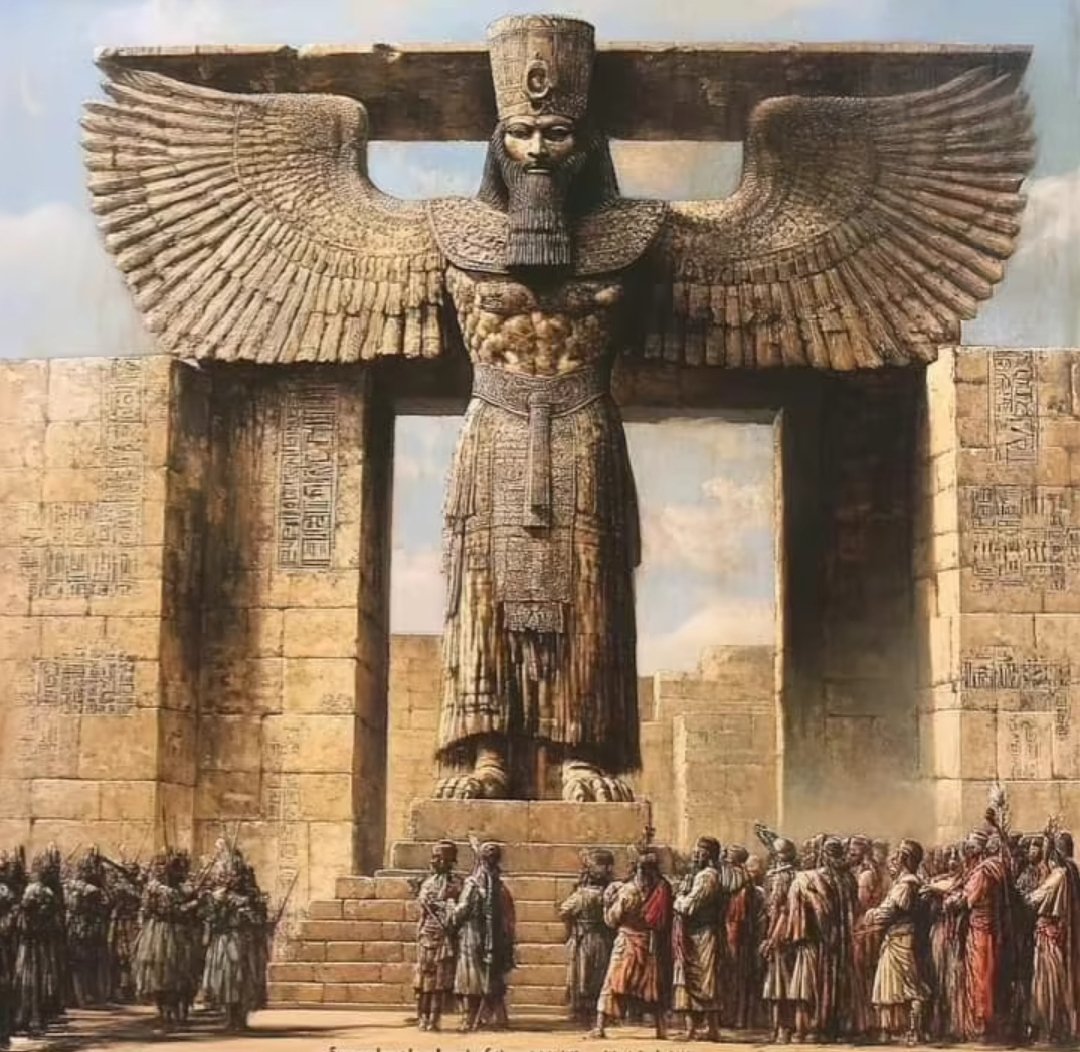
Anunnaki gods were worshipped by Sumerians of ancient Mesopotamia long before Greeks praised Olympian gods or Egyptians prayed to Osiris. While Zeus and the rest of Greek gods resided at top of Mount Olympus, and Osiris was god of earth and underworld, Anunnaki were winged deities who lived up in heavens and came down to Earth to decide on people’s destiny.
Sumerians had many myths involving Anunnaki gods passing judgment on humans. The gods were described as children of the Earth and sky. This indicates they were believed to interact with humans when they came down to Earth. Based on ancient carvings depicting deities of ancient Mesopotamia, some had wings, wore horned caps, and had bird faces, while others held something resembling a modern-day ladies’ purse.
Anunnaki descended from the god of heavens An and goddess of the Earth Ki. The word Anunnaki word can be translated into “princely seed” in Sumerian, but as a term, it remains poorly defined. There is hardly any evidence of an exact number of these gods and their various functions as historical texts deviate from one another. According to Sumerian beliefs, Heaven and Earth were inseparable until Enlil came along. Enlil split Heaven and Earth in two and carried the Earth away whilst his father, An, carried away the sky.
Sumer, one of oldest civilizations, estimated to have existed between 4500-1750 BC. It consisted of a small number of city-states, each organized around a temple now called a ziggurat, dedicated to Anunnaki gods’ worship. Ziggurats were layered pyramids with a flat top. Archaeologists consider those communities to be “servant-slave” populations dedicated to serving temple gods. Later, priesthood rulership was replaced by kings.
Babylonian cuneiform texts describe Sumerians as ancients. Despite their ancient origins, Sumerians had developed a sophisticated method of keeping time, dividing the day into hours, similar to way we count time today. They also invented cuneiform, one of earliest known systems of writing in human history. In addition, they invented plow. This played a great role in helping their empire grow.
Epic of Gilgamesh; so-called Mesopotamian Odyssey begins with five short poems in Sumerian language about Gilgamesh, king of Uruk. It is known from tablets that were written during first half of 2nd Millennium BC. The poems have been entitled “Gilgamesh and Huwawa,” “Gilgamesh and the Bull of Heaven,” “Gilgamesh and Agga of Kish,” “Gilgamesh, Enkidu, and the Netherworld,” and “The Death of Gilgamesh.”
The sophistication of Sumerians is demonstrated by a clay tablet translated in 2015 showing that ancient astronomers made extremely accurate mathematical calculations for the orbit of Jupiter a full 1400 years before Europeans did. These extraordinary advances in Sumerian civilization so early in antiquity that made some researchers doubt Sumerian mythology and extrapolate so-called ancient astronaut or ancient alien theories about Anunnaki. Fringe theorists believe Sumerian deities were aliens from another planet that ruled the Sumerians, sharing their advanced knowledge and intelligence with them.
Researcher and author Michael Cremo (Forbidden Archaeology), Zecharia Sitchin, Erich von Däniken (Chariots of the Gods), author and researcher Michael Tellinger, and several others argue that Anunnaki were actually aliens posing as gods.
Some of these theories also assert these aliens genetically engineered human race to be a slave species, influencing human affairs for millennia. These off-world gods brought advanced technologies that account for sophisticated megastructures such as pyramids or Stonehenge. Tellinger claimed that Anunnaki extracted massive amounts of gold using human labor and introduced the concepts of money, finance, and debt to human societies.
📷 : AI imagination
#archaeohistories
English

@fasc1nate Oh no, the Child Labor Laws must have relaxed in Hollywood.
English
Actors who were to portray the Munchkins in The Wizard of Oz arriving at MGM studios in 1938.
See more photos: bit.ly/44OpIzi

English

@konstructivizm This is the most famous fake image in entire library of fake images.
English
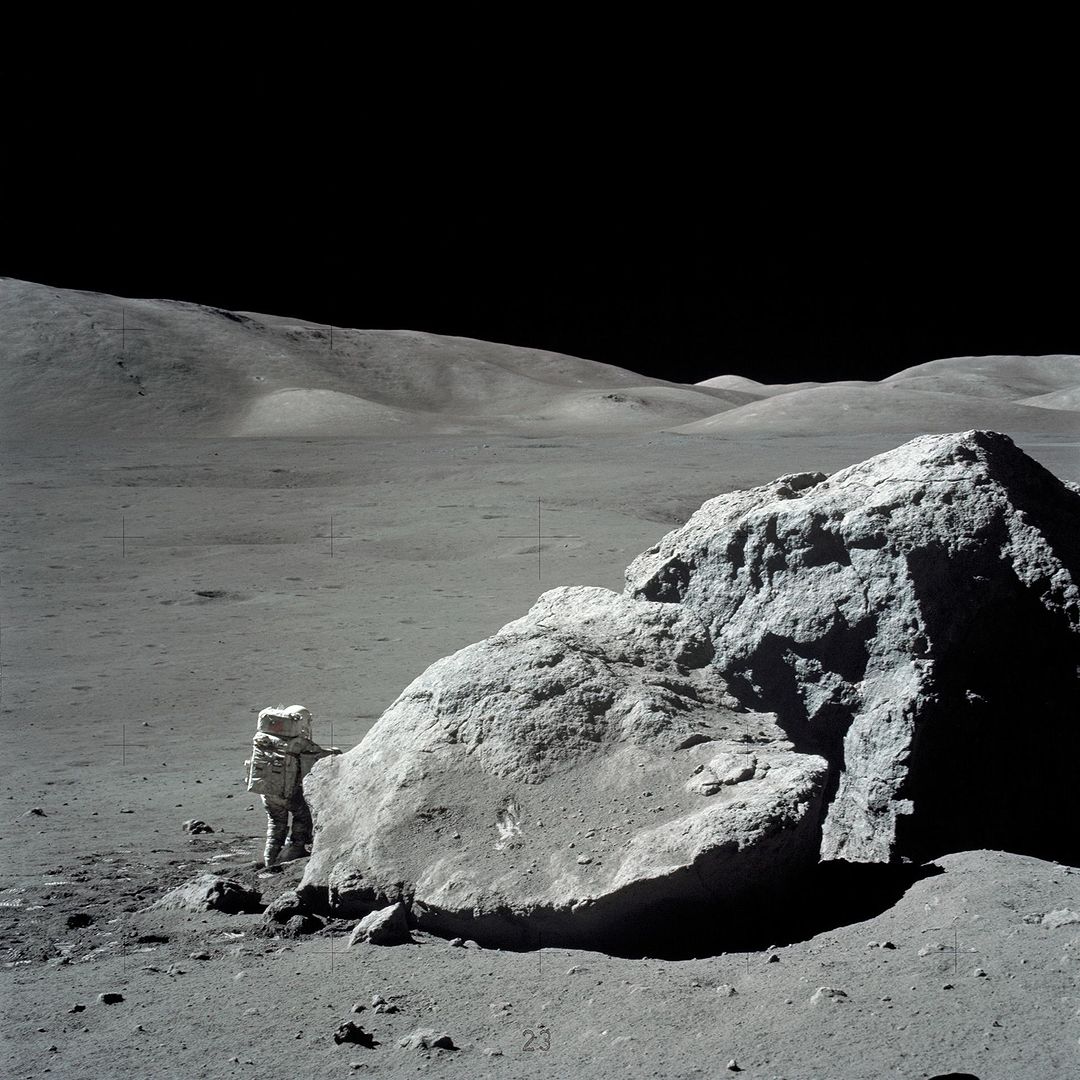
... this is a famous photo from the Apollo 17 mission (December 1972), the last human visit to the Moon to date.The image shows geologist-astronaut Harrison "Jack" Schmitt standing next to a massive split lunar boulder at Geology Station 6 (at the base of the North Massif in the Taurus-Littrow valley). It was taken during the third extravehicular activity (EVA-3) by mission commander Eugene Cernan.The boulder is known as "Split Rock", "Tracy's Rock" (named by Cernan after his daughter Tracy), or simply the Station 6 Boulder. It's impressive in scale—roughly 10 meters (33 feet) tall—and the photo beautifully illustrates the Moon's geological features and vast landscape.Here are several iconic versions and variants of this shot
This is one of the most iconic photographs from the entire Apollo program, highlighting both the scientific value of the mission and the stark beauty of the lunar surface.
English




@archeohistories the dead should be left dead.. it is organic decay, the spirit is what matters, is he with Jesus now or in hell?
English
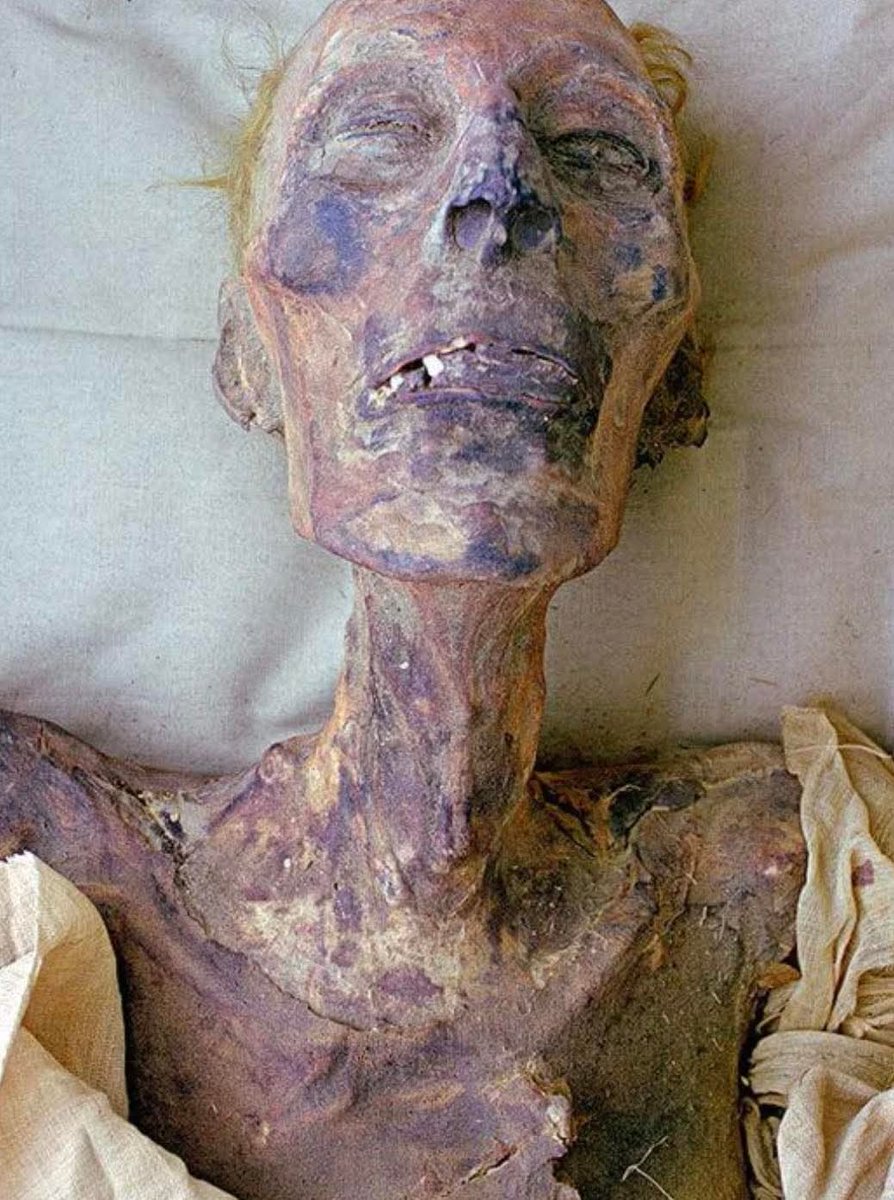
The Mummy of Ramesses II, also known as Ramesses the Great ....
Ramesses was one of the most powerful and long reigning rulers in ancient Egyptian history. Ramesses II ruled for approximately 66 years during the 13th Century BC, and became a symbol of imperial strength, monumental architecture, and divine kingship. He led numerous military campaigns, most famously against the Hittites at the Battle of Kadesh, and commissioned an extraordinary number of temples, statues, and monuments across Egypt, including Abu Simbel and the Ramesseum.
The condition of his mummy reflects both advanced embalming practices and the turbulent history of royal burials in ancient Egypt. Like many pharaohs, Ramesses II was reburied multiple times by priests attempting to protect his remains from tomb robbers. His body was eventually hidden in a royal cache at Deir el Bahari, where it remained undisturbed for centuries before its rediscovery in the 19th century.
Modern scientific studies have revealed remarkable details about his life. Analysis suggests he lived into his late 80s or early 90s, an exceptional lifespan for the ancient world. His preserved facial features closely resemble statues made during his reign, offering a rare and direct link between ancient art and the physical reality of one of history’s most famous rulers.
In 1976, Ramesses II’s mummy was flown to France for conservation and was issued an official Egyptian passport that listed his occupation as “King (deceased).”
#archaeohistories
English

@archeohistories Sad it was our own gov. That did this!
English
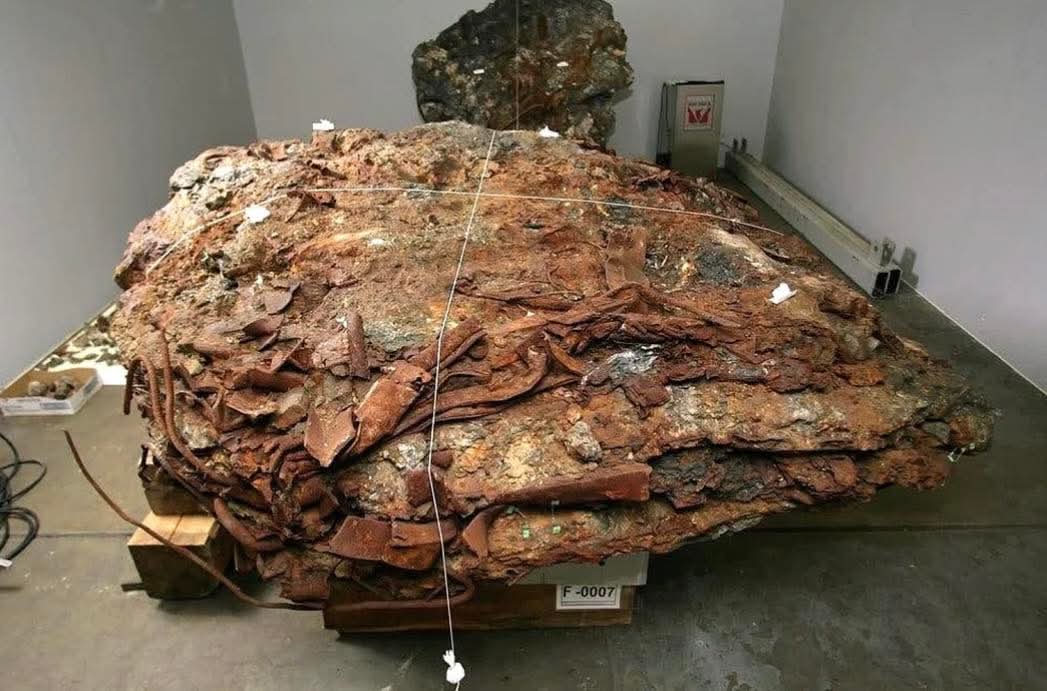
This is approximately 4 to 5 floors of the World Trade Center compressed, known as “The Meteor”...
This massive, misshapen block of steel is one of the most striking physical remnants recovered from the ruins of the World Trade Center after September 11. Nicknamed The Meteor by recovery crews, it represents several stories of floor trusses, concrete, wiring, and structural steel crushed together by the unimaginable force of the towers’ collapse. Rather than falling neatly, the upper sections of the buildings pancaked downward, compressing enormous amounts of material into dense, fused masses like this one.
The object’s appearance tells the story without words. Twisted beams are folded into each other, concrete is pulverized and baked onto steel, and layers that once stood stories apart are now flattened into a single form. Firefighters and engineers encountered dozens of these compressed steel clusters during the cleanup, many weighing tens of tons and requiring specialized cranes to remove.
Beyond its scale, The Meteor illustrates the sheer physics of vertical collapse. Gravity, structural failure, and sustained fire combined to generate forces far beyond what the buildings were designed to withstand. Today, artifacts like this are preserved not as curiosities, but as physical evidence of the event itself, grounding abstract numbers and timelines in something tangible and heavy.
Several compressed steel masses recovered from the site are now housed at the National September 11 Memorial and Museum, where they are intentionally left largely untouched to preserve their original condition from the recovery effort.
#archaeohistories
English
@BLKCRAIG1 @archeohistories Ahh no usa is and always will the best
English

@archeohistories Europe and the United States, always taking. Always greedy.
English
A grainy photograph taken in 1864 shows a group of Japanese samurai standing in front of the Great Sphinx of Giza in Egypt. This jolting image messes with our sense of history – the traditional Japanese clothes, the ancient Egyptian monument, and the European camera just don’t seem to add up. As unexpected as this combination may be, the 161 year-old photograph highlights a pivotal moment in the history of Japan and the globalized world.
The image depicts the Second Japanese Embassy to Europe, also called the “Ikeda Mission.” Under the order of the Tokugawa shogunate, the military dictators who ruled feudal Japan, local governor Ikeda Nagaoki was sent off to Europe in 1864 in a bid to resolve a burning disagreement over the port of Yokohama.
Alongside the 27-year-old was a delegation of 36 men. As we can see in images of the men taken in Paris, many were armed with two swords – an honor that was reserved for samurai, the educated warrior class of Japan who wielded significant political power at the time.
The second half of 19th Century was a time when Japan was at an existential crossroads. European colonizers had taken control of huge swathes of Asia, as well as Africa and the Americas. To hold them at bay, Japan had been acting on a strict isolationist policy called sakoku since 17th Century that attempted to cut off the island from outsiders in a push to preserve their culture. As part of this policy, Christianity was strictly forbidden and they only traded with the Chinese and the Dutch.
The proud island of Japan had managed to stay relatively untouched by the relentless force of colonialism, but it became increasingly clear that change was knocking at their front door. Around 1853, US Commodore Matthew Perry arrived on the shores of Yokohama with a fleet of American warships and demanded that Japan open up its ports for international trade. Reluctantly, they agreed, and the coastal settlement of Yokohama quickly became a hub of foreign trade.
Japan was understandably uneasy about the growing influence outsiders had on their country and anti-foreign sentiment became inflamed. In 1863, Emperor Kōmei promoted the edict: "Revere the Emperor, Expel the Barbarians." As part of the push to take back control, Ikeda was ordered to travel to France and demand an end to the open-port status of Yokohama. Onboard a French warship, Ikeda and his crew set sail, making stops in Shanghai, India and Cairo.
When making their pitstop in Egypt, they took the time to visit the Great Pyramids of Giza. It is here, at the foot of the Sphinx, where the delegation had their picture taken by photographer Antonio Beato. After traveling through Egypt by train, expedition set sail through the Mediterranean and eventually arrived in France. Ikeda met with the French, but their demands to close the port of Yokohama were outright rejected and the mission crumbled in total failure.
Japan was eventually forced to let go and concede. In 1868, the Japanese kick-started the Meiji Restoration. Following the overthrow of the Tokugawa Shogunate, the island opened its doors to Westernization, sparking rapid modernization, industrialization, and urbanization. Amid intense social change, Japan didn’t lose its identity. Still paying attention to their tradition and culture, Japan rose to become an imperial powerhouse that started to rival the West.
Perhaps they didn’t know it at the time, but when the Ikeda Mission stood at the foot of the Sphinx in 1864 they were standing on the precipice of Japan’s contemporary history, with the world's pre-modern past behind them and the uncertain modern future ahead.
📷© Antonio Beato
© IFL Science
#archaeohistories

English

@jkyrfkd @konstructivizm It's not if you were in orbit around this planet this is what you would see,,artist picture of what might look like
English

@konstructivizm What's with the stupid picture shows this planet next to the sun and it's way bigger? Dumbass shit
English
Imagine this: Just 40 light-years away, orbiting a dim red dwarf star called TRAPPIST-1, there's a rocky world the size of Earth — TRAPPIST-1e. For years, it's teased astronomers as the ultimate "Goldilocks" planet: perfectly positioned in the habitable zone where liquid water could splash across its surface... if it has the right atmosphere to make it possible.Now, the James Webb Space Telescope has peered deeper than ever. Across four transits in 2023, JWST's NIRSpec/PRISM instrument captured faint whispers in the starlight filtering through the planet's edge. No thick, puffy hydrogen blanket like a mini-Neptune. No scorching CO₂ hell like Venus, and no thin, frozen CO₂ veil like Mars. Instead? Tantalizing hints of a thin, stable secondary atmosphere — one born from the planet's own volcanic outgassing over billions of years.The data point to something nitrogen-dominated, much like Earth's air (78% nitrogen), possibly laced with traces of methane. This kind of envelope could trap just enough heat, shield against the red dwarf's nasty flares, and — crucially — allow oceans to exist without boiling away or freezing solid.Scientists are buzzing with excitement but keeping the champagne on ice. Stellar spots and flares from the rowdy host star are still muddying the signal. The current evidence favors a nitrogen-rich world over a bare rock... but it's not conclusive yet. More than a dozen additional JWST transits are already scheduled through 2025 to sharpen the picture and hunt for definitive chemical fingerprints — water vapor, maybe even biosignatures down the line.If confirmed, TRAPPIST-1e would instantly become the closest known "Earth twin" with a potentially habitable atmosphere — a prime target for the ultimate question: Are we alone?Source:
JWST-TROP DREAMS: NIRSpec/PRISM Transmission Spectroscopy of the Habitable Zone Planet TRAPPIST-1e // The Astrophysical Journal Letters, September 8, 2025 (and companion paper on secondary atmosphere constraints).

English

@konstructivizm It says this planet is the size of earth. But it looks huge compared to its sun. And there is noway a sun the size of a dot compared to that planet could possibly heat that planet.
English

@konstructivizm @grok what is the gray dust like particles in between the galaxies?
English
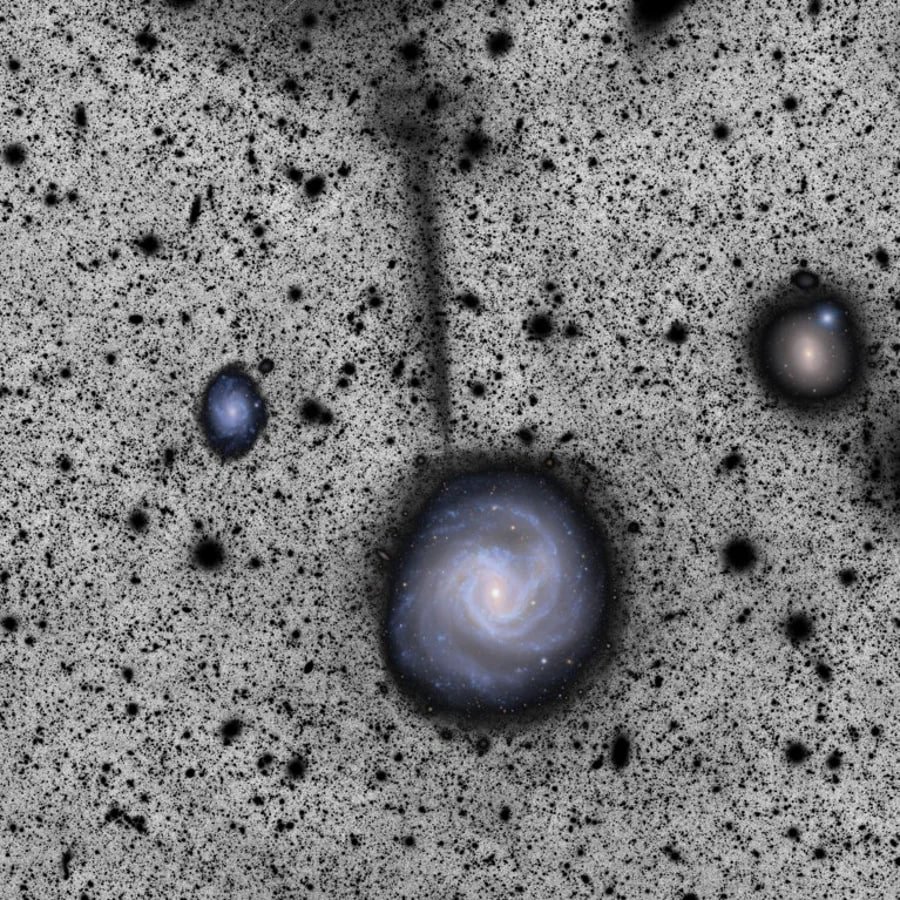
A giant stellar tail has been discovered in the galaxy M61.
A photograph taken by the Vera Rubin Observatory in Chile has revealed an unexpected detail in the structure of the galaxy M61. The galaxy has an extended stellar stream spanning approximately 55 kiloparsecs (approximately 180,000 light-years). This light trail, according to researchers, was formed after M61 engulfed a dwarf galaxy, disrupting it through gravitational interaction.
English
@therunway_times @engineers_feed @grok It will take millions of years to leave our galaxy, it's nearly out of are star system
English

@engineers_feed @grok how far is Voyager 1 and how many were sent and what happened to the others.....what speed does it travel on and is it out of our Galaxy yet?
English

Pale Blue Dot is a photo of Earth that was taken by the Voyager 1 space probe in 1990 from a distance of about 6 billion kilometers (3.7 billion miles) as it was leaving our solar system. This is what Carl Sagan said about the photo:
"Look again at that dot. That's here. That's home. That's us. On it, everyone you love, everyone you know, everyone you ever heard of, every human being who ever was, lived out their lives. The aggregate of our joy and suffering, thousands of confident religions, ideologies, and economic doctrines, every hunter and forager, every hero and coward, every creator and destroyer of civilization, every king and peasant, every young couple in love, every mother and father, hopeful child, inventor, and explorer, every teacher of morals, every corrupt politician, every 'superstar,' every 'supreme leader,' every saint and sinner in the history of our species lived there — on a mote of dust suspended in a sunbeam.
The Earth is the only world known so far to harbor life. There is nowhere else, at least in the near future, to which our species could migrate. Visit, yes. Settle, not yet. Like it or not, for the moment the Earth is where we make our stand. It has been said that astronomy is a humbling and character-building experience. There is perhaps no better demonstration of the folly of human conceits than this distant image of our tiny world. To me, it underscores our responsibility to deal more kindly with one another, and to preserve and cherish the pale blue dot, the only home we've ever known.”

English

@konstructivizm Does anyone else ever wonder if this is just a picture from the desert? I mean how can we actually see the Rover on another planet? Is there even a telescope strong enough to be able to see a little bitty rover on another planet? How do we know we're not just being hustled?
English
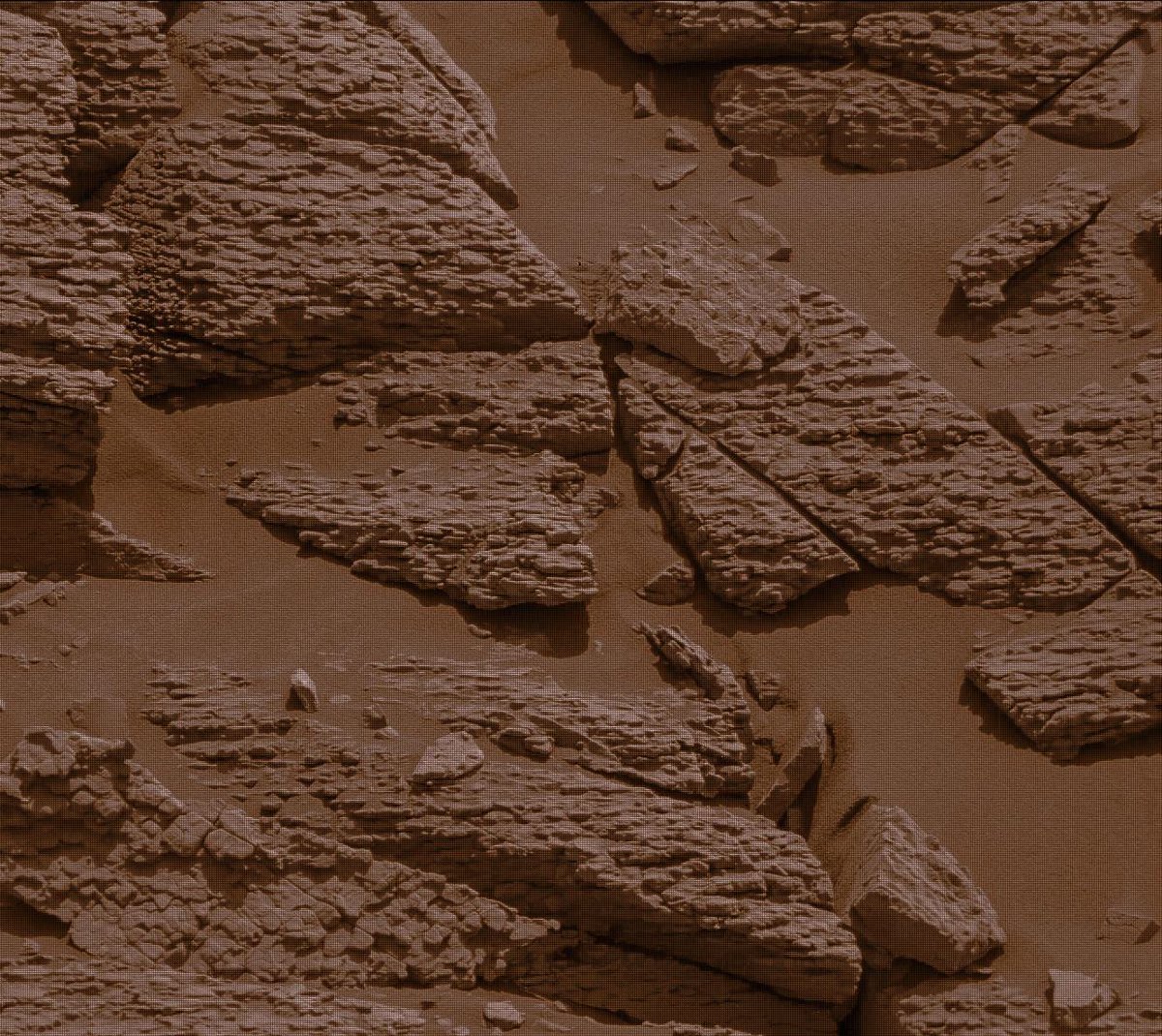
NASA's Curiosity rover captured one of its latest images on September 5, 2025, showcasing the dramatic transition from smooth ridge bedrock to nodular formations on the edge of a shallow hollow in Gale Crater.
This Left Navigation Camera photo highlights the intricate boxwork terrain on Mount Sharp, where erosion and ancient cementation have sculpted Mars' surface into ridge-and-hollow patterns.
The rover's masthead shadow is visible in the frame, adding a sense of scale to the rusty-red rocks and dusty expanse under the Martian sky.
Scientists are using this image to evaluate potential drill sites, comparing the chemical compositions of the smoother ridges and bumpy hollow edges to unravel the planet's geological history.
As Curiosity continues its ascent through this alien landscape on Sol 4650, the photo underscores the rover's enduring quest to probe for signs of ancient habitability on the Red Planet.
English

@konstructivizm @grok how many planets are estimated to be in galaxy M-51
English
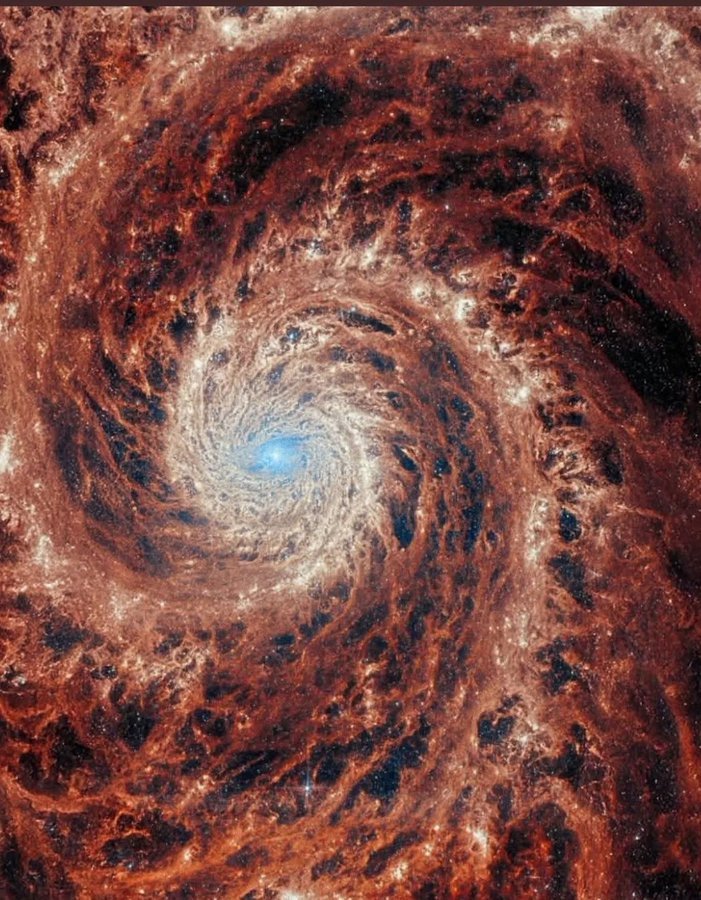
The James Webb Space Telescope unveils a breathtaking view of the M-51 galaxy, its radiant spiral arms shimmering with starlight and intricate patterns of dust, captured in vivid clarity that transforms the Whirlpool Galaxy into a dazzling cosmic dance, revealing the universe’s grandeur and whispering its ancient secrets in a single, awe-inspiring frame.
NASA
English
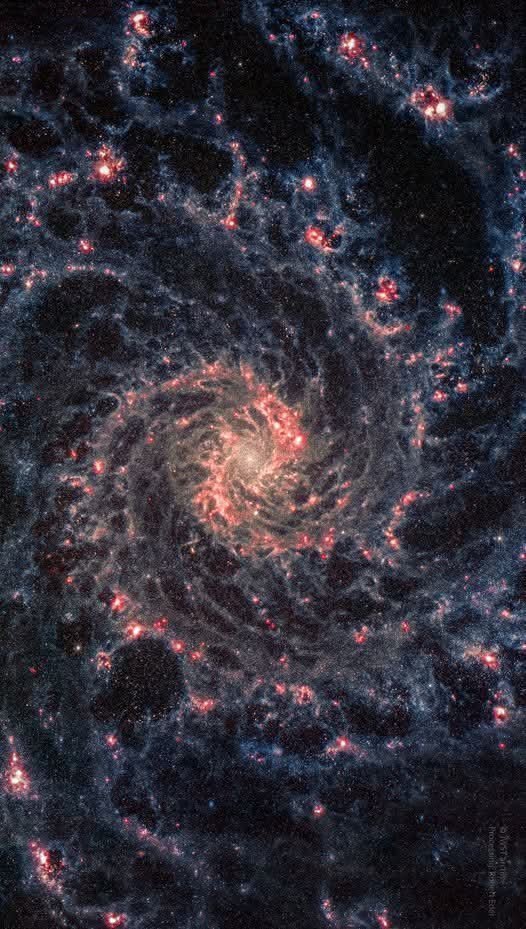
This is the Phantom Galaxy (M74), about 32 million light-years away from Earth and spans around 95,000 light years (almost as big as the Milky Way). It contains about 100 billion stars
NASA
English