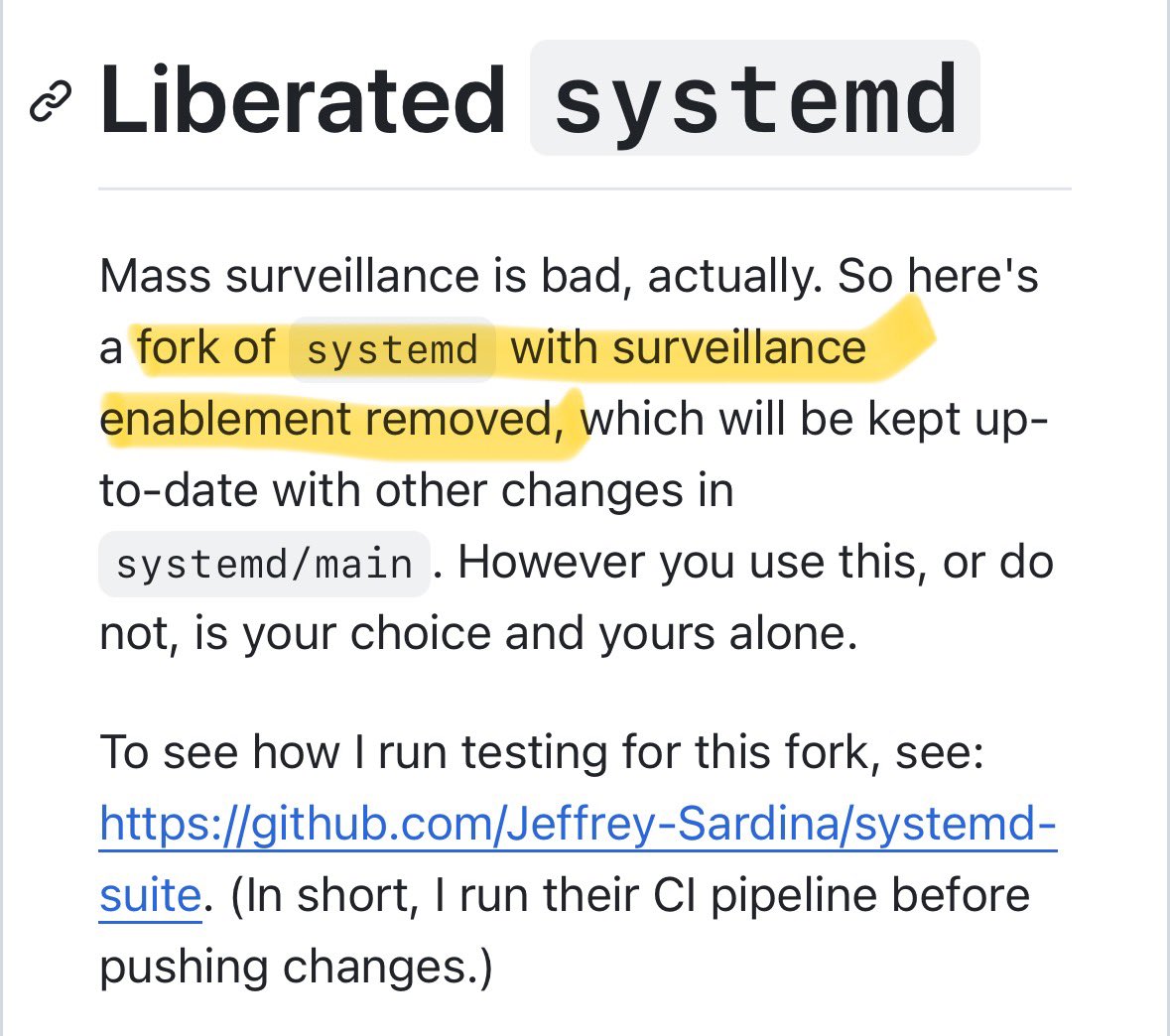
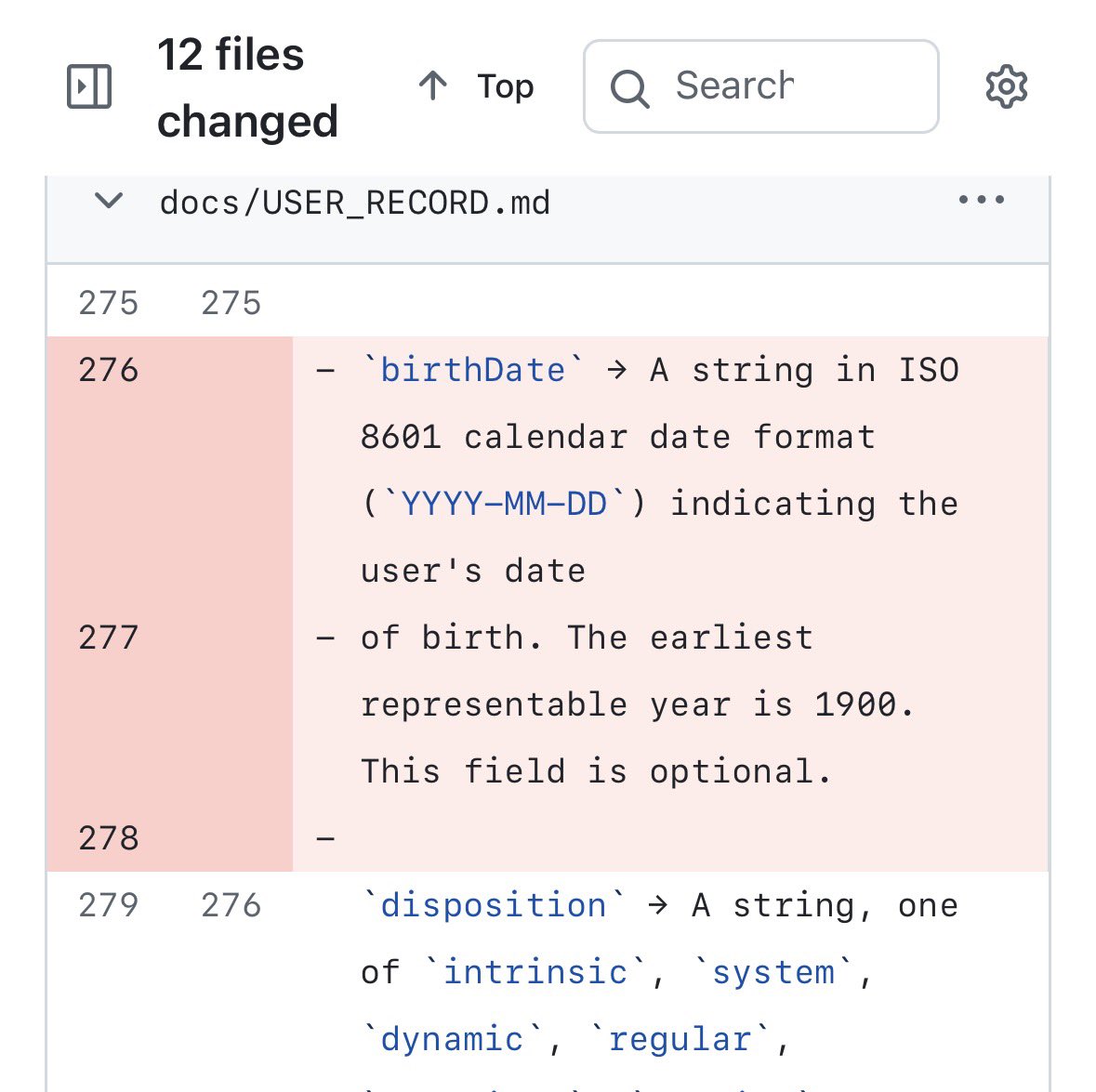
“Liberated systemd” is a systemd fork which removes the recently added Age Verification supporting functionality.
This is exactly how Open Source is supposed to work.
Don’t like the direction a project is going? Fork it!
github.com/Jeffrey-Sardin…
Claude is helping me organize my whole music career and other businesses in days ... and it's moving my business forward at a high rate! Some tech youngbull I met on LinkedIn gave me a incredible template! Who else can help me with Claude
These are some Linux distributions that don’t use systemd as their default init system. Instead, they use alternatives like SysVinit, OpenRC, runit, s6, or dinit. These options are simple and good for beginners.
Devuan:
Devuan is a direct fork of Debian that does not use systemd. It uses SysVinit by default, but you can also choose OpenRC or runit. Devuan is stable and feels familiar if you have used Debian or Ubuntu before. The installer is straightforward, making it a good choice for servers or desktops if you want Debian-like simplicity without systemd. The current stable release is Excalibur, which is based on Debian Trixie.
antiX:
antiX is based on Debian and is extremely lightweight. It is fully systemd-free and uses SysVinit. antiX includes user-friendly tools, IceWM or other light window managers, and has great hardware support for older computers. It is simple to install and run, and many users praise it for being easy to use while staying minimal.
MX Linux (SysVinit variants)
MX Linux is based on Debian and is closely related to antiX. It is known as one of the most user-friendly distributions. MX Linux offers editions with SysVinit instead of systemd, and it includes excellent graphical tools like MX Tools for package management, backups, and system tweaks. It is very approachable for beginners who want a polished experience.
Artix Linux
Artix Linux is based on Arch but does not use systemd. During installation, you can choose from OpenRC, runit, dinit, or s6. Artix offers pre-configured desktop editions like XFCE and KDE, and it uses the Calamares installer, which is simpler than the standard Arch installer. Many users find Artix fast and easy to use once it is set up. It is a good middle ground if you want Arch-like rolling updates with an easier start.
There are other notable systemd-free options, such as Void Linux, Alpine Linux, and Chimera Linux. However, these tend to be more minimal and technical, so they may not be as simple for most desktop users.
If you are coming from Ubuntu or Mint and want a similar experience, try Devuan or the SysVinit edition of MX Linux.
If you want something lighter, give antiX a try.
IFFFF.... This birthdate thing really comes to Linux. Systemd having a spot to store that date saves the community a lot of headaches. Every app and service can just check the date. I think people are missing the bigger picture here.
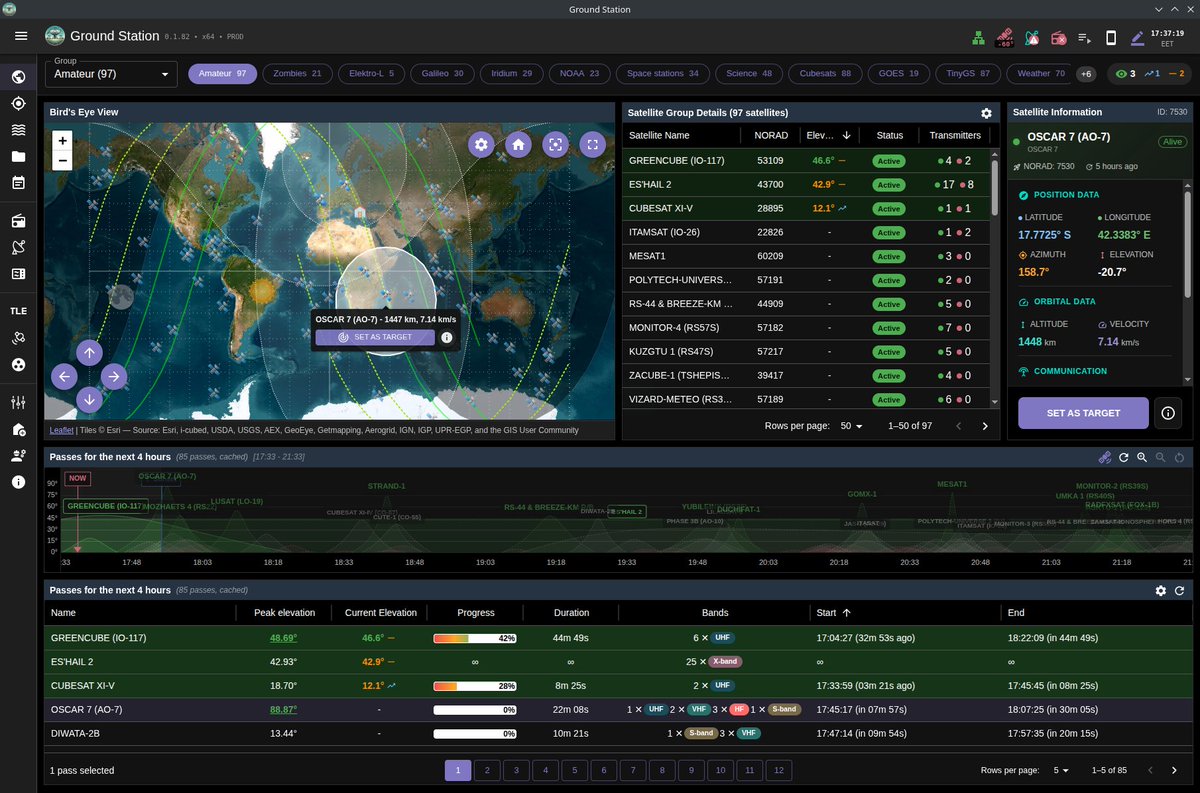
🚨 BREAKING: Someone just open-sourced a full suite for tracking satellites and decoding their radio signals locally.
You don't even need the internet. It uses an SDR to pull weather images and raw data straight from space to your hard drive.
100% Open Source.
Linus Torvalds created Linux at 21 without Claude or any other AI.
- He didn't have a co-founder.
- No VC funding. No office.
- No team.
- Just a personal project
he posted to a mailing list:
"I'm doing a free OS."
33 years later,
it runs 97% of the world's servers, all smartphones, and the International Space Station.
The most important software in history started as someone's side project.
Absolute legend.
We've built a brand around a timeless, clean style. We offer extremely comfortable jeans that boast durability and flexibility, all at a fair price.
- Ultra-Comfortable
- 3-Core Fits
- Added Stretch
I think Iran knew ahead of time this war was coming. They've been scanning for video streams way before the public knew orange Caesar was gonna start a war.