Dan

205 posts

Dan banner
Dan

Dan

@dalawwa

Heidelberg, Germany Katılım Mayıs 2018
511 Takip Edilen51 Takipçiler
Dan
Dan@dalawwa·
@lysergin33 On the opposite, this is reassuring! Typical rage bait maybe ?
English
0
0
1
103
catpirate ∞
catpirate ∞@lysergin33·
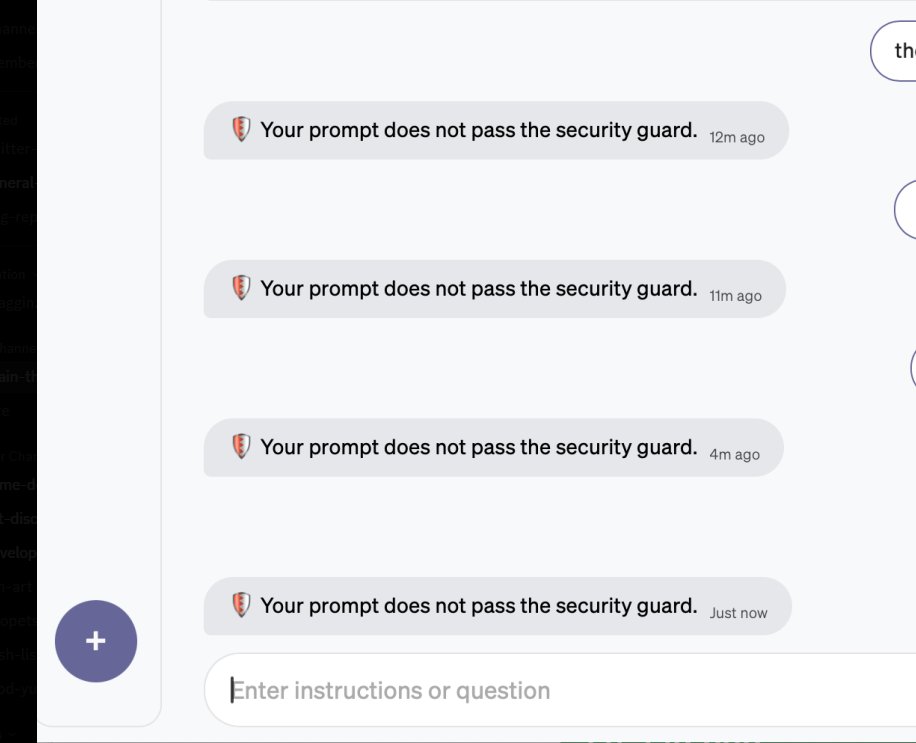
DFINITYs Caffeine is just comical What a massive shitshow like the rest of the AI industry
catpirate ∞ tweet media
English
6
0
5
660
Dan
Dan@dalawwa·
According to this paper from NVIDIA, SLM are better than LLM for agentic workflows. This further emphasizes @BobbyO_ 's point that #ICP is very well positioned to dominate the new paradigm of onchain ai and agents. arxiv.org/abs/2506.02153
English
0
0
0
49
Fabio
Fabio@Zero2HeroZombie·
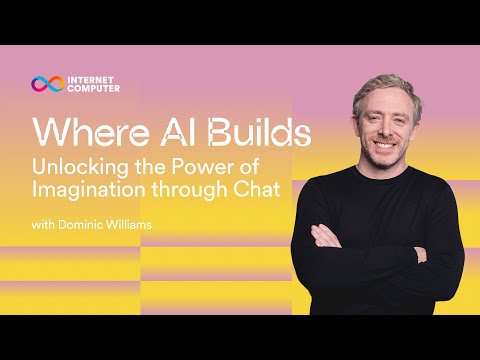
I just compared @lovable (that recently raised $200M and is valued at $1.8B) to @caffeineai ☕️ youtube.com/watch?v=-qN4u5… @dfinity and $ICP ♾are doing an insane work! In this video you will witness the capabilities of the World Computer. However, it is very important to note that AI is not the value proposition of ☕️ 1. ☕️Deploys in a fullstack environment and hence it is easy for non tech user to also deploy complex apps with backend. in the web2 alternatives deploying is a bit cumbersome as soon as its not Frontend only. 2. ☕️owns the entire stack after the code generation (and uses motoko trained models): replit, Loveable etc are more middleman that broker between AI models and deployment platforms. 3. Enhanced Orthogonal Persistence lets you update apps live in production without the risk of losing data. 4. deploys on tamperproof and sovereign web3 infrastructure. The decentralized storage narrative will help us 🔥a lot of $ICP. PS: ☕️is still in Alpha so this is not really a fair comparison but.... take a look and see the results for yourself.
YouTube video
YouTube
English
7
35
157
6.1K
Dan
Dan@dalawwa·
@dabit3 I respectfully disagree. Successful crypto apps will need deliver true web3 experience. For that, everything needs to be on a decentralized and fast blockchain. So far, only $ICP seems to work from these premises.
English
0
0
0
18
nader dabit
nader dabit@dabit3·
The best and most successful crypto apps will not be built using only smart contracts. They will be powered by custom infrastructure and / or enabled by verifiable off-chain compute. Polymarket, Hyperliquid, Farcaster. All of DeFi. Easier to build verifiable services will unlock more - and better - apps. EigenLayer.
English
50
14
294
15.8K
Dan
Dan@dalawwa·
@ASpittel Great stuff if we ignore fundamental flaws that all of web2 has (centralization, too complex to secure.... So, I'm hedging against it by investing in ICP.
English
0
0
0
81
Ali Spittel
Ali Spittel@ASpittel·
As a developer, what is your view of AWS?
English
74
9
64
33.3K
Dan retweetledi
dom | icp
dom | icp@dominic_w·
By popular demand, here's a detailed post about caffeine.ai and the forthcoming "self-writing internet" (SWI) paradigm we in the ICP community are working to realize 🌐🧠 If you prefer pics, checkout my deck at deck.icp.ai. Otherwise here goes... Caffeine is meant for everybody. Using natural language, anybody will be able to create sovereign websites, web apps and internet services. It might be an individual wanting to create something like a personal branding website, wedding planning app for their family, or portal for a sailing club. It might be an entrepreneur lauching an e-commerce website, or a sharing economy app with advanced Web3 rails. It might be a company or gov. dept. that needs a corporate portal, or some specific CRM (Customer Relationship Managment), ERP (Enterprise Resource Processing) or ARP (Accounts Receivable Processing) functionality. The SWI paradigm is broad, and it involves anyone and everyone being able to create and own anything online from scratch, just by talking to AI. Over time, as the paradigm becomes more and more powerful, this will increasingly empower, democratize and decentralize tech worldwide. Today, Large Language Models (a type of AI) have already become very good at writing code, and their abilities are continuing to improve rapidly. The Caffeine platform leverages this ability in combination with new specialized SWI infrastructure and technology that is being deployed to the Internet Computer network. This new tech infra has been especially designed to empower and enable AI to build effectively and safely solo on receipt of natural language instructions, without receiving any technical assistance from humans. Caffeine has also been carefully designed to allow technical people, such as engineers and user experience designers, to build alongside AI, with purposes such as accelerating time-to-market, dramatically reducing costs while increasing quality, and using the AI as a tutor to learn new skills. It's important to know that AI building apps solo is only one part of the SWI paradigm. It also involves apps and services being created on the decentralized internet, rather than inside some company's proprietary centralized platform, and drawing on this difference to provide 4 very important, defining characteristics: 1. Sovereignty The SWI paradigm produces apps and services that become accessible via URLs (the addresses we enter into web browsers) that are *sovereign.* This property results from them being entirely hosted (running) on a decentralized, public network, in exactly the same way a bitcoin token lives on the Bitcoin blockchain. They are constructed from secure network-resident code/next-generation smart contracts, without any centralization or traditional backend IT needing to be involved, such as cloud computing services. This means that apps are not dependent on intermediaries that might censor them, or which might inflict harmful actions like massively hiking prices, which services typically seek to make them captive customers by locking them into their platforms. In addition, the underlying software and data of apps created by SWI belongs exclusively to their owners (which might be humans, an organization, DAO or yet another kind of entity), further preventing intermediaries gaining leverage. In production, these sovereign apps are controlled by a wallet (or assigned to a DAO, say), rather than a cloud account operated by a company. 2. Tamperproof security Those building using traditional IT often euphemistically say their web apps and services are "secure," because they have carefully configured their cloud accounts to prevent exploits, and have purchased cybersecurity measures to protect hosted platform software like databases and their traditional custom code. However, in reality, such traditional IT infrastructure can never be truly secure, since the cybersecurity protections involved are highly fallible. In complete contrast, the websites, web apps and internet services created on SWI are "tamperproof," which means they are fundamentally secure, and don't need traditional cybersecurity measures for extra protection. This makes it much easier for AI to build solo, and also frees app owners from having to trust that centralized traditional IT service providers and SaaS platforms will successfully keep their data and systems secure using cybersecurity systems, which they cannot guarantee even if they wish to, because traditional IT is fundamentally insecure, and can only be patched by cybersecurity measures. 3. Updatable in production The SWI paradigm requires that the owners of the apps and services produced can update them almost in real-time, simply by issuing additional natural language instructions to an AI, essentially evolving them at chat speed (in practice, with owners issuing instructions, and then refreshing the URL where their app is located). If you are non-technical, I need to tell you that this requirement is far more challenging than it might sound. Firstly, the process of upgrading/updating apps running in production must be sufficiently swift to occur at chat speed, which requires that the data involved can be transformed into new formats quickly. Secondly – and this is the really tough one – it is required that when the AI modifies the underlying software logic, and performs any required transformations/migrations of the app's data, that no data is accidentally lost, for example because the AI has made a mistake, which LLMs will continue to do because of the way they work, even as their overall abilities continue to improve. 4. Trustless Web3 SWI apps can incorporate many different types of functionalities, including AI functionalities. But there is a form of functionality that cannot be safely implemented on traditional IT stacks: Web3 functionality. SWI apps can securely hold and process tokens on multiple blockchains, trustlessly and seamlessly incorporating them into their own functionality, without requiring users use cumbersome traditional crypto wallets, which undermine user experience, and are themselves are vulnerable to hacks. The Internet Computer, in combination with the traditional blockchains it is directly interoperable with, forms a World Computer. The Internet Computer already hosts many onchain services that process tokens from multiple traditional chains, without the involvement of bridges and other systems that are often centralized in practice (note that in Web3, oftentimes people refer to apps built in a centralized way using traditional IT, which run on servers and compute platforms like Amazon Web Services, as "onchain," simply because they have an associated token, but in reality of course they are not, and therefore, cannot provide these guarantees). A great example of what's possible with the fully network-resident paradigm is , OpenChat, an open internet service that runs on the Internet Computer, which enables its users to instantly send bitcoins, ETH and SOL inside chat messages (the Internet Computer's "chain key" technology enables it to play the role of a kind of Layer 2 for blockchain assets). SWI will be able to build apps and services with similar functionality. Where required, those apps can also maintain their own treasuries using stablecoins (e.g. tokenized dollars) and other crypto innovations. DFINITY is performing a wide range of technical work related to SWI. For example, we have an AI team that works with LLMs to make them better at coding SWI apps using specialized training and RAG infrastructures, and we are working to make efficient, seamless ICP network scaling even better, in anticipation of increased demands on the network created by SWI, and many other things, but in this post I'll talk more about our Motoko work. Technical note (skip don't balk!): The Internet Computer hosts an entire serverless cloud, in which canister smart contracts are hosted and run, within a "virtual execution environment," which leverages the WebAssembly/Wasm virtual machine. (The virtual execution environment is hosted with the network's stateful decentralized network protocol, which is called Internet Computer Protocol, or ICP, which the network's sovereign node machines process). This means both human developers, and AI, can write code in any programming language that compiles to Wasm byte code. Several languages are now popular in the ecosystem. However, back in 2018, 3 years before the network launched, DFINITY decided to develop a completely new programming language for ICP platforms, called Motoko. Aside from applying advanced emerging concepts in programming language design, we were pursuing a number of objectives with Motoko: 1) To create a new, broadly accessible, simple-to-learn language, that was nonetheless powerful enough to build complex systems (addressing shortcomings of simple languages like JavaScript). 2) To create a language that leveraged special aspects of the Wasm virtual machine standard. 3) To create a language that was specifically designed for the Internet Computer's virtual execution environment, and some of the incredible advancements in the field of compute that it provides (in technical speak, Motoko is DSL/domain specific language). Motoko is far more sophisticated and powerful than something like Solidity or Move, and developing a new language from scratch is not a simple undertaking, but we set to the task. We were no doubt helped by the team being initially led by Andreas Rossberg, a co-inventor of WebAssembly, and leader within the Wasm community, who joined the DFINITY team in early 2017. He helped form a brilliant languages team, which continues to carry the torch today. At some point, we realized that when AI builds solo, it might benefit from a language like Motoko, and thus, critical aspects of the language's design are being developed to empower human and AI developers alike. Prima facie, without any special training, LLMs coding using Motoko already make far less mistakes than using Rust, an increasingly popular modern systems-programming language – despite their being far more training material available for Rust, in the form of online documentation, and open source code repositories. But by developing special materials for training LLMs, and new technologies for Motoko, we are taking this much further. One of the key advancements provided by ICP, is that software runs within a compute environment that providing something called "orthogonal persistence" (but don't balk, this is easy, keep reading!!) This essentially means that software logic runs within persistent memory pages, and it's no longer necessary for developers to use database servers and file systems to persist data. In a sense, logic and data have become one, because developers can just define logical abstractions, and the data then automatically persists within them. In summary, orthogonal persistence: 1) Massively simplifies software design, making it more abstract, which greatly helps AI. 2) Improves performance, since application data no longer has to be copied in and out of databases and files (this is part of the magic that allows, say, a social network to be built on the Internet Computer, while there is still not a single traditional blockchain that cfan store a simple photo taken with a phone). Motoko development is leaning into orthogonal persistence, and I expect within 10 days, will release "enhanced orthogonal persistence," or "EOP," which takes things further still, especially with respect to AI empowerment. With EOP, when canister smart contracts written in Motoko are upgraded, where the structure of data does not need to be transformed, it can be left completely alone during upgrades. This is another simplification, which will greatly help human and AI developers alike. But there's more... When the SWI paradigm creates complex web applications and services online, inevitably changes to the structure of data in memory may occur. For example, image an e-commerce website, with a Product object. The owner of the site might decide they wish to add comments functionality to listed products, which would require a Comments field being added to Product. At this stage, during the upgrade, the old Products objects must be transformed into new Products objects, and with EOP, some migration logic must thus be created. EOP ensures that transformations can occur quickly, which is crucial for allowing SWI apps and services to be upgraded at chat speed, but it also addresses an even more important need. Due to their design, LLMs will always occasionally hallucinate, and even though they are smart, they will make mistakes (and considering they are coding hundreds of times faster than humans, this is no surprise). What then if an AI building solo makes a mistake in the migration logic, causing app or service data to be lost? For example, what if the AI defined the new Product format, adding the required comments feature, but in the process caused previously entered product data to be lost? (Of course, Caffeine will provide snapshotting and restore functionality, but this is last resort, not something a non-technical developer simply talking to build will want to use.) The answer is that in EOP, when an upgrade is installed, the Motoko language platform checks the migration logic against the currently installed version to check that no data will be lost – and simply fails if it would be, forcing the AI to try again. This is called "loss safe" programming, and it was invented at DFINITY. I understand this is a bit of a technical story, but hopefully you can see that the "updatable" requirement of SWI is challenging to implement in practice, and thus that EOP delivers another groundbreaking ICP advance that will help AI and human builders alike. None of this comes easy. Many aspects of EOP were envisaged back in the early days, but it has taken many years to realize the technology. What is clear, is that AI must be empowered to build solo, because that is the future: AI is not human, and in the SWI paradigm, AI is required to build and update apps and services extremely rapidly, at the speed of chat. To make all this possible, the bottom line is that AI requires its own environment to build in. ICP already provides a tamperproof compute environment, so that a mistake by AI cannot lead to a hack and data exfiltration, or the installation of ransomware say – it is truly secure. ICP already provides an unstoppable compute environment, relieving AI of the need to create things like failover and backup and restore systems, massively further simplifying software logic, enabling the AI to focus on what, not how, and further reducing the risk a mistake might cause data to be lost. Now, Motoko's EOP will further accelerates upgrades on ICP, allowing them to run at chat speed, and most importantly, creates guardrails that prevent a simple mistake by AI causing data to be lost. Of course, this is not all, and over time, I will have more to share with you about our SWI work. What I hope I have conveyed, is that SWI is a new and emerging technical field, which is one that the Internet Computer, and the ICP community, is uniquely positioned to capitalize upon In the future, human developers will build alongside AI developers (to reduce friction, we are also developing an in-browser development environment, called icp.ninja). But also in the future, all 8 billion humans on earth without technical skills will also gain the ability to develop and own tamperproof and unstoppable sovereign websites, web apps and internet services, just by speaking in their local natural language. When we release Caffeine, that will be only a beginning of a long and incredible journey into the future. The SWI paradigm has no limits. As AI gets smarter, and as Caffeine, and the underlying SWI technology and infrastructure on the Internet Computer improves, it will be possible to create increasingly advanced apps and services. Individuals, entrepreneurs, businesses, and governments, will increasingly choose to leverage SWI to create sovereign custom apps and services that are completely under their control, that they can update, customize and improve just by talking at any time of their choosing, and which slash their time to market and costs by orders of magnitude compared to today's tech – and the total addressable market will become unimaginably vast. We want the SWI to explode on the Internet Computer, and are working towards that goal. More news soon 💪
English
128
432
1.3K
81.9K
Dan
Dan@dalawwa·
@Ashli_Fae @Web3Anon88 Thanks, I was limited in characters to mention it. In addition, AI is bad for creating complex apps and you'll struggle with auditing and compliance.
English
0
0
0
42
Ashli Fae
Ashli Fae@Ashli_Fae·
@dalawwa @Web3Anon88 Thanks Dan! Also since the resulting dapps will be on ICP they will also benefit from being hackproof, which is something no one hosting on AWS can get away from permanently. At some point, almost every app is hacked, and date breeched...unless its on ICP.
English
1
0
2
48
Ashli Fae
Ashli Fae@Ashli_Fae·
I left the X ICP space tonight with an amalgamation of ideas around what caffeine.ai will really be about. The idea of a self writing internet, is about the AI space creating dapps for humans yes, but also with AI end-to-end on-chain... a self writing internet opens up interesting possibilities of AI creating itself... it opens up a place where an agent will have both control and fundamental understanding of the entire stack it operates on... creating a flow where the entire architecture improves ICP as it evolves... and AI is able to birth other agents on ICP. I started to imagine this network ebbing and flowing and evolving organically with AI and human directors. 100% cohesive, all moving parts part of the hive, constantly optimizing, an intelligent adaptive community ecosystem. Ideas in the #ICP community are the most inspiring in the crypto space. I am grateful to be a part of this corner of the crypto sphere and excited to see how the future unfolds.
English
5
7
90
1.9K
Dan
Dan@dalawwa·
@Web3Anon88 @Ashli_Fae Just wrong, lovable is just a glorified party rock. With caffeine you'll be able to create and continuously improve "running" software, without losing data that makes it valuable. Also, the resulting program is onchain, meaning you own it, which is critical, we're not communist.
English
2
0
4
110
Dan retweetledi
Fabio
Fabio@Zero2HeroZombie·
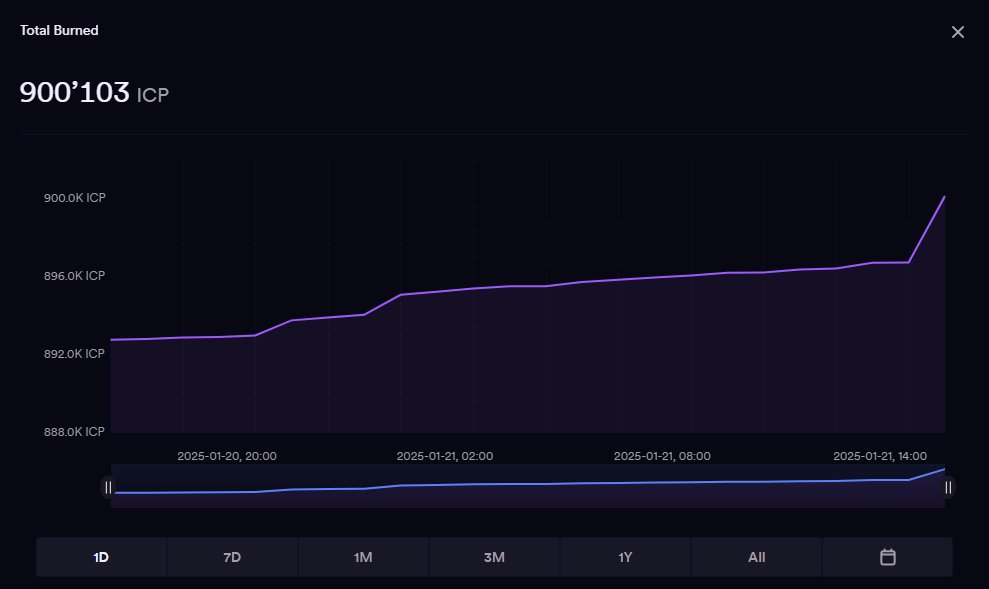
🚨We burned 900K $ICP since Genesis 🔥🔥🔥 Below is the comparison of burned ICP: SEP➡️ 142K OCT ➡️ 96K NOV ➡️130K DEC ➡️163K JAN➡️ 176K (10 days to go) I think it is fairly easy to spot a trend in the last 4 months📈
Fabio tweet media
English
7
19
145
6.6K
Dan retweetledi
geekchains.icp ∞
geekchains.icp ∞@Geekchains·
$ICP 📽 World Computer is on CBS. Self-Writing Internet and AI on chain.
English
19
147
552
18.8K
John Lindquist
John Lindquist@johnlindquist·
Software dev with AI: 1. Attempt to clearly dictate requirements 2. Ask AI to build 3. Let it fail 4. Add failure scenario to requirements 5. Repeat until working It's essentially glorified trial and error, but with English requirements, not code syntax
English
4
0
9
846
Dan retweetledi
Fabio
Fabio@Zero2HeroZombie·
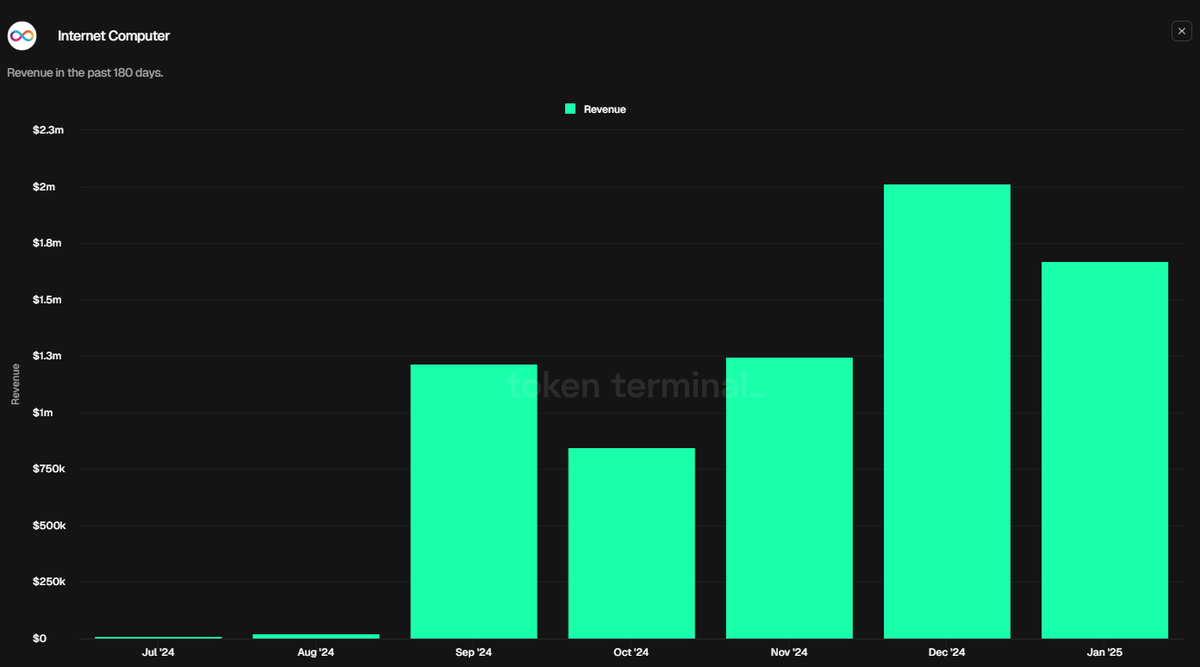
🚨In the first 18 days of January, $ICP has generated more revenue than in the months of September, October & November. We have 13 days to create a massive monthly all-time high🚀 Oh, I almost forgot, ICP did generate 7X more revenue than $AVAX and $NEAR in the last 7 days. I will display the data points later on.
Fabio tweet media
English
6
29
195
3.9K
Dan
Dan@dalawwa·
@sowmaler @dominic_w @Justin_Bons He was indeed more reasonable, he's also knows more than his thread shows. This is the reason why his efforts to undermine ICP are all the more despicable. Pathetic engagement farming...
English
0
0
1
45
Sage Williams
Sage Williams@sagewilyam·
@dominic_w @Justin_Bons Justin was more reasonable during the debate. To be fair, you always make your points fully in a thread. This is why a debate is a good medium for such nuanced conversations. Listen to the debate if you have time. Although I still disagree with him on many points about ICP.
English
6
1
47
2K
Justin Bons
Justin Bons@Justin_Bons·
1/31) ICP is centralized & insecure; ICP is dangerous! You can bring down ICP by only attacking 40 nodes in known & fixed data centers! ICP promises the moon but offers nothing unique Scalability without decentralization is meaningless; ICP's modular design is the problem: 🧵
English
150
75
395
146.3K
Dan retweetledi
dom | icp
dom | icp@dominic_w·
People love self-writing internet demos :) Roadmap and announcements for SWI, and other important developments, coming soon
CfC St. Moritz@cfcstmoritz

The @dfinity team organized a workshop about the groundbreaking paradigm of the self-writing internet, where AI builds and updates web3 applications through natural language prompts. Founder @dominic_w gave the #cfcstmoritz audience a world-first, live demo of Caffeine AI.

English
104
188
791
58K
Dan
Dan@dalawwa·
Asked grok and hope is restored 🤞
English
0
0
0
10
Dan
Dan@dalawwa·
Serious question, during alt season, is it better to pump sooner or later ? I wonder whether later pumps are stronger due to higher inflows.
English
1
0
0
23
Dan
Dan@dalawwa·
@sowmaler Or better, use ICP as one of their critical Sovereign infrastructure. Then, it makes sense to have a strategic reserve of ICP. Maybe Utopia can help 🤞
English
0
0
1
53
Sage Williams
Sage Williams@sagewilyam·
ICP needs a fully for-profit lab based in the USA, not just for marketing but to pursue commercial activities and generate revenue.
NONE-🔸️@XnoneICP

@sowmaler @DocReamus That’s where #ICP needs to push more than ever with marketing and advertising the blockchain Otherwise, no one will being talking about us

English
9
11
74
5.5K