Sabitlenmiş Tweet
Damo Mackerel 👣 2 + 2 = 4
8.9K posts

Damo Mackerel 👣 2 + 2 = 4
@DamoMackerel
My superpower is not to be offended by most things these days.

Waterford, Ireland Katılım Haziran 2014
2.7K Takip Edilen308 Takipçiler

How many Roman cities survived the Dark Ages collapse?
Comparing a database of 405 Roman cities to a database of medieval cities, we can see that around 33 Roman cities survived as cities into the 8th century.
The rest — around 372 (92%!) — were destroyed or depopulated to become small towns or settlements.

English
Damo Mackerel 👣 2 + 2 = 4 retweetledi

@PoltFan69 Those dancing tech girlies appeared in @GundamIsHere video. It's 8 min. long and contains naughty language, but it shows you how hard they slaved for Meta and other tech cos. youtu.be/6A-MiztY6e4

YouTube
English

@ProfHall1955 @ProfSteveKeen Would you recommend buying gold?
English

What's likely to happen next in the global economy? I'll keep it as simple as possible.
Firstly, the most significant sudden shortage in energy supplies in our history will cause supply-side inflation as the prices of most everyday goods rise. The bond market parasites will demand higher yields and longer maturities, spooking governments about deficit spending, which will have to rise anyway because of increased welfare demands caused by increasingly precarious employment. Irreconcilable tension right away.
Secondly, consumption and aggregate demand will fall, stalling growth and combining with inflation to cause what we used to call 'stagflation'. Skyrocketing prices will trash aggregate demand, asset prices, investment, employment and tax revenue, leading to a reversal into the realm of deflation, as experienced during the US Great Depression. Higher interest rates will further limit investment and state spending, tipping the whole shebang into a deflationary vortex.
Thirdly, states will have to react. So will voters. Far-right populism could expand, so the left will have to stop pissing about with identity politics and get back to political economy. The only partially effective measures capable of pulling back deflation, preventing widespread poverty and quelling civil unrest would be price controls, defict spending, public investment and employment, nationalisation of all infrastructure and key industries, a huge shift in progressive taxation aimed at the wealthy, negative bond yields (or the elimination of the primary and secondary bond markets), tarrifs on selected imports, and strict capital exchange controls.
Of course, the global creditor class would see all this as more instability and a threat to their power and free money. They would hoard their money, squeal for higher yields and interest rates and launch mass-media ideological campaigns to discredit politicians and intimidate voters. Hordes of irredeemably stupid individuals would agree with them and support the misery as an essential 'market correction'. Hours of fun on X.
Sounds very messy, doesn't it? So messy, in fact, that we might as well forget the whole thing and revive the only serious antidote and alternative. It's called socialism. It's not the most easily administered system, and some of the more avaricious, narcissistic and entitled individuals would experience limits on their economic freedoms, but anything is better than the chaotic lunacy that is late-stage capitalism.
English

@RaminNasibov The “secular” French Revolution executed three times as many people in 9 months (17,000+) as the “religious” Spanish Inquisition did in 350 years (5–6,000).
English
Damo Mackerel 👣 2 + 2 = 4 retweetledi

After more than two years of Milei, the international press still does not understand what is happening in Argentina.
The narrative abroad is "shock therapy, social pain, fragile coalition." That frame misses the actual mechanism. Argentina did not have a budget problem. It had a printing problem. From 2003 to 2023 the central bank financed deficit after deficit until the peso lost 99 percent of its value against the dollar. Annual inflation hit 211 percent in 2023. Half the country was poor. That was the floor.
What changed is not vibes. It is arithmetic. The fiscal deficit was eliminated for the first time in 16 years. Monthly inflation fell from 25 percent to low single digits. The central bank stopped printing to fund the Treasury. Country risk dropped from over 2,500 basis points to a fraction of that. Argentine sovereign debt, which used to trade like a default option, began behaving like normal emerging market paper.
Critics say poverty rose. It did, briefly, because removing price controls and subsidies revealed the real prices of energy, transport and food that the state had been hiding with debt. Once measured honestly, poverty has been falling fast. Real wages are recovering. Mortgages in pesos are reappearing, something that had not been possible in a generation.
This matters beyond Argentina. It is the clearest live experiment in whether a developed-style economy can be rebuilt by pulling the state out of places it never belonged. Spain, Italy and France should be paying attention. A country does not get poor because it lacks resources. It gets poor because its political class learned to live off printing money and calling it social policy.
Argentina spent 80 years proving that. It is now spending two years proving the opposite.
English

@Handre What about using a basket of currencies?
English

Argentina burned through 7 currencies in 100 years. The peso oro (1881-1970), peso ley (1970-1983), peso argentino (1983-1985), austral (1985-1991), peso convertible (1991-2001), and back to the peso again. Each collapse triggered by central bank money printing to fund government spending.
You can predict the entire sequence. Politicians promise stability with each new currency launch. They peg exchange rates, rename the units, lop off zeros. The IMF applauds their "structural reforms." Then fiscal deficits explode again, the central bank monetizes debt, inflation returns with a vengeance.
Javier Milei gets this (guy literally taught Austrian economics before taking office). His dollarization plan cuts through the charade completely. No more peso, no more central bank balance sheet games, no more currency resets every 15 years. Just adopt the dollar and force the government to live within its means.
English
Damo Mackerel 👣 2 + 2 = 4 retweetledi

What did socialists use before candles?
Electricity.
Milei in English - Official Account@jmilei_english
Being a socialist in 2026 is something to be ashamed of. Long live freedom, damn it!
English

@garrettmullan @declanganley It was a currency swap which Argentina has paid back in full with interest.
English

@declanganley not sure if this is true but I do know that the US gave Argentina a 40b bailout and that is much of its budget
English

For people that wonder why I am such a supporter of President Milei, why I attended his inauguration, why I met him in Florida a few months ago. It’s because he knows how to fix Argentina and repair the damage done by decades of misrule by economic illiterates. It’s because I knew he would implement policies like this:
Daniel Hannan@DanielJHannan
Works every time.
English
Damo Mackerel 👣 2 + 2 = 4 retweetledi

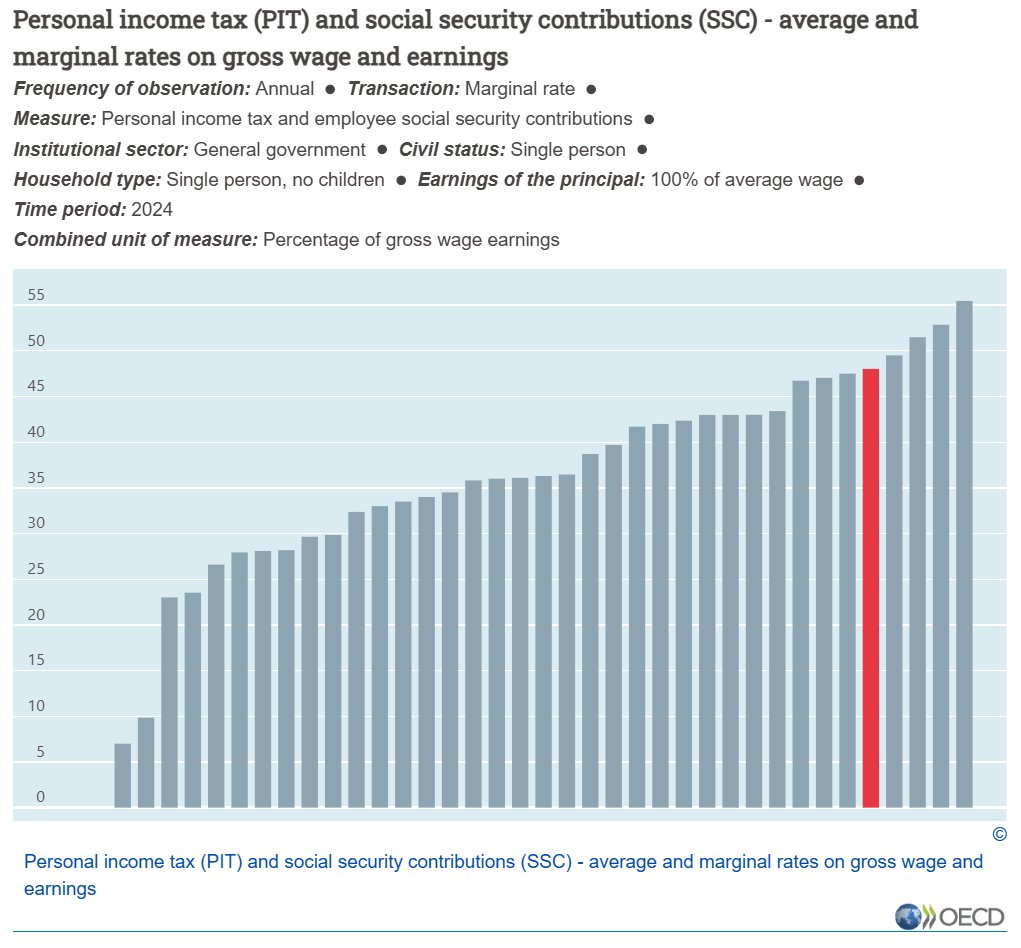
Ireland has the fifth highest marginal income tax rate in the OECD for workers on the average wage. Almost half of every extra euro earned after just €44,000 is taken by the by the government. These confiscatory rates, which were introduced 18 years ago to address a fiscal crisis that is long over, crush the incentive to work more.
Ireland is the red bar in the OECD chart below.
thecurrency.news/articles/22557…

English

@Rainmaker1973 Horses are the most farted upon creatures.
English
Damo Mackerel 👣 2 + 2 = 4 retweetledi

Every week for the past few months I’ve been putting a call out for indie devs to share their games.
I then put together an “Indie Games of The Week” showcase - some which are seeing 20k views. We have also been writing weekly articles reviewing games that are being shared on these posts by reputable editors within the gaming space!
So if you’d like to share what you’re working on, drop it below. We’d love to feature you. 👇
English
Damo Mackerel 👣 2 + 2 = 4 retweetledi

Róisín Murphy is a truer Irish rebel than Kneecap will ever be. She risked the ire of the elites by questioning gender ideology, whereas they win plaudits from posh ponces for their dull Israelophobia. More power to Róisín’s elbow, says Brendan O’Neill
buff.ly/BaQBsTh
English

@Handre Wasn't the root of the 2008 crisis the gov't law that forced banks to write loans for homebuyers with bad credit? Then the credit agencies were corrupt and failed to account for this terrible credit.
English

The bailout of AIG: one of the most grotesque examples of corporate socialism in American history. When this insurance giant collapsed in September 2008, Treasury Secretary Hank Paulson and Fed Chairman Ben Bernanke handed over $182 billion of your money to save the company that had recklessly bet the farm on mortgage derivatives. Not loans to help families buy homes. Bets on whether other people would default on their mortgages.
Failure serves a crucial function in a healthy economy. When companies make catastrophically bad decisions, they die. Their assets get sold to competent managers who can actually run a business. Their employees find work at firms that didn't gamble away their future on credit default swaps. This process, however painful in the short term, reallocates resources from failures to successes.
Instead, the government created a moral hazard so massive it guaranteed future crises. AIG's executives kept their jobs. The counterparties who had made equally reckless bets with AIG got paid in full (Goldman Sachs received $12.9 billion through the backdoor bailout). The message to every major corporation became crystal clear: socialize your losses, privatize your profits.
You funded this disaster through inflation, debt, and direct taxation. Meanwhile, AIG executives paid themselves $165 million in bonuses just months after the bailout. They literally rewarded themselves with your money for destroying their company.
The politicians called it "too big to fail" when the accurate term was "too connected to fail."
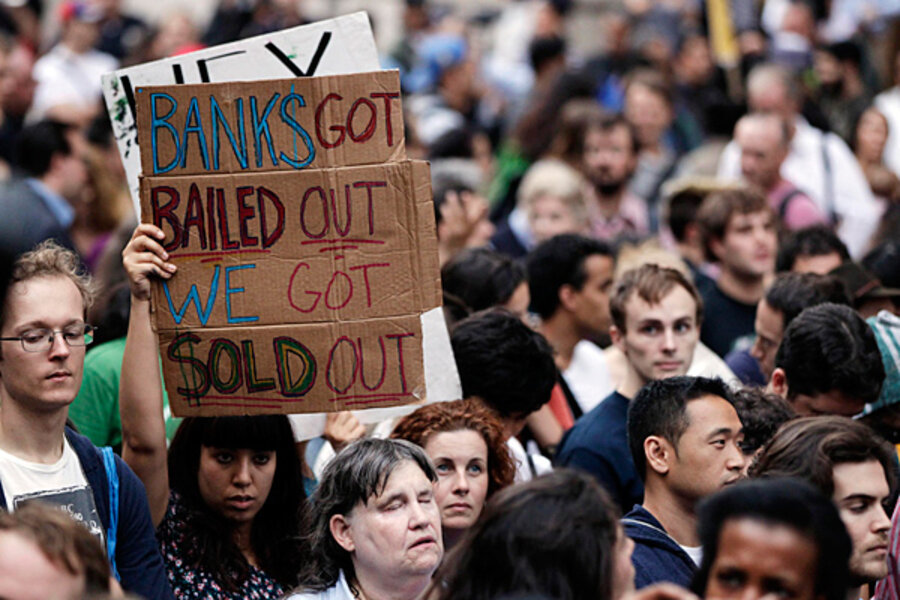
On a personal note, when people protested on the streets in the aftermath of the GFC during the "Occupy Wall Street" movement, I thought they were crazy commies who just didn't understand business. Knowing what I know today, I would have been out protesting as well.

English