Daniel

1.8K posts

Daniel banner
Daniel

Daniel

@daniel_esco01

I like to make 3d things

S Katılım Şubat 2015
1.9K Takip Edilen352 Takipçiler
Daniel retweetledi
HeyGen
HeyGen@HeyGen·
We built our launch video in Claude Code using HyperFrames. Now it's yours. Open source, agent-native framework. HTML to MP4. $ npx skills add heygen-com/hyperframes RT + Comment "HyperFrames" to get the full source code of this launch video (must follow)
English
2.8K
1.9K
8.2K
2.8M
Luke The Dev
Luke The Dev@iamlukethedev·
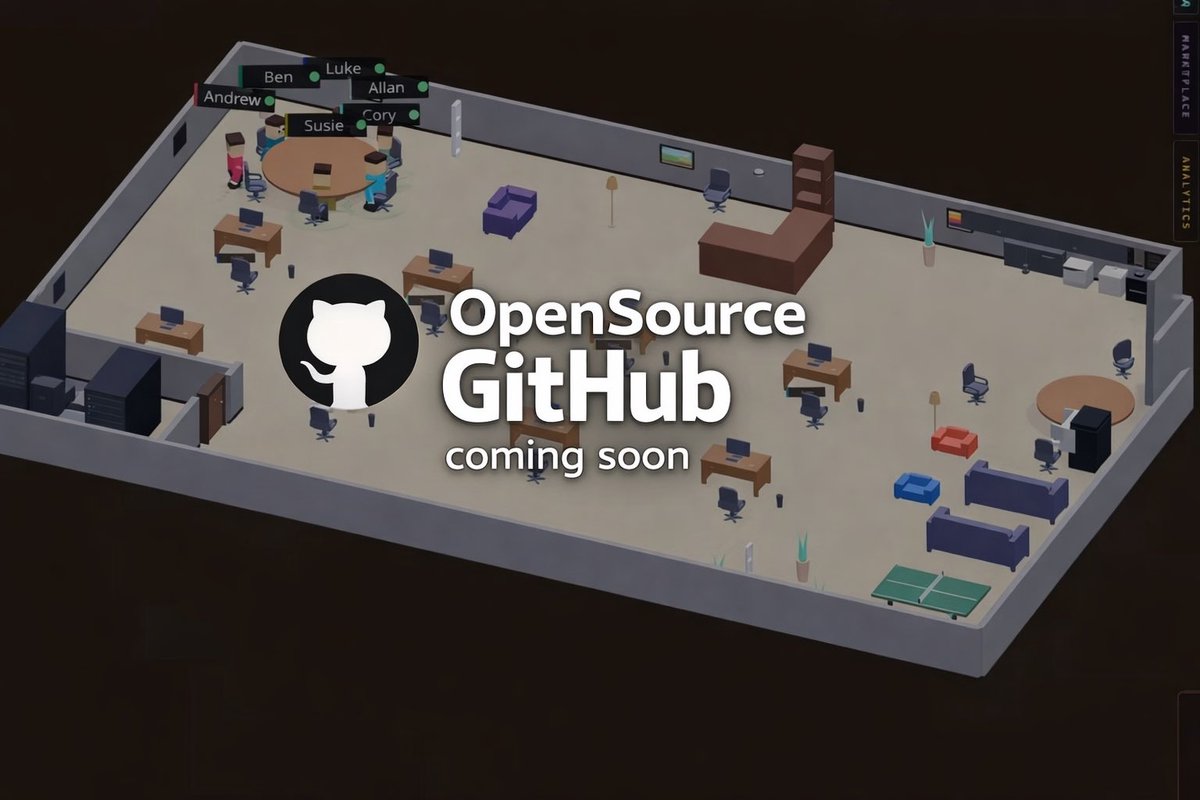
The community asked. The decision has been made. The OpenClaw 3D office will be open-sourced. Step 1 ✅ Domain secured: claw3d.ai Step 2 🚧 Looking for builders and collaborators to join the project. Step 3 ⏳ GitHub repo coming soon. If you want to help build the AI workplace, reply “CLAWS” and I’ll reach out.
Luke The Dev tweet media
English
280
150
1.5K
94.9K
Cris Lenta
Cris Lenta@crislenta·
Real-time World Models x Multi-agent reality simulator with @odysseyml
English
23
18
244
44.5K
Daniel
Daniel@daniel_esco01·
@ailker Link didn’t work
English
1
0
0
242
ilker
ilker@ailker·
As I promised yesterday, I'll briefly explain LoRA training and share a workflow I made so you can do it quickly. First, let me answer a very common question: 'Why train LoRAs when we have such advanced models?' Even though we have incredibly advanced models now (like NBP), we still can't always get them to do specific things we want. Simplest example: the spritesheet LoRA I made the other day. I generated 1000 images with Nano Banana and only 100 were what I wanted. The LoRA I trained using those 100 images gives me nearly 100% consistent results. Second point is cost and speed. With LoRA, we can cut costs by 4-5x. And while doing that, we're generating 4-5x faster. How many images do you need for a good LoRA? This depends on your LoRA's complexity. For example, when I training the spritesheet LoRA, even though I used 100 images, I didn't include buildings in the training data, so this LoRA doesn't work for buildings. So think about your LoRA's use cases and add examples for as many use cases as possible to improve quality. What are paired images and how to train LoRAs for image-editing? When training LoRAs for image editing on fal, we call each edit example paired images - one with _start suffix, one with _end suffix. For example, if you're training a background remove LoRA, the unedited original photo will be your '_start' image. The image with background removed will be the '_end' image. Simply put: images we want to edit or use as reference get _start, target images we want to achieve get '_end'. Important: save both images with the same name. Like image332_start.jpg and image332_end.jpg. This way the system knows which images pair together. What about training LoRAs for models with multiple image inputs? Same logic. We still use _start and _end suffixes, but with one difference. Since there are multiple input images, we can number them: _start, _start1, _start2. Example: start images, 1st image = Woman portrait (image35_start.jpg) 2nd image = Glasses photo (image35_start1.jpg) 3rd image = Hat photo (image35_start2.jpg) Output image = portrait of woman wearing glasses and hat (image35_end.jpg) Can we do more detailed captioning? Yes. Similarly, you can improve training quality by creating a txt file for each set with the caption inside. Example: create image35.txt and write: 'Recreate the image by putting the glasses from the second image and the hat from the third image on the woman in the first image.' What are Steps? How many should I use? What's Learning Rate? Steps determines how many times the model sees and processes your training data (your images). Each step, the model learns a bit more. But as steps increase, so does the risk of overfitting. So there's no real default. But for a simpler LoRA with 20 paired images, 1000 steps is ideal. Here's a metaphor for the Steps and Learning Rate relationship: Imagine you have a balloon. Our goal is to inflate it to the optimal size. Steps = How many times we blow into the balloon Learning rate = How hard we blow each time If we blow too softly, we need to blow many more times. If we blow too hard, we risk popping it quickly and can't reach optimal size. Of course training won't explode, but it won't work as intended because it wasn't trained optimally. Training's done, now what? Once training's complete, you'll have a safetensors file. Every model you train on fal has a LoRA inference endpoint. In that inference, add your safetensors file link to the LoRA url input, and you can use your LoRA. Thanks for the read! The workflow in the video: fal.ai/workflows/ilke… If I forgot anything, let me know in the replies.
English
20
31
274
15.1K
Renaud
Renaud@onirenaud·
After 4 days, I think my Gaussian Splatting implementation in WebGPU is ready. 🚀 Next up: focus on performance and an online visualizer in Three.js Blocks by the end of the week. Also will ship GS3D "lit" mode (SH + PBR) and some GS3D+Physics examples! 1/2
English
16
30
465
17.9K
shirish
shirish@shiri_shh·
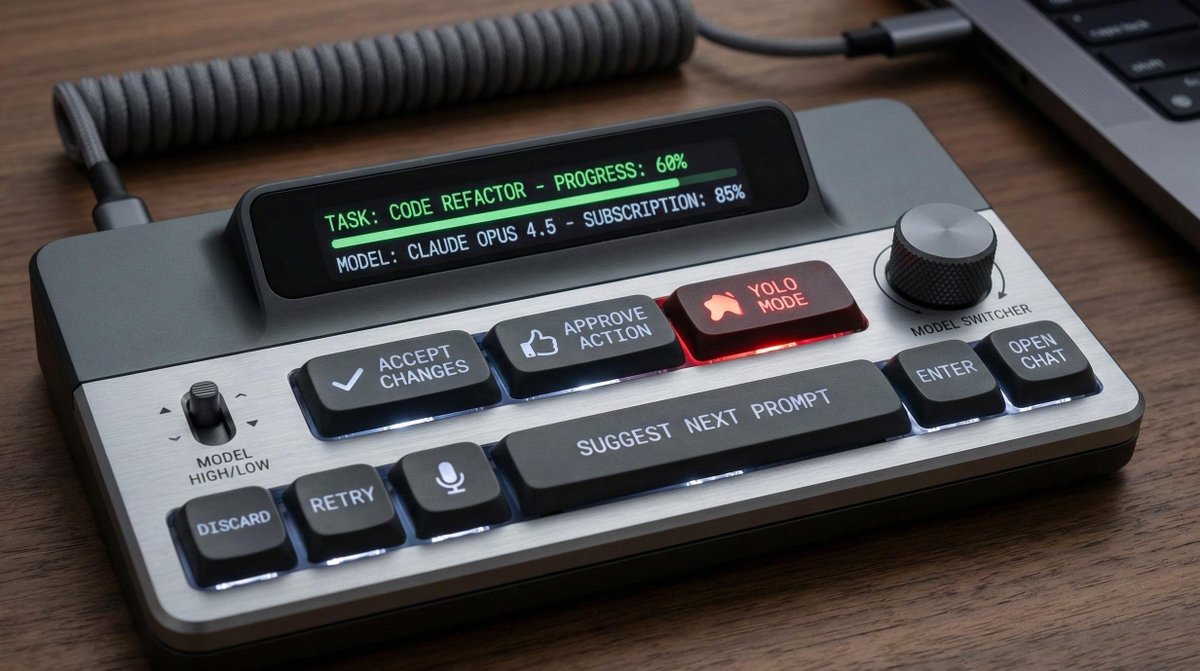
this is what vibe coders need in 2026.
shirish tweet media
English
378
674
7.8K
708.6K
Daniel Skaale
Daniel Skaale@DSkaale·
🚀 WIP A 360° 4D Gaussian Splatting video player with a novel approach My solution: SPAG-4D (Spherical Pixel-Aligned Gaussians for 4D) 🔬 Technical approach: • Bijective pixel-to-Gaussian mapping - each pixel in equirectangular frame maps directly to a Gaussian • AI depth estimation converts 360° frames to 3D point clouds • No iterative optimization needed - milliseconds per frame vs minutes 📦 Temporal compression format: • Base PLY + quantized position/color deltas • Int16 position deltas + Int8 color deltas • 51x compression: 8.1GB → 156MB for 241 frames ⚡ Browser playback: • NPZ parsing with flate decompression • Frame reconstruction from deltas in JS • 500K+ Gaussians at 60fps 🎮 Unity plugin: • Compute shader reconstruction on GPU • Custom splat rendering shader (BiRP + URP) • TemporalNpzLoader for streaming playback #GaussianSplatting #4DGS #3DGS #unity3d #ComputerVision
English
3
21
233
10.5K
Ian Nuttall
Ian Nuttall@iannuttall·
I put the Codex CLI into a Ralph Wiggum loop and it built AIM (Agent Instant Messenger) then I ran ralph in multiple tabs at the same time and they all used AIM to chat/collab and design the UI look more like the classic AOL messenger (while I was at the gym for 2 hours!)
English
72
46
1.1K
94.6K
goo.vision
goo.vision@goo_vision·
🌫️
QME
36
752
5.1K
99.7K
martin_casado
martin_casado@martin_casado·
Sweet. The mesh generation worked really well for a pretty complex scene.
English
17
20
503
34.6K
Victor M
Victor M@victormustar·
Y̶o̶u̶ ̶c̶a̶n̶ Claude can just do things. Connect it to HF ZeroGPU tools: Chatterbox Turbo, Z Image Turbo, or any MCP-compatible Spaces and watch it create autonomously :)
Victor M@victormustar

Hugging Face PRO is the wildest $9/month deal in AI right now🤯 🔹 25 min/day of H200 compute on Spaces ZeroGPU 🔹 ~1M free inference tokens from 15+ providers (Groq, Cerebras, etc.) 🔹 1TB private storage and more 🔹 More cool things...

English
12
44
642
99.1K
Daniel
Daniel@daniel_esco01·
@K_S_Schwarz Hey Katja , I’m developing a plaftform for generative Ai for architects. Xfigura.ai , would love to chat to incorporate Spaitial 3d generation on our plaftform and bring these incredible technology to architects and designers. Thank you
English
0
0
0
9