danielmingram

2K posts

danielmingram

danielmingram

@danielmingram

Applied ethics, meditation, music, heliotropic wizardry, late-night noodles, research into emergence, philanthropy

Katılım Temmuz 2012
2K Takip Edilen6K Takipçiler
danielmingram retweetledi
The Emergent Phenomenology Research Consortium
👉 Know a psychiatrist, meditation teacher, energy healer, psychedelic facilitator, or other practitioner with 10+ years supporting others through spiritual crisis and related experiences?
English
1
1
11
687
danielmingram retweetledi
Matthew D. Sacchet
Matthew D. Sacchet@MatthewSacchet·
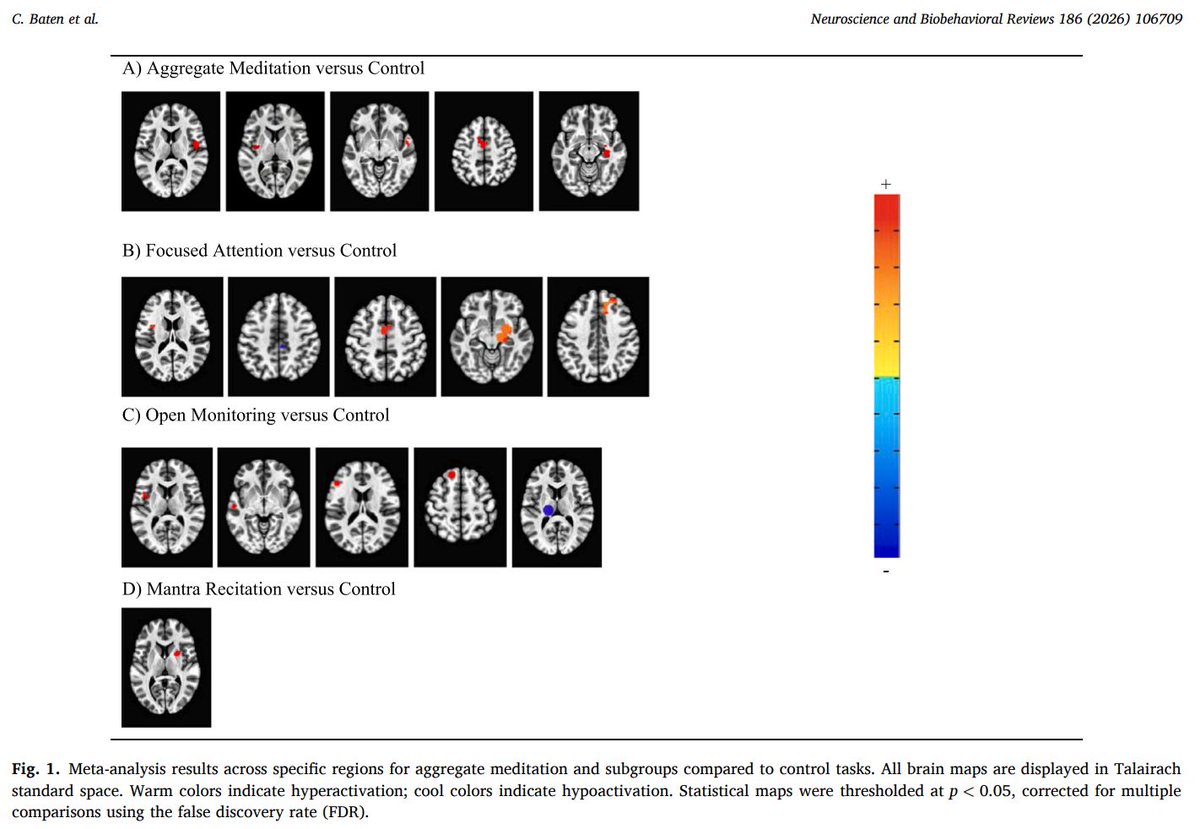
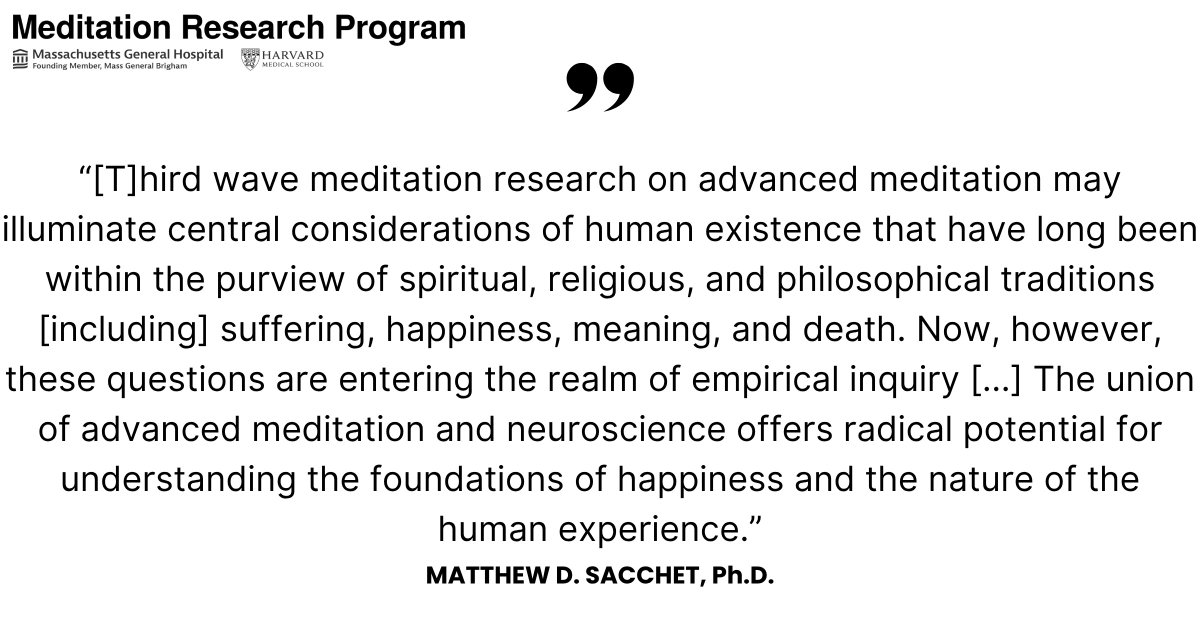
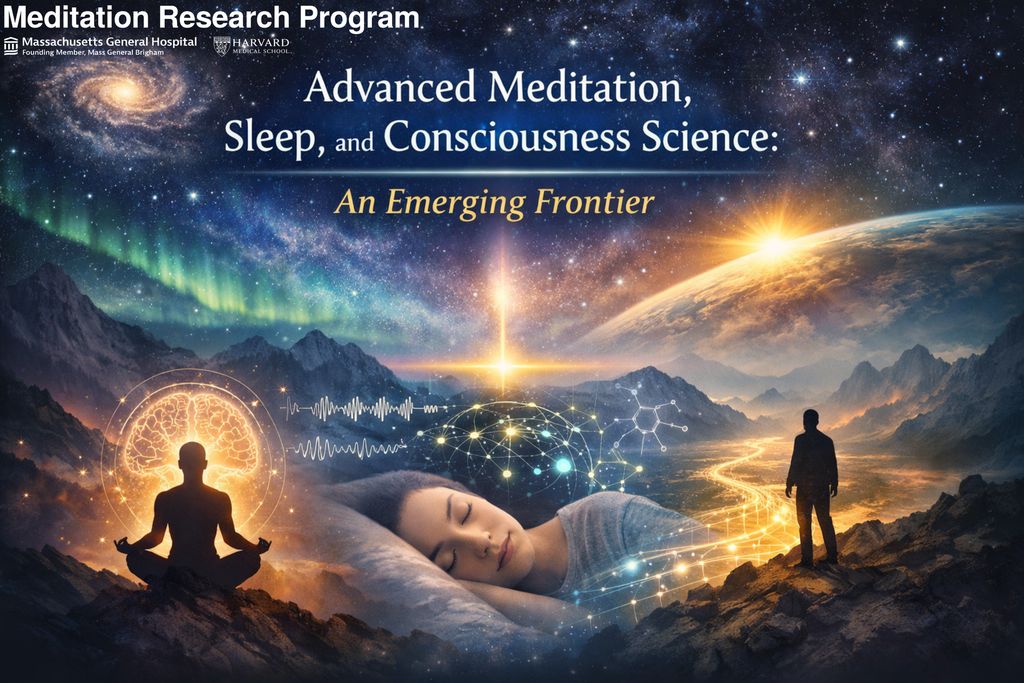
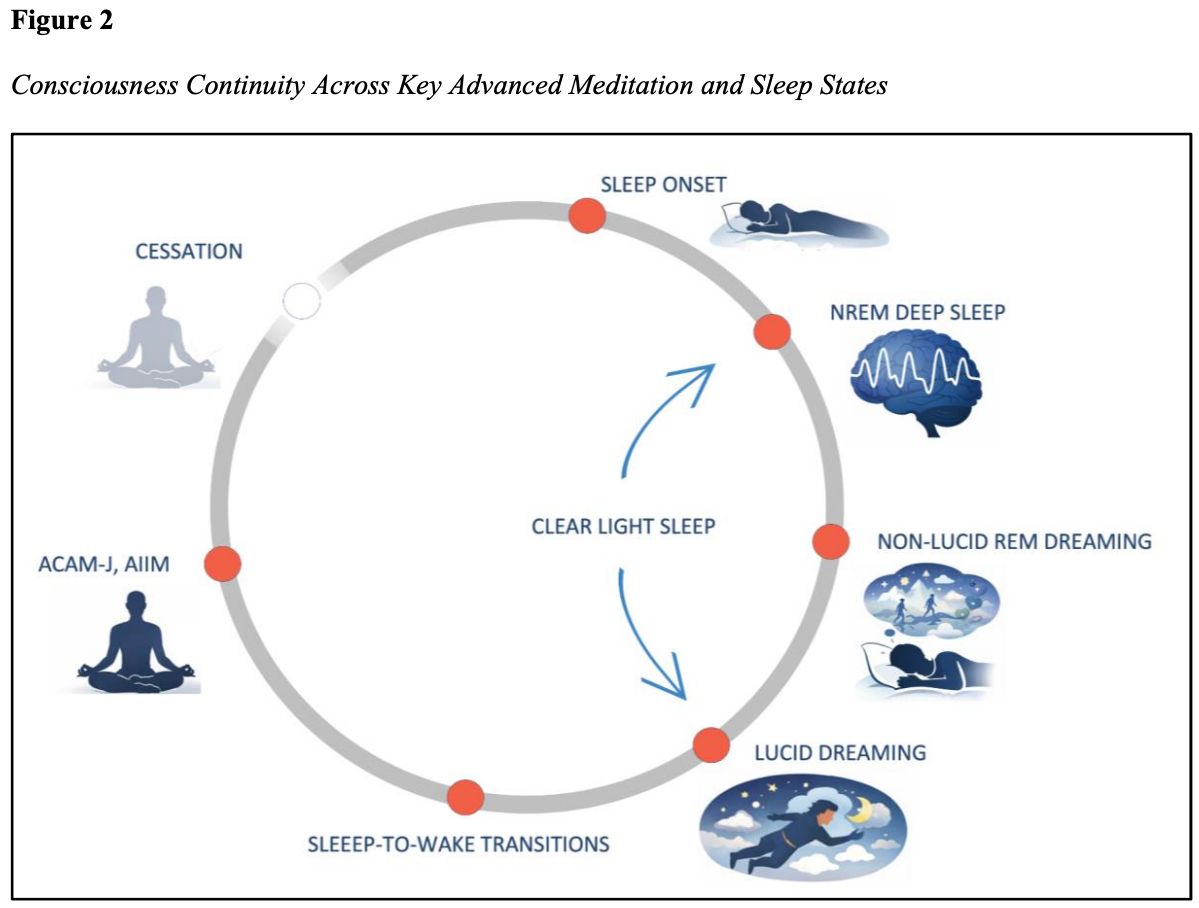
What happens in the brain when consciousness is voluntarily suspended in advanced meditation and then returns with radical clarity, equanimity, and relief? Mainstream neuroscience has largely studied reduced consciousness through sleep, anesthesia, or pathology, but advanced meditation offers something very different: extended cessation (EC). EC is a rare meditative endpoint (MEND) where phenomenal experience is temporarily and volitionally absent, followed by pronounced perceptual vividness, openness, equanimity, and affective balance. EC offers an endogenous, non-pharmacological, and volitional way to investigate how conscious experience may temporarily cease, and how the mind may reorganize afterward. I'm delighted to share our new preprint: "EEG brain reconfiguration during meditation-induced extended cessation of consciousness: A dense-sampling multi-participant microstate study.” Using high-density EEG microstate analysis across six frequency bands (broadband, delta, theta, alpha, beta, gamma) in five highly trained meditators, this study is one of the first empirical characterizations of EC. Our key findings include: -- Microstate B (linked to self-referential imagery and autobiographical memory) became less frequent and shorter during EC, suggesting down-regulation of the brain's inner self-narrative -- Microstate C (linked to the default mode and salience networks) increased in dominance, reflecting deep inward absorption and metastable DMN reconfiguration -- Transition flows shifted: sensory processing fed more toward DMN-like states and away from self-referential networks -- Delta band changes point toward strengthened sensory-led updating with deprioritized self-related priors -- Beta band changes suggest reduced cognitive-autobiographical interplay and enhanced local sensory loops Together, these results support a precision re-weighting account of EC, converging with our prior 7T fMRI evidence of reduced global connectivity alongside enhanced sensory differentiation. Notably, EC produced no novel EC-specific microstate class, consistent with sleep and anesthesia. Instead, altered consciousness appears to modulate the temporal parameters and syntax of existing maps. Unlike sleep and anesthesia, however, EC preserves neural complexity and is followed by a profound psychological afterglow rather than residual confusion. Congratulations to first author David Zarka, co-authors Winson Yang @winsonfzyang, Abel Rassat, Ruby Potash @rpotash16, and Terje Sparby @terjesparby, as well as the extraordinary meditators who offered their time and their practice to make this science possible. We warmly welcome reflections from scientists, clinicians, practitioners, and friends interested in this frontier. The full preprint is included below ⤵️ May this work benefit many 🙏
Matthew D. Sacchet tweet mediaMatthew D. Sacchet tweet mediaMatthew D. Sacchet tweet mediaMatthew D. Sacchet tweet media
English
12
47
245
10.9K
danielmingram
danielmingram@danielmingram·
Research from my friends at AllHere, for those who are interested: San Francisco – Quantified Meditation Sessions (EEG Study) Experienced meditators are invited to participate in Quantified Meditation Sessions in San Francisco. During the session, research-grade EEG records brain activity while you meditate. Using the Quantified Meditation System™, these signals are analyzed to visualize the neural dynamics of meditation practice. The recordings contribute to ongoing research on the neurophysiology of deep meditative states, including concentration, absorption, and silent mind states across different traditions. Participants will: • contribute to meditation neuroscience research • experience a meditation brain-computer interface in real time • receive a personalized Quantified Meditation Report All meditation traditions are welcome. Sessions will take place March 20–23 in San Francisco (Hayes Valley). Registration:allhere.org/san-francisco-…
English
2
3
23
2.2K
danielmingram
danielmingram@danielmingram·
🔥 If you have had challenges related to meditation or psychedelics, or know people who might be interested, please help Emory, the VCE at Brown and Cheetah House with their vital study on phenomenology, influencing factors, and remedies, so they can improve systems of support. It's all online and currently available to residents of US, Canada and Australia, with Europe coming soon. meditationchallenges.org and psychedelicchallenges.org) For more information: youtube.com/watch?v=4YC3Bz… and also a study description cheetahhouse.org/participate-in… Thanks! 😊
YouTube video
YouTube
English
0
6
18
1.4K
danielmingram retweetledi
Mike Hoerger, PhD MSCR MBA
Mike Hoerger, PhD MSCR MBA@michael_hoerger·
My best career advice is to reduce your lifetime number of cumulative SARS-CoV-2 infections.
English
30
593
1.5K
29.4K
Bryan Johnson
Bryan Johnson@bryan_johnson·
I'm experimenting with 5-MeO-DMT because it may be most underrated longevity molecule no one is talking about. + Accelerated neurogenesis: a single dose more than doubled brain cell proliferation and neuronal regeneration in the hippocampus within 12 hours, alongside measurable increases in synaptic density and firing frequency in rodent models. + Proteomic reorganization: in human cerebral organoids, 5-MeO-DMT triggers rapid proteomic shifts favoring cellular reorganization and synapse formation. Early evidence of structural brain renewal at the molecular level. + Default Mode Network reset: The DMN calcifies with age locking us into rigid, repetitive patterns of thought. 5-MeO-DMT disrupts these patterns, restoring bottom up connectivity between sensory and creative brain regions. A forced return to neurological flexibility and youthfulness. + Systemic anti-inflammation: suppresses pro-inflammatory cytokines (IL-1β, IL-6, TNF-alpha) while upregulating IL-10, the anti-inflammatory signal. Mediated through the Sigma-1 receptor, suggesting a mechanism distinct from other psychedelics.
Bryan Johnson tweet media
English
311
200
2.6K
193.1K
danielmingram retweetledi
The Emergent Phenomenology Research Consortium
Drawing on collaborative expertise and wisdom, we're exploring the deep end of human experience and development - often labelled as spiritual, meditative, mystical, magical, psi, psychedelic, or energetic - to improve global medical and mental healthcare. Join us!
English
0
1
4
272
danielmingram retweetledi
Matthew D. Sacchet
Matthew D. Sacchet@MatthewSacchet·
What if the root of suffering isn't what actually happens to us, but a fundamental mismatch between how the world is and how we expect it to be? Mainstream science has focused on the stress-reduction benefits of basic mindfulness meditation. Yet many traditions describe a profound trajectory of meditative development that involves deconstructing our sense of self, perceiving the transient nature of reality, and ultimately reaching extraordinary meditative endpoints (MEND). Advanced Investigative Insight Meditation (AIIM) is a class of practices designed to facilitate this process of insight development. Until now, we have lacked a secular, empirically testable framework to rigorously study this trajectory of insight development. Here I announce our new preprint: "A Theoretical Framework for Stages of Advanced Insight Meditation.” In this paper, we introduce the Insight Development Process (IDP). Drawing on classical Buddhist theory alongside clinical and contemplative practice expertise, we reconceptualize the process of insight development as three testable, psychologically neutral perceptual modes any human can grow: -- Transience: Shifting perception to see seemingly solid, continuous experiences as a rapid, moment-to-moment succession of fleeting phenomena -- Self-lessness: Experiencing thoughts, emotions, and actions as arising autonomously, loosening the burden of maintaining a solid, central sense of self -- Incongruence: Recognizing the painful mismatch between our brain's rigid expectations for stability and control, and the fluid, unpredictable nature of reality What emerged from this project is a framework that, for the first time, maps the arc of advanced insight practice in an empirically testable format. This work makes several key contributions we believe will be of broad interest to researchers, clinicians, and practitioners: -- We outline 8 distinct stages mapping phenomenology from the "Initial Decomposition" of sensory experience to profound equanimity, and ultimately the “Momentary Cessation of Consciousness” -- We differentiate fleeting "momentary insights," brief shifts in how reality is perceived, from "integrated insights," which are more durable, baseline shifts in cognition, perception, affect, and behavior -- By formalizing potentially challenging stages like "Foundational Instability," we provide a clinical lens for understanding destabilizing altered states of consciousness, framing them not as pathology, but as developmentally appropriate steps toward deep psychological growth My deep gratitude to first author Andrea Grabovac (@meditationmama3), and co-authors Nickolas Grabovac, @winsonfzyang, Molly Haggerty, Malcolm Wright, and the contemplative traditions that help inform our research. Have you ever noticed a moment where your suffering came not from what was happening, but from your expectations and resistance? What shifted when you saw that? The full preprint is included in the comments below ⤵️ May this work benefit many 🙏
Matthew D. Sacchet tweet mediaMatthew D. Sacchet tweet mediaMatthew D. Sacchet tweet mediaMatthew D. Sacchet tweet media
English
16
36
239
11.9K
danielmingram retweetledi
Matthew D. Sacchet
Matthew D. Sacchet@MatthewSacchet·
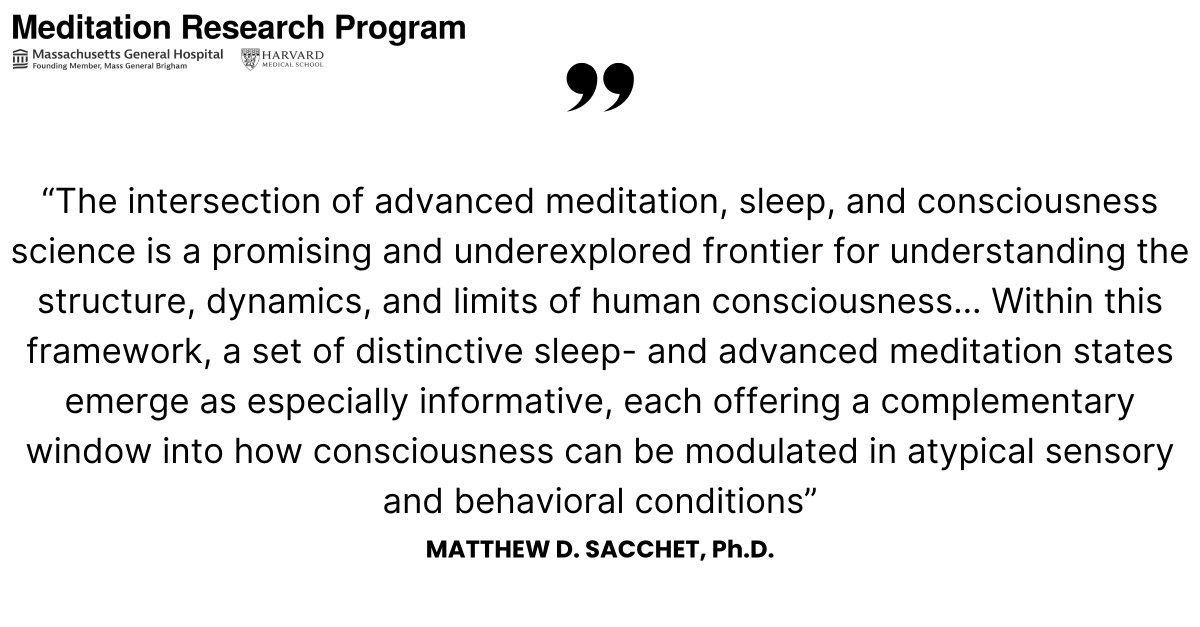
The Harvard Gazette has published a quiz on advanced meditation: “Your brain on advanced meditation: Where do science and ancient wisdom align? Take our quiz to find out.” Check it out through the link in the comments below! ⤵️
Matthew D. Sacchet tweet media
English
4
7
39
3.1K
Taylor Sterling
Taylor Sterling@FatherMcKennaa·
The ancient Greeks made a psychedelic from toxic fungus, wood ash, & water — and served it to thousands every year for 2,000 years. A paper published today in Nature showed how. Plato drank this. Cicero drank this. The Western world was built on a psychedelic sacrament.
Taylor Sterling tweet media
English
129
552
4.3K
183.2K
danielmingram
danielmingram@danielmingram·
And, from my friend Jules, for those interested in participating: "I’d love your help with this survey - it’s a 5 minute survey looking into people’s beliefs and experiences around psychedelics and sorcery / black magic / cursing / brujeria. IRB approved and being undertaken in collaboration with ICEERS, Greenwich, Maastricht and others. Here’s the survey: qualtrics.ucl.ac.uk/jfe/form/SV_3r… Thanks and all best wishes Jules Evans"
English
2
2
13
1.3K
danielmingram
danielmingram@danielmingram·
My friend Mark asked me to put this out there, so perhaps check it out and see what you think of it: "Well-trained, experienced meditators now have the opportunity – without leaving home – to advance our understanding of brainwave changes in different styles of meditation and different levels of practice. The Institute for Meditation Brainwave Research (IMBR) is sponsoring the largest such EEG-based research study to date, utilizing its GoDeeper app and the Muse EEG-monitoring headset. The GoDeeper app has 45 different meditation techniques to choose from. Because existing EEG studies of meditation have small sample sizes, their results cannot confidently be generalized to help a wide variety of meditators practice better. To solve this problem, IMBR is seeking 1,000 experienced meditators who can reliably achieve the brain states important to their styles of meditation. After each 20-minute session, participants view a report of how their brainwaves varied from their own baselines while meditating as well as how their brainwaves compared with published research for that style of practice. Loaner Muse headsets are available for those who don’t already have one. Visit imbr.org to find out more, and learn about study enrollment."
English
2
5
43
3.4K
Brink Ovlov
Brink Ovlov@BrinkOvlov·
@FatherMcKennaa It is called the DUDE Factor. Deeper Understandings Demands Entheogens
English
2
0
9
912
danielmingram retweetledi
Matthew D. Sacchet
Matthew D. Sacchet@MatthewSacchet·
Does neurofeedback for meditation work? Meditation popularity has skyrocketed, but the hard data proves that building a consistent habit is rare. Dropout rates for meditation apps often exceed 55% within the first month, and many struggle with barriers like anxiety, self-doubt, or a simple lack of progress. Neurofeedback, a tool for real-time monitoring and modulation of mental states using feedback from one's own neural activity, has been seen as a potential solution. But what is the state of the evidence? Delighted to share our new preprinted manuscript: "Meditation and Neurofeedback: A Systematic Scoping Review." In this work, Hagar Tal, @winsonfzyang, and I explore the landscape of NF-MED (neurofeedback enhanced meditation). We review 31 studies involving over 800 participants, including long-term meditators, novices and clinical cohorts, across three major neurofeedback modalities (EEG, fMRI, fNIRS). What we found: We identified a complex picture of a field currently dominated by early-stage "proof-of-concept" studies rather than large-scale clinical trials. We found: --Intriguing Initial Effects: NF-MED studies show that neurofeedback can help users downregulate regions like the posterior cingulate cortex (PCC) to curb self-referential thought. However, considerable heterogeneity among studies and a lack of consistent effects prevent confidence in these outcomes or understanding why neurofeedback may work in some contexts but not others. --Gaps in Transfer to Real Life: While participants could sometimes moderate their own brain activity in research environments, evidence that these effects translated into improved behavior, subjective well-being, or transferable meditative skills was highly limited and inconsistent. Challenges in the data The lack of standardized research methods across different studies presents a major challenge for the field. 1. Undefined Expertise: There is no standard definition for a "long-term meditator." Some studies categorized individuals with as few as 100 lifetime practice hours as experts, while others looked for thousands of hours. 2. Lack of Verification: Very few studies verified whether participants were actually doing the specific meditation practice assigned. 3. No Guidance: Almost none of the studies involved qualified meditation teachers, or reported clear instructions. For this technology to evolve from a novelty into a genuine aid for human flourishing, the field needs standardized protocols, better control groups, and a clearer connection between neural signals and the subjective experience of meditation with validated markers of meditative adherence and depth. It also needs to demonstrate longer term, real world evidence that it’s more than an unnecessary technological layer on top of existing meditation practices. We would love to know what you think. May this work benefit many 🙏 The full preprinted manuscript PDF is included in the comments ⤵️
Matthew D. Sacchet tweet mediaMatthew D. Sacchet tweet mediaMatthew D. Sacchet tweet media
English
19
15
60
4.2K
danielmingram retweetledi
Chris Timmermann
Chris Timmermann@neurodelia·
Our work comparing the effects of a psychedelic and an advanced meditation practitioner in the brain and mind covered by @newscientist #Echobox=1770229269" target="_blank" rel="nofollow noopener">newscientist.com/article/251409…
English
3
10
70
3.4K