

Dan
2.1K posts
Dan
@daninvests_
Personal Finance, Equity Investing, Markets
Remote Katılım Mayıs 2009
314 Takip Edilen243 Takipçiler

When $SOFI achieves $100/share, the company will achieve a $128 billion dollar market cap.
I think this is definitely attainable by 2030.
The stock is trading around a $21 billion dollar market cap today.

English

@daninvests_ Not as fast as $NVDA, but I agree with you. They are surprising cheap.
English
The market is splitting Big Tech into two distinct tiers👇
Forward P/Es ABOVE 30x:
• AMZN: ~31.9
• AAPL: ~31.4
• GOOGL: ~30.9
Forward P/Es BELOW 24x:
• NVDA: ~23.8
• MSFT: ~22.5
• META: ~18.8
The market is separating:
“Priced for acceleration” (>30x)
“Priced for execution” (<24x)
Which side are you on?

English
Spirit danced with bankruptcy & was plagued by management issues for quite some time. Then - this unprofitable organization- with almost no cushion got hit with soaring jet fuel costs.
That is the story.
Aaron Rupar@atrupar
Sean Duffy on Spirit Airlines: "I think it's important to talk about why we are here today. Joe Biden and Pete Buttigieg ... "
English

It may not be tomorrow, or a week from now, or a year from now
But at some point in the future, Jensen Huang is going to walk on stage at GTC or some other event and say something to the tune of
“memory is no longer a bottleneck”
Every memory stock will instantly fall 30-50% + within a month
English
@Liathetrader yep. if not just better on yield, better on headaches and trouble
English

Just took a ride with a friend of mine. He is 62, has a paid-off condo, and $100,000 to invest. That’s all he has. He works a part-time job making at most $2,000 monthly and can’t find a better one. He is short on bills every month. Needs 3,5-4k.
He wants to buy a shitty real estate property with his $100k and rent it out. (I don’t even know what you buy in FL for 100k? Garage? )
I suggested passive income from dividend stocks instead.
I believe the market provides a better investment with this money.
Am I right?
English
@jimiuorio This is a classic case of thinking they had good intentions and morally superior but in reality their policies are destructive and anti what they claim to care about. So it’s either incompetence or outright corruption
English

This decision cost 14,000 jobs….it would have been nice if we had a secretary of transportation who had any idea what he was doing…
Izengabe@Izengabe_
Here's Biden Department of Transportation Secretary Pete Buttigieg bragging about blocking the Spirit Airlines merger with JetBlue that would have saved the airline from bankruptcy. I don't think America has ever had a more incompetent Secretary of Transportation than Mayor Pete.
English
@TheBTCKnight yes but timeframe is probably much further out than people think
English

Do you truly believe $BTC will hit $1,000,000?
Honest answers only.
English
@TheLongInvest I generally think this is true. The companies or assets still need to be viable and growing long term. don’t want a shitco under the 200wma
English

What’s the cheat code to the market?
Buying under the 200 WMA
Historically the market and the majority of positions will always reset back to this support line
But there are two problems with this:
1. People won’t wait for the pull back to this MA
2. People don’t believe it can recover after hitting this MA.
Understanding fundamentals help this
English
@escasnor @MMatters22596 I don’t think this is 2-3 timeframe chat but more of a 10 year chart
English

@MMatters22596 Assuming $SOFI has a P/B ratio between 2-3x which is applicable for a profitable growing bank, book value per share would have to grow to between $43-65M.
We're currently at $10.81M... that means we need a 4 to 6x over the next 2-3 years.
Possible but very unlikely
English

$SOFI
I think many investors don’t fully realize how big this could become over the next few years.
From a chart perspective, $SOFI is giving me strong $PLTR and $HOOD vibes.
Over the next 2–3 years, prices around $130+ are clearly possible.

English
One way to think about these is to just read it and know the opposite is likely. It’s like the inverse Kramer but for your life.
Elizabeth Warren@SenWarren
I've warned for months that a @JetBlue-@SpiritAirlines merger would have led to fewer flights and higher fares. @JusticeATR and @USDOT were right to stand up for consumers and fight against runaway airline consolidation. This is a Biden win for flyers! apnews.com/article/jetblu…
English


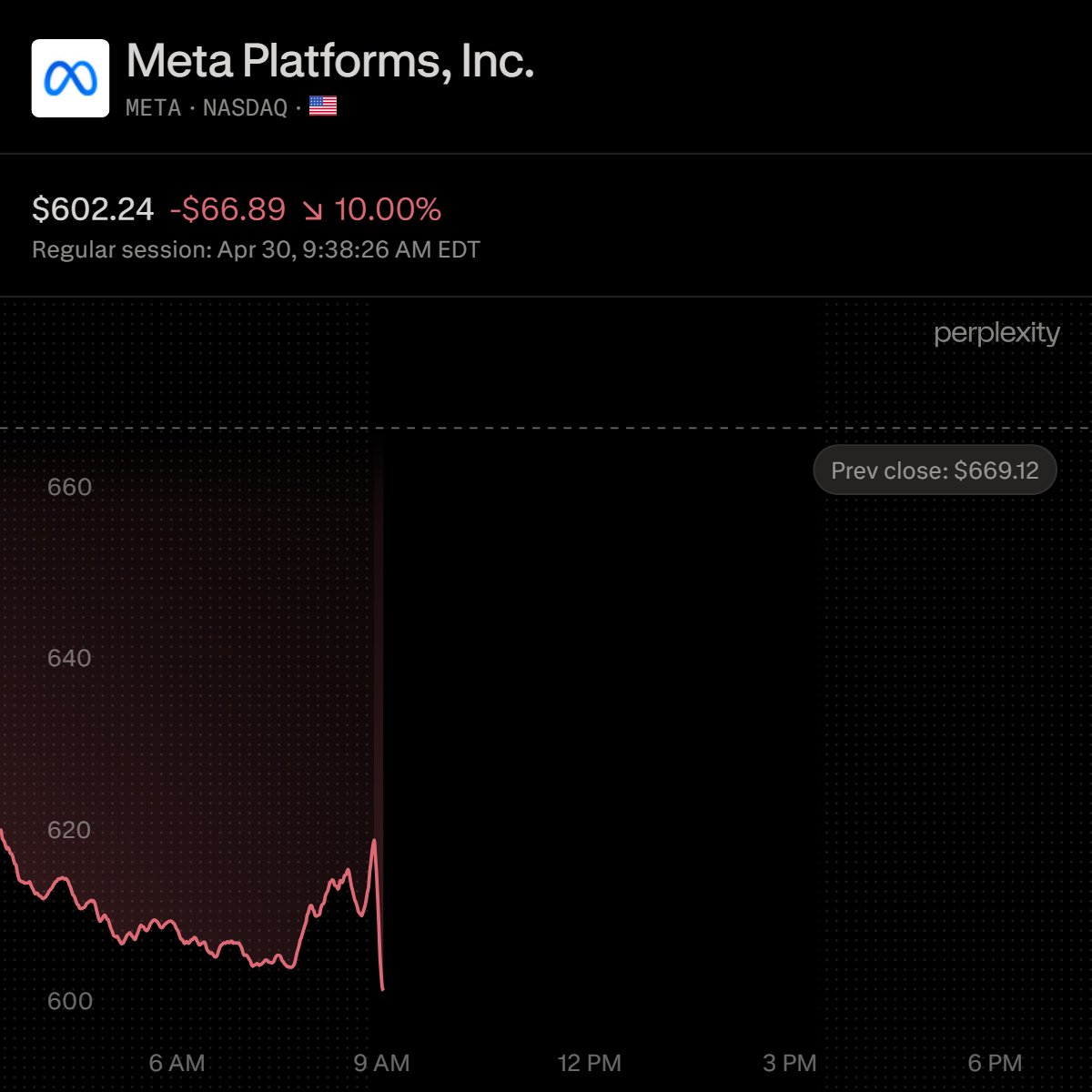
Does $META really deserve to be down -10% on those earnings??
English

Let’s be clear: LA fire survivors who lost their homes shouldn’t have to pay property taxes based on a value of a property that no longer exists.
Today my office urged LA County to offer clarity and assurance for these impacted survivors so that they can continue to defer payments without penalty.
English
@StockOptionCole UX is important but business fundamentals are more important. and they have 14M members so there is obviously value they’re providing
English

All CEO compensation packages should be designed this way. You get crazy rewarded for hitting crazy goals where everyone benefits
The Kobeissi Letter@KobeissiLetter
BREAKING: SpaceX's board has approved a new compensation package for Elon Musk ahead of its record-setting IPO. The package includes: 1. 200 million super-voting shares if SpaceX hits a $7.5 trillion valuation and establishes a permanent Mars colony with at least 1 million people 2. Additional 60.4 million shares if SpaceX reaches certain valuation goals and operates data centers in space delivering 100 terawatts of compute 3. Elon Musk will not receive a single share if the company fails to reach the board's valuation targets Elon Musk has received a salary from SpaceX of $54,080 per year since 2019.
English
@realroseceline this is genuinely thoughtful but misses two key points: fee based revenue is accelerating at 41%, stablecoin accelerating, and member growth hit new all time highs. they’ve been hitting these despite the bad macro cyclical environment which is where your argument breaks for me.
English

Thoughts on $SOFI
Regardless of how you dress it up, $SOFI is a lending business at its core. No matter how you package it, they make money by issuing loans and earning the spread, which ties everything to credit quality, interest rates, and funding costs. That’s not just a detail, thats literally the business.
The issue is that lending businesses are cyclical, whether people want to admit it or not. When the cycle turns even a little, defaults rise, charge offs increase, and margins compress. It doesn’t take a crisis, just a shift in conditions for things to tighten. This is not a durable model that compounds smoothly, it is a conditional model that works best when the environment is supportive.
The risk is also more concentrated than most people realize, which makes it even more fragile. A large portion of the book is in personal loans, which are unsecured and highly sensitive to unemployment and consumer stress. That’s where the first place cracks show up in any downturn. So it’s not just credit risk, it’s concentrated exposure to the weakest part of the credit system.
The growth looks great on the surface, and that’s exactly why it’s seductive and pulls people in. But in lending, growth can actually hide risk rather than eliminate it. The real question is not how fast originations are growing, but whether the loans being made are improving in quality or simply increasing in volume. Those two paths look identical in the short term, but lead to very different outcomes over time.
Another things I see people miss is how these books are accounted for in practice. A lot of what you see is effectively marked to model, not fully marked to reality yet, because losses are estimated before they are realized. That allows earnings to appear smooth and controlled while risk builds underneath the surface. When the cycle turns, provisions rise and charge offs hit, and what looked stable changes very quickly.
This is where the structure of the model really matters, because lending does not scale in a straight line. In good times you see steady growth, low defaults, and stable spreads, which creates the illusion of consistency. In weak conditions, defaults jump, funding tightens, growth slows, and margins compress. The downside tends to accelerate faster than the upside, which is what makes the model fragile.
At the same time, $SOFI is trying to position itself as something much broader than a lender. It’s a bank, fintech platform, technology provider, and a financial super app all in one. That sounds compelling, but in practice it makes the business harder to value, harder to execute, and harder to dominate in any one category. It becomes a bit of everything, but not clearly the best at anything.
The super app idea also sounds better in theory than in reality. Financial products tend to have low engagement, low loyalty, and are highly substitutable for most users. People don’t build daily habits around their lending apps the same way they do with social, simply out $SOFI is no Instagram.
Funding is another critical piece thats underestimated. Even with a bank charter, the model still depends on cost of deposits, securitization markets, and access to capital. If someone else can fund more cheaply, they can price more aggressively and take share. That means the real product is not the app or the interface, it is the cost of capital behind it.
Management will always emphasize member growth, product expansion, and engagement metrics. Those are important, but they are not the core driver of value in a lending business. The real driver is risk adjusted returns on the loans being originated. Those two things can diverge for a long time, which is why the story can look strongest right before it starts to weaken.
1/2 👇
English