Sabitlenmiş Tweet

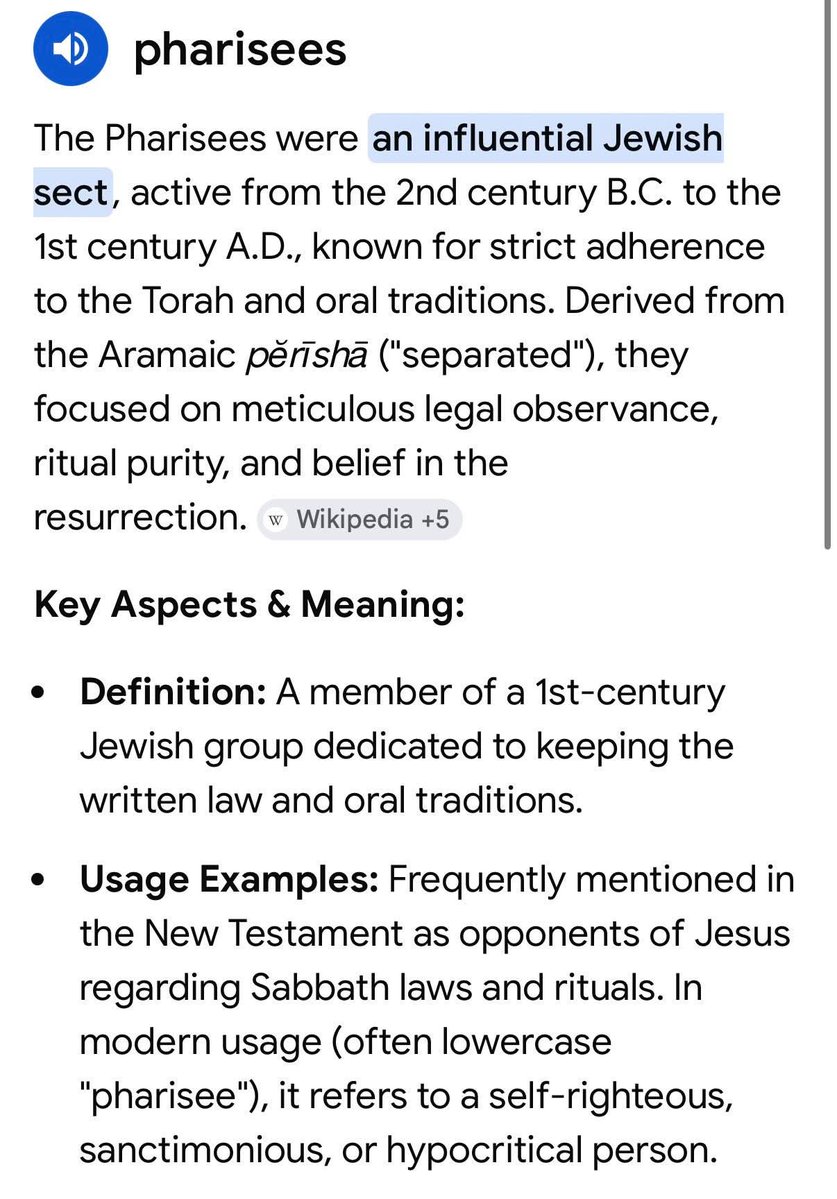
Am I the only one nonplussed by how "nonplussed" has somehow come to mean the exact opposite of what "nonplussed" means?
English
(((DavidLieberman)))
13.8K posts

@davidilieberman
I code, therefore I ... code.

Paint crews are busy painting the Lincoln Memorial Reflecting Pool blue this morning.



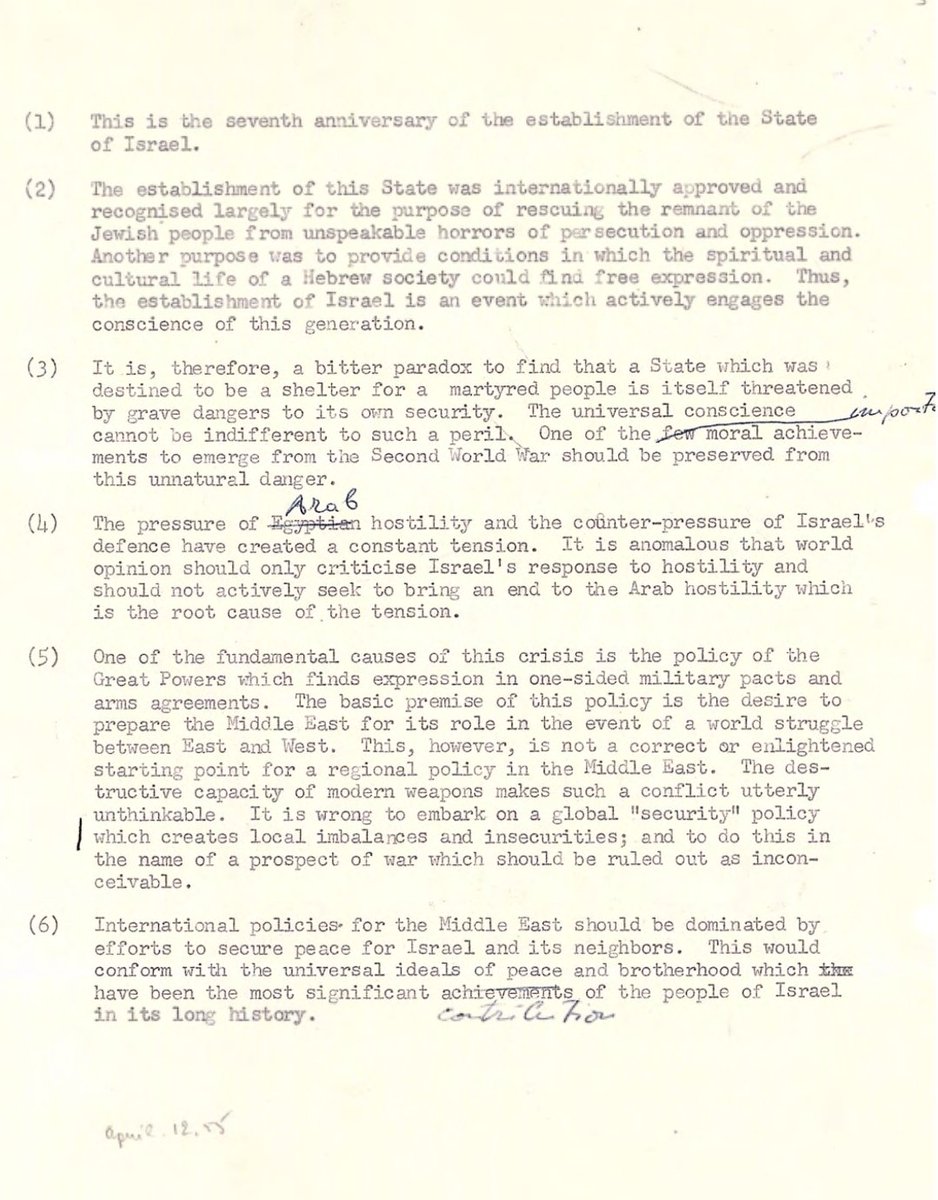

As I write and document quite explicitly in the piece, Einstein was a binationalist before Israel's founding (as were many notable Zionists!), but then became a supporter of Israel once it was established in 1948. He hosted Israel's first prime minister David Ben Gurion at his home in 1951. When he turned down the Israeli presidency in 1952, he referred to the country as "our state of Israel." Do you think they would have offered the job to an enemy? In reality, Einstein was an ally of the socialist government in power and a harsh critic of the Israeli right that opposed it -- which was actually a problem, because the presidency is supposed to be nonpartisan. Einstein regularly lambasted the Israeli right, not Israel or the Zionist project, which is quite clear if one actually reads the critical statements and who he refers to. In 1955, in one of his last interviews, Einstein said "I have great hopes for the future of the Jewish state." haaretz.com/2014-05-22/ty-… The last speech Einstein composed was intended to mark the 7th anniversary of Israel's founding, and he wrote it in conjunction with Abba Eban, Israel's ambassador to the United States (not the sort of thing an anti-Zionist would do). Explaining his idea in a letter to the embassy, Einstein wrote that "a somewhat critical attitude concerning the behavior of the world powers toward Israel and the Arab states could have a salutary influence. It is easier for me to say those things than for any person connected officially with organized Jewish life. To do this well it has to be carefully prepared in cooperation with responsible Israelis." Einstein died days before Israel's Independence Day, but we have the text of the undelivered speech. In it, Einstein wrote: "The establishment of the State of Israel was internationally approved and recognized largely for the purpose of rescuing the remnant of the Jewish people from unspeakable horrors of persecution and oppression. Another purpose was to provide conditions in which the spiritual and cultural life of a Hebrew society could find free expression. Thus the establishment of Israel is an event which actively engages the conscience of this generation. It is, therefore, a bitter paradox to find that a state which was destined to be a shelter for a martyred people is itself threatened by grave dangers to its own security. The universal conscience cannot be indifferent to such a peril." He also wrote: "It is anomalous that world opinion should only criticise Israel's response to hostility and should not actively seek to bring an end to the Arab hostility which is the root cause of the tension." And, as Einstein always did, he closed with an appeal for peace, coupling his defense of Israel with this conclusion: "International policies for the Middle East should be dominated by efforts to secure peace in Israel and its neighbors." He never stopped advocating for Israeli-Arab peace, and raised the same point in that final interview cited above. To him, all these sentiments were not contradictory but complementary. web.archive.org/web/2014090317… He bequeathed his intellectual assets and likeness to Hebrew University. One does not need to align with Einstein's approach to Israel and Zionism to acknowledge the reality of what it actually was. Einstein was a physicist who died in 1955, not some oracle on world politics, and it is perfectly reasonable to disagree today with his views on these and many other subjects. What is not reasonable is to adulterate those views in service of a contemporary ideological agenda. All of this material is either explicitly discussed or linked in the article. I'm a little confused and surprised that you missed it.
The problem is not talking to Hasan Piker or influencers like him. Such conversations are part of democratic dialogue. The problem is figuring out how to constructively engage a new media landscape dominated by smashmouth populists of all political persuasions who talk about everything but are experts in nothing, and whose incentives run toward incendiary virality rather than accuracy. How do reporters and others have these conversations in ways that make their audiences more informed, rather than less? I have some ideas. Gift link: theatlantic.com/politics/2026/…


Suggesting a positive political endgame for Palestinians isn't hard to do. I've done it. Many others have too. And these endgame suggestions would be fantastic tools in the hands of anyone looking to impose specific demands on Israel, or on Abbas or Hamas, or to offer a better future for Palestinians of the sort that might peel some away from Hamas. Palestinians have shown repeatedly that they have the tools to shape Israeli politics. But they are told by ideologues foreign and domestic that they must never use these powers, because doing so would commit the unforgivable sin of actually engaging and acknowledging the dastardly Jews. Sorry, Israelis. So no one is ever interested in endgames. The suggestions always land with a thud. The activists dismiss them out of hand as distractions from the main task. Because the main task, the purpose of the whole rabid, unprecedented campaign, unseen in scale, duration or intensity in any conflict or country or even atrocity in generations, is not to find any solution for Palestinians. The purpose is to project all Western criminality and self-abnegation and all the anxieties of this moment of social disarray onto the familiar old scapegoat and then, as in the days of old, destroy that scapegoat. It's a civilization-spanning purification ritual couched, like all such rituals in the history of Christendom and the West, as a call to righteousness and truth. And the bulk of the costs of all this blind hatred masquerading as righteousness isn't paid by Israelis or Jews, though they are paying steep costs that will only grow steeper, because this hatred is never satisfied. No, they're paid by Palestinians. They, not we, are trapped in this obsessive radicalization against Israel. They, not we, are herded by comfortable foreigners living out anti-imperialist noble-savage fantasies into ever more rounds of zero-sum war. There *are* political endgames, and they're worth fighting for. But they require a pro-Palestinian campaign that's more than just an updated version of the anti-Jewish purges of old.