davidosez

1.3K posts

davidosez banner
davidosez

davidosez

@davidosez

Love talking tech and about humanity

San Francisco Katılım Aralık 2008
622 Takip Edilen467 Takipçiler
davidosez retweetledi
e-
e-@eminus·
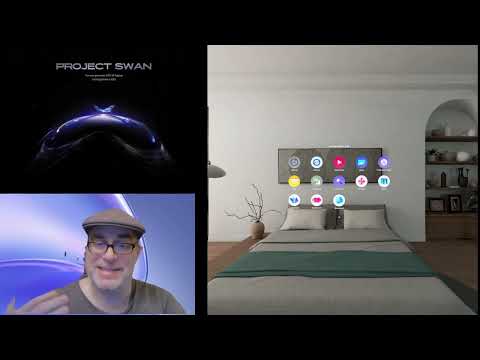
While at GDC, why not show off a bit about what developer tools exist in VR? In today's video, I walk through the preview of PICO OS 6 provided by @PICOXR in the PICO Spatial SDK and PICO Emulator. Shipping in a new hardware device later this year! youtu.be/O4kuRqWCokw
YouTube video
YouTube
English
1
3
15
706
davidosez retweetledi
WebSpatial
WebSpatial@WebspatialXR·
Teleportal reimagines how people discover and navigate virtual world platforms—by turning a fragmented landscape into a connected, spatial ecosystem. Built from the research of the Virtual Worlds Museum, Teleportal is an interactive 3D map and gateway that brings WebXR, VR apps, games, open-source platforms, blockchain worlds, and specialized virtual environments into a single spatial experience. Instead of exploring platforms in isolation, users can see how they relate through proximity, scale, and movement—making the virtual worlds ecosystem easier to understand at a glance. Powered by WebSpatial, Teleportal exists natively in 3D space and can be deployed across Apple Vision Pro and PICO headsets from the web. In its first iteration, users can select a platform to launch its site in a spatial browser window—with plans to explore true portal-based interoperability over time. Teleportal is designed as a living digital atlas of virtual worlds—one that will continue to evolve as the ecosystem grows, helping people better understand and experience the expanding metaverse landscape. #WebSpatial #Teleportal #VirtualWorlds #WebXR #SpatialComputing #VisionPro #PICO #XRDev
English
1
2
4
170
davidosez retweetledi
WebSpatial
WebSpatial@WebspatialXR·
JAQUE.AI is rethinking how manufacturers plan, train, and validate—by moving from flat tools to spatial systems. Manufacturing problems are inherently 3D, yet they’re still solved with PDFs, diagrams, spreadsheets, and video calls. JAQUE bridges that gap with a multi-AI agent XR platform that turns CAD data into immersive, spatial workflows. Think of it as a flight simulator for factory floors ✈️🏭 • Plan quality strategies before production • Train teams in immersive XR • Validate processes without waste • Continuously improve—before issues hit the line Built with WebSpatial, JAQUE runs on Vision Pro and the browser from a single codebase—using web technologies to go from 2D → 3D faster, with less overhead. This is what happens when spatial computing is applied to real industrial problems: better understanding, faster decisions, and fewer costly mistakes. #WebSpatial #IndustrialXR #Manufacturing #SpatialComputing #VisionPro #EnterpriseXR #AI
English
0
2
2
53
davidosez retweetledi
PICO Developer
PICO Developer@PICOXR_Dev·
✨2025 PICO Store Annual Awards Results Announced!✨ After enthusiastic voting and expert liberation, from expert judges and a wide range of users, the 2025 PICO Store Annual Awards are finally here! We sincerely thank every developer for their outstanding creativity and continuous dedication. It is your work that has collectively defined the trends in VR content in 2025 and earned genuine love and recognition from players worldwide. This honor belongs to each and every one of you who contributed to its creation. We look forward to continuing our collaboration in the future, bringing even more breathtaking immersive experiences to the world! 🥳Let's follow the video to experience the wonderful moments of the PICO store together.
English
0
1
5
304
davidosez retweetledi
WebSpatial
WebSpatial@WebspatialXR·
👋 Meet Mixed Reality They’re building a spatial AI productivity platform designed to help people understand complex places, projects, and data—by moving beyond flat dashboards and into spatial experiences 🧠✨ Using WebSpatial, the team is transforming an existing web dashboard into a true spatial interface that lives around the user, where AI helps craft narratives and adds time and place to information. Built for Apple Vision Pro using just React, HTML, and CSS 💻➡️🥽 No native XR code required. This is a clear example of how WebSpatial enables teams to go from web flat → web spatial, and unlock new ways to communicate and reason with information. #WebSpatial #PICO #SpatialComputing #AI #XRDev #FutureOfWork
English
0
2
2
60
davidosez retweetledi
WebSpatial
WebSpatial@WebspatialXR·
🗣️✨ This is what voice-first productivity should look like. Aligned Tools is an AI-powered productivity platform where you speak naturally and tasks execute across your email, calendar, Slack, GitHub, and more. Why spatial? Because voice finally makes sense in a headset. 🥽On Apple Vision Pro, your workflow appears around you: 📧 Emails float in space 📆 Calendar appears when you say “plan my day” ✅ Tasks materialize as they’re completed No clicking. No tabs. Just voice → action → spatial feedback. Built for Vision Pro using WebSpatial, which lets us develop spatial apps with just React, HTML, and CSS 🚀 No native VisionOS code. This is the interface voice agents deserve. And this is the future of productivity. #VisionPro #WebSpatial #VoiceAI #SpatialComputing #AIProductivity #XRDev #FutureOfWork
English
0
1
2
39
davidosez retweetledi
CNET
CNET@CNET·
Google, Meta, and the Race for Your Face: Analyzing the Next Generation of AR Glasses Here’s what to expect from smart glasses right now, including all the ones I’ve already been putting on my face
English
3
13
76
9.7K
davidosez retweetledi
WebSpatial
WebSpatial@WebspatialXR·
🎓 Stanford XR Hackathon 2025 — Featured Project IdeaSpace is a bold rethink of ideation in mixed reality—where ideas don’t wait for tools, they build themselves. Created during the Stanford XR Hackathon, IdeaSpace explores what happens when AI becomes a true brainstorming partner in spatial computing. Instead of dragging shapes or navigating menus, users simply think out loud: • Voice-driven creation • Diagrams, text, and relationships forming automatically • An infinite spatial canvas managed by AI • Context-aware commands like “move this” or “expand that” • Suggestions that appear when your thinking slows Built for Apple Vision Pro using React + TypeScript, IdeaSpace was made possible by the WebSpatial SDK, which turns web apps into fully spatial experiences—no Swift, no RealityKit, no native VisionOS code. By combining voice, streaming AI actions, and spatial UI, IdeaSpace shows what assisted ideation can look like when AI acts while it thinks. This isn’t just more space to work in. It’s a glimpse of how AI + spatial computing can help us think faster and better. Developers: 🔗 linkedin.com/in/akhandel/ 🔗 linkedin.com/in/parsh-gandh… 🔗 linkedin.com/in/madhu-vijay… 🔗 linkedin.com/in/waheed-khan… This project is open sourced and available for the wider dev ecosystem: 🔗 developer.picoxr.com/blog/pico-deve… #StanfordXR #IdeaSpace #WebSpatial #ByteDance #AppleVisionPro #SpatialComputing #XRDev #AI
English
1
1
2
45
davidosez retweetledi
WebSpatial
WebSpatial@WebspatialXR·
🎓 Stanford XR Hackathon 2025 — Featured Project MindOrbit explores how everyday productivity tools can move beyond flat screens and into mixed reality. Built during the Stanford XR Hackathon, and supported by ByteDance’s first-ever sponsorship at the event, MindOrbit uses WebSpatial to reimagine notes, tasks, and media as spatially organized panels that live around you instead of inside tabs. Rather than experimental gestures or flashy visuals, MindOrbit focuses on real study and work workflows: • Floating panels for notes, tasks, and music • Subject-based notes with formatting and word count • An always-visible todo list for focus • A calm, desk-inspired spatial layout designed for long sessions Built entirely with React, TypeScript, and WebSpatial, the project shows how familiar web tools can power practical XR experiences—without native XR stacks or complex infrastructure. MindOrbit highlights an important direction for spatial computing: not novelty, but better everyday workflows—made possible by space. Developers: 🔗 linkedin.com/in/aungbbo/ 🔗 linkedin.com/in/hsu-yati-ph… 🔗 linkedin.com/in/khup-tuang/ 🔗 linkedin.com/in/kennaissana… This project is open sourced and available for the wider dev ecosystem: 🔗 developer.picoxr.com/blog/pico-deve… #StanfordXR #MindOrbit #WebSpatial #ByteDance #SpatialComputing #XRDev #ProductivityXR
English
0
1
2
94
davidosez retweetledi
WebSpatial
WebSpatial@WebspatialXR·
🏆 Best Overall Design & Storytelling — Stanford XR Hackathon 2025 SoulSpace reimagines something deeply human: emotional reflection. At Stanford XR Hackathon 2025, with ByteDance participating as a sponsor for the first time, teams explored how WebSpatial and AI can unlock new kinds of mixed-reality experiences. One project stood out for its emotional depth and spatial clarity—SoulSpace. Built entirely with web technologies (React, TypeScript, Three.js) and powered by the WebSpatial SDK, SoulSpace is an AI-powered spatial journaling app for Apple Vision Pro that turns emotions into immersive 3D visuals you can walk through. Instead of burying feelings in text, SoulSpace places them around you in space: • AI-assisted journaling (voice or text) • Emotional summaries over time • A 3D “Emotion Sphere” visualizing moods as spatial objects • Gentle AI insights that support reflection, not overwhelm it No native VisionOS code. No complex XR infrastructure. Just the web—made spatial. SoulSpace shows how spatial UX + AI + the web can create experiences that feel personal, calming, and meaningful—not just technically impressive. This is the kind of emotionally resonant spatial app that becomes possible when WebSpatial lowers the barrier and lets developers focus on storytelling and experience. Developers: 🔗 linkedin.com/in/cheyoungahn… 🔗 linkedin.com/in/steve-kuo2/ 🔗 linkedin.com/in/pranjaladh/ This project is open sourced and available for the wider dev ecosystem: 🔗 developer.picoxr.com/blog/pico-deve… #StanfordXR #SoulSpace #WebSpatial #ByteDance #AppleVisionPro #SpatialComputing #XRDev #AI
English
0
1
3
71
davidosez retweetledi
WebSpatial
WebSpatial@WebspatialXR·
🏅 Honorable Mention — Stanford XR Hackathon 2025 Genesis XR explores how spatial computing can transform science education from memorization into experimentation. Built during the Stanford XR Hackathon, the project uses WebSpatial to create an XR learning environment where students can combine virtual materials, observe outcomes, and immediately understand the real scientific processes behind them. Instead of passive lessons, Genesis XR offers: • A spatial element library • A 3D workspace for experimentation • Clear, science-first explanations for every interaction • A discovery library to revisit what you’ve learned Inspired by playful learning experiences like Minecraft and Little Alchemy, Genesis XR shows how XR can make abstract concepts tangible, interactive, and intuitive—especially for classrooms without access to physical labs. Built with WebSpatial, TypeScript, and CSS, the experience demonstrates how lightweight web-based spatial frameworks can unlock meaningful educational XR without heavy native stacks. This is a glimpse of how spatial computing can reshape learning—one experiment at a time. Developers: 🔗 linkedin.com/in/indugadiraj… 🔗 linkedin.com/in/megancdsouz… 🔗 linkedin.com/in/marlonmoeni… 🔗 linkedin.com/in/jason-wang-… This project is open sourced and available for the wider dev ecosystem: 🔗 developer.picoxr.com/blog/pico-deve… #StanfordXR #GenesisXR #WebSpatial #ByteDance #EducationXR #SpatialComputing #XRDev
English
0
1
4
118
davidosez retweetledi
WebSpatial
WebSpatial@WebspatialXR·
In many schools, foundational science is taught through memorization instead of experimentation. That gap is exactly what Genesis XR set out to address. Genesis XR teaches science the way games taught us growing up — through discovery. Combine elements, see what they form, and learn the real chemistry behind it, all in 3D. Built at the Stanford XR Immerse the Bay Hackathon, Genesis XR is a spatial learning platform where students can combine elements, experiment with materials, and uncover the real scientific processes behind everyday objects — all through XR. Pick “sand” and “heat,” and you don’t just get “glass” — you learn that silica melts into liquid at high temperatures and reforms into solid glass as it cools. Combine “wood” and “limited oxygen,” and you watch pyrolysis turn it into charcoal. Every interaction comes with clear scientific explanations and a growing “discovery library” students can revisit. The team built Genesis XR using React, TypeScript, and the WebSpatial SDK, with translucent scenes, multi-panel layouts, and 3D models rendered directly inside Vision Pro. Genesis XR shows how spatial computing can make foundational science equitable, hands-on, and fully accessible from anywhere. 🚀📚
English
0
1
2
24
davidosez retweetledi
WebSpatial
WebSpatial@WebspatialXR·
We’ve all hit that moment where our workspace becomes a wall of tabs — notes over here, tasks over there, music buried somewhere in between. At Stanford XR’s Immerse the Bay Hackathon, Team MindOrbit asked a simple question: What if your digital workspace felt more like your actual desk — calm, spatial, and arranged the way your mind works? Enter MindOrbit, a multi-scene spatial workspace built with React, TypeScript, Vite, and the WebSpatial SDK. Instead of juggling windows, you arrange floating panels around your environment: ✨ Subject Orbs you can place anywhere — personalized by color, mood, and theme 🎧 A floating music player that sets your atmosphere without stealing attention 🗒️ A planner that orbits nearby, holding your to-dos, classes, and reminders 🎨 A clean, airy aesthetic built with Tailwind CSS and CSS 3D transforms MindOrbit makes your workspace feel intuitive, spacious, and a little magical — exactly how focus should feel in XR. 🚀✨
English
0
1
3
71
davidosez retweetledi
WebSpatial
WebSpatial@WebspatialXR·
Most collaboration tools still feel flat, even though the way we brainstorm is anything but. We think out loud, we gesture, we rearrange ideas — and Team Ayoddhas decided to build a whiteboard that works exactly like that. At Stanford XR’s Immerse the Bay Hackathon, they created an AI-powered 3D Whiteboard, where you simply talk and the system builds your ideas for you inside a spatial canvas. Say: “Create a diagram of the solar system” — and the whiteboard generates every component: the sun, planets, labels, connections — all structured automatically. Say: “Edit the Earth node” — and it updates just that component without breaking the rest of the diagram. The entire experience feels natural, fast, and honestly… fun. Brilliant work, Team Ayoddhas. 🚀✨
English
0
1
2
51
davidosez retweetledi
WebSpatial
WebSpatial@WebspatialXR·
We all try to keep up with too many things at once — emails, news, sports, social media, work dashboards — all squeezed inside flat tabs competing for attention. Team Moment asked a simple (and very relatable) question: What if you could just look around your space and see everything at the same time? Built at the Stanford XR Immerse the Bay Hackathon, Moment creates a virtual workspace where multiple live windows float around you. Want to answer emails while keeping an eye on a game? Track the news while responding to Slack? Moment lets you do it naturally, using your actual field of view instead of juggling a stack of apps. It’s a playful concept — intentionally fun — but also surprisingly practical. When you can literally “see everything at once,” spatial computing starts to feel less like VR and more like a superpower. Powered by ByteDance’s WebSpatial SDK, the team built a system that synchronizes 2D app interfaces with a 3D spatial layout on VisionOS. Moment shows that spatial computing isn’t just for productivity or entertainment — it can be both at the same time. And yes… you might finally be able to “brainrot and be productive simultaneously.” 🚀😄
English
0
1
2
35
davidosez retweetledi
WebSpatial
WebSpatial@WebspatialXR·
🏆 Best WebSpatial App — Stanford XR Hackathon 2025 Meet Spatial Canvas by Team Hoku. A beautifully designed and genuinely useful spatial workspace for Apple Vision Pro, built using just React, HTML, and CSS. No Swift. No RealityKit. No native VisionOS code. Using the WebSpatial SDK, Team Hoku turned the browser itself into a true 3D canvas—where web content can be pinned, layered, and arranged in real depth, exactly how humans think and create. This is what’s possible when the web becomes spatial. And this is why ByteDance WebSpatial matters. Developers: 🔗 linkedin.com/in/utsavgupta/ 🔗 linkedin.com/in/rebecca-nef… This project is open sourced and available for the wider dev ecosystem: 🔗 developer.picoxr.com/blog/pico-deve… #StanfordXR #WebSpatial #ByteDance #AppleVisionPro #SpatialComputing #XRDev
English
0
1
2
114