David Parrish
760 posts

David Parrish
@davidparrish
World traveller (100+ countries) - helping creative business owners to combine their creative talents with smart business thinking, to achieve greater success.
UK / International / Online Katılım Temmuz 2007
725 Takip Edilen3.4K Takipçiler

@CerfDavid @SamaHoole Parasites and cancer feed on sugar/glucose in similar ways. Which is why anti-parasitic drugs are effective against cancer. But of course cancer is not parasites. Look up Thomas Seyfried, who explains this very well.
English

Cancer cells have a problem.
They cannot run on fat.
Healthy cells in your body, properly metabolically flexible cells, can switch between glucose and ketones depending on what's available. They evolved to do this. They are good at it. Your brain in particular runs beautifully on ketones, which is why an adapted carnivore can think clearly through a 36 hour fast and a fed vegan can't remember what he came into the kitchen for.
Cancer cells cannot do this. The mitochondria in tumour cells are damaged. They are stuck on glucose, almost exclusively, fermenting it inefficiently in the presence of oxygen. Otto Warburg observed this in the 1920s. He won a Nobel Prize for it. Then we spent the next century pretending he hadn't.
The treatment implication writes itself. Lower the available glucose, raise ketones, and you starve the tumour while the rest of the body switches to its backup fuel and carries on. There are now multiple human trials showing improved outcomes when therapeutic ketosis is added to standard oncology, particularly for glioblastoma, where conventional treatment has hardly moved in forty years.
It is cheap. It is non-toxic. It is metabolically gentler than chemotherapy. It is, in many cases, additive rather than alternative.
It is also not patentable.
Which is why you have probably never been told about it by anyone with a prescription pad.
The metabolic theory of cancer is not fringe. It is not new. It is not unsupported. It is simply unprofitable, which in modern medicine is the same thing as untrue.

English

@SamaHoole Visit the famous market in Bury, in the north west of England, to eat hot Bury Black Puddings at the stalls there! Then buy some to take home! Other offal also on sale!
English

Black pudding is one of the very few offal foods in Britain that survived the 20th-century collapse of traditional cooking.
When the British kitchen turned against liver, kidney, heart, tongue, tripe, sweetbreads, faggots, and trotters, black pudding somehow got through. The generation that grew up in the 1970s rejecting their grandmothers' offal made an unspoken exception for the thick black disc on the breakfast plate. It survived by stowing away inside the Full English, carried through the century by the cultural weight of a breakfast format no government campaign has managed to dismantle.
The recipe has not changed in six hundred years. Fresh pig's blood, pinhead oatmeal, beef suet, onion, salt, pepper. Stuffed into a natural casing, coiled into a ring, simmered until it sets. Stornoway defends its version under PGI. Bury uses pearl barley and eats it boiled with mustard. Every butcher from Morecambe to Fraserburgh has a recipe his father handed him.
A ring from a decent butcher costs about £5. Per 100 grams it delivers substantial heme iron in the form the human gut actually absorbs, substantial B12, complete protein, and the specific lipid profile of real rendered suet.
Approximately 20% of British women of childbearing age are anaemic. The NHS response is ferrous sulphate tablets at £4 a month, which cause nausea, constipation, and dark stools, and must be taken for six months to correct a deficiency that two slices of black pudding a week would correct in a fortnight.
Faggots went. Brains went. Tripe went. Sweetbreads went. Black pudding stayed.
It stayed because the British breakfast refused to let it go.
Eat it. Support the butcher who makes it properly. That is what kept it here in the first place.

English

@SamaHoole We used to twist the foil cap off instead of breaking it. Then you could flick it across the classroom like a flying saucer! Haha
English

In 1946 the British government introduced free school milk for every child in the country. One third of a pint, every school day, from the age of five to the age of fifteen.
The milk was whole. Full-fat. From British dairy herds. It was delivered to the school gate in small glass bottles with foil caps and left on the doorstep in metal crates, where it sat in the sun until morning break if the weather was warm and developed a slightly suspect taste that an entire generation of British adults can still describe with uncomfortable precision.
The generation that grew up on school milk was, by every anthropometric measure, the healthiest generation of British children ever recorded.
Average height increased. Bone density improved. Dental health, despite the sugar in everything else, improved. Iron deficiency rates among school-age children dropped. The growth charts that the Ministry of Health had been keeping since the war showed a consistent, measurable, year-on-year improvement that tracked precisely onto the introduction of the milk programme.
In 1971 Margaret Thatcher, then Education Secretary, cut free school milk for children over seven. The tabloids called her Thatcher the Milk Snatcher. She was vilified. She kept the policy.
The next generation of British children, the ones who grew up without the daily third of a pint, were measurably less healthy than the one before.
The growth charts show it. The dental records show it. The conscription medicals, while they lasted, showed it. The thing the milk had been providing, the calcium, the vitamin D, the vitamin A, the complete amino acid profile, the conjugated linoleic acid, the fat-soluble nutrients that a growing skeleton requires in order to reach its genetic potential, was no longer arriving at morning break in a glass bottle with a foil cap.
It was replaced, eventually, by nothing. Or by a carton of fruit juice. Or by a packet of crisps from the vending machine that appeared in the school corridor in the 1990s.
The generation that drank the milk is now in its seventies and eighties. They are, on average, taller, stronger-boned, and longer-lived than the generation that came after them.
The milk was not magic.
The milk was milk.
It was the thing the body needed, delivered at the time the body needed it, at a cost the government considered acceptable until it didn't.
The cost of not providing it has been rather higher.

English

The issue with Mearsheimer's model is that he treats states as unitary rational actors pursuing security in an anarchic system.
The US is "incompetent" because it started a war without clear objectives or adequate force to achieve them.
Russia and China now see America as weak.
This analysis assumes the war's purpose is the one stated by the government; nuclear prevention, regime change, security.
This is wrong.
The war is not designed to be "won" in any conventional sense. Because it's a convergence-as-disruption event in which the apparent crisis is the mechanism for the transition, not an obstacle to it.
Consider who benefits from this war continuing for weeks, even messily.
Every single industrial complex from military, financial to consumer. Every Gulf state now able to justify security re-alignment, force majeures, new JV's.
The Hormuz closure is selective. It punishes Western-aligned energy consumers while China continues importing Iranian crude.
This is by design. There's a reason why Trump casually drops "maybe we don't need to be there anymore" when asked about the Hormuz.
This is a restructured order being stress-tested in real time.
FIC institutions that positioned in Gulf sovereign wealth fund partnerships, alternative pipeline infrastructure, and non-dollar energy settlement systems are watching their bets validate.
Mearsheimer sees Witkoff and Kushner and concludes incompetence.
He asks "What does this tell China and Russia?"
Fact is. What China and Russia actually see is not incompetence.
It is a demonstration that the US is willing to act irrationally, with devastating force, with no clear exit strategy, against a state that was actively cooperating on nuclear negotiations.
This is not a signal of weakness, strength, competence or incompetence.
It is a signal that the actors driving the decision are not optimizing for state or national security.
They are optimizing for something else entirely.
And that "something else" is invisible to Mearsheimer's state-centric model.
It's actually invisible to a lot of people.
Clash Report@clashreport
Professor John Mearsheimer: We’re not winning against Iran. We’re not winning. We’re sending a message that we’re a bunch of fools. That we started a war we can’t win. We didn’t have the required military forces to achieve any of the objectives that we were floating, and we had no plan. What does this tell the Chinese and what does it tell the Russians? It tells them that we are incompetent. Of course the Russians have had enough dealings with Steve Witkoff and Jared Kushner to fully understand just how incompetent we are.
English

@SamaHoole @SamaHoole, please write a post about carnivore/keto and cancer, based on the excellent research of Thomas Seyfried. His work on cancer as a metabolic disease fits perfectly with the carnivore diet.
English

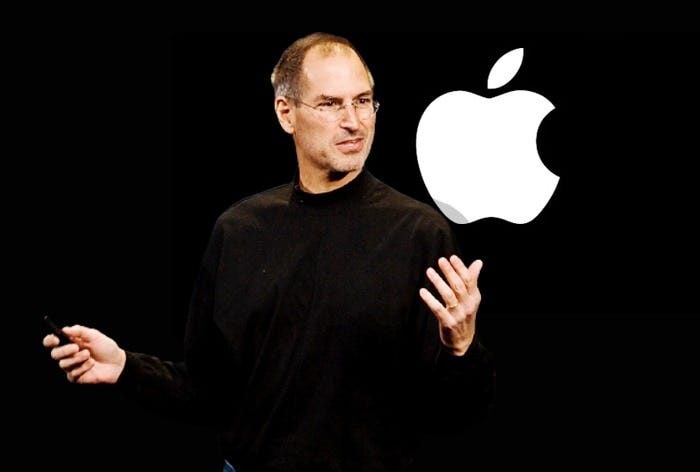
2003: Steve Jobs diagnosed with pancreatic neuroendocrine tumor. Highly treatable with immediate surgery, because it was found early.
Doctors recommend immediate surgical removal. Simple procedure. Prognosis excellent.
Jobs refuses. His better idea: Fruitarian diet.
His logic: Cancer feeds on toxins from meat. Fruit is pure, natural, cleansing. The body can heal itself.
His doctors beg him to reconsider.
Jobs: "I'm going to cure this naturally."
Nine months pass. Jobs follows the fruit diet religiously.
The tumor grows. Metastasis begins.
2004: Jobs finally agrees to surgery. Too late. Cancer has spread.
2011: Steve Jobs dies at age 56.
His biographer reveals: Jobs deeply regretted delaying surgery. Called it one of his biggest mistakes.
Where did Jobs get this idea? 1960s counterculture vegetarian mythology. Repackaged as cutting-edge wellness.
Jobs believed this despite having access to the best medical science in the world. Intelligence doesn't protect against nutritional superstition.
Jobs revolutionised computing by ignoring conventional wisdom. But computers aren't biology. You can disrupt an industry through innovation. You can't disrupt tumor growth through fruit.
The fruitarian diet didn't slow the cancer. It allowed nine months of uncontrolled growth that turned a simple surgical fix into a death sentence.
Modern wellness culture still promotes variations of what Jobs believed: Plant-based healing, natural cure, body's innate wisdom.
The lesson: Your body can't heal cancer through fruit. Surgery works. Magical thinking doesn't.
2003 Steve Jobs could have lived decades longer.
2011 Steve Jobs died because he believed in fruit cure mythology.
The difference was nine months.

English

@SamaHoole Some people will get to Carnivore in steps, stage by stage. This helps that process. Thanks Sama!
English

@LynAldenContact Nice! The translation of my creative business book into Traditional Chinese, for publication in Taiwan, is one of my coolest too!
davidparrish.com/wp-content/upl…

English

@echipiuk “Modern bureaucracies and institutions are powerful precisely because they diffuse responsibility. Decisions are broken into policies, protocols, committees”
So true!
And this is why nobody goes to prison when there are public disasters, corruption, institutional failures etc.
English

After the Nuremberg Trials, one of the most unsettling conclusions did not come from the courtroom, but from the psychiatrist tasked with evaluating the defendants.
Dr. Douglas Kelley, the U.S. Army psychiatrist assigned to assess many of the senior Nazi officials, expected to find monsters people fundamentally different from the rest of humanity. He did not.
What disturbed him most was how ordinary they were.
They were not raving madmen. They were not obvious sociopaths. They were intelligent, educated, and often convinced they were simply doing their duty, following orders, or serving a higher cause. Kelley warned that this was the real danger: evil does not always look abnormal. It often presents itself as competence, obedience, and institutional loyalty.
His central warning was deeply uncomfortable there are people with morally vacant or destructive tendencies everywhere. In every society. In every era. What determines the outcome is whether systems elevate those people, shield them from accountability, and normalize their behavior, and whether ordinary citizens are willing to question authority when it matters most.
Modern bureaucracies and institutions are powerful precisely because they diffuse responsibility. Decisions are broken into policies, protocols, committees, and “best practices.” Harm is rarely framed as harm; it is reframed as necessity, risk management, or compliance. Individuals are encouraged not to think morally, but procedurally.
This is how ordinary people become capable of extraordinary wrongdoing by outsourcing conscience to institutions and convincing themselves that accountability lies somewhere else.
The lesson of Nuremberg is not that “those people were different.” It is that they were not.
That is why vigilance matters. That is why blind trust in authority is dangerous. And that is why a healthy society must protect dissent, accountability, and moral courage especially when it is inconvenient.
History does not repeat itself because people forget facts. It repeats itself when people convince themselves, “It could never happen here.”

English

@Codie_Sanchez This is one of the key points I make in my strategic marketing book: “Chase One Rabbit: Strategic Marketing for Business Success”.
Choose the right customers!
The best customers often aren’t nearby.
Stop wasting time and effort trying to “market to” the wrong customers!
English

@fesshole 68 . I'm about to do it again.
With a comfortable income.
Glad I looked after my health
English

@jpazniokas @SamaHoole Yes. Or something shorter that people will find time to read. Sama’s short summary here is excellent. A good start to get millions thinking critically.
English

@SamaHoole I feel like we need a book on the ahole that was Ancel Keys. I tell this story often, absolutely nobody knows of it.
English

1958: Ancel Keys presents his Seven Countries Study claiming saturated fat causes heart disease.
Problem: He had data from 22 countries. He cherry-picked 7 that fit his hypothesis and buried the rest.
France ate butter and cream with low heart disease. Switzerland ate cheese with low heart disease. West Germany ate meat and had declining heart disease despite rising fat consumption.
Keys ignored all of them. They didn't support the conclusion he'd already decided on.
When other scientists pointed this out, Keys didn't engage with the science. He destroyed them personally. He had colleagues blacklisted from journals. He used his position on the American Heart Association to block opposing research from publication. He went after funding for anyone who questioned him.
Dr. John Yudkin suggested sugar might be the problem, not fat. Keys called him a fool in print, destroyed his reputation, got his research funding cut, and effectively ended his career. Yudkin was vindicated decades later but he died in obscurity.
Keys wasn't doing science. He was running a protection racket for his hypothesis. You either supported him or you stopped publishing.
The man who convinced the world that butter would kill them selected 7 countries out of 22 to prove his predetermined conclusion, then spent 30 years destroying anyone who noticed.
And we're still living with dietary guidelines based on his fraud.

English

What your psychiatrist won't tell you about mitochondria:
Your neurons have the highest mitochondrial density of any cells in your body except muscle.
Why? Because thinking requires massive energy.
Depression, anxiety, ADHD, bipolar, schizophrenia: all show mitochondrial dysfunction in brain imaging studies.
The common factor across all psychiatric disorders isn't neurotransmitters.
It's impaired brain energy metabolism.
Your neurons can't produce enough ATP to function normally because their mitochondria are damaged by:
- Chronic glucose metabolism creating oxidative stress
- Seed oil oxidation products damaging mitochondrial membranes
- Inflammatory cytokines impairing mitochondrial function
- Inadequate NAD+ reducing efficiency
Psychiatric medications don't fix mitochondria. They can't. They alter neurotransmitter availability, which is downstream of the energy problem.
Ketogenic diets (particularly carnivore) fix mitochondria:
- Ketones provide superior fuel requiring less oxygen
- Reduced oxidative stress from lower ROS production
- Mitochondrial biogenesis (creating new, healthy mitochondria)
- Improved NAD+/NADH ratio
- Elimination of inflammatory inputs damaging mitochondria
This is why dietary interventions work when medication fails.
You're not treating symptoms. You're fixing the power plants.
When neurons have adequate energy, they function normally.
When they don't, you get diagnosed with a psychiatric disorder and prescribed drugs that don't address the problem.
The mitochondrial dysfunction framework explains why ketogenic diets treat epilepsy, bipolar disorder, schizophrenia, depression, and anxiety effectively.
Same root cause. Same solution.
But acknowledging this requires abandoning the neurotransmitter hypothesis that the entire psychiatric pharmaceutical industry is built on.
So they won't.
Your mitochondria don't care about industry politics.
They just need proper fuel.
Give them ketones from animal fat, remove the engine lubricant, and watch mental illness resolve.
English

@archivetvmus71 As a youngster my friend John and I won a fancy dress competition as Bill and Ben! Haha
English

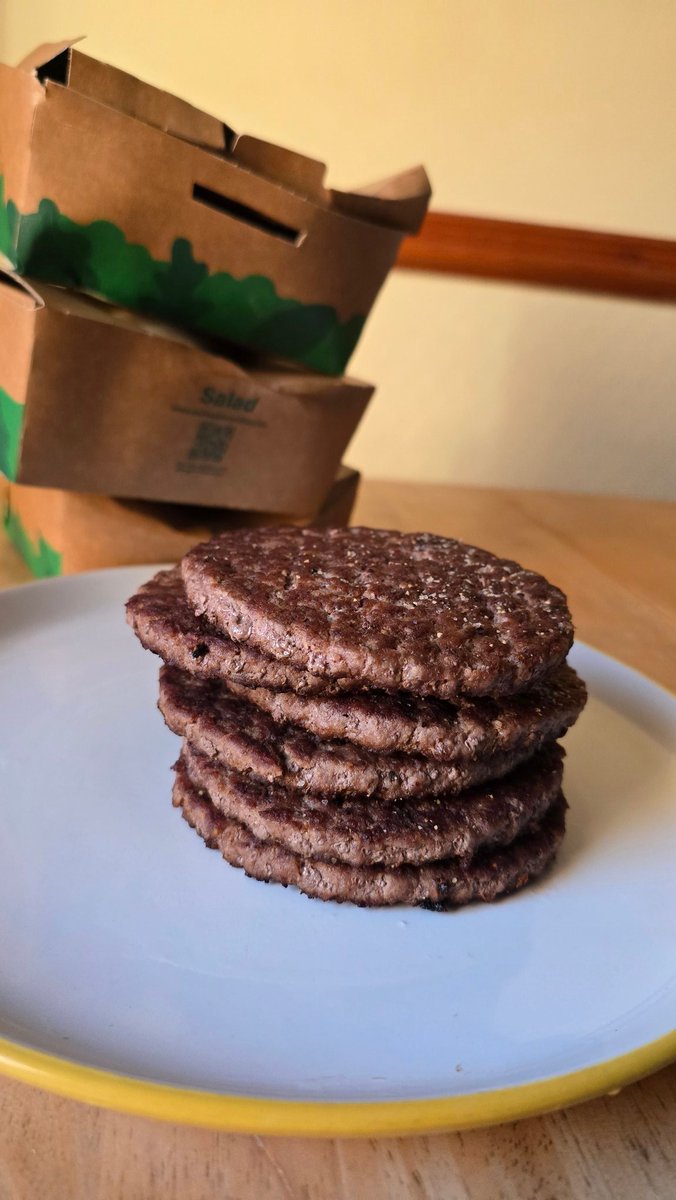
@GievlosD @drawandstrike @SamaHoole I’ve bought patties-only at Burger King in the UK but the manager had to authorise my unusual request!
English