David K

1.3K posts

David K banner
David K

David K

@dbkca

Former makerdao contributor, banker, consultant, entrepreneur, mentor/adviser. Active blockchain developer building and architecting the future of DeFi.

Toronto, Canada Katılım Haziran 2009
959 Takip Edilen243 Takipçiler
David K
David K@dbkca·
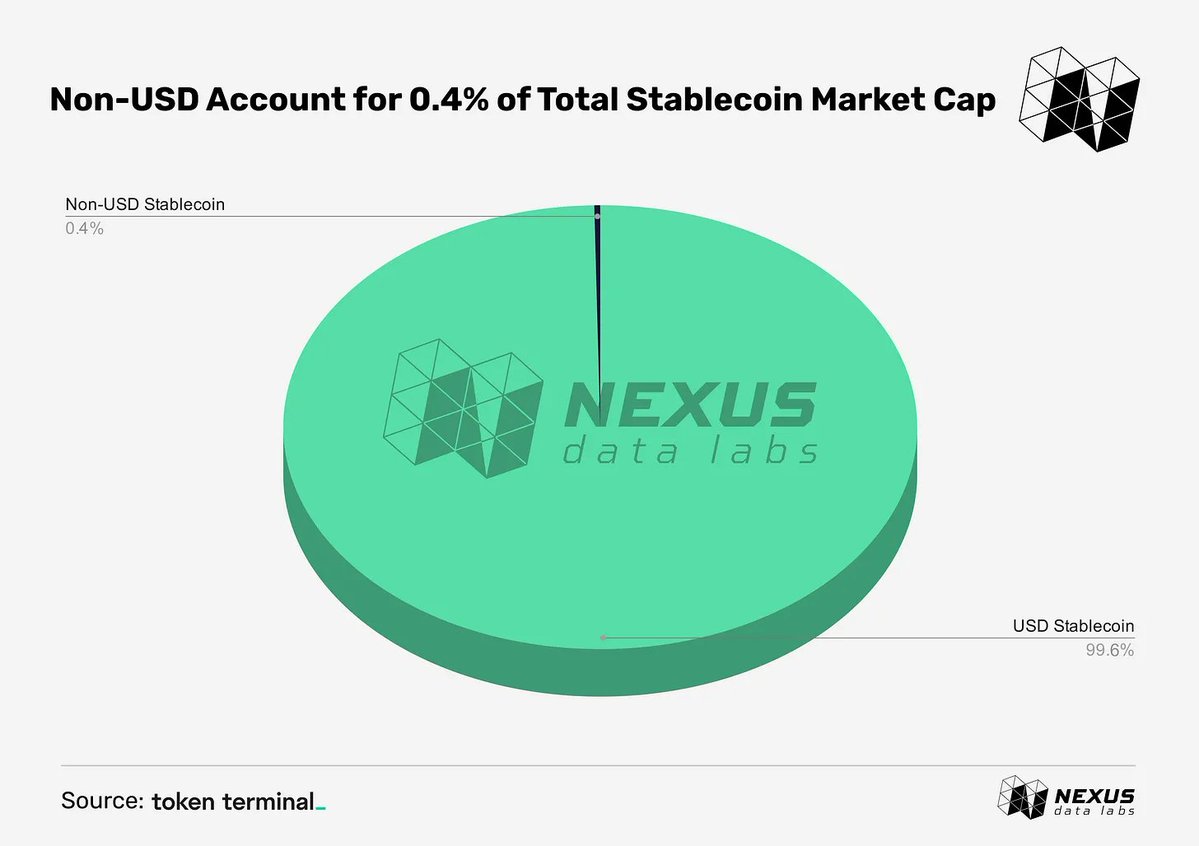
@NexusDataLabs @tokenterminal Non-USD stablecoins are only ~0.4% of the $300B market, while USD dominates traditional FX (89%). Canada’s regulated CAD stablecoins (CADD, QCAD, CADC) are trying to close that gap under the new framework. Just published my assessment: w2d.co/insights/can-t… Thoughts? 🇨🇦
English
0
0
1
52
Nexus Data Labs
Nexus Data Labs@NexusDataLabs·
Non-USD stablecoins represent just 0.4% of a $300B stablecoin market. In traditional FX, the US dollar is involved in 89% of transactions. The gap between how the world transacts and how the onchain economy is structured remains largely unaddressed. Data: @tokenterminal
Nexus Data Labs tweet media
Diego@0xTakeProfits

x.com/i/article/2054…

English
3
2
14
2.1K
David K
David K@dbkca·
Would love your thoughts, especially from payments, treasury & fintech people: Have you used any Canadian stablecoins yet? What changes would help them compete while staying safe? Open to discussion 🇨🇦 #Stablecoins #DeFi #CanadianFintech #RWA #Payments
English
0
0
0
10
David K
David K@dbkca·
In my new post I break down their strengths and the real challenges ahead: → Yield limits → Settlement constraints → Upcoming federal Stablecoin Framework Full analysis here: w2d.co/insights/can-t…
English
1
0
0
11
David K
David K@dbkca·
After years in traditional banking + now building in DeFi/blockchain, I’ve been watching Canada’s regulated CAD stablecoins closely. We now have three solid ones: CADD, QCAD & CADC all 1:1 backed & provincially regulated. Real progress. But will they actually gain traction
English
2
0
0
16
David K
David K@dbkca·
@EvanLSolomon Are you kidding me you can’t even build a payroll system (phoenix) or mobile apps - arrive/prescribe scam.
English
0
0
0
34
Evan Solomon
Evan Solomon@EvanLSolomon·
We’re building the first public AI supercomputer, owned and operated in Canada, to power innovation across every sector. From healthcare to clean energy to startups scaling here at home, this is about making sure the future is built here. Applications are open. 🇨🇦 Nous construisons le premier superordinateur public dédié à l'intelligence artificielle, appartenant à et exploité par le Canada, afin de stimuler l'innovation dans tous les secteurs. Des soins de santé à l'énergie propre, en passant par les start-ups qui se développent ici même, notre objectif est de faire en sorte que l'avenir se bâtisse ici. Nous acceptons désormais les candidatures.
English
936
71
367
321.3K
David K
David K@dbkca·
💯
William (Bill) Kennedy@goinggodotnet

I sent this message to everyone at Ardan this morning. Good Morning everyone. I want to share this and share some thoughts for all of you to consider for this year. We all need to come to recognize that if your job is to just write code, you will be out of a job in the next year or two. The AI coding agents have reached a level of being very good at writing the code you ask it to write. Notice I said "ask it to write." I need everyone to start focusing on their engineering skills: - Being able to identify what needs to be built and why. - Breaking that down into chunks of work and that be verified and tested. - Knowing how to ask for the code you need written and when you need it. - Maintaining a mental model of what is being built and coded. - Code reviews by yourself and the AI coding agents. This requires you to have a strong foundation in project structure and architecture. Everything I teach in my Software Design class. Without strong project structure, architecture, and design philosophy, these projects will be a mess. Really no different from what happens today without the AI Coding agent. You just get to the mess faster. So now is the time to strengthen these skills and leverage the videos I have. Leverage my existence here and reach out and ask questions. This year you MUST improve these engineering skills to stay employed. You must find an AI coding agent you like and start using it. You must invest in that tooling just like you invest in your laptop. Sourcegraph AMP I think is the best backend dev tooling out there. They have a free version with ads that don't get in your way. This is just 1 of many tools. Try and few and pick one. If you watch my live coding show (especially the last 2 shows) you can see how I use AMP effectively. Some of you can't use this tooling with your clients. But they do have internal models that some tools can use. Push to get access and start using it. Ask your clients what the rules are for using these tools and start using them. Please reach out if you need help getting started or have questions. -- Bill

ART
0
0
1
93
Ameen Soleimani
Ameen Soleimani@ameensol·
gm what is the general solution to 51% attacks against democracies? aka when the voters just decide to vote themselves the treasury, and basically win forever
Ameen Soleimani tweet media
English
54
7
111
21.1K
David K
David K@dbkca·
@ShaziGoalie Not just the tech scene the big corporates implicit in this as well - especially where visa is conditional on maintaining their job - slave labour
English
0
0
1
190
Shazi
Shazi@ShaziGoalie·
Toronto’s tech scene has a dirty secret. Companies bypass experienced 🇨🇦 to hire international students and newcomers at rock-bottom wages — $50K for software dev roles in a city where rent alone can eat half that. Exploitation disguised as “diversity.”
Shazi tweet media
English
182
609
3.1K
99.9K
David K
David K@dbkca·
@SebVentures My interpretation is rating agency key concern is lack of decentralization in the DAO and centralized governance. Kind of ironic Given DEFI= supposed to be “decentralized finance” and not a centralized endgame
English
1
0
5
63
SebVentures
SebVentures@SebVentures·
A major rating agency was able to rate a DAO that doesn't exist as a legal entity. Let that sink in. It's a journey, I'm glad we achieved this first step (wasn't convinced we could). The rating is B-, which is low, but still great regarding the novelty of the whole thing. Lack of regulatory clarity is hurting, which is not really rating the protocol but regulators.
Steakhouse Financial@SteakhouseFi

Credit ratings compress complexity into clarity. In TradFi, they turn products into usable inputs. Unlocking liquidity, reducing search costs, and enabling scale. For the first time, a stablecoin system has crossed that threshold. That stablecoin is @SkyEcosystem USDS

English
3
4
41
3.2K
David K
David K@dbkca·
@hasufl @SkyEcosystem @SPGlobal Let’s take investment grade collateral and use incorruptible defi to make it sub investment grade - significant improvement required.. by the protocol to address identified issues..
English
0
0
0
115
Hasu⚡️🤖
Hasu⚡️🤖@hasufl·
Today, @SkyEcosystem and its decentralized stablecoin USDS got a B- rating from S&P (@SPGlobal ) - the first time they rated any stablecoin issuer, centralized or decentralized. Some people are getting hung up on the B- because its not investment-grade yet when compared to established Tradfi issuances - that would be a big mistake. Any crypto stablecoin/smart contract system is expected to get a more conservative rating, because Defi carries unique technological and regulatory risks. The rating is very fair and there is now a clear and surprisingly accurate framework to improving it over time. This rating is a milestone for all Defi because it proves that decentralized protocols can meet the standards of major ratings agencies, paving the way for an adoption of crypto assets + issuers by existing Tradfi organizations.
Steakhouse Financial@SteakhouseFi

Credit ratings compress complexity into clarity. In TradFi, they turn products into usable inputs. Unlocking liquidity, reducing search costs, and enabling scale. For the first time, a stablecoin system has crossed that threshold. That stablecoin is @SkyEcosystem USDS

English
29
27
285
44.6K
Steakhouse Financial
Steakhouse Financial@SteakhouseFi·
Credit ratings compress complexity into clarity. In TradFi, they turn products into usable inputs. Unlocking liquidity, reducing search costs, and enabling scale. For the first time, a stablecoin system has crossed that threshold. That stablecoin is @SkyEcosystem USDS
Steakhouse Financial tweet media
English
12
14
126
100.5K
David K
David K@dbkca·
@Tablesalt13 International students should be conning for and education only - and should leave after - if the want pr they can apply on their merits after - leave all employment for legal residents ..
English
0
0
0
17
Tablesalt 🇨🇦🇺🇸
Tablesalt 🇨🇦🇺🇸@Tablesalt13·
🚨Canadian international student Says on camera That she paid 20k for a Canadian job Its so commonplace... that people don't even know it's illegal
English
577
1.4K
4.9K
342.4K
David K
David K@dbkca·
I think this is shortsighted - a prudent tradfi institution will understand that the chain they use and its decentralization will be assessed for counterparty risk, capital required and that institutions credit rating these ancillary costs should be factored into their decisions
Jake Chervinsky@jchervinsky

I said yesterday it's not obvious to me that TradFi institutions will choose "the most decentralized L1" as they move their businesses onchain. A common response was "then why not use AWS/SQL." This is cute, but it wrongly casts decentralization as a binary rather than a spectrum. Public blockchains have many advantages over traditional databases: they are more accessible, interoperable, reliable, secure, etc. But many of these advantages require only sufficient decentralization — not maximum decentralization. Yes, if a chain depends on a single data center, it won't be nearly as reliable (it won't have as good uptime) as a decentralized chain. It also won't be as resilient to risks like censorship, deplatforming, security exploits, etc. More decentralization is better in many ways. But more decentralization is generally more expensive, practically by design. Some users will spare no expense to get the most benefit possible. If you're a dissident opposing an authoritarian regime who needs to secure your personal wealth, you should be willing to pay for maximum decentralization. There are many such cases. My point is that TradFi institutions offering centralized onchain products are not such cases. TradFi institutions aren't looking to spend extra or wait extra minutes on every transaction day-in and day-out to get more security against nation-state-level attacks. If something goes really wrong onchain, the risk to the TradFi institution isn't "the whole business fails," it's "we have to process the transaction using an alternate method" or "we have to decommission and reissue a stolen asset" or some other cost that may not outweigh using a more expensive chain. TradFi institutions also don’t care about the core property that decentralized public blockchains uniquely enable — self-sovereign ownership of digital assets. When the blockchain itself is the sole source of truth regarding who owns what, maximum decentralization is paramount. But TradFi institutions offering centralized products aren’t using chains for that purpose, since they rely on offchain legal systems to determine ownership. For these users, sufficient decentralization is the right tradeoff — just enough to get the benefits of a public blockchain on any given day, but no more expensive than necessary in cost and speed. Arguing that TradFi institutions will choose "the most decentralized L1" puts ideology over practicality, something the vast majority of for-profit businesses will not do. Two notes: (1) Many people took this as a criticism of Ethereum, and, well, sort of! But the best counterargument is also Ethereum's own L2 roadmap, which (if it works) offers an appealing tradeoff for TradFi institutions of low cost and high speed with an escape hatch in case of crisis. I think there's a good shot that institutions decide to offer centralized products on ETH L2s. The challenge for competing chains looking to win this business is to have more attractive infrastructure, liquidity, developer interest, interoperable products, exclusive offerings, regulatory moats, etc. — which explains why you see them acting the way they are now. (2) Maximum decentralization is much more important for developers of crypto-native protocols. The TradFi institution offering the centralized product onchain typically retains the ability to resolve issues offchain, since their customers expect (and regulations often require) them to act as trusted third parties who keep their products working as expected. In that case, the risk of using an insecure chain is lower; the product survives even if the chain fails. But the crypto-native protocol has risk commensurate with the chain; since the protocol depends on the chain as the sole source of truth, if the chain fails, the protocol (and products built on it) fail too. This explains why you see so many developers continuing to build on Ethereum, despite all the turbulence in the ecosystem over the last year.


English
0
0
1
115
David K
David K@dbkca·
@jp_koning A Canadian Stablecoin 🇨🇦that is not a security will solves this …
English
1
0
0
45
John Paul Koning
John Paul Koning@jp_koning·
Trump-proofing Canada means we need to end our reliance on the SWIFT financial messaging network for domestic payments purposes. Let's build a Canadian replacement now — before Trump exerts U.S. economic power to de-SWIFT us. My latest 👉 moneyness.ca/2025/04/trump-…
John Paul Koning tweet media
English
3
0
4
981
David K
David K@dbkca·
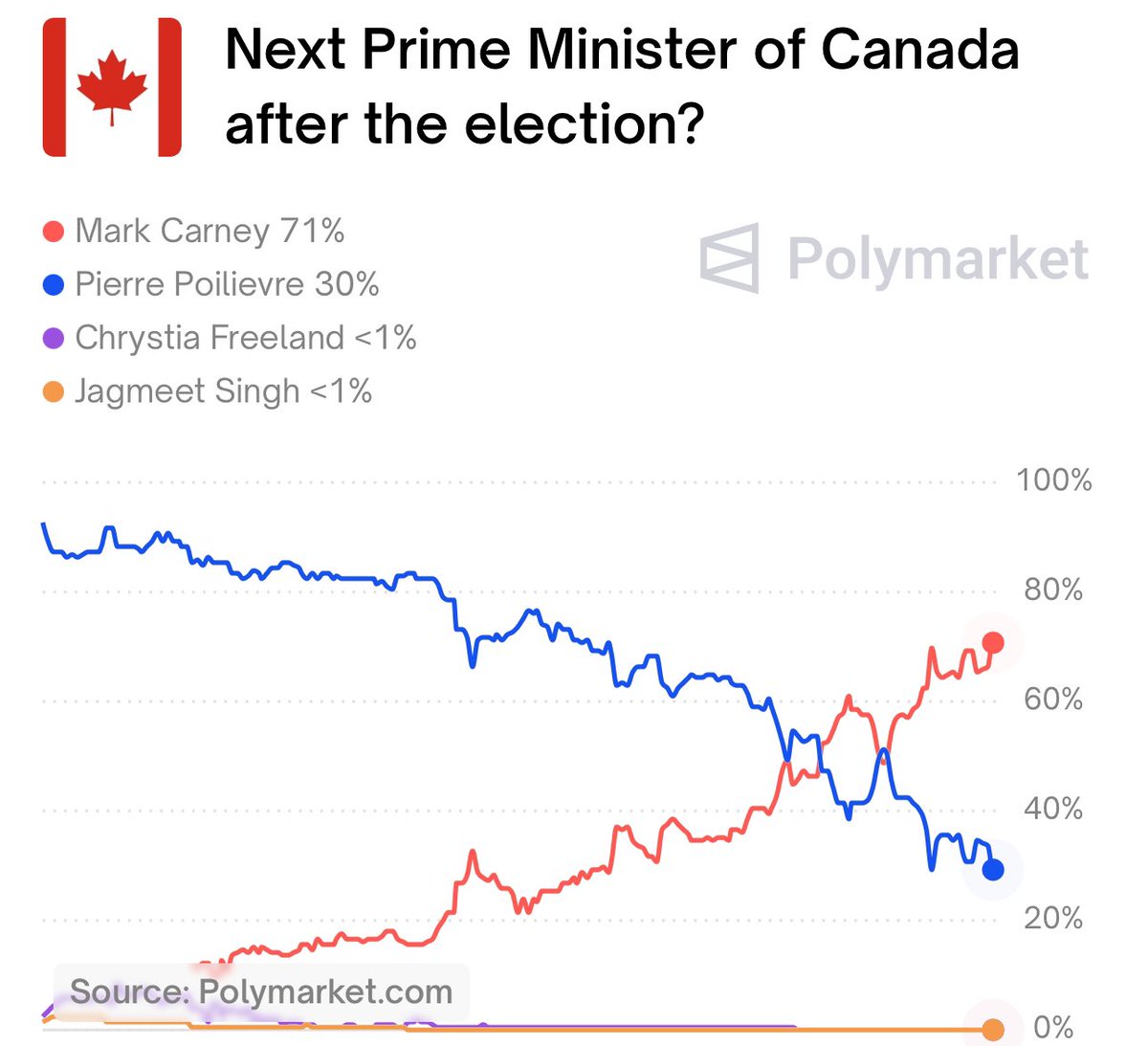
@ksorbs Probably China 🇨🇳 state actors manipulating polymarket as part of their support campaign for Carney/liberals 🇨🇦
English
0
0
1
23
Marc Nixon
Marc Nixon@MarcNixon24·
Polymarket has MARK CARNEY at 71% to WIN the election… And Pierre Poilievre at 30%. WHO in the hell is making these bets? And why does the numbers not add up? It adds up to 101% to 103% Make it make sense.
Marc Nixon tweet media
English
625
111
1.1K
56.6K